Ixtapa
"Ixtapa is not the destination you brag about, but it is where you sleep well and eat fish from a boat and do not have to explain yourself."
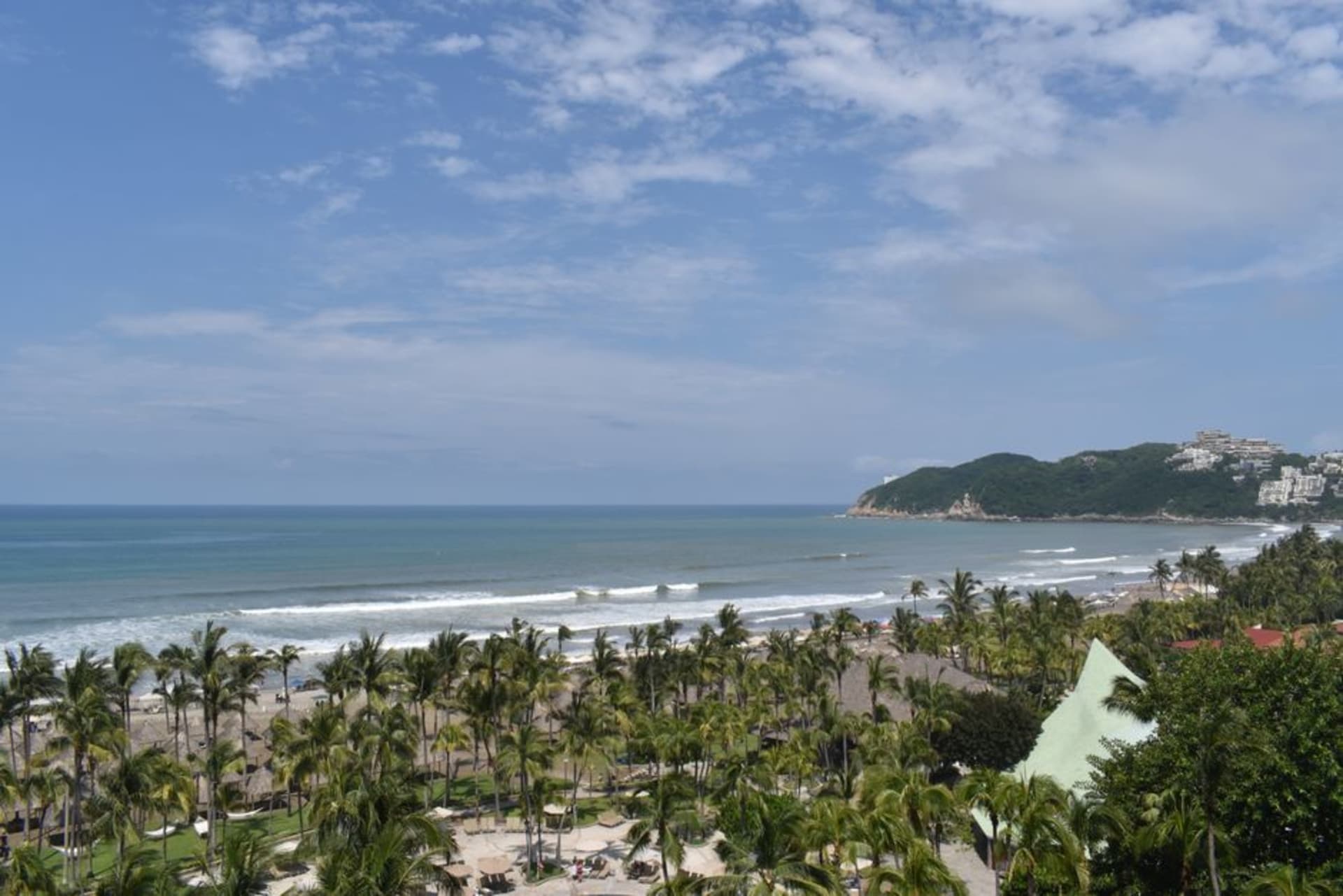
Ixtapa is a FONATUR resort town that materialized on the Guerrero coast in the 1970s with a blueprint for Cancun-style tourism and ended up being something more Mexican and more useful than that. The beaches are wide and calm, the water taxi to Isla Ixtapa runs all day, and the snorkeling around the rocks is better than anyone tells you.

The planners at FONATUR had a theory in 1971: you could engineer a resort from scratch on an empty stretch of Guerrero coast and it would become the next Cancun. They were not entirely wrong. Ixtapa materialized more or less on schedule — the wide Paseo Ixtapa lined with towers, the manicured arc of Playa del Palmar stretching north — and then something unexpected happened: Mexico refused to stay outside the perimeter. I first arrived on a colectivo from Zihuatanejo, twelve pesos, fifteen minutes, slightly confused about which stop was mine. The driver told me before I asked.
The Island Five Minutes Away
The water taxis leave from the dock at Playa Linda, north of the hotel zone, every fifteen minutes from eight in the morning until five in the afternoon. The crossing costs around forty pesos each way — the kind of transaction that still surprises me with its modesty. Isla Ixtapa has four beaches facing different directions, and the one everyone goes to first, Playa Cuachalalate, fills up by ten on long weekends with families down from Mexico City and Morelia. I go to Playa Varadero instead, on the island’s western side, where the rocks drop into water clear enough to see the parrotfish working the coral without any particular effort on your part.
The snorkeling around those rocks is genuinely good. I borrowed a mask and fins from one of the palapa restaurants — they rent them informally for a hundred pesos, no deposit required — and spent ninety minutes in the water without noticing the time passing. Trigger fish, sergeant majors, the occasional spotted puffer doing its anxious orbit of the reef. Back on shore I ate a plate of grilled sierra con frijoles at one of the palapas under a thatched roof while my shirt dried on a plastic chair.

The Part That Isn’t the Hotel Zone
The boulevard hotels are efficient and anonymous in the way that purpose-built resorts always are. What saves Ixtapa from complete sterility is that Zihuatanejo is nine kilometers away and the two towns have never entirely separated. The cooks who staff the resort kitchens live in Zihuatanejo. So do the fishermen who supply them. By six in the morning, the catch from the night before is moving up the coast road in the backs of trucks.
If you walk ten minutes inland from the hotel zone, past the shopping mall that opened in the 1980s and has the permanent air of something slightly surprised to still be operating, you find a cluster of fondas serving the maintenance and construction workers who keep the resort running. I had a bowl of caldo de camarón at one of them — shrimp broth with chipotle and a stack of tortillas on the side — for sixty-five pesos. The woman who served it told me the shrimp had come in that morning from Petacalco. I believed her.

How I Use It
I come to Ixtapa when I want a beach without negotiation — without the crowds of Zicatela, without the politics of choosing a spot on the Puerto Escondido strip. The northern end of Playa del Palmar is wide and calm enough that you can put a towel down and not be bothered. The surf is gentle by Pacific standards and there are lifeguards, which matters more than I used to think. I usually stay two nights, which is exactly right. By the third morning, Ixtapa starts to feel like what it is: a holding pattern. But for two nights it functions exactly as designed — comfortable, uncomplicated, air-conditioned. Sometimes that is precisely what you need and there is nothing wrong with admitting it.

Getting There
From Zihuatanejo, colectivos run along Paseo de la Boquita every fifteen minutes for around twelve pesos; the nine-kilometer ride takes about twenty minutes. From Puerto Escondido, the fastest route is the toll highway through Acapulco — plan for six to seven hours depending on checkpoints along the Costa Chica. The nearest airport is Zihuatanejo International, with direct flights from Mexico City, Guadalajara, and several border cities.
Keep exploring
More of Guerrero
Keep exploring
More from Guerrero
 mexico
 Playa Ventura
A black-sand beach in the Copala region of Guerrero where fishing pangas outnumber tourists most of the year and olive ridley sea turtles come ashore from July through December to nest. Four hours from anything significant, and content to stay that way.
Explore mexico
 Ometepec
Ometepec is the commercial center of the Mixtec coast in Guerrero, where market days draw Amuzgo and Mixtec vendors from dozens of surrounding communities. A working town with no pretense toward tourism, it rewards the early riser willing to eat barbacoa at dawn with strangers.
Explore mexico
 Tlapa de Comonfort
Tlapa de Comonfort sits at the junction of Nahua, Mixtec, and Tlapanec territories in the La Montaña highlands of Guerrero — remote, politically active, and the site of one of the most culturally dense markets in Mexico. The Tuesday and Sunday markets have been gathering indigenous communities from across the region for centuries. I took a three-hour second-class bus from Chilpancingo and was almost certainly the only foreign tourist in the city that day.
Explore mexico
 Cuajinicuilapa
A small town on Guerrero's Costa Chica where one of the only museums in Mexico dedicated entirely to Afro-Mexican heritage sits a short walk from the plaza, largely unvisited. The people here descend from African cimarrones who built autonomous communities on this coast centuries before the Mexican state acknowledged they existed.
Explore mexico
 Marquelia
A small municipality on Guerrero's Afromexican coast where the cultural inheritance of enslaved Africans — in music, food, and language — persists with quiet, unperformed clarity. The beaches are raw and largely empty, and the chilate is unlike anything you will find further north.
Explore mexico
 Olinalá
A remote mountain town in northern Guerrero producing the finest lacquerware in Mexico — a technique using linaloe wood and multiple layers of mineral-pigment lacquer, scratched into geometric and floral designs with a cactus thorn, practiced here since before the Spanish arrived.
Explore