Durango
"John Wayne filmed nine movies here. Sam Peckinpah filmed three. The villagers who played extras still remember their lines."
Durango is a colonial silver city that reinvented itself as a film location. Between 1950 and 1990, more than 120 Hollywood and European Westerns were filmed in the Durango countryside — the semi-arid scrubland and red sandstone formations of the Sierra Madre foothills photographed identically to the Arizona and New Mexico landscape, at a fraction of the production cost, without union rules, and with a local population willing to work as extras, wranglers, and production assistants.
John Wayne came nine times. Sam Peckinpah came for The Wild Bunch and Pat Garrett and Billy the Kid and found the landscape he needed for his particular vision of violence and landscape. Sergio Leone used Durango locations. The permanent Western movie sets built outside the city — Villa del Oeste and Chupaderos — still stand and have been in use continuously since the 1950s.
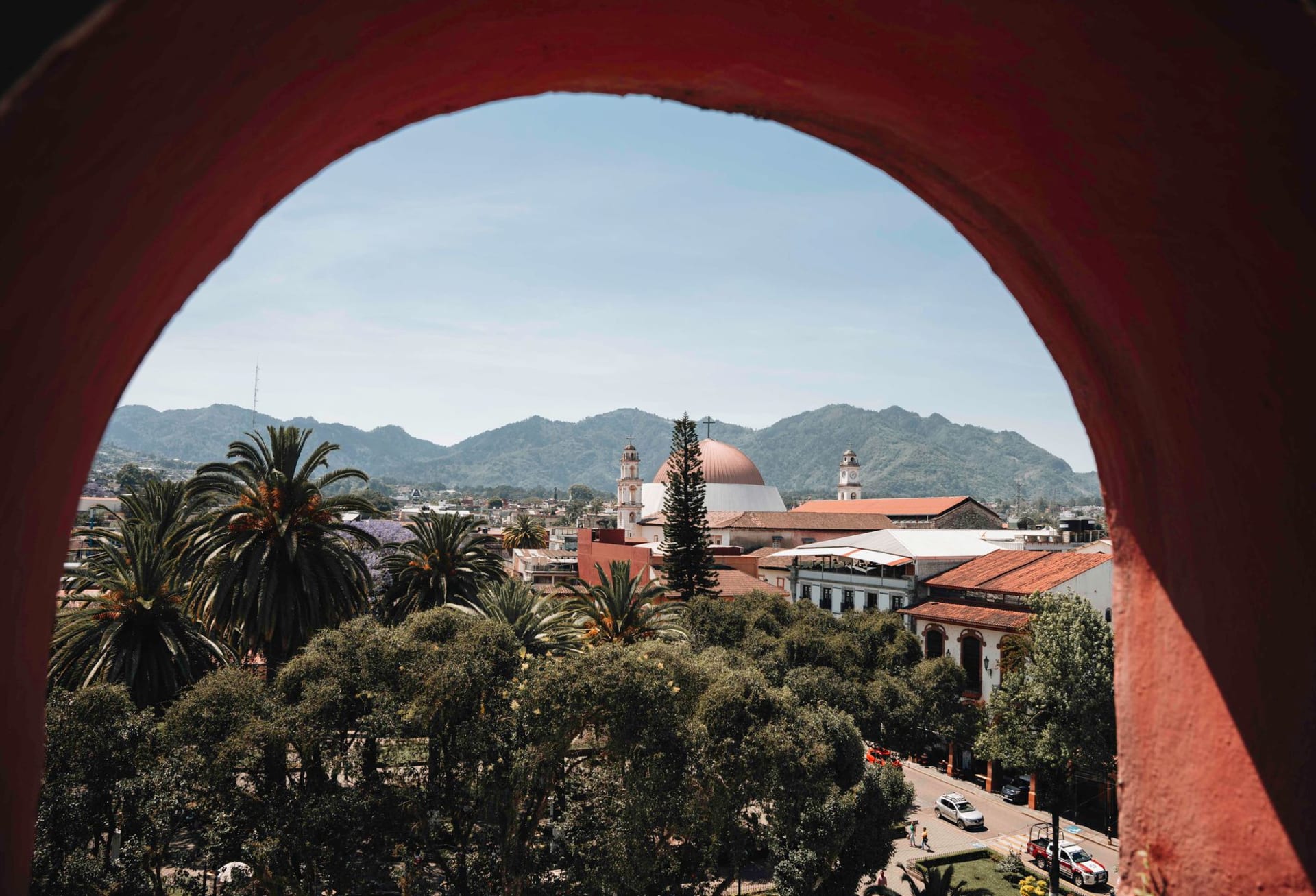
The city itself is a UNESCO-listed colonial capital of genuine quality that receives a fraction of the attention given to its Bajío counterparts.
The Film Sets
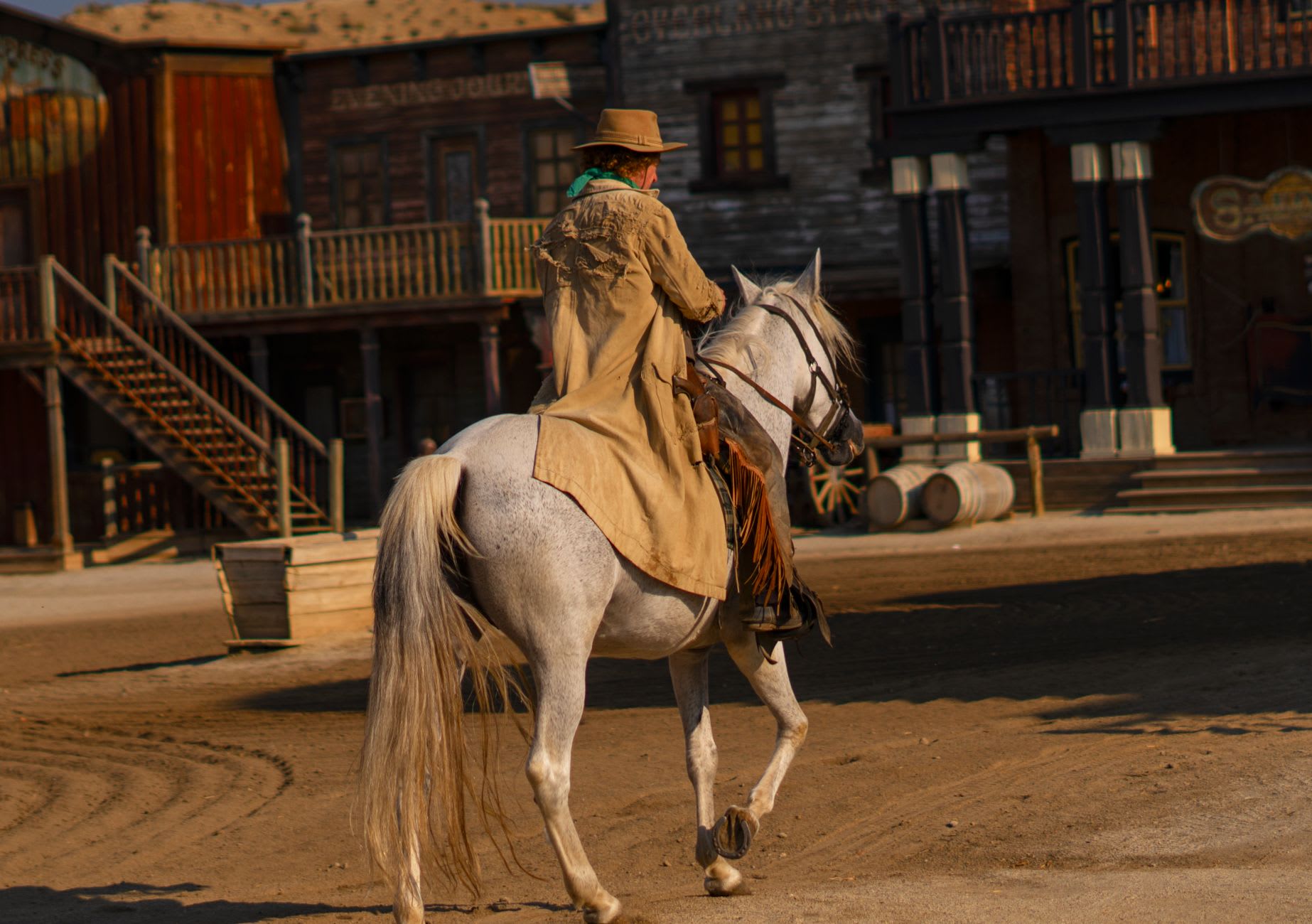
Chupaderos, 12 kilometers north of the city on the highway to Parral, is the oldest and most complete Western movie set in Mexico — a ghost town built for the 1956 John Wayne film The Conqueror and used for dozens of subsequent productions. The set has a main street of false-front buildings, a saloon, a church, and the specific atmosphere of a place that has been repeatedly destroyed (by film pyrotechnics, by weather) and rebuilt for the next production.
The Villa del Oeste set, 5 kilometers from the city, was built for a 1970s Mexican television Western and has a more elaborate layout — multiple street configurations, more permanent construction. Both sets run as tourist attractions with actors in period costume on weekends.
The Durango Film Commission maintains a museum in the city center documenting the production history: photographs of Wayne, Peckinpah, and Clint Eastwood on location, production stills, the original contracts for the city’s use as a film location. The images of the Sierra Madre landscape standing in for the American West have a specific quality of photographic equivalence — the light, the landform, and the vegetation color are close enough to be interchangeable.
The Colonial Center
Durango’s Plaza de Armas is anchored by the cathedral — a late 17th-century building with two towers of mismatched height and a facade that has the visual weight of a northern colonial church whose ornament was constrained by the available resources rather than by taste. The interior is more elaborate than the exterior promises: an 18th-century gilded retablo of considerable ambition behind the main altar, and the particular quality of a church that has been in continuous use by the same community since 1695.
The Palacio de Gobierno contains murals by Francisco Montoya de la Cruz depicting Durango history from pre-Columbian times through the revolution, with the specific visual weight of northern Mexican muralism — drier, less chromatic than the central Mexican tradition, the light of the Sierra Madre in the palette.
The Mercado Gómez Palacio has the food section that matters: the chilorio stalls. Chilorio — shredded pork braised with dried chiles, vinegar, and spices until almost dry, then packed in lard — is the canonical Durango food product and one of the finest preserved meat preparations in Mexico. It appears on every breakfast menu in the city and is sold in clay pots at the market for transport home.
The Quebradas
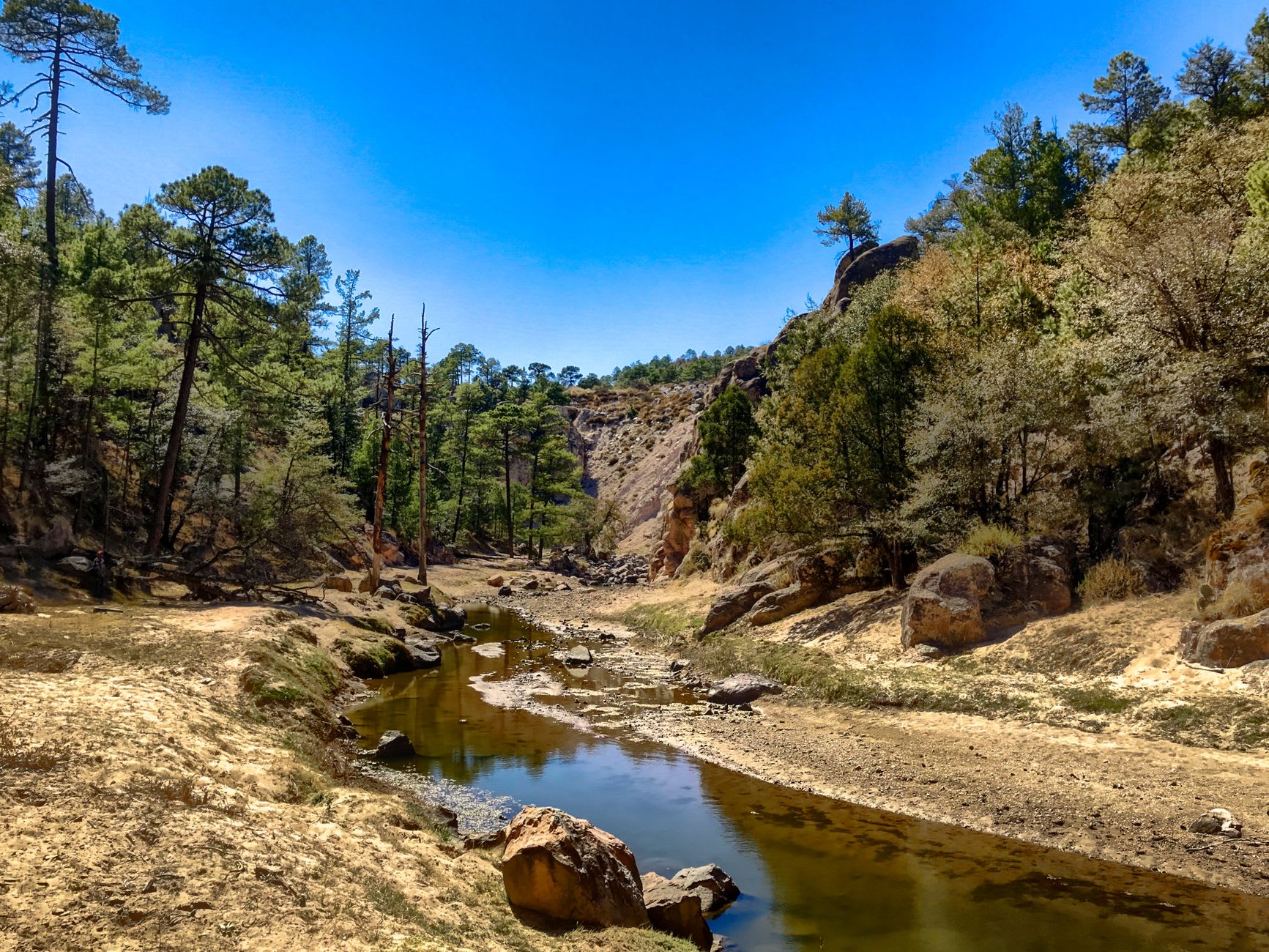
Thirty kilometers south of the city, the road drops from the pine-covered Sierra Madre into a series of dramatic canyon systems known as the Quebradas — the same terrain, in slightly different ecological form, that the film crews were using as a stand-in for Arizona. The canyons are accessible by road to their rim and by trail into their interiors; the vegetation shifts from pine forest at 2,400 meters to subtropical dry forest at 400 meters over twenty kilometers of descent.
The Puente de Ojuela — a suspension bridge over the Palmito Gorge, built in 1898 to serve the Ojuela silver mine and still standing — is the most dramatic single structure in the region: 318 meters long, swaying perceptibly in wind, with the gorge 110 meters below.
Getting there: Direct flights from Mexico City, Guadalajara, Monterrey, and Tijuana. ETN buses from Mazatlán (3h over the spectacular Trans-Sinaloa Highway through the Sierra Madre) or Mexico City (12h). The film sets are accessible by taxi from the city; a car is useful for the Quebradas.
When to go: April through June and September through November for best weather. The mountain climate produces cold winters and a rainy summer season (July-August) that makes the Sierra Verde and the Quebradas lush.