Chihuahua
"Pancho Villa kept his car in a garage here. His car was shot full of holes in 1923. The garage is now a museum. The holes are still in the car."
Chihuahua is the capital of Mexico’s largest state — a state bigger than the United Kingdom — and a city whose 20th-century history is the history of the Mexican Revolution made domestic. Pancho Villa organized and commanded the División del Norte from Chihuahua; his military campaigns that pushed south from here broke the Díaz regime and later the Huerta government and made Villa briefly the most powerful military figure in Mexico. The city’s relationship with this history is intimate and proud and still contested in the ways that revolutionary history always is.
The city is also, in 2026, a working industrial capital of northern Mexico — manufacturing, aerospace, agriculture — with a colonial downtown that carries the weight of its history more gracefully than many Mexican cities four times its size.
The Pancho Villa Museum
The Quinta Luz — the mansion where Villa lived with his last wife, Luz Corral, in the years between the end of the revolution and his assassination in 1923 — is now the Museo de la Revolución Mexicana and contains one of the most affecting single objects in any Mexican museum: Villa’s 1919 Dodge touring car, with the bullet holes from the ambush at Parral still in the body. Villa was killed in that car on July 20, 1923. The car has been in the museum since 1976.
The museum also contains Villa’s personal weapons collection (including his favored pistols), his military campaign maps, photographs from the División del Norte campaigns (many of them taken by the Mutual Film Company, which paid Villa for exclusive filming rights in 1914), and documentation of the complex political negotiations that were Villa’s actual strategic instrument alongside his military campaigns.
The mansion itself is a period document: the room where Luz Corral continued living until her death in 1981, the stables where Villa kept his horses, the garage where the Dodge was maintained. The scale is that of a successful rancher’s house, not a warlord’s palace — Villa’s legend has always been partially the legend of a man who could have been much more powerful than he chose to be.
The Cathedral and the Centro
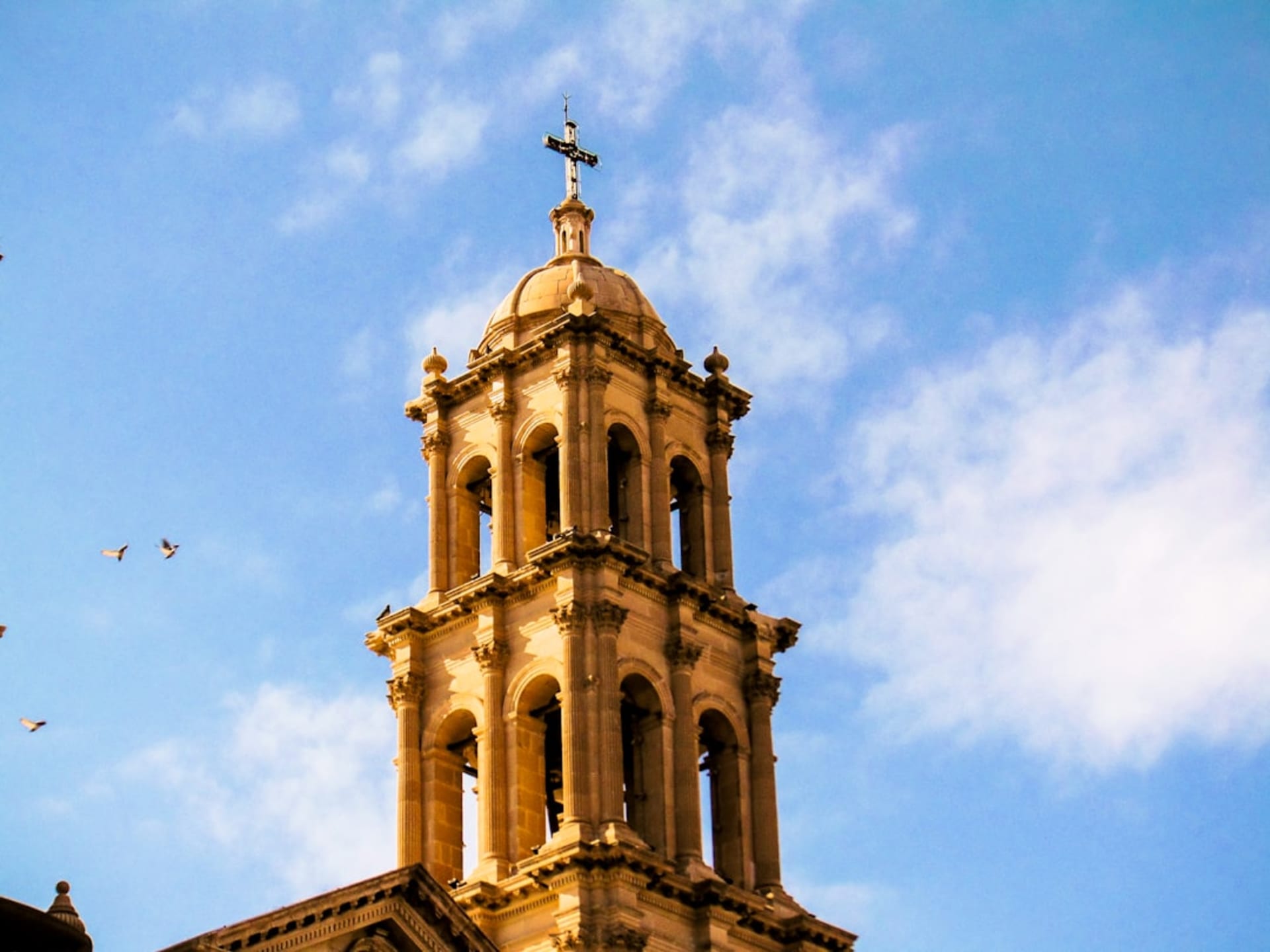
The Cathedral of Chihuahua on the Plaza de Armas is the baroque showpiece of the city: an 18th-century church with two towers of unequal height (one was finished in 1750, the other not until 1826) and a facade of carved cantera stone that is less ornate than the Churrigueresque churches of central Mexico but has a severity appropriate to the north. The interior has been heavily modified but the main altar is significant.
The Palacio de Gobierno — the state capitol — contains Aarón Piña Mora’s murals depicting Chihuahua history from pre-Columbian times through the revolution. The Cuauhtémoc cell in the basement (where the last Aztec emperor was reportedly tortured before his execution during the conquest period — a historical event that happened 500 kilometers away but that the Chihuahua murals claim with regional authority) is the most visited room.
The Palacio Federal — an art nouveau building from 1910 — and the adjacent streets of the historic center carry some of the most interesting 19th and early 20th-century commercial architecture in northern Mexico. The Chihuahua prosperity of the Porfiriato (the Díaz era of infrastructure and foreign investment) left buildings that the revolution interrupted and that have been slowly restored since.
The Mennonite Country
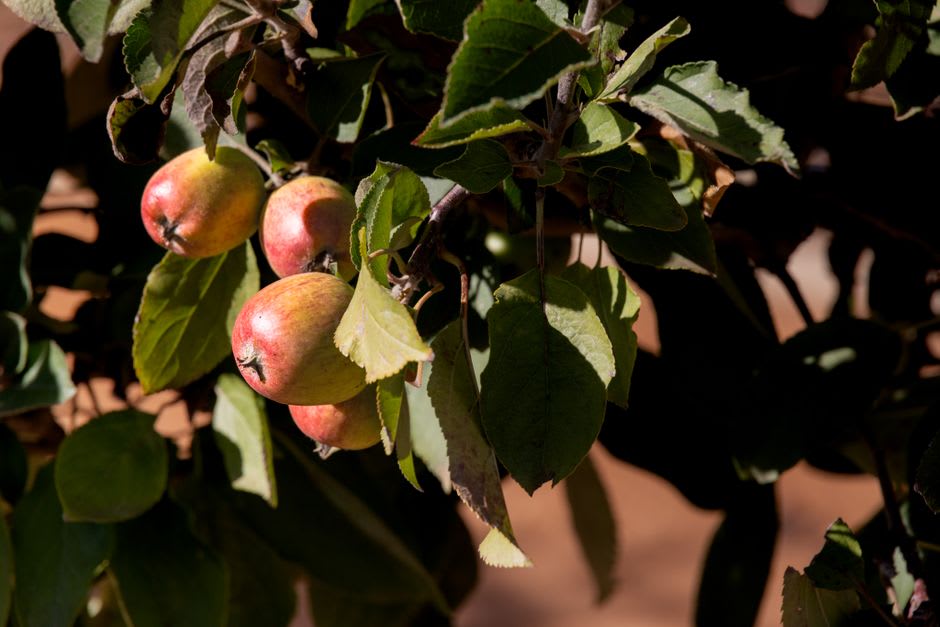
Two hours west of Chihuahua, the agricultural plains of the Cuauhtémoc region are the homeland of the Mennonite communities that settled here in the 1920s, fleeing restrictions on their religious practice in Canada. The communities now number around 100,000 people — Low German speakers who maintain traditional Mennonite practice while operating successful dairy farms, cheese factories, and apple orchards.
The queso menonita — a mild, semi-firm yellow cheese in the Dutch-influenced style — is the best-known product and appears in every northern Mexican market and restaurant. The version bought from the farms around Cuauhtémoc, sold in large wheels from roadside stands, is different from the industrial version distributed nationally. The apple orchards produce the only significant commercial apple crop in Mexico; the apple cider from Cuauhtémoc is available in Chihuahua markets in the fall.
Getting there: Direct flights from Mexico City, Guadalajara, Monterrey, and US border cities. Bus from Ciudad Juárez (4h) or Hermosillo (8h). The Chihuahua al Pacífico railway (El Chepe) runs from Chihuahua into the Copper Canyon — the standard starting point for the train journey through the sierra.
When to go: April through June and September through November for best weather. July-August brings monsoon rains (often dramatic lightning storms over the sierra that are worth seeing). The Chihuahua winter (December-February) is genuinely cold by Mexican standards.
Explore
Places in Chihuahua
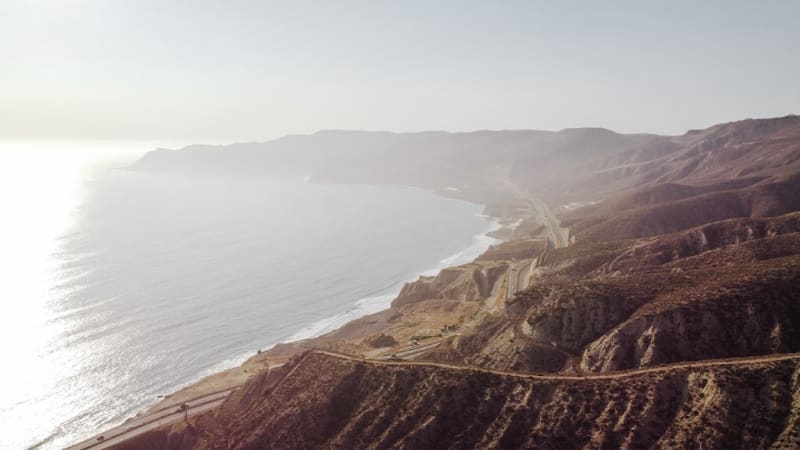
Copper Canyon
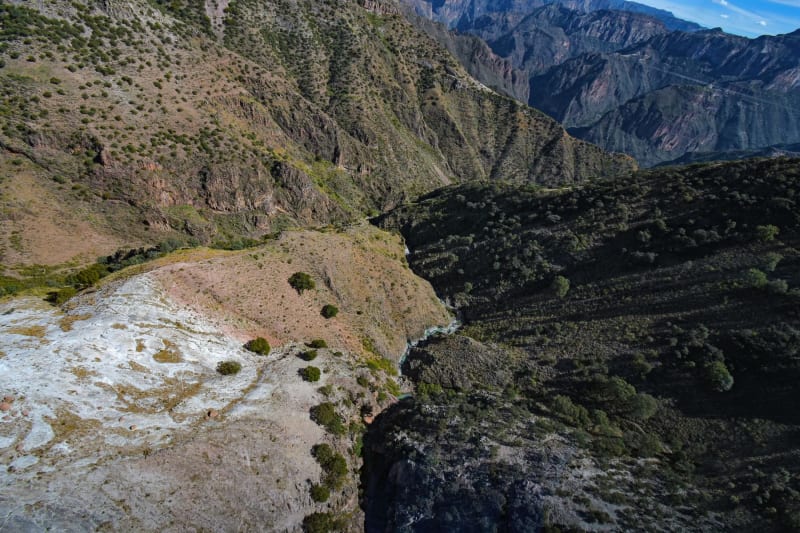
Four times the size of the Grand Canyon, this Chihuahuan labyrinth is traversed by one of the world's great train rides.
Creel
The mountain town gateway to the Copper Canyon — four canyons larger and deeper than the Grand Canyon, the Rarámuri people who run ultramarathons barefoot, and a train journey through the Sierra Tarahumara that is one of the great engineering feats of 20th-century Mexico.
Paquimé
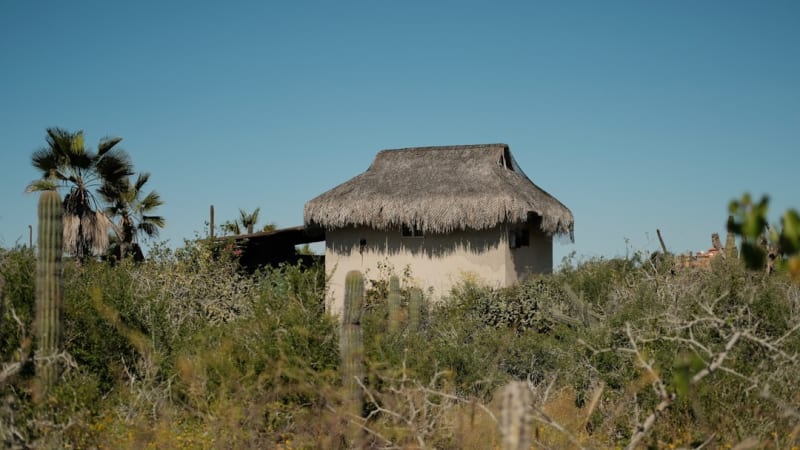
The most mysterious city in northern Mexico — a Mogollon adobe metropolis in the Chihuahuan desert that traded macaws and copper bells between the Mississippi civilizations and Mesoamerica, then vanished completely around 1450.