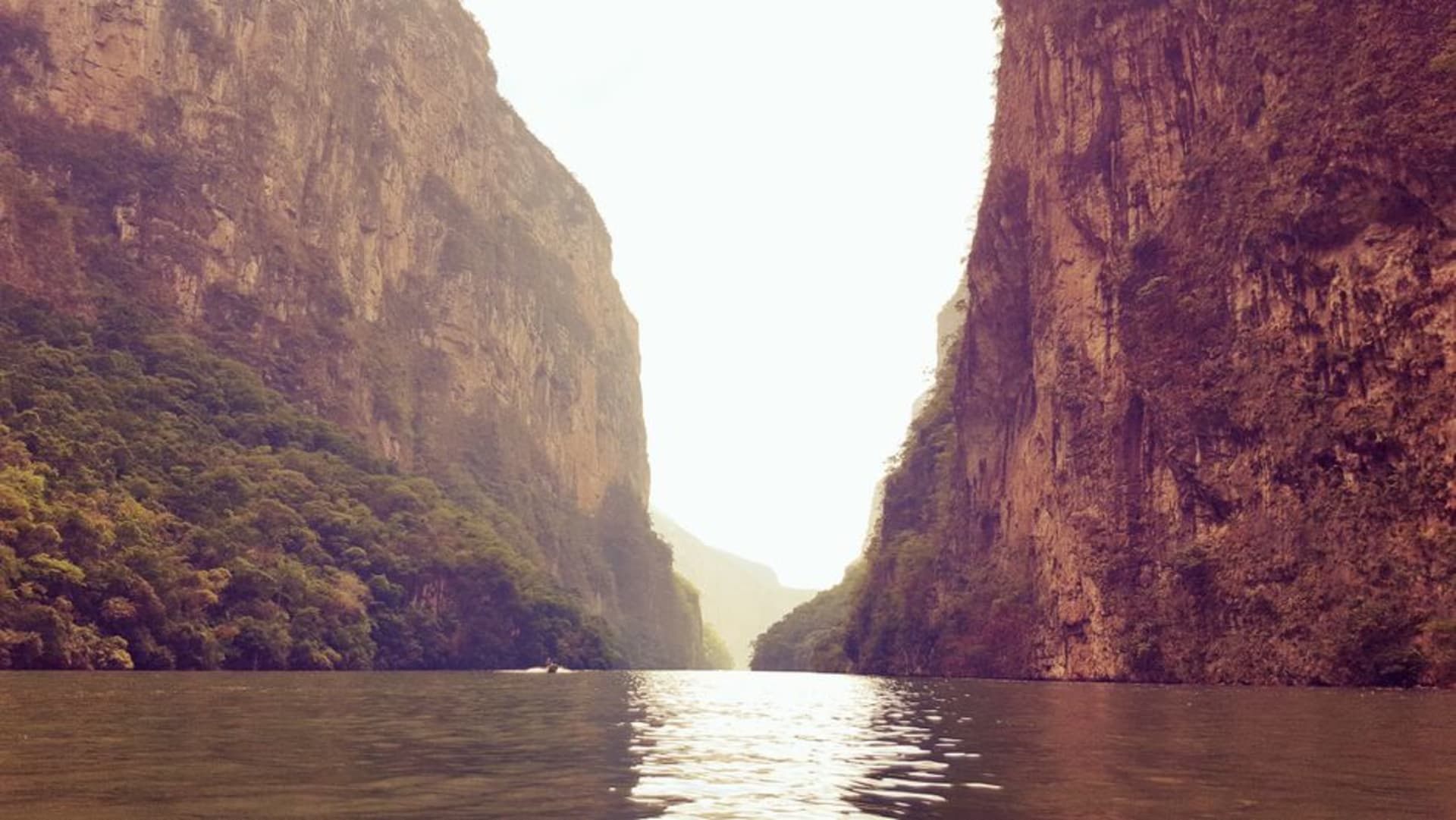
Cañón del Sumidero
"The walls go up a thousand meters on both sides. The river is fifty meters wide at the bottom. The boat feels very small."
A 1,000-meter-deep canyon cut by the Grijalva River through the Chiapas highlands — vertical walls rising from a boat-level river where crocodiles sun on the banks and waterfalls pour from a thousand meters overhead.

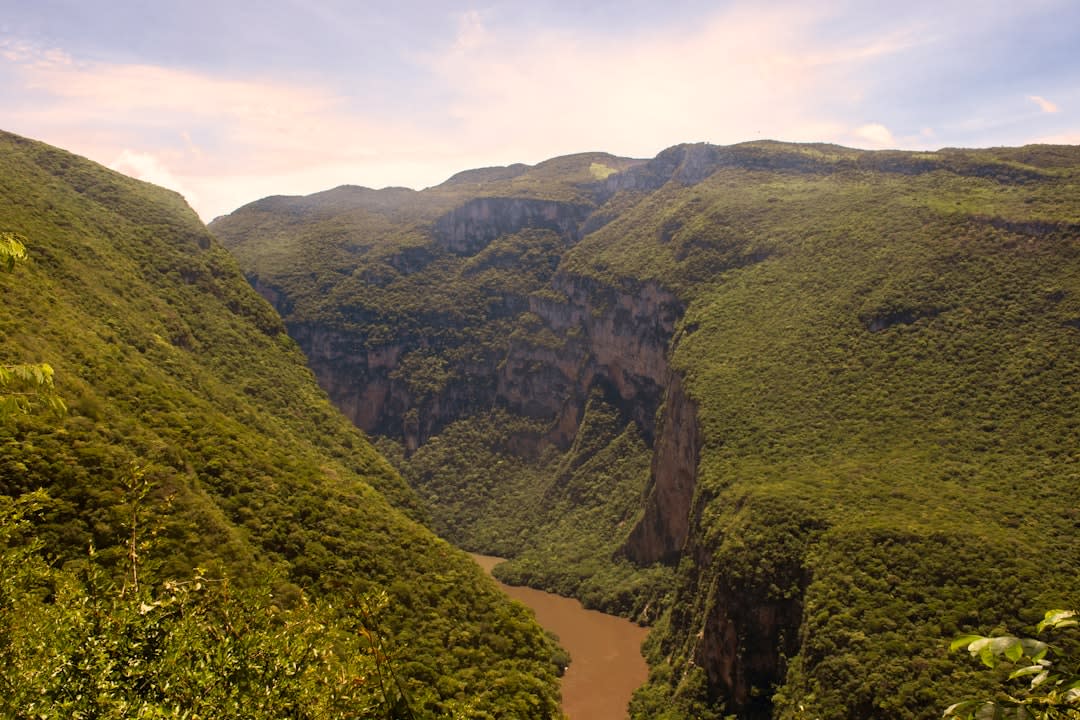
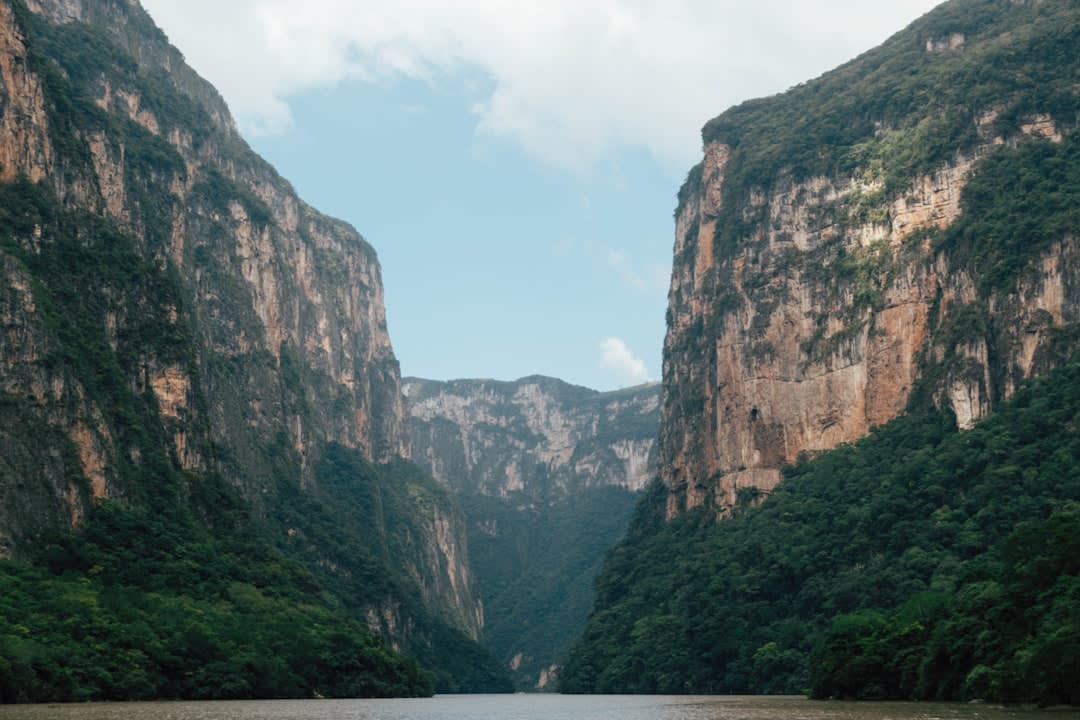
The Cañón del Sumidero is one of Mexico’s most dramatic natural landscapes and one of its least expected. The canyon was cut by the Grijalva River through the Chiapas highlands over millions of years, and the result is a slot canyon on the scale of a geological fantasy: walls of limestone rising 1,000 meters from the river surface, vegetation clinging to vertical faces, waterfalls dropping the full height of the canyon walls, and the river itself running dark and calm between the cliffs.
The canyon is accessible by boat from Chiapa de Corzo — a colonial town 15 kilometers east of Tuxtla Gutiérrez, the Chiapas state capital — with launches departing all morning. The two-hour boat tour covers the most dramatic section of the canyon, which runs approximately 23 kilometers between the Chiapa de Corzo launch point and the Chicoasén dam at the canyon’s far end.
The Boat Trip
The boat enters the canyon from the open river and the walls build slowly — twenty meters, then fifty, then the canyon closes above into a strip of sky and the scale becomes difficult to process from water level. The vertical limestone faces are striped with the geological history of the region: layers of different composition at different depths, stained with mineral seepage into blues and oranges and the specific rust-red of iron-rich water.
The Christmas Tree waterfall — about an hour into the canyon — is the most dramatic feature: a seep that comes through the limestone over hundreds of years has built up a mossy stalagmite formation on the canyon wall, draped with vegetation in a shape that gives the formation its name. The waterfall isn’t a single stream but a thousand smaller seeps through the moss, the whole thing green and dripping and thirty meters tall against the dry limestone behind it.
The Cave of the Colors — a shallow cavern in the canyon wall where mineral-stained stone creates a natural color palette of ochre, rust, and deep blue — is lit briefly by the boat’s spotlight as the tour passes. The cave extends only a few meters into the wall but the color concentration is extraordinary at the point where the limestone is saturated.
Crocodiles — American crocodiles and morelet’s crocodiles both — sun on the river banks throughout the canyon. The boatmen know the spots where the crocodiles reliably rest and slow down for photography. The crocodile population in the canyon has grown significantly since the Chicoasén dam reduced the fishing pressure from the downstream communities; the populations visible from the boats are now large and in good condition.
The canyon tour also passes spider monkeys in the trees above the river banks, snail kites working the water surface for the apple snails the canyon produces in large numbers, and multiple species of heron and egret at every wide point in the river.
Chiapa de Corzo
The launch point for the canyon boats, Chiapa de Corzo is a colonial town on the Grijalva River bank that predates Tuxtla Gutiérrez as the region’s urban center and has been bypassed by the state capital’s growth without losing its character. The town’s central La Pila — a Mudéjar-style fountain from 1562 that is the oldest surviving Spanish-built structure in Chiapas — is the civic landmark and the hub of the evening social life.
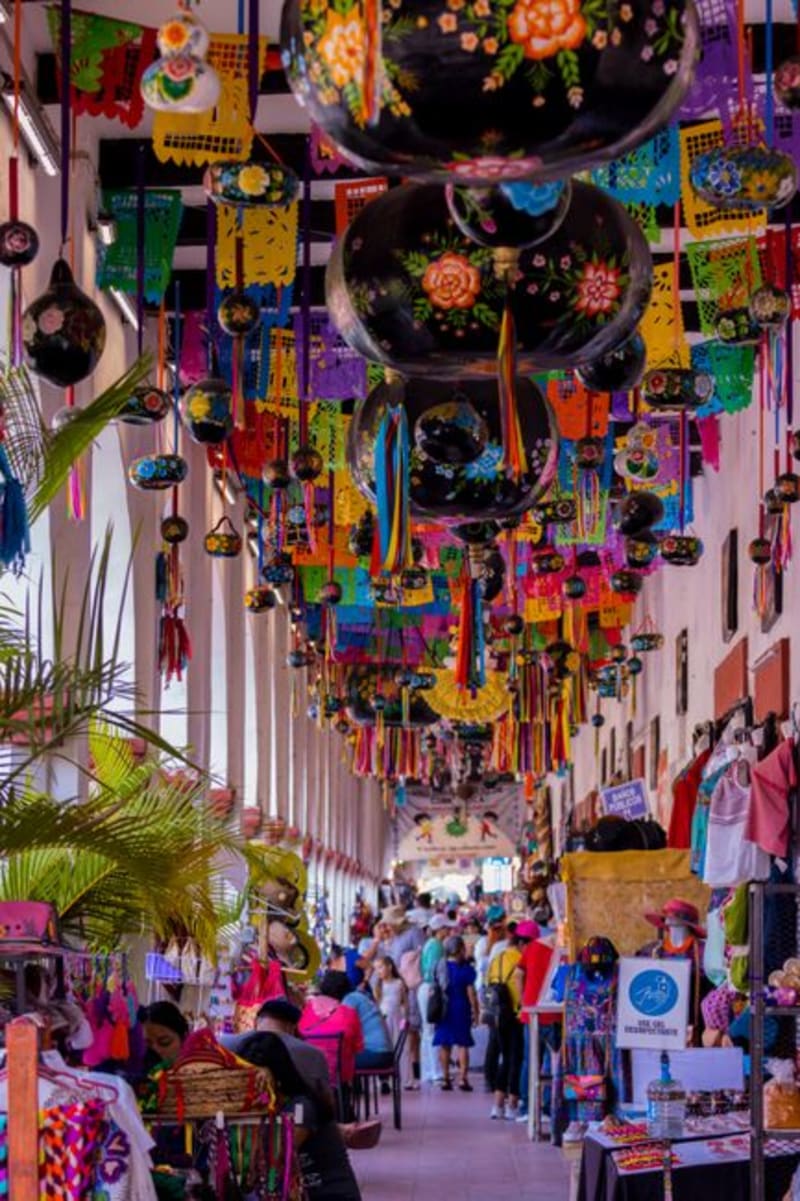
The Fiesta de Enero (January 8-23) is the most elaborate civic festival in Chiapas: the Parachicos dancers, in wooden masks and blond wigs (a costume tradition that UNESCO listed as Intangible Cultural Heritage), dance through the town streets daily for two weeks. The lacquerwork for which the town is famous — decorative lacquered gourds in the pre-Columbian tradition, produced in workshops that have operated continuously since the colonial period — is sold in the market year-round.
Getting there: Chiapa de Corzo is 15 minutes east of Tuxtla Gutiérrez by colectivo or taxi. Tuxtla has an airport with direct flights from Mexico City, Guadalajara, and Oaxaca. The canyon boats leave from the Chiapa de Corzo dock; the embarcadero is signed from the town center.
When to go: Year-round, but November through May for lowest water levels (the canyon walls are more visible and the crocodile banks are more exposed). The rainy season (June-October) raises the river level and reduces visibility but makes the waterfalls more dramatic. Mornings are best before the afternoon convective storms build over the sierra.
Keep exploring
More of Chiapas
Keep exploring
More from Chiapas
 mexico
 Tuxtla Gutiérrez
The capital of Chiapas gets skipped in favor of San Cristóbal and Palenque, which is understandable but slightly unfair. Tuxtla has ZOOMAT, one of Mexico's finest regional wildlife parks, a marimba tradition that fills the Parque Central on weekend evenings, and a functional, unselfconscious Mexican city life the colonial towns simply cannot offer.
Explore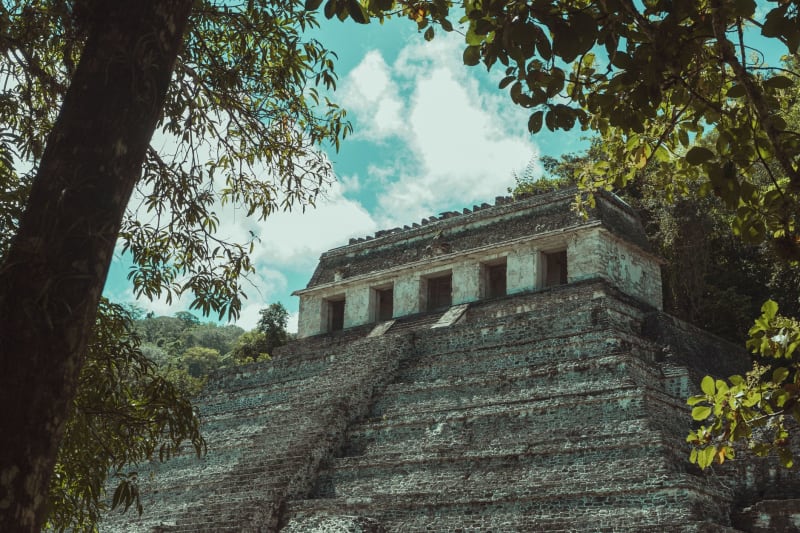 mexico
 Bonampak
A small Chiapas Maya city whose three painted rooms — discovered in 1946 by a Lacandon Maya guide and a photographer — changed everything scholars thought they knew about the Maya, revealing a civilization of warfare, blood sacrifice, and political violence that the stone monuments had been successfully obscuring.
Explore mexico
 Chiapa de Corzo
Chiapa de Corzo sits on the Grijalva River with one of Mexico's most singular colonial plazas — a Moorish-influenced fountain that stops you mid-step — and serves as the launch point for Cañón del Sumidero boat tours. Most people pass through in a few hours. That is a mistake.
Explore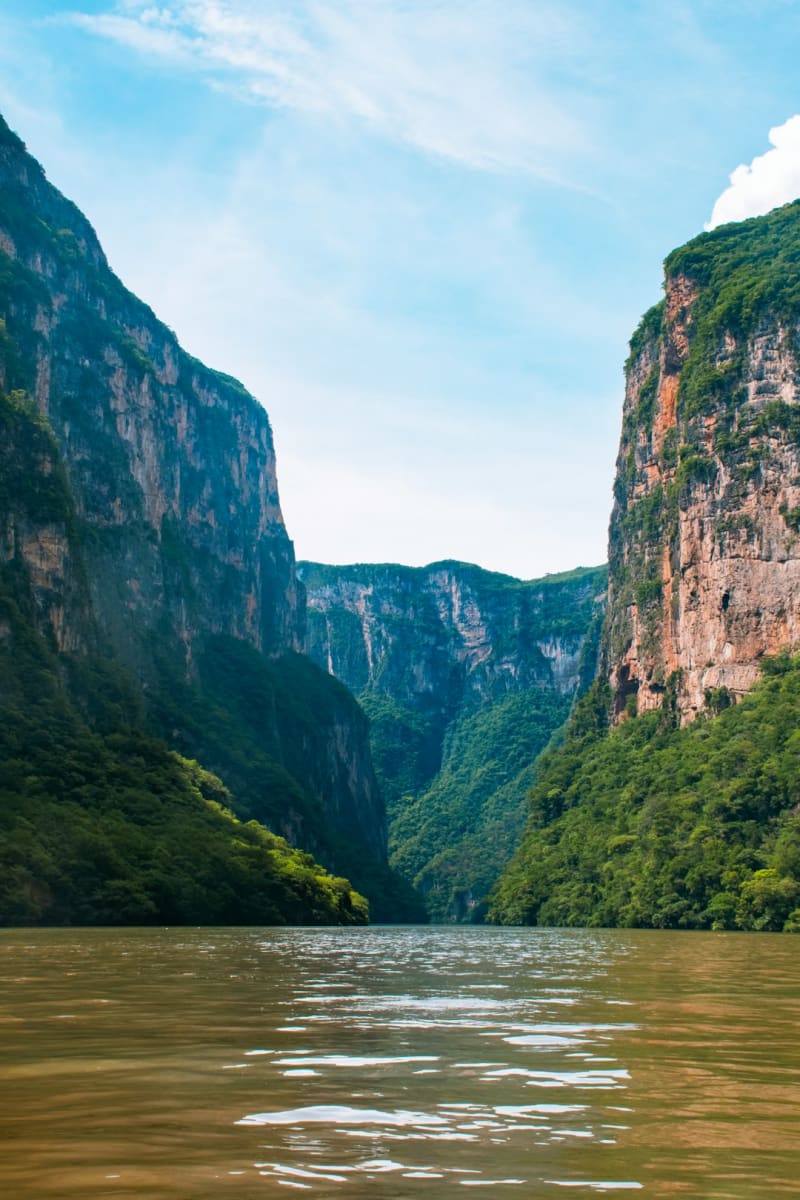 mexico
 Berriozábal
Twenty minutes from Tuxtla Gutiérrez, Berriozábal sits at a useful distance from everything — close enough to reach without planning, far enough that nobody has tried to ruin it yet. The El Aguacero waterfall drops forty meters into a Grijalva canyon that turns geological time into something you can stand in front of. The town grows pineapples and goes about its business with admirable disinterest in being discovered.
Explore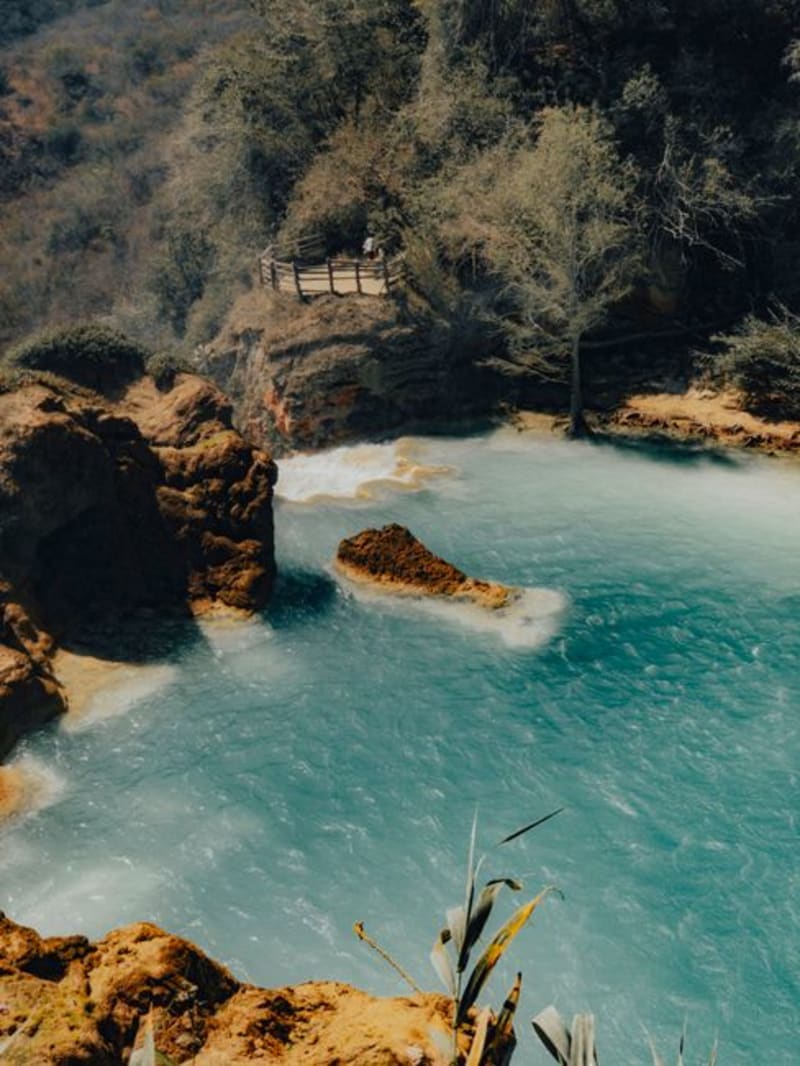 mexico
 Berriozábal
A short drive from Tuxtla Gutiérrez, Berriozábal is built around El Aguacero, a limestone springs complex where cold clear rivers pool beneath tropical forest and families from the city come to eat tamales on the bank and let the afternoon dissolve. It is not organized for tourists, which is precisely what makes it worth the trip.
Explore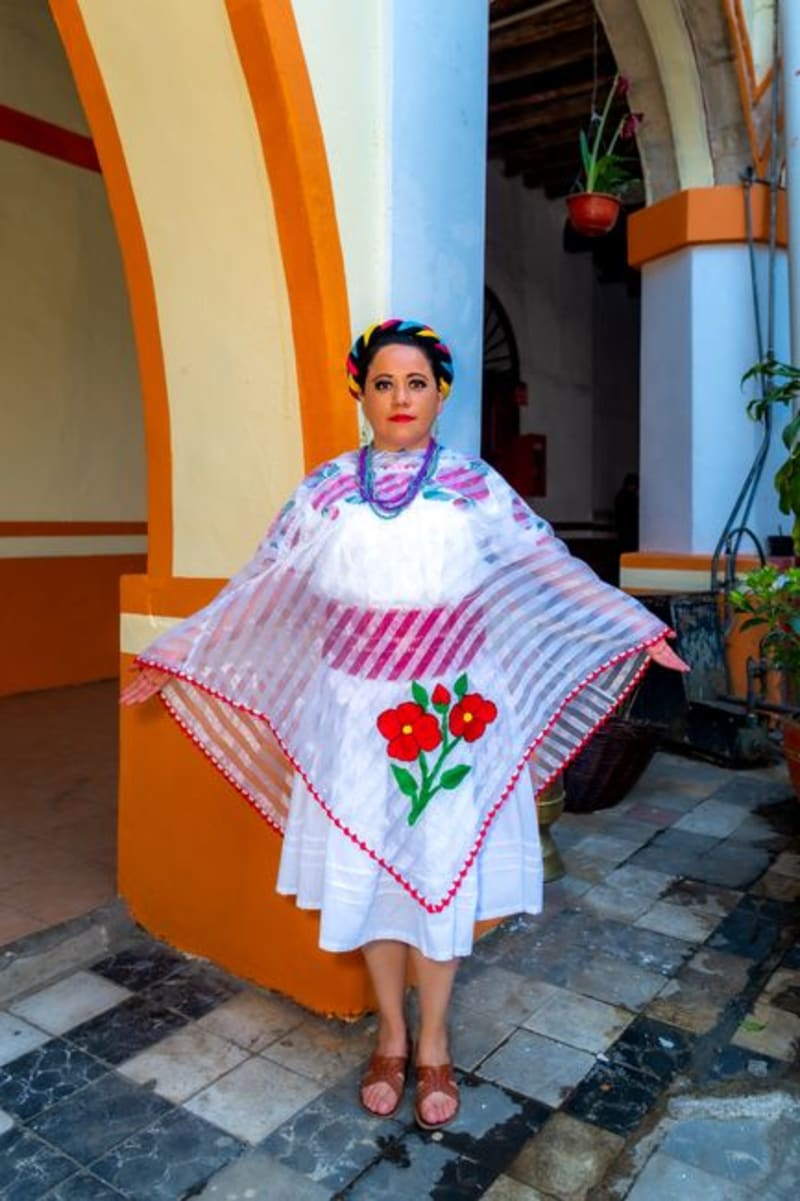 mexico
 Zinacantan
A Tzotzil Maya village above San Cristóbal where carnation fields cover the hillsides and men still move through their days in rose-embroidered black tunics. Family kitchens open to visitors for posh and weaving demonstrations that feel like actual hospitality rather than theater.
Explore