The city that gave Gilgamesh his throne and the world its first written word — a vanished metropolis of mudbrick and myth rising from the desert near Samawah.
I’ll admit I had to sit with the fact for a while before it landed properly: the ground I was walking on at Uruk is where the concept of a city was more or less invented. Not improved, not scaled up from something smaller — invented. By 3200 BCE this place held tens of thousands of people behind six kilometers of wall, and somewhere inside those walls a Sumerian administrator, tired of memorizing grain deliveries, pressed a reed into wet clay and started writing. Cuneiform starts here. Bureaucracy starts here, if we’re honest, and bureaucracy is underrated as a civilizational achievement. Standing in the rubble of the Eanna precinct, it is genuinely difficult to process that abstraction into something your body can feel, and I kept failing at it in useful ways — pacing off distances, crouching to look at potsherds, trying to triangulate where a market or a temple or a house might have stood.
The site itself is a series of low mounds now, the ziggurat of Anu the most recognizable feature, its stepped mudbrick core eroded into something closer to a large dune than a monument. This is the disappointment every visitor has to metabolize before Uruk gives anything back: there is no reconstructed grandeur here, no Ishtar Gate replica. What there is instead is scale and silence — the site sprawls for kilometers, and I walked much of it with a local guide from Samawah who has spent two decades watching German and Iraqi archaeological teams pick at the edges of a story that is, by any honest accounting, still mostly buried.
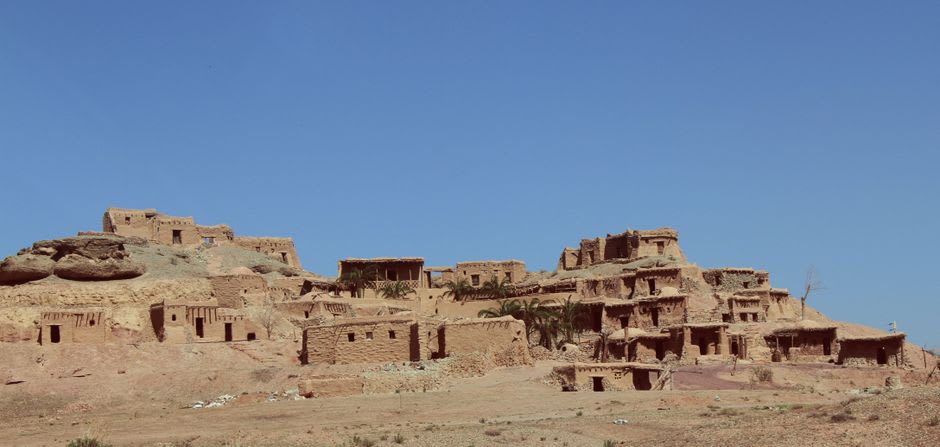
Uruk is also, of course, Gilgamesh’s city — the historical Bilgames who became the hero of the oldest surviving work of literature on earth, a king whose walls the epic poem itself brags about (“go up on the wall of Uruk and walk along it”). I brought a printed translation with me, which felt a little precious until I actually read the wall-boasting passage sitting in the ruins of that same wall, at which point it stopped being precious and became something closer to vertigo. Few tablets have physically survived on-site — most of the great cuneiform archive is scattered between Berlin, Baghdad, and other museums — but the White Temple platform, older even than the ziggurat, still holds a commanding view over the flood plain that made all of this possible.
Getting here means a rough hour and a half from Samawah or a longer detour off the Nasiriyah road, mostly on tracks that a normal rental car will not appreciate. Nobody was there when I visited except a caretaker who unlocked a small site office and offered tea before I’d even asked. That is the real texture of Uruk now: not grandeur, but the strange privilege of standing, essentially alone, at the coordinates where cities as an idea first took hold of humanity.
When to go: November through March, when daytime temperatures stay bearable for walking the exposed, shadeless site. Arrange a driver and guide in Samawah or Nasiriyah in advance — there is no infrastructure at the site itself, and the tracks are easy to lose without local knowledge.
Keep exploring
More from Mesopotamia
 mesopotamia
 Al-Qurnah
The town where the Tigris and Euphrates physically become one river — long claimed as the site of the Garden of Eden, and home to a dead tree tourists still visit as the Tree of Knowledge.
Explore mesopotamia
 Ashur
The original heart of the Assyrian empire, perched on a limestone cliff over the Tigris — a UNESCO site that survived three thousand years of history only to nearly lose a fight against a proposed dam.
Explore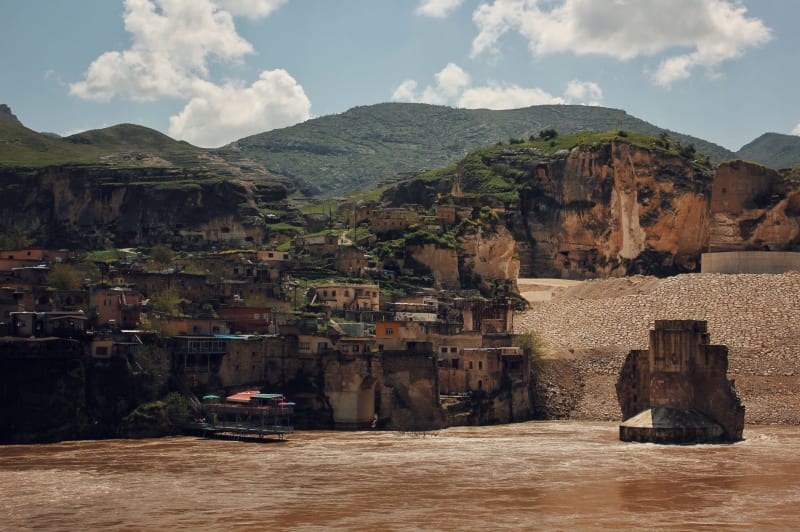 mesopotamia
 Babylon
Hammurabi's capital still holds the bones of the world's first laws — a ruin that once dazzled antiquity and now demands imagination to reassemble.
Explore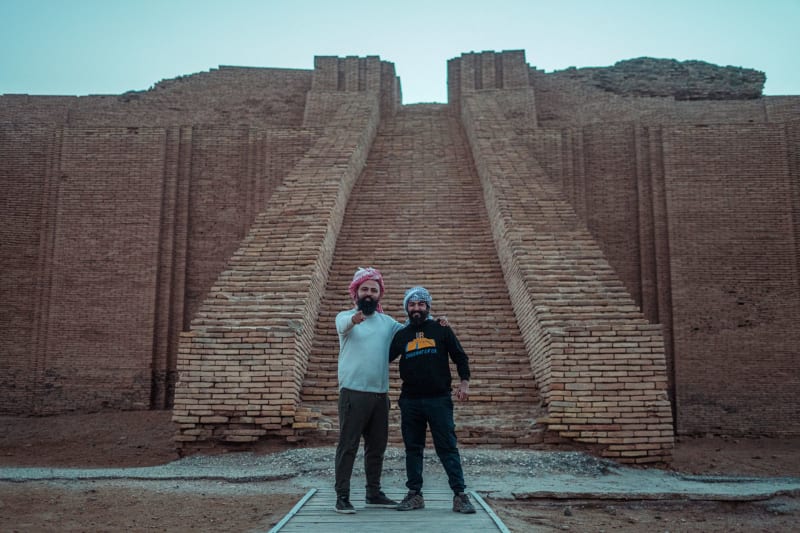 mesopotamia
 Baghdad
A city carrying twenty-five centuries of being the center of the world, now rebuilding itself in a thousand small and stubborn gestures of ordinary life.
Explore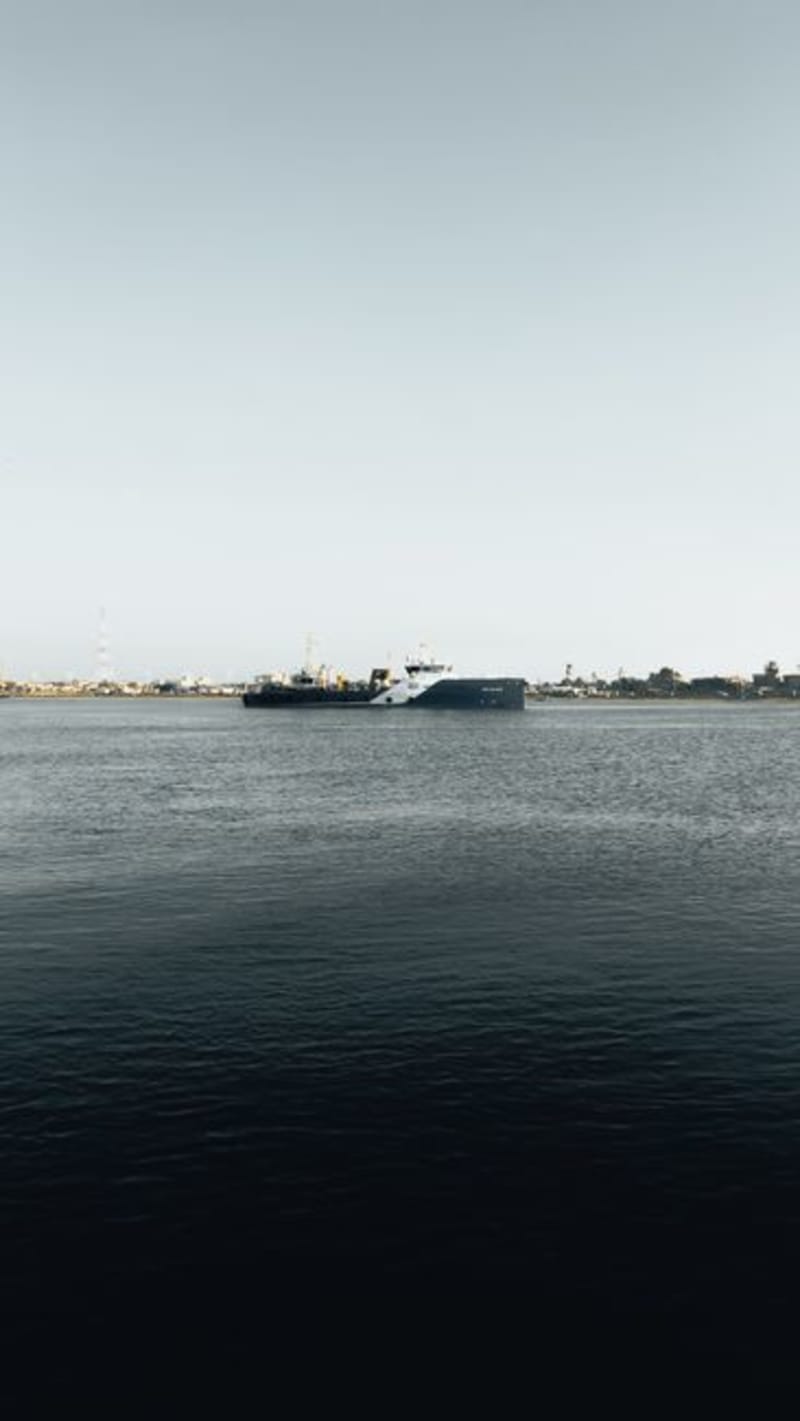 mesopotamia
 Basra
Iraq's southern port city, threaded with canals and palm groves along the Shatt al-Arab, where Sinbad supposedly set sail and where oil money and old commerce still argue with each other.
Explore mesopotamia
 Ctesiphon
The world's largest unreinforced brick arch stands alone in the Iraqi desert south of Baghdad — a ghost city reduced to a single breathtaking room.
Explore