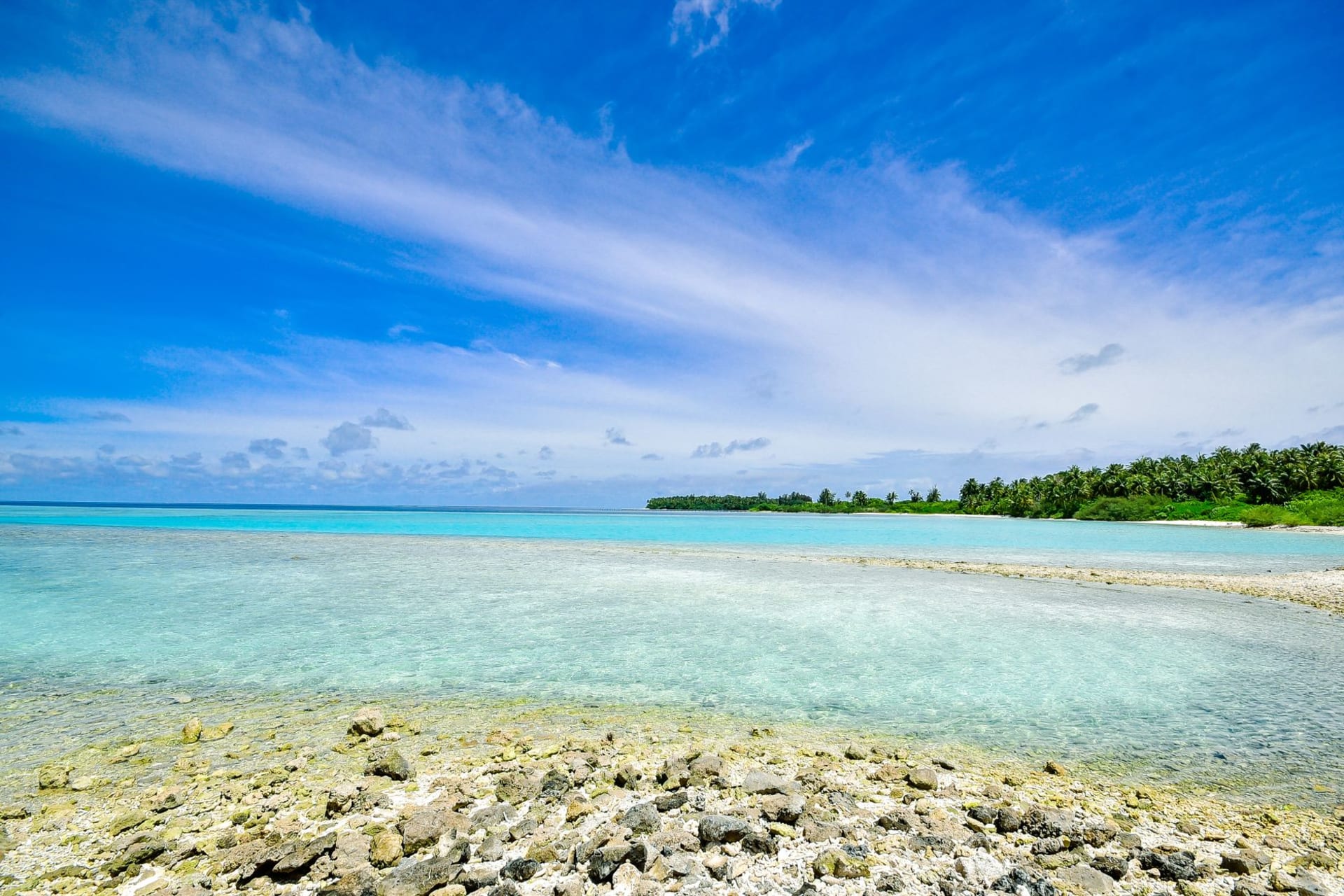
Bikini Atoll
"I dove on a warship at 50 meters and found the galley still had cups on the shelves. History has a physical address here."
A UNESCO World Heritage ghost atoll where you can dive on a nuclear ghost fleet and feel the full weight of the twentieth century.

There is a way that guilt accumulates in water. I understood this for the first time at Bikini Atoll, floating 52 meters above the rusting flight deck of the USS Saratoga, watching a school of grey reef sharks navigate between radar towers that were last operational in 1946. The aircraft carrier is enormous underwater, more enormous than it seemed possible for anything to be — 270 meters of steel running east to west along the lagoon floor, its flight deck close enough to the surface that the light still reaches it and illuminates the coral that has grown over the ship’s bell in the decades since the United States used this place as a nuclear testing range.

Between 1946 and 1958, the United States detonated 23 nuclear devices on and around this atoll — including Castle Bravo in 1954, which was a thousand times more powerful than Hiroshima and the largest US nuclear test ever conducted. Before that program began, the 167 Bikinian people who had lived here for generations were told by a Navy commodore that the tests were “for the good of mankind.” They agreed, believing the arrangement temporary. They have never been able to return permanently. The coconuts still test positive for cesium-137. The fish are technically safe but most Bikinians won’t eat them. The atoll is beautiful in a way that requires constant moral accounting.
You reach Bikini by charter flight from Majuro — a small prop plane over 800 kilometers of open ocean, landing on a grass airstrip that still uses the wartime concrete underneath. A caretaker lives there, one of the few permanent residents. There is a guesthouse with solar power and rainwater collection. At night the stars are exceptional in the way that stars are only exceptional when there is no light for a thousand kilometers in any direction. I lay on a concrete step and watched the Milky Way and thought about the two vaporized ships that were too radioactive to ever raise and are still sitting somewhere on the lagoon floor.

The dive sites are genuinely among the finest in the world — not despite the history but because of it. The Japanese battleship Nagato, from whose bridge Admiral Yamamoto ordered the attack on Pearl Harbor, lies upside down at 55 meters, its massive guns pointed into the sand. The German heavy cruiser Prinz Eugen breaks the surface with one propeller, the rest of her submerged, home now to enormous grouper and lionfish so settled they barely move when you approach. In the hold of the Saratoga I found cups still on the galley shelves, arranged as if a meal were being prepared. I had to remind myself to breathe.
When to go: Bikini is only accessible during the dry season, roughly November through April. Liveaboard dive boats visit periodically; independent access requires coordination with Bikini Atoll authorities through the Marshall Islands Visitors Authority. Plan at least three to six months ahead. There are a maximum of a few dozen visitors per year — this is not an accident.
Keep exploring
More from Marshall Islands
 marshall-islands
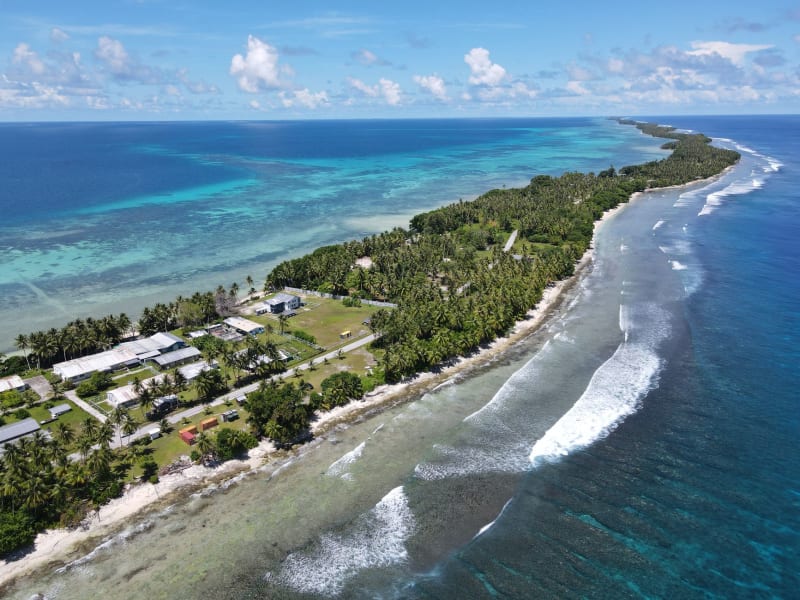
 Ebeye
One of the most densely populated islands on earth, wedged next to a US military base — the Pacific's most uncomfortable mirror.
Explore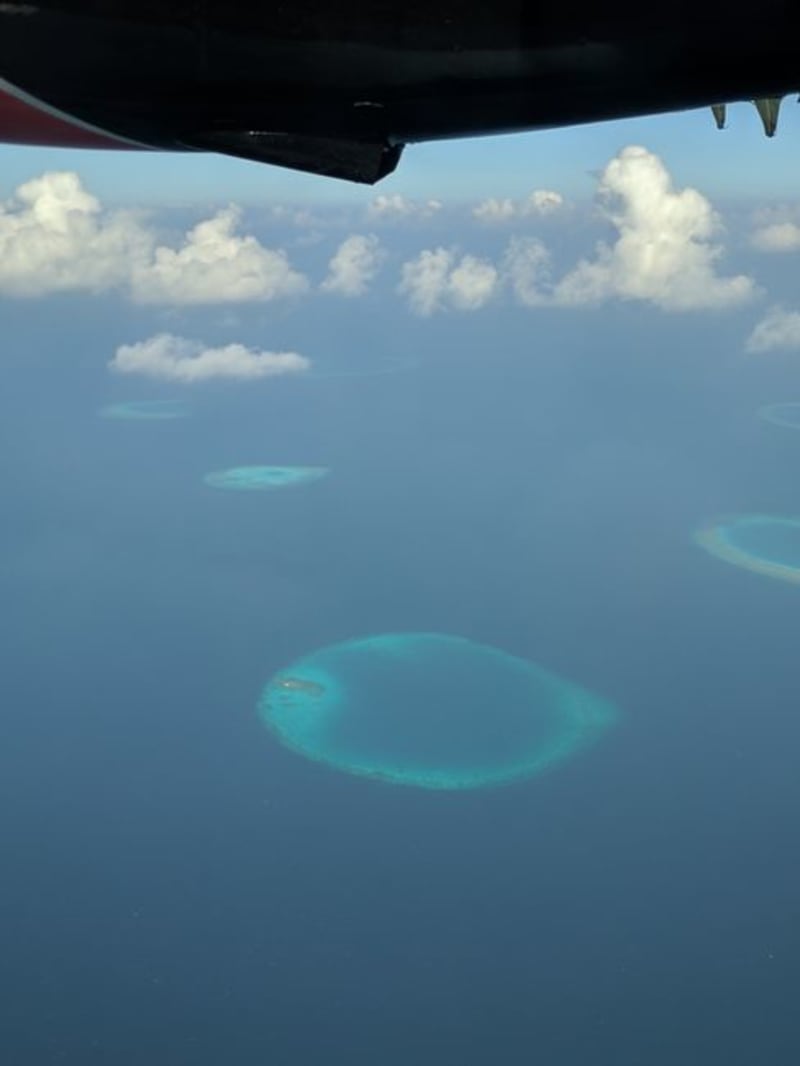 marshall-islands
 Enewetak Atoll
A concrete dome the size of a football stadium sits over 111,000 cubic meters of American nuclear waste, and the lagoon around it is some of the clearest water I've ever swum in.
Explore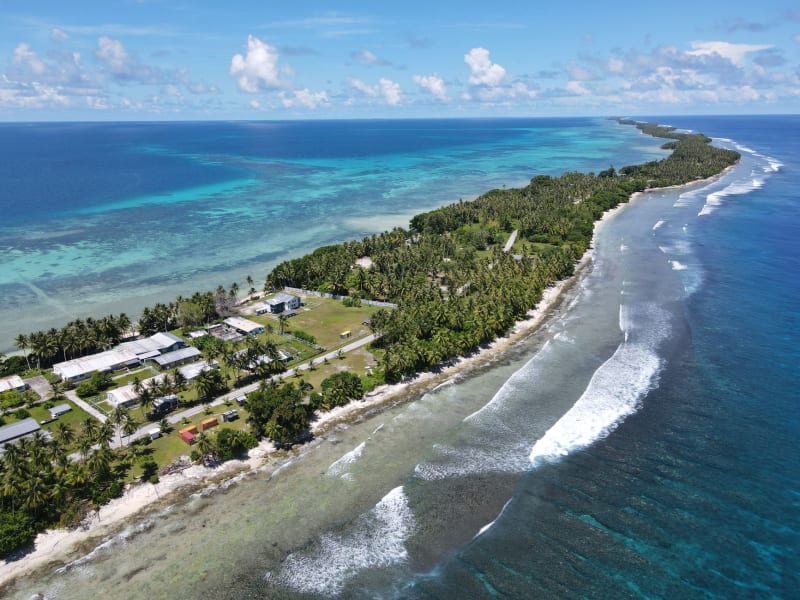 marshall-islands
 Jaluit Atoll
The old colonial capital of the Marshalls, where German and Japanese ambitions left ruins the lagoon is slowly reclaiming.
Explore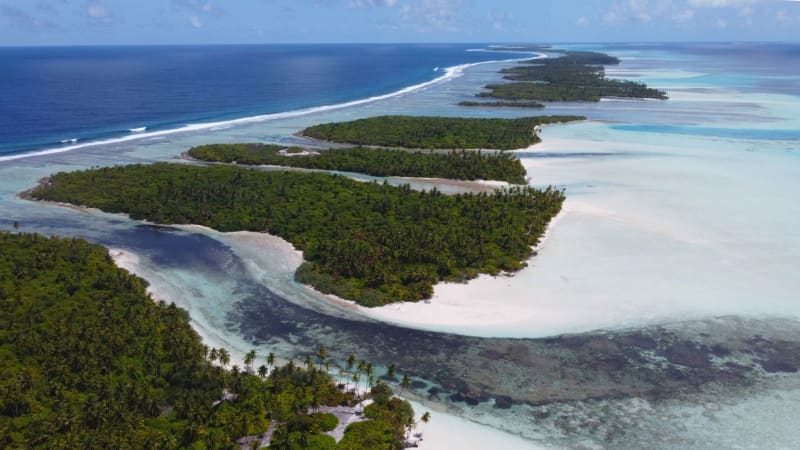 marshall-islands
 Kwajalein Atoll
The world's largest atoll by lagoon area, split between a US missile test range and the Marshallese community living in its shadow.
Explore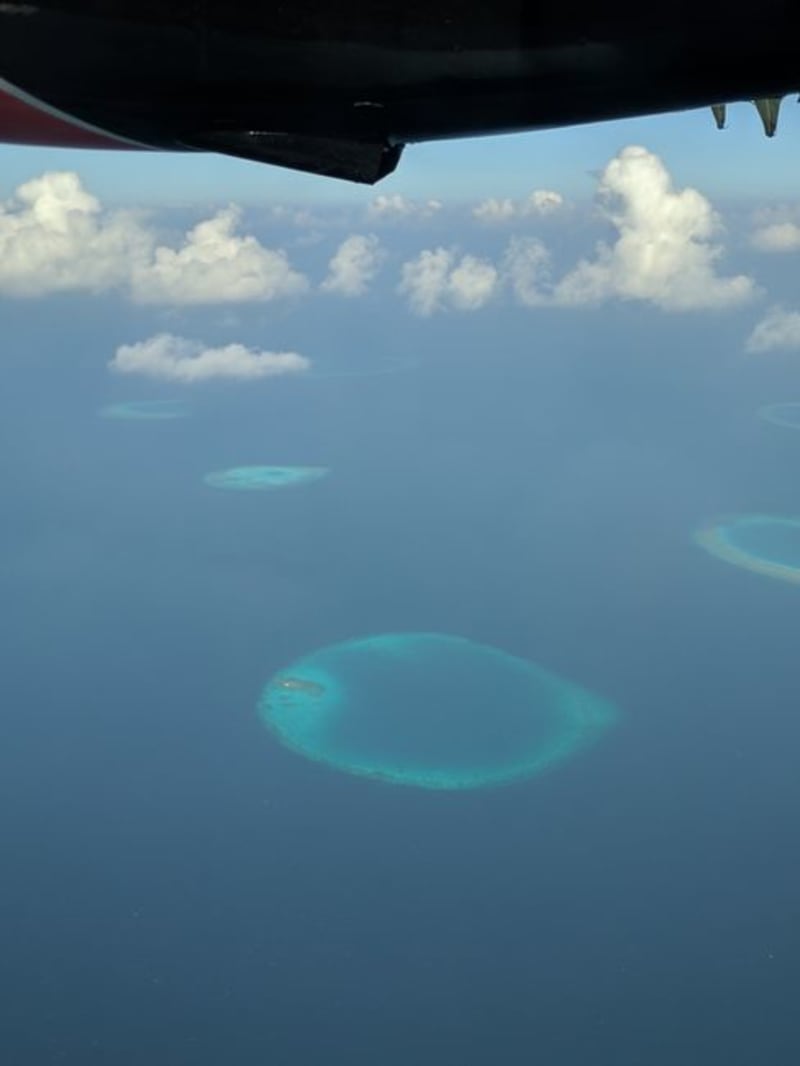 marshall-islands
 Likiep Atoll
A copra plantation gone quiet, where a nineteenth-century German trading dynasty's coral-block mansion still stands under the coconut palms.
Explore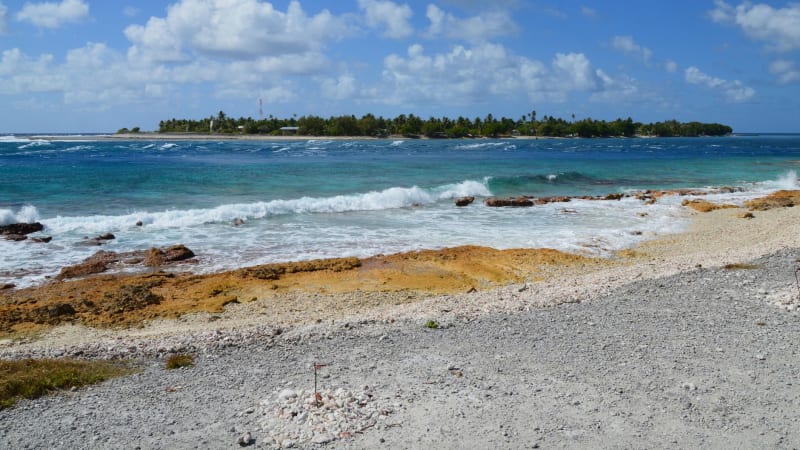 marshall-islands
 Majuro
A capital city that is also a single road stretched taut between a lagoon and an ocean, daring you not to notice.
Explore