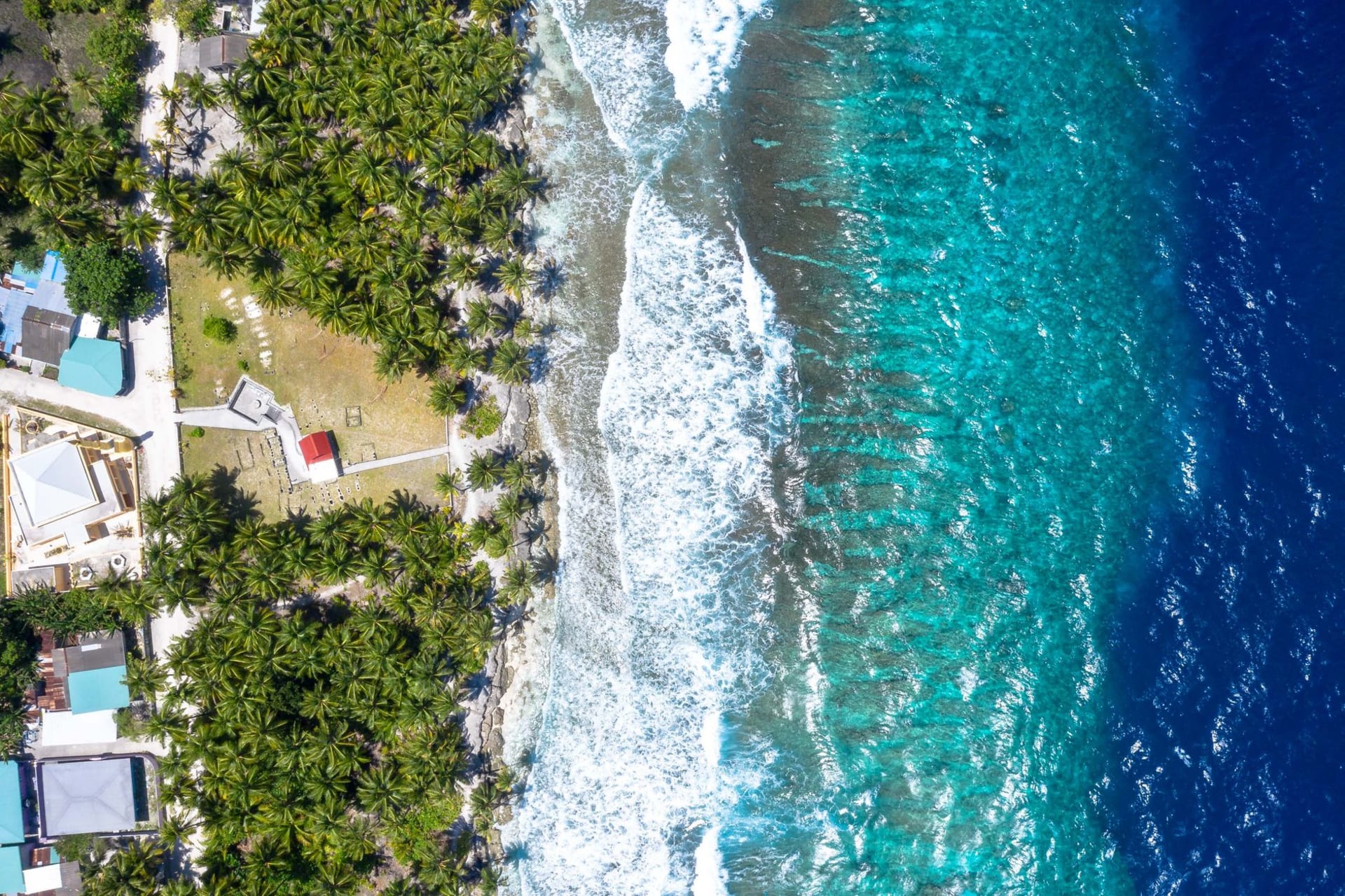
Arno Atoll
"The fisherman drew the ocean from memory on a mat of sticks, and I realized I was the one who was lost."
The quietest thirty-five kilometers from Majuro, where traditional stick-chart navigation still makes more sense than GPS.

The boat from Majuro to Arno takes about an hour in calm conditions, crossing a stretch of open channel that gets choppy when the trade winds pick up and glassy when they don’t. I went on a morning when they didn’t. The outboard hummed and the water was the color of old glass, green-grey, and then we came around the reef passage and the lagoon opened up in that particular Marshallese way — shallow and improbably bright, a color that looks computer-generated until you are in it and can feel the warmth of the water through the hull.
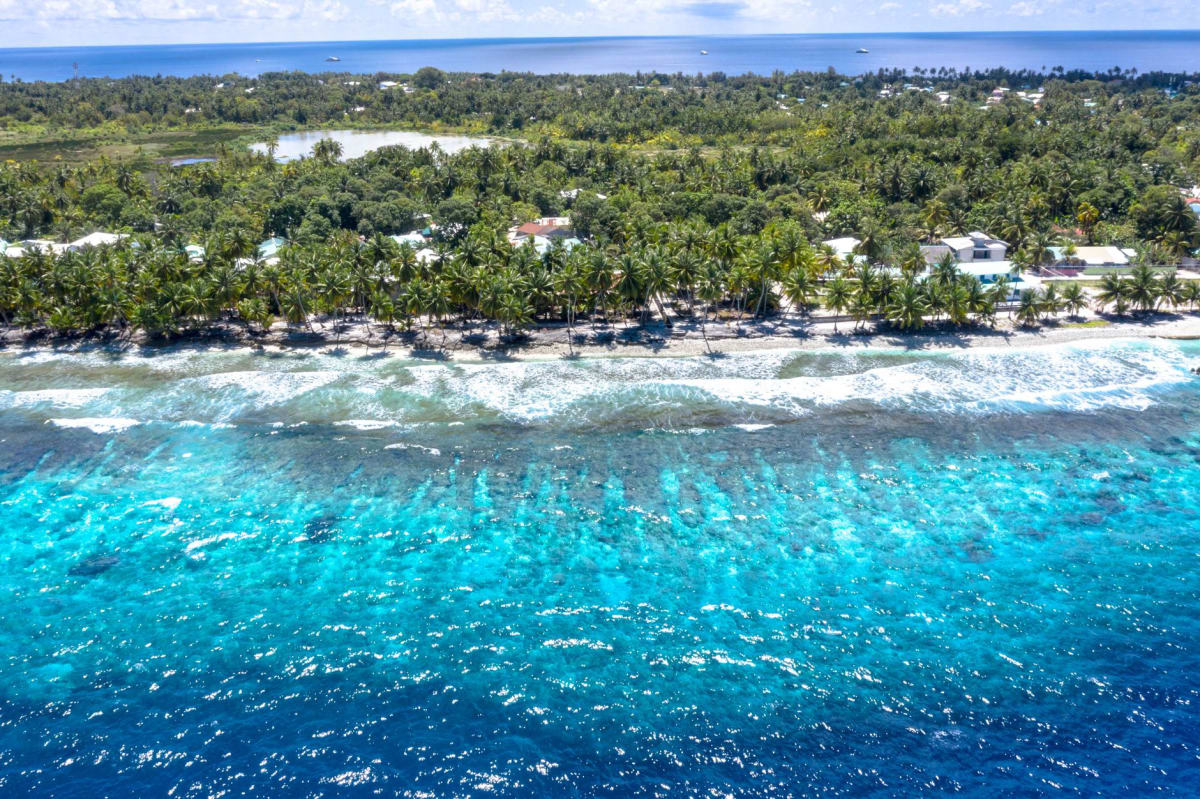
Arno is the atoll closest to Majuro — 133 islets arranged around a lagoon roughly 45 kilometers long — but it occupies a different psychological register entirely. There are perhaps 1,500 people spread across a handful of communities, most of them engaged in fishing and the cultivation of breadfruit and pandanus. The pace is not slow in a resort sense, it is slow in the way of communities that do not have much use for haste. I stayed with a family whose patriarch, a man in his seventies named Amon, spent an afternoon teaching me to read a mattang — the small square stick chart used by Marshallese navigators to memorize wave patterns, the way swells bend around islands, the feel of a current against a hull. He did not draw the ocean. He expressed it, in a lattice of coconut midrib and cowrie shells, as a physical argument about how water moves. I understood perhaps fifteen percent of what he was explaining and it was the most interesting afternoon I had on the atoll.
The food at Arno is simpler than Majuro and somehow better for it: fresh yellowfin grilled over coconut husk, breadfruit roasted in the ground, drinking coconuts so young the flesh is still translucent and wobbles when you cut it. A woman who ran what amounted to the village’s only store made me a pot of rice and canned corned beef one evening and added a wedge of papaya from her garden, and the combination of those four things, eaten sitting on the step of a house facing the lagoon, hit that precise register of adequacy that makes you realize how rarely you experience it in places with more options.

The reef along the ocean side of Arno is excellent and almost entirely unvisited — hard coral formations, good visibility, the occasional manta ray working the current in the passes between islets. You snorkel rather than scuba because nobody brings tanks here. That turns out not to matter. The reef is in better condition than anything I saw closer to Majuro, the fish more abundant, the coral less bleached. A few passes between islets deliver a current snorkel, the kind where you go in at one side, spread your arms, and let the reef scroll beneath you at walking pace for ten minutes without moving a fin.
When to go: Arno is accessible year-round by boat from Majuro, with conditions best from December through March. Accommodation is limited to guesthouses arranged through local contacts or the Marshall Islands Visitors Authority — there is no commercial lodging. Go with an open schedule; weather, boats, and island time operate on their own logic.
Keep exploring
More from Marshall Islands
 marshall-islands
 Bikini Atoll
A UNESCO World Heritage ghost atoll where you can dive on a nuclear ghost fleet and feel the full weight of the twentieth century.
Explore marshall-islands
 Ebeye
One of the most densely populated islands on earth, wedged next to a US military base — the Pacific's most uncomfortable mirror.
Explore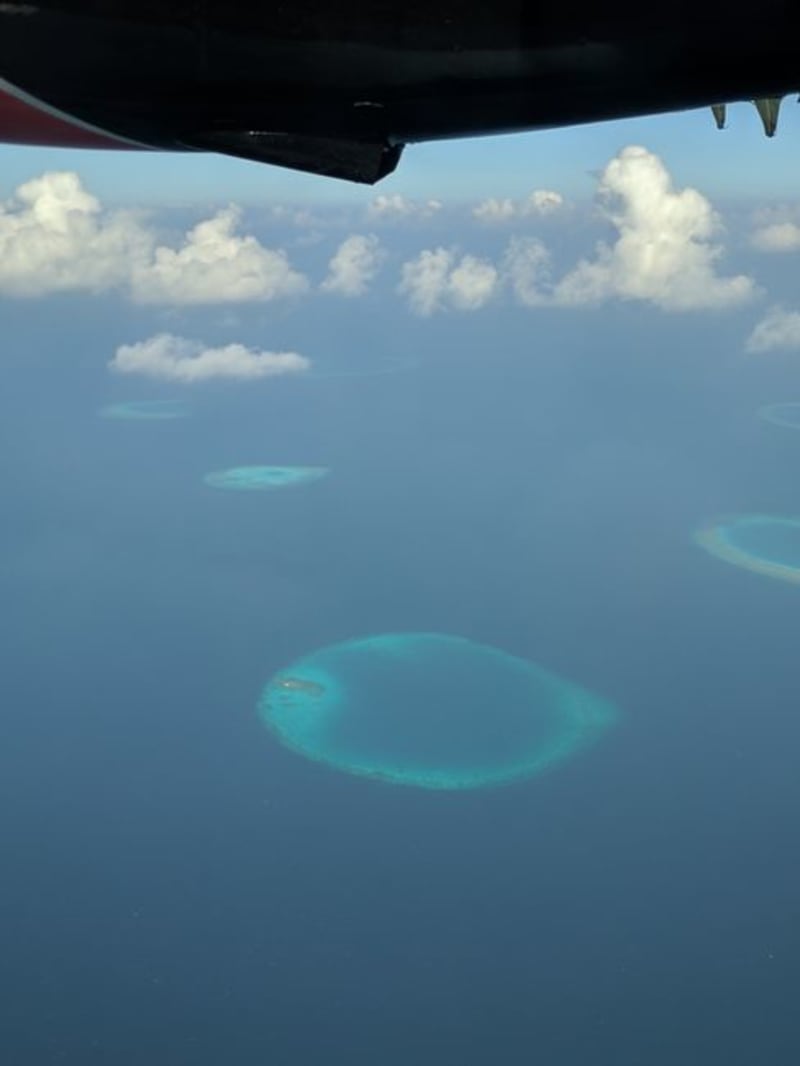 marshall-islands
 Enewetak Atoll
A concrete dome the size of a football stadium sits over 111,000 cubic meters of American nuclear waste, and the lagoon around it is some of the clearest water I've ever swum in.
Explore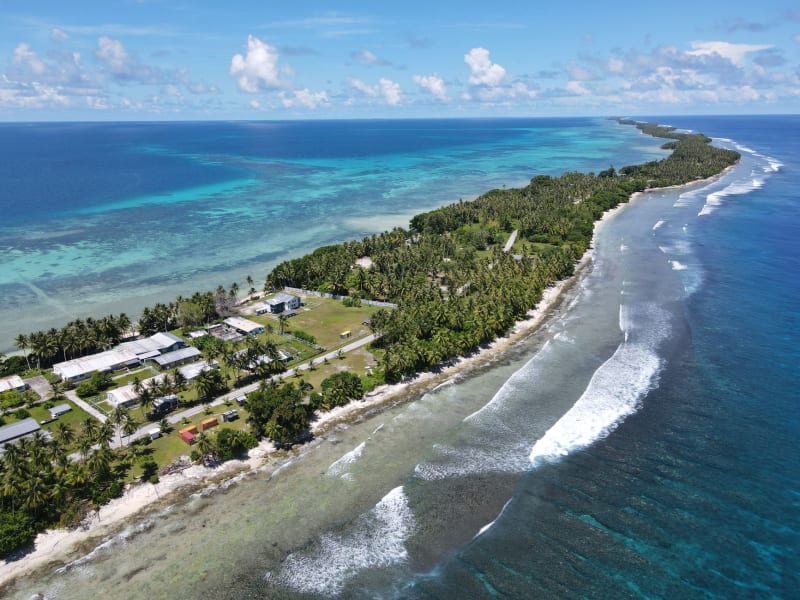 marshall-islands
 Jaluit Atoll
The old colonial capital of the Marshalls, where German and Japanese ambitions left ruins the lagoon is slowly reclaiming.
Explore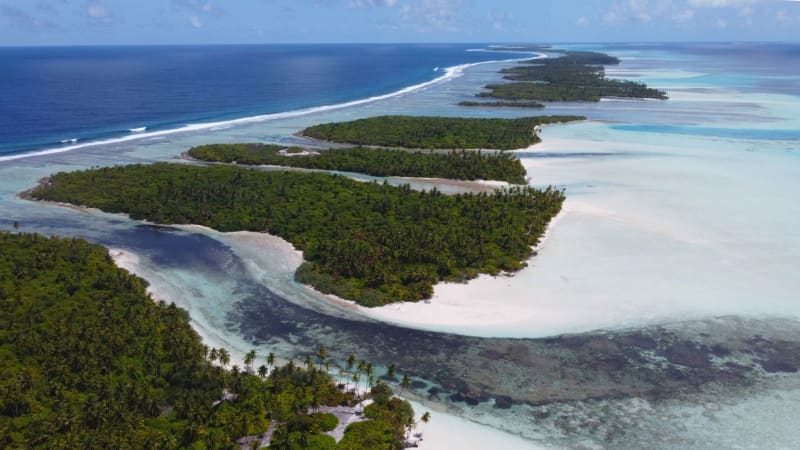 marshall-islands
 Kwajalein Atoll
The world's largest atoll by lagoon area, split between a US missile test range and the Marshallese community living in its shadow.
Explore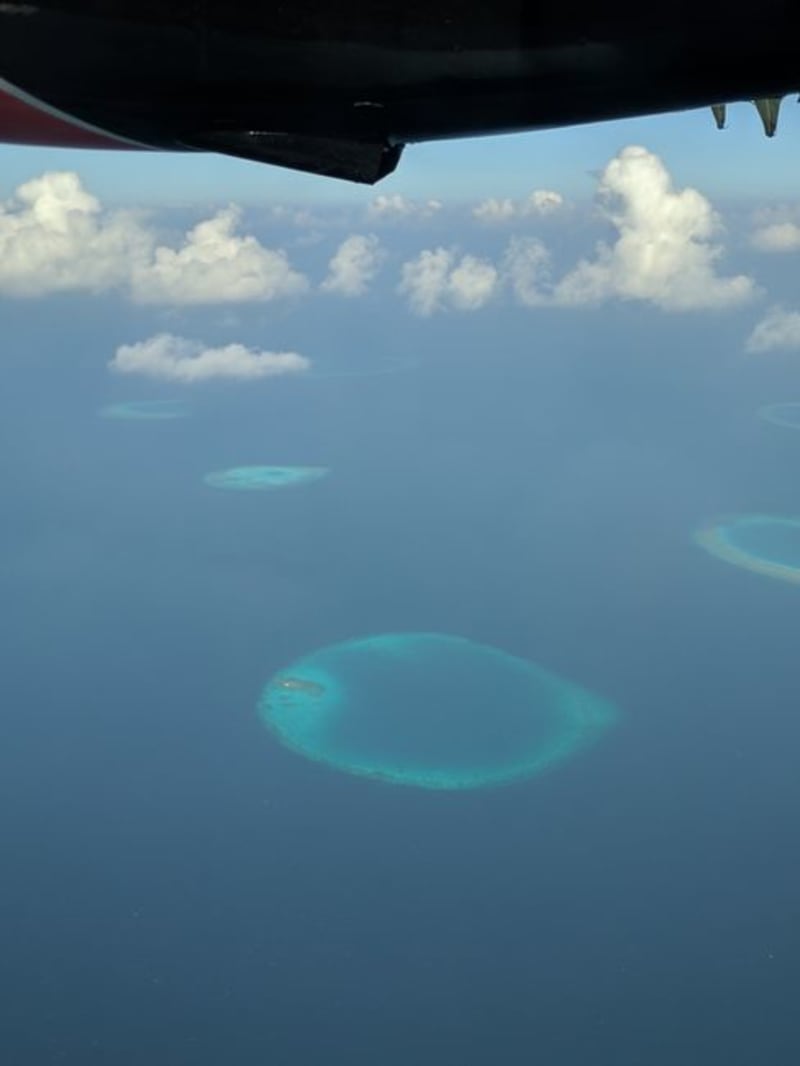 marshall-islands
 Likiep Atoll
A copra plantation gone quiet, where a nineteenth-century German trading dynasty's coral-block mansion still stands under the coconut palms.
Explore