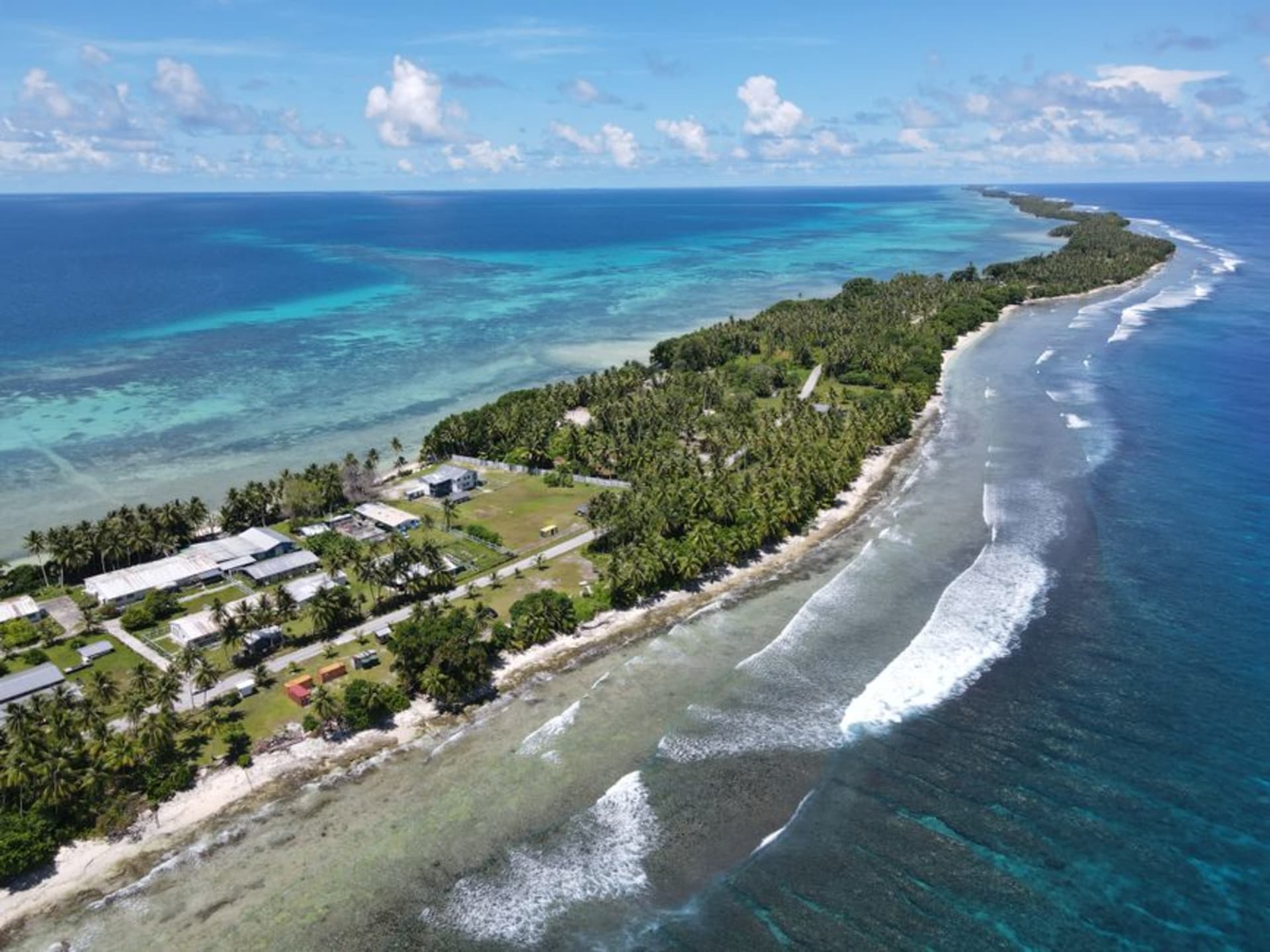
Ailuk Atoll
"She could weave a story into the mat, and then untie it, and weave a different one."
The finest handwoven mats in the Marshalls come from an atoll so remote the supply ship visits maybe six times a year.
I’ll admit I went to Ailuk mostly because of the mats. Marshallese jaki-ed — the finely woven pandanus mats produced across the outer islands — have a reputation, and within that reputation Ailuk’s weavers are spoken of, even by weavers on other atolls, as the best in the country. Getting there means catching one of the field-trip ships that loops through the northern Ratak chain a handful of times a year, or chartering a small plane if you can find one going that way, and either option means committing to a schedule that isn’t really yours to control. I ended up staying eleven days instead of the four I’d planned, because that’s when the boat came back.

It turned out to be the best accident of the trip. Ailuk is a long, narrow atoll with maybe 400 people spread across a string of islets, and the weaving happens almost as a form of daily conversation — women sitting together in the shade in the afternoon heat, splitting pandanus leaves into hair-thin strips with their thumbnails, working a pattern that might take three or four months to finish. A woman named Kejlok, whose mats sell in Majuro for prices that would surprise you, let me sit with her group for several afternoons without ever really explaining the technique, because the technique isn’t the point — the point is being there, present, contributing gossip and jokes while your hands stay busy. I never wove a single usable row of anything. I did learn who was fighting with whom over a fishing dispute three islets over.
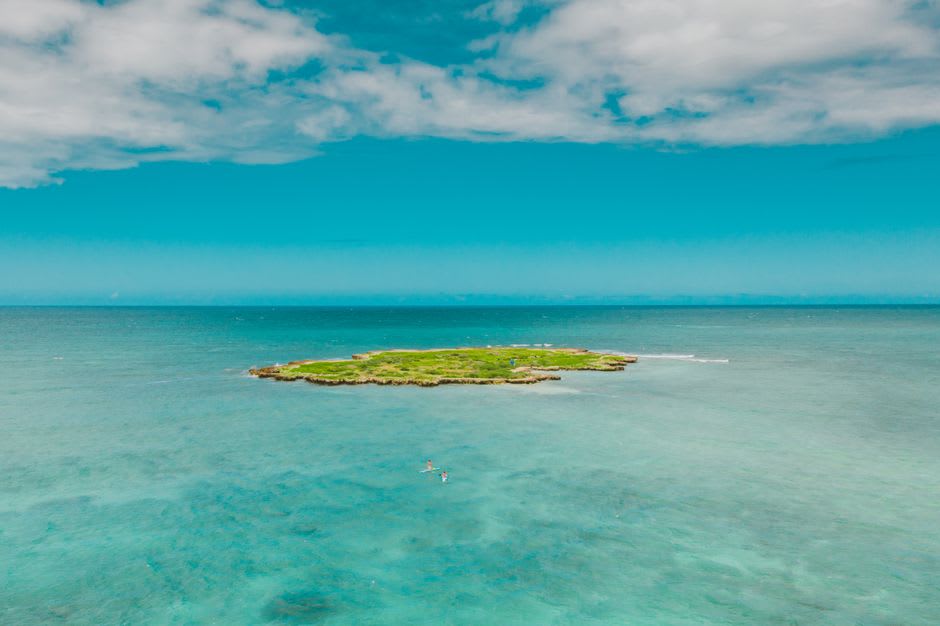
Beyond the mats, Ailuk is simply one of the more beautiful and untouched lagoons I saw in the country — a wide expanse dotted with uninhabited islets you can ask someone to boat you out to for the day, where you will see no one else and the reef is essentially undisturbed. There’s a particular pass on the atoll’s western side where the tide runs hard enough to snorkel with real current, grey reef sharks patrolling below in numbers that would alarm you anywhere with more tourism infrastructure and here just felt like the reef doing what a healthy reef does.
When to go: Access is unpredictable — check with the Marshall Islands Visitors Authority or Air Marshall Islands for the current field-trip ship schedule and build in significant slack. Go between December and April for the calmest seas, and go with the expectation that you may end up staying longer than you planned.
Keep exploring
More from Marshall Islands
 marshall-islands
 Arno Atoll
The quietest thirty-five kilometers from Majuro, where traditional stick-chart navigation still makes more sense than GPS.
Explore marshall-islands
 Bikini Atoll
A UNESCO World Heritage ghost atoll where you can dive on a nuclear ghost fleet and feel the full weight of the twentieth century.
Explore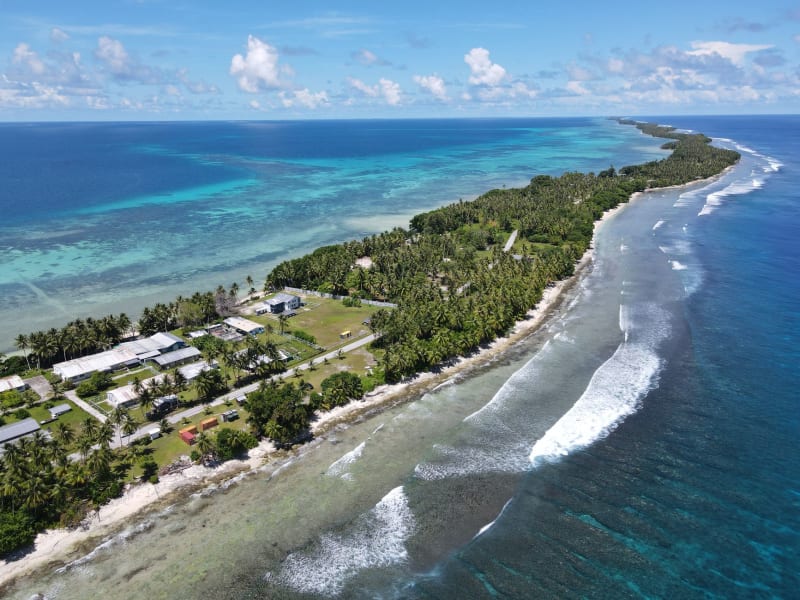 marshall-islands
 Ebeye
One of the most densely populated islands on earth, wedged next to a US military base — the Pacific's most uncomfortable mirror.
Explore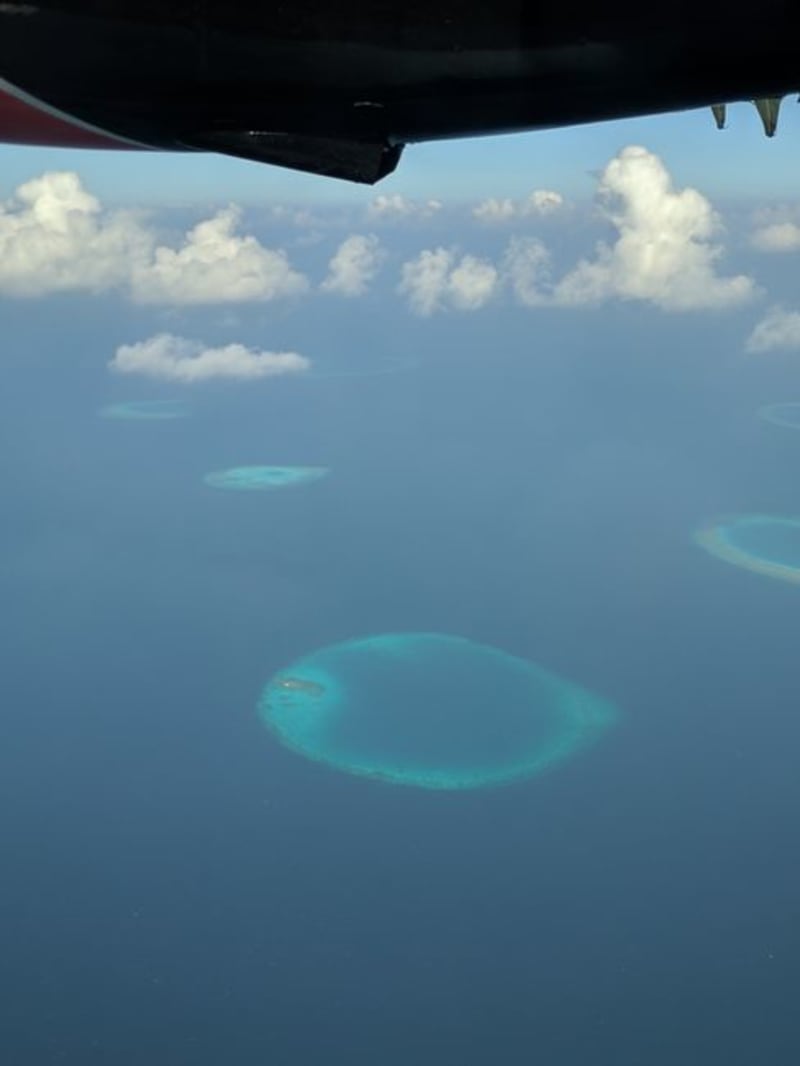 marshall-islands
 Enewetak Atoll
A concrete dome the size of a football stadium sits over 111,000 cubic meters of American nuclear waste, and the lagoon around it is some of the clearest water I've ever swum in.
Explore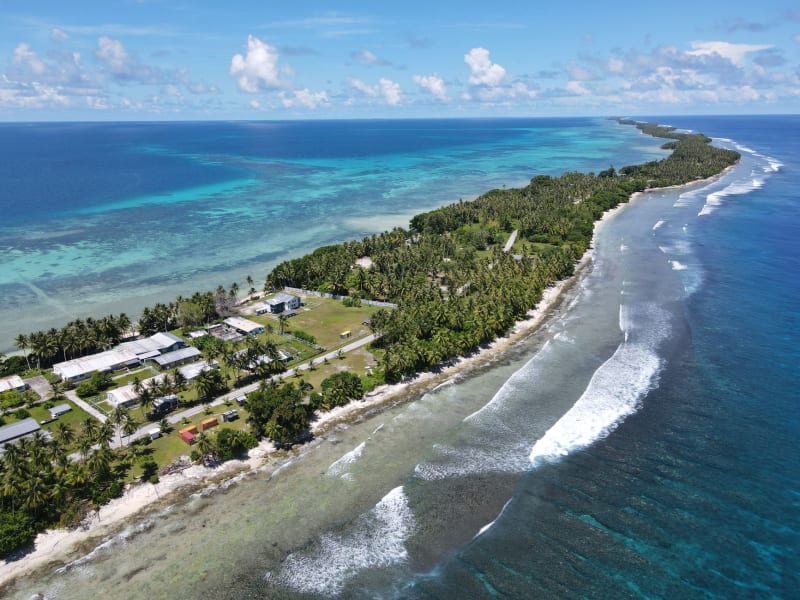 marshall-islands
 Jaluit Atoll
The old colonial capital of the Marshalls, where German and Japanese ambitions left ruins the lagoon is slowly reclaiming.
Explore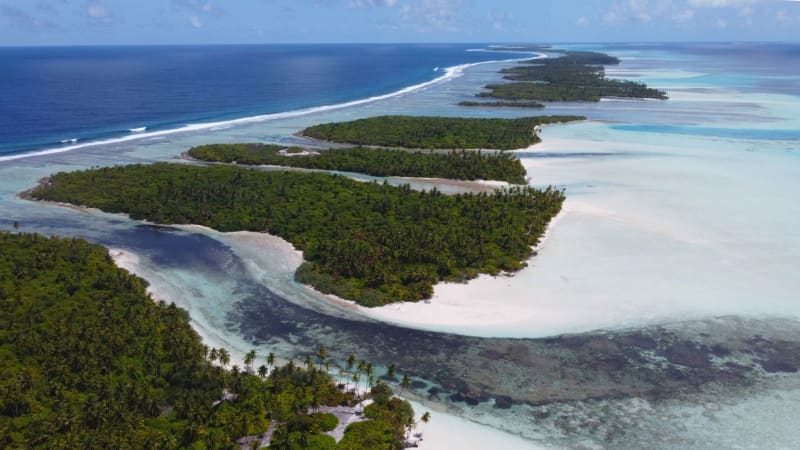 marshall-islands
 Kwajalein Atoll
The world's largest atoll by lagoon area, split between a US missile test range and the Marshallese community living in its shadow.
Explore