Fazendas & Buffalo Country
"The vaqueiro managed the herd the way a conductor manages an orchestra — with almost no visible effort."
The Campo at Dawn
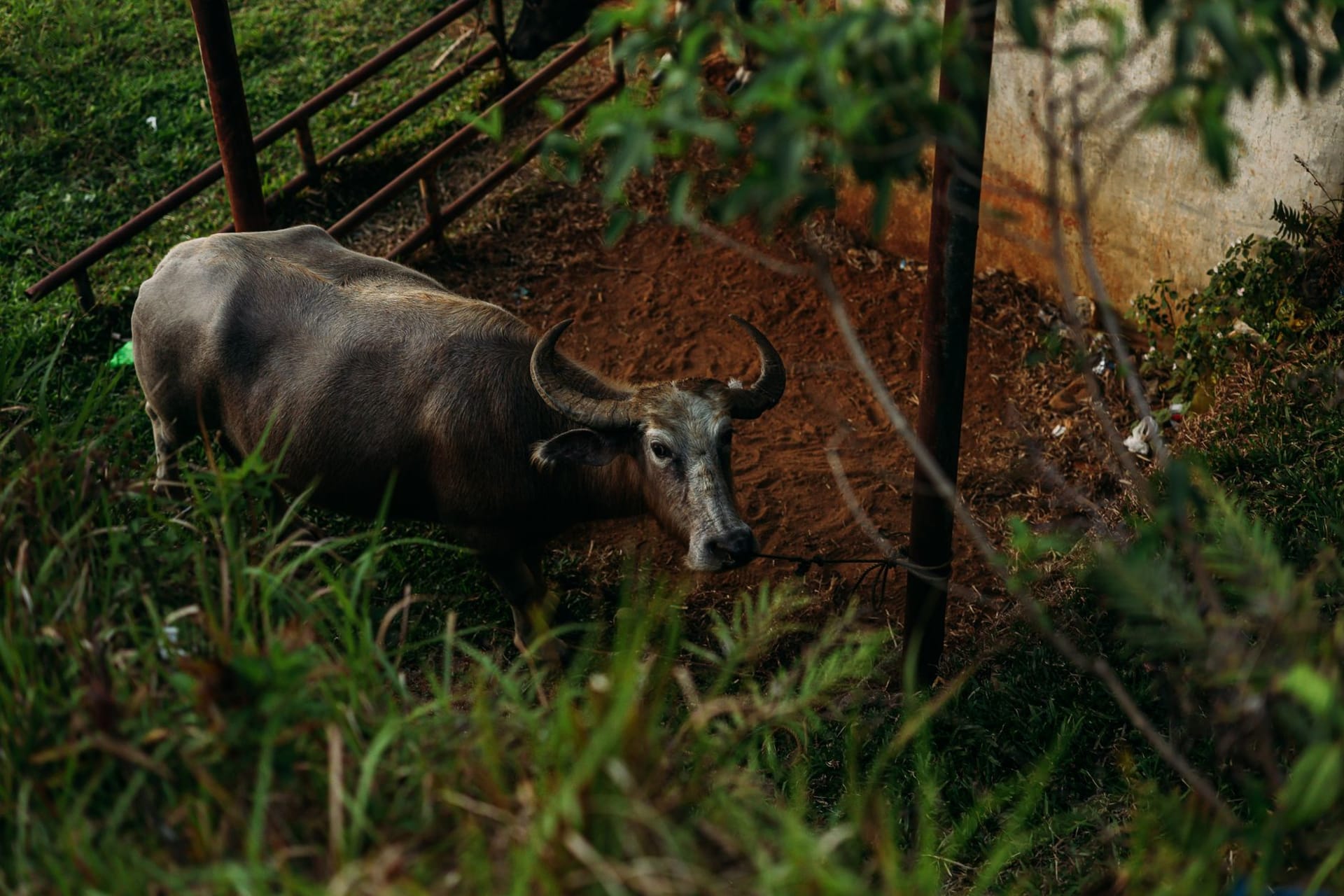
The interior campo of Marajó — the open floodplain grassland that covers the eastern half of the island — is most itself at 5:30 in the morning when the mist is still sitting on the grass and the vaqueiros (cowboys) are already out. I was up that early because the fazenda owner had mentioned, the night before, that this was when things happened. He was right. By the time I reached the edge of the corral, a herd of perhaps two hundred buffalo was being moved to a different pasture and the show was extraordinary.
Marajó’s buffalo story begins in the late 19th century when animals were brought from India and Southeast Asia — legend has it some swam ashore from a shipwreck, though historians are skeptical. What’s certain is that the local cattle didn’t adapt well to the seasonal flooding and the buffalo did, thriving in the wet campo in ways that changed the island’s entire agricultural economy. Today there are an estimated 600,000 buffalo on Marajó, outnumbering the human population by a considerable margin.
A Night on a Working Fazenda
Several fazendas around Soure and in the island’s interior accept visitors — not as eco-lodges with amenities, but as paying guests in the working-farm sense. I stayed at one that had been in the same family for four generations. Dinner was buffalo stew cooked over wood, served at 6 p.m. at a long table. The family watched Brazilian football on a television in the corner. The generator cut out at 9 p.m. By 9:05 I was asleep under a mosquito net and the sounds of the campo at night — frogs, insects, the distant movement of the herd — filled the dark.
This is the closest thing Marajó offers to a true immersion in how the island actually functions economically and ecologically. The buffalo are not decoration; they are the point.
The Vaqueiro’s Art
What struck me most about the herding I watched was the restraint involved. The vaqueiros use long wooden staffs rather than ropes, communicate with the animals through body position and voice, and manage animals that weigh 500 to 700 kilograms with what looks like minimal effort. One man I watched redirected a breakaway group of maybe thirty buffalo using only changes in his horse’s angle and a low clicking sound. The buffalo responded as if this were entirely reasonable.
The work is seasonal: the wet season requires constant monitoring of animals on higher ground as the campos flood; the dry season brings the great sorting and branding operations that are Marajó’s equivalent of a cattle drive. If you time a visit to the dry-season corrida (round-up), usually between August and October, you’ll see the island’s equestrian culture at full expression.
Buffalo Products Everywhere
The economic outputs of Marajó’s buffalo herds are visible in every town on the island. Buffalo milk is turned into queijo de búfalo — a mozzarella-style cheese that’s denser and richer than the Italian version, served at every meal and sold at every market. Buffalo mozzarella from Marajó has a regional appellation and is exported to specialty markets in Belém and São Paulo. Carne de búfalo appears in stews, grilled, dried, and in the meat-heavy açaà combinations that fuel the island’s workers.
I ate buffalo at every meal for five days and never tired of it, which tells you something about the quality of the ingredient or the adaptability of my digestion. Possibly both.
Reaching the Fazendas
Fazendas accessible to visitors are concentrated around Soure — several are within 15 kilometers of town on roads navigable by mototaxi or bicycle in dry season. Ask at your pousada in Soure for current recommendations; the best ones operate on word of mouth rather than online bookings.
When to go: August to October is the vaqueiro high season — dry campo, active herding, the corrida operations at full pace. Sunrise visits are essential; the animals are moved in the cool morning hours and the light is extraordinary. The wet season has its own spectacle (the buffalo in flooded campo is a surreal visual), but logistics are harder and mud is real.