Americas
Marajó Island
"I came for the buffaloes and left humbled by how much island there was left to understand."
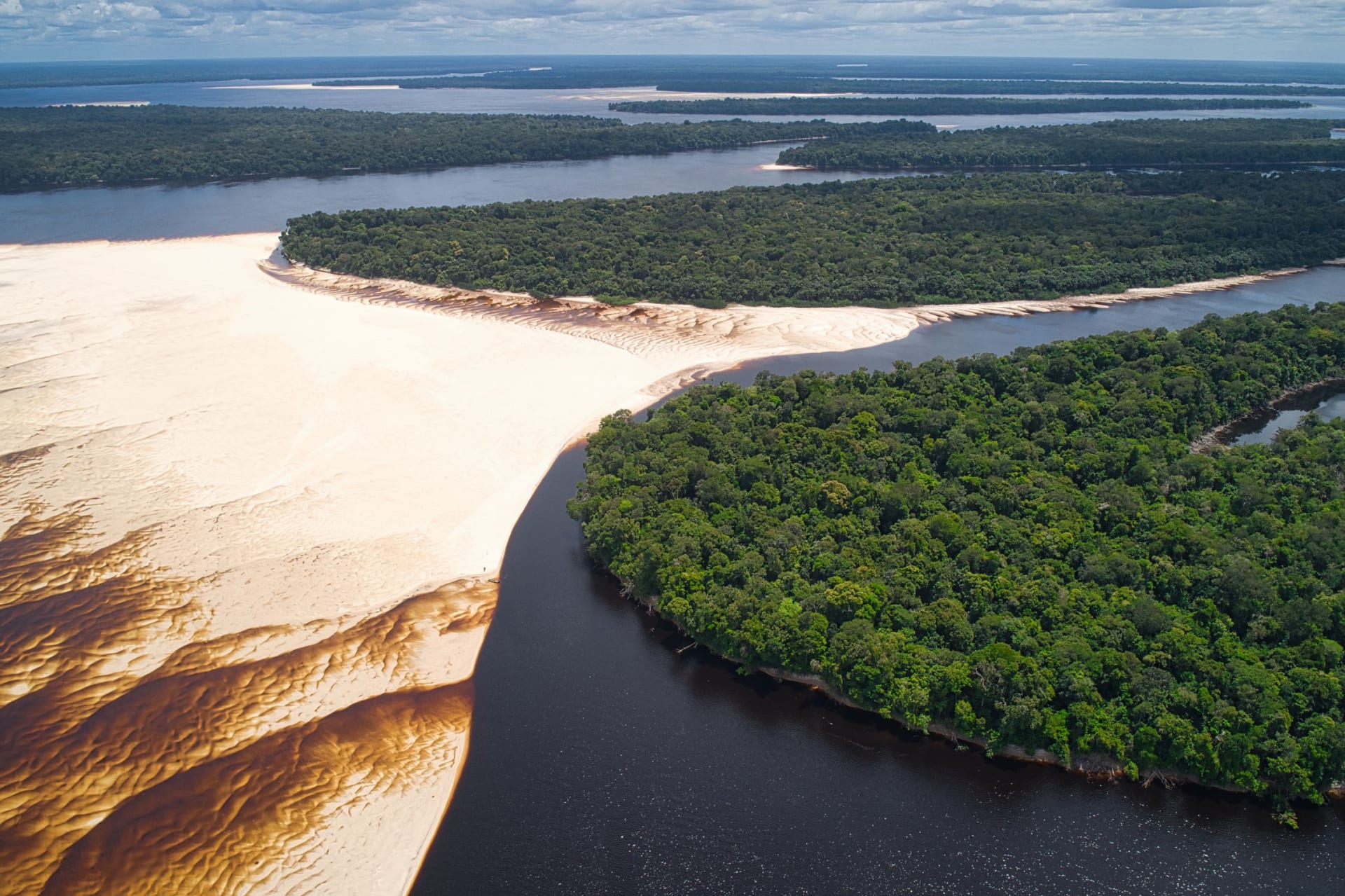
The ferry from Belém takes four hours. You leave a chaotic port city of two million people and you arrive somewhere that feels like the planet before it decided to organize itself. Marajó is the size of Switzerland — it sits in the mouth of the Amazon where the river is so wide you cannot see the other shore — and almost nothing about it resembles any island I had ever visited. The water is brown, the horizon is flat, and at certain times of year fully half the island disappears underwater. The water buffalo you’ve been promised are everywhere, crossing roads, standing in flooded fields up to their chests, being ridden by vaqueiros in wide-brimmed hats as though this were the most natural thing in the world. It is, here.
I stayed in Soure, the island’s main town, in a pousada run by a family who had lived on Marajó for four generations. Breakfast was filhote — a large Amazon river fish — grilled and served with açaí that tasted nothing like the frozen sweetened version I’d had everywhere else. Here it was savory, almost earthy, eaten with farinha. The local cheese, queijo marajoara, is made from buffalo milk and is sold at every corner; slightly salty, dense, nothing like anything in a French fromagerie but deeply satisfying eaten with cupuaçu jam on a slow morning. In the late afternoon I hired a guide to walk the edge of the island where the savanna floods, and we watched hundreds of scarlet ibises descend into the mangroves at dusk — a color so violent against the grey sky it seemed digitally enhanced. It wasn’t.
The Marajó Archaeological Culture left behind ceramics here that date back nearly three thousand years — intricate, geometric, technically sophisticated. The Museu do Marajó in Cachoeira do Arari holds a collection that belongs in a world-class museum and is visited by almost no one. That asymmetry — profound cultural depth, almost total international invisibility — describes the island exactly.
When to go: June to November is the dry season — savannas are accessible, wildlife concentrates around remaining water sources, and the buffalo crossings are at their most spectacular. December to May brings the floods, which transforms the island into something stranger and more beautiful, but harder to navigate without a local guide and a boat.
What most guides get wrong: They sell Marajó as a quirky day trip from Belém — “see the buffalo, eat some cheese, come back.” That framing misses everything. The island rewards at least three or four nights, ideally with a guide who knows the interior. The archaeology alone is worth the detour. The ibis roost at dusk on the eastern coast is one of the great wildlife spectacles I have witnessed anywhere on earth, and I have never once seen it mentioned in a roundup.