Hill of Crosses
"I came expecting something eerie. I left understanding why people keep coming back with more crosses."
A hillside covered in hundreds of thousands of crosses that began as a protest against occupation and became something the Soviet Union couldn't dismantle.

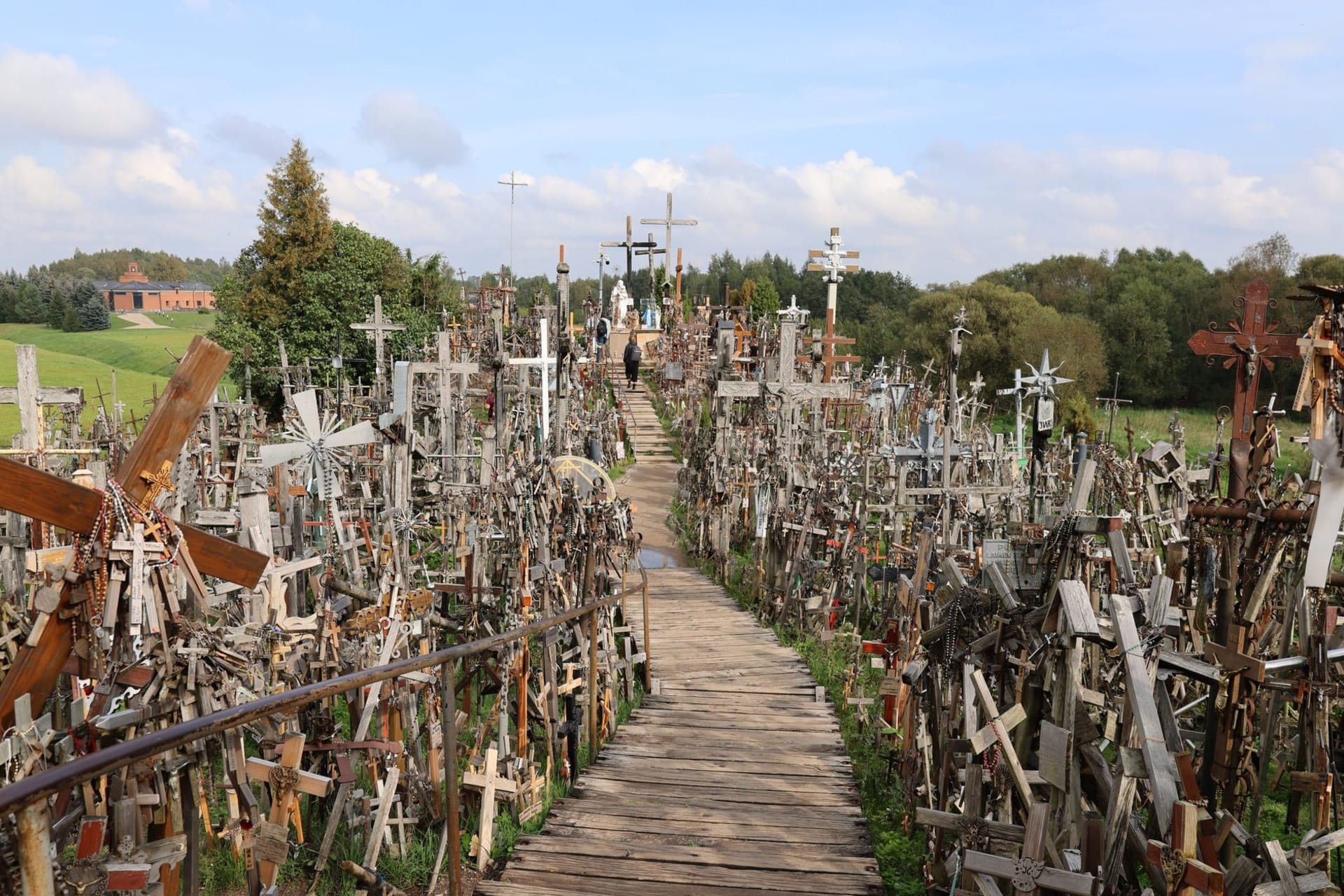
The Hill of Crosses is twelve kilometers north of Šiauliai, down a road that runs through flat farmland under a very large sky, and nothing in the approach prepares you for what you find. You park in a small lot beside a souvenir market, walk through a gate, and then there it is: a low hill about five meters high, so completely covered in crosses of every conceivable size and material that the hill itself has effectively ceased to exist as a geographical object and become instead a concentration of human intention so dense it almost generates its own atmosphere. I stood at the entrance for a long time before I walked in.
The crosses started appearing in the mid-nineteenth century after an uprising against Russian rule — a form of quiet, unmovable defiance, crosses planted for the dead who couldn’t be mourned publicly. The tradition continued through the Soviet occupation, when authorities bulldozed the hill three times, burning the wooden crosses, melting down the metal ones, carting away the rubble. Each time, within days, Lithuanians came back and planted more. The Soviets eventually stopped trying. The hill kept growing. By some estimates there are now over two hundred thousand crosses, crucifixes, rosaries, statues, and religious medallions on a hill roughly the size of a city block.

Walking through the hill is slow and requires watching your feet — the path is narrow and the crosses reach down to ankle level, and to move carelessly would mean stepping on something someone planted for a reason. The scale is overwhelming in the mathematical sense: you look in any direction and the crosses continue farther than the eye can easily follow. But what made me stand still was the detail. A rusted metal cross with a hand-stamped name from 1963. A tiny silver cross tied to a larger one with red thread, a photograph of a woman inside a small laminated envelope. A carved Lithuanian folk cross, maybe two meters tall, covered in traditional sun motifs and birds, planted with obvious skill and care by someone who made this specifically. A child’s plastic crucifix from what looks like a cereal box prize, tied carefully to a knot of rosaries.
The crosses run the entire range from the sacred to the earnest to the commercially produced, and somehow the whole accumulation transcends the sum of its parts. I am not religious in the way these crosses mostly imply, but I felt the weight of the place clearly, the accumulated grief and hope of two centuries of people who had something to say and knew that crosses planted on a hill were more durable than words.

Pope John Paul II visited in 1993 and planted a cross, which is still there, now surrounded by thousands planted in response. There is a Franciscan friary on the edge of the site, modest and quiet, whose monks I saw walking a path around the perimeter in the late afternoon. A tour group from Poland arrived while I was there and moved through in forty minutes, photographing everything. A Lithuanian family arrived separately, placed a cross somewhere in the middle that I couldn’t see from where I was standing, stood quietly for a few minutes, then drove away.
When to go: The hill carries a particular atmosphere at dawn and dusk when the light comes in at an angle and the shadows of the crosses multiply across each other. Visit on a weekday to have longer stretches of quiet between tour groups. Any season works — winter adds a silence that feels appropriate, and snow on the crosses creates images of a different kind. The souvenir market at the entrance sells handmade crosses that are worth buying if you want to add one.
Keep exploring
More from Lithuania
 lithuania
 Kaunas
Lithuania's second city wears its interwar modernism like a quiet confidence — art deco and tragedy in the same afternoon.
Explore lithuania
 Kernavė
Lithuania's vanished medieval capital, where five grassy hill forts rise above the Neris valley and the whole country seems to begin in a quiet green field.
Explore lithuania
 Klaipėda
Lithuania's only sea port carries its German Memel past in cobblestones and half-timbered facades that survived the century just barely.
Explore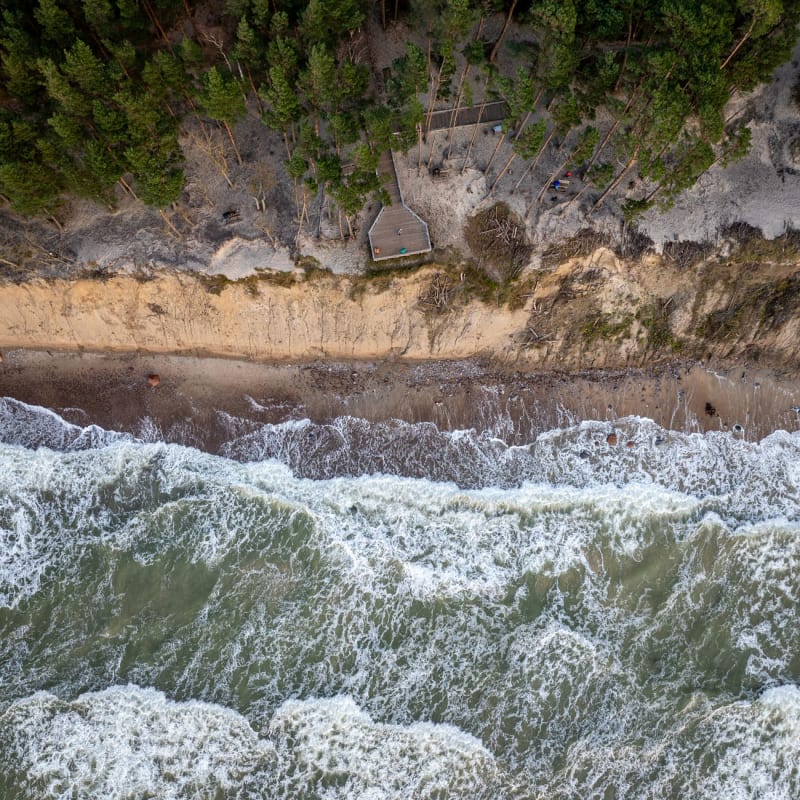 lithuania
 Nida
A fishing village at the end of a sand peninsula, where the dunes are taller than houses and the smoked fish is reason enough for the trip.
Explore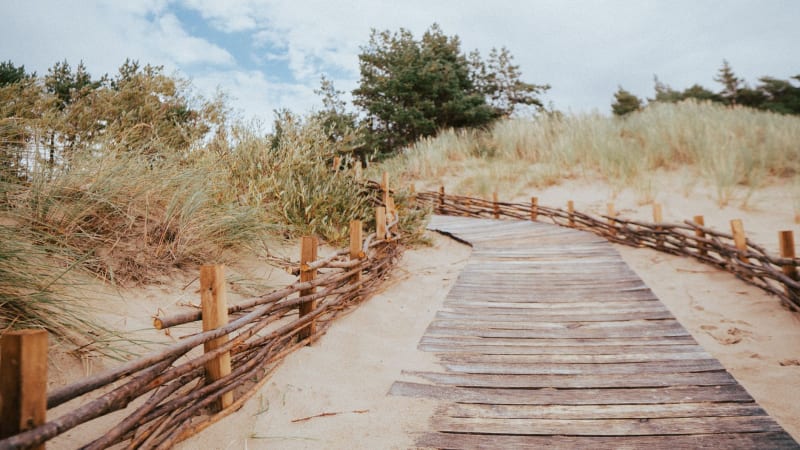 lithuania
 Palanga
The Baltic's amber coast in a resort town that goes from sleepy to euphoric every summer and back again before you blink.
Explore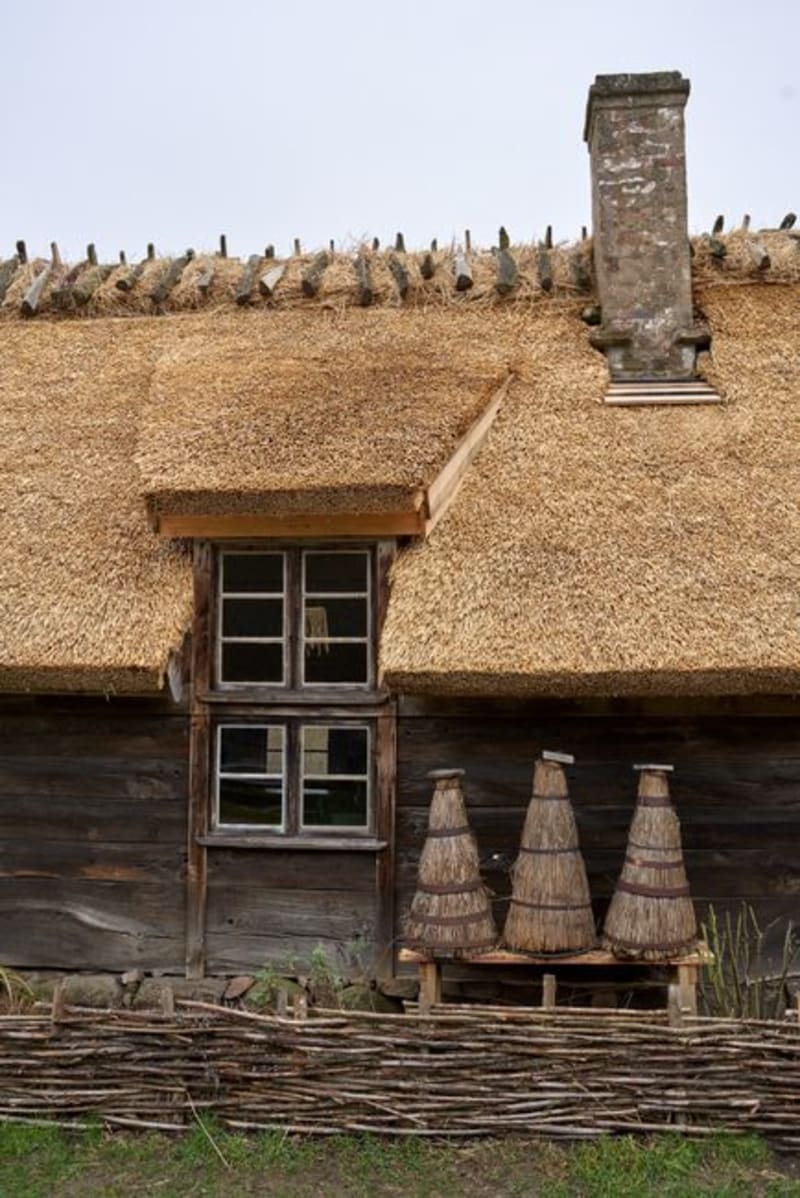 lithuania
 Rumšiškės Open Air Museum
A sprawling open-air museum on the Kaunas Reservoir where 180 relocated wooden buildings recreate four centuries of Lithuanian village life.
Explore