Bcharre
"The cedars above Bcharre are so old they make you feel like the newcomer in a conversation that started long before you were invited."
A mountain village at the edge of a sacred cedar forest, birthplace of Khalil Gibran, and the best reason to drive high into the Lebanese peaks.

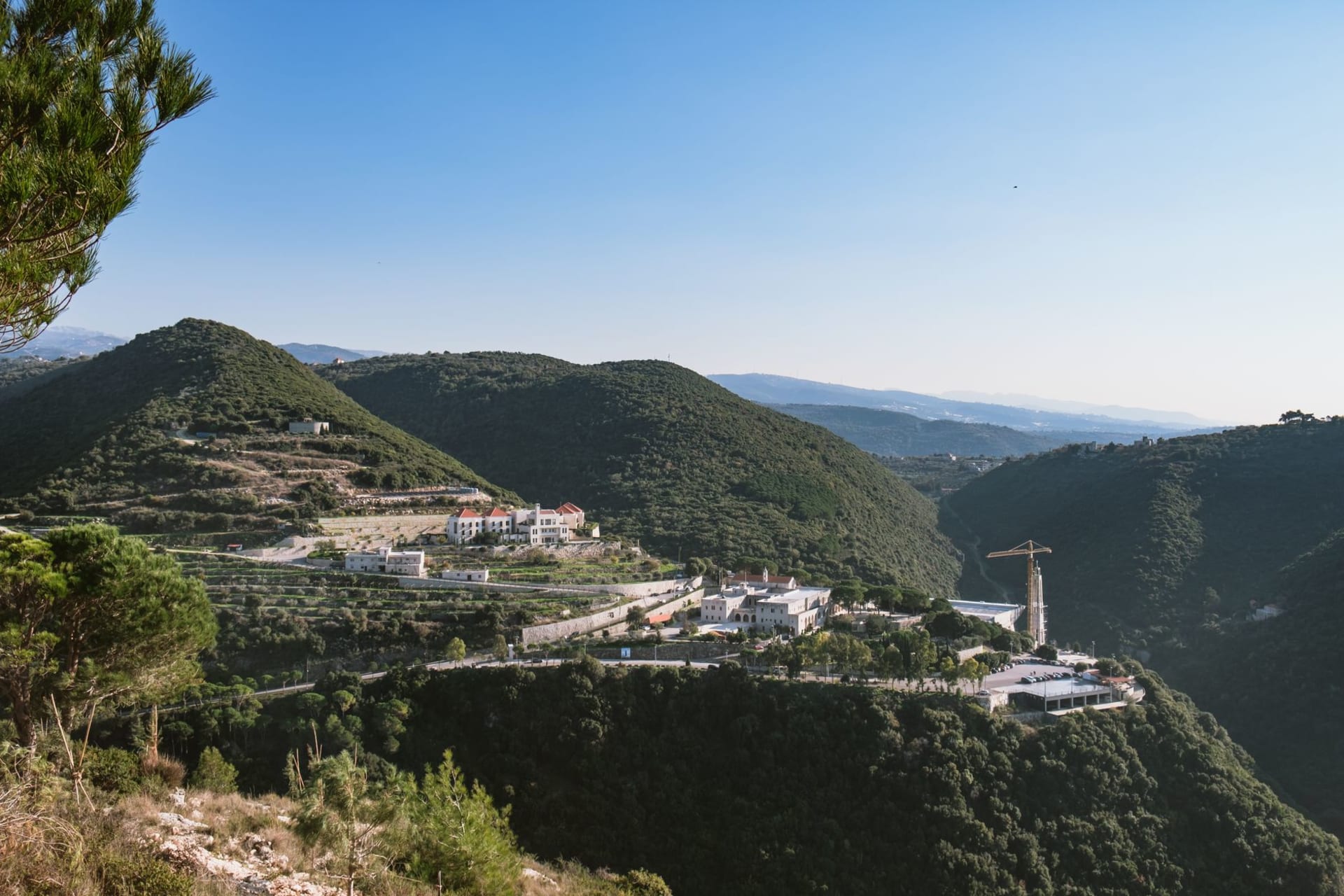
The road up to Bcharre is one of the great mountain drives in the Levant — not because it’s easy but because every switchback reveals more mountain than you expected. The valley of Qadisha falls away below to the left, impossibly deep, the cliff faces rising in shades of pale limestone and terracotta, monasteries cut directly into the rock face visible far below like architectural afterthoughts. I pulled over twice on the way up simply to stand at the edge and look down at the valley, where the river looked silver and thread-thin from that height, and ancient Christian communities had been finding refuge in the cliff caves since the seventh century.
Bcharre itself sits at roughly 1,400 meters, a village of red-roofed houses built from the same pale stone as the mountains, clinging to the upper edge of the Qadisha Valley with an abrupt confidence that suits a place which has spent centuries being difficult to reach. The village is small — a church square, a main street of shops, a few restaurants where the menu is mountain food: kibbeh bil-saniyeh baked in a pan with bulgur and lamb, a dish of hummus that arrives warm, bowls of soup that taste of the cold outside.

The cedar forest above the village — the Horsh Arz el-Rab, the Forest of the Cedars of God — is what brings most people up here, and it delivers something beyond what photographs suggest. There are roughly 375 trees in the protected grove, some of them more than a thousand years old and several estimated at two or three thousand. The old trees are enormous in a way that takes adjustment: trunks four meters in circumference, canopies spreading horizontal like slow explosions, branches so thick they cast shade the size of rooms. I walked among them in November when the first light snow had fallen overnight and dusted the branches, and the silence in the forest was so complete it had a texture, a kind of physical presence, like something heavy held at a slight distance.
Khalil Gibran was born in Bcharre in 1883 and the village hasn’t let anyone forget it. The Gibran Museum, installed in a former monastery carved into the cliff above the village, houses the poet’s manuscripts, paintings, letters, and the man himself — he requested burial here, and his sarcophagus is in a chamber at the back of the museum, cut into the rock. I went expecting a small provincial tribute and found instead a genuinely serious collection, Gibran’s Arabic and English manuscripts laid out together, his drawings showing an aesthetic sensibility quite different from the prophetic public persona.
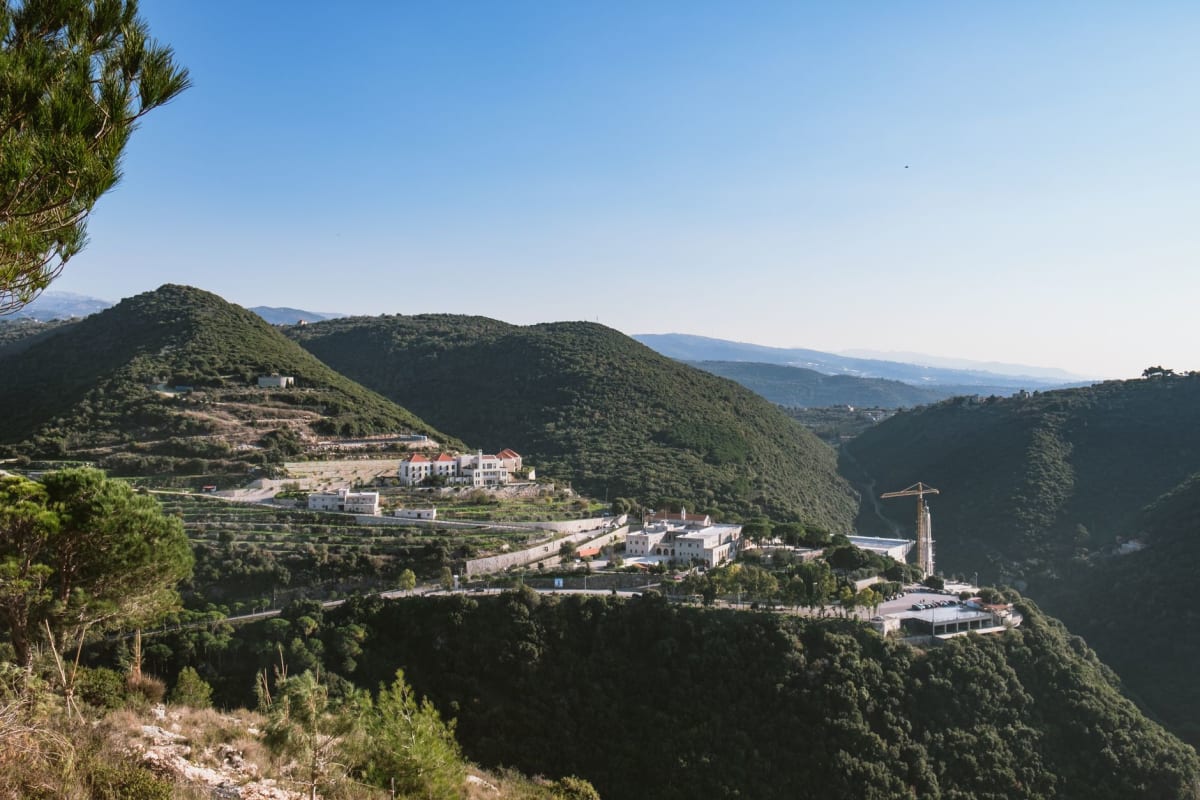
In winter, the mountains above Bcharre become one of Lebanon’s ski areas — the Cedars ski resort operates directly above the cedar grove, and the combination of ancient trees below and ski runs above has an absurdist quality that is somehow entirely Lebanese. But the mountains in winter, covered in snow with the valley invisible below in cloud, have a severity that suits them.
When to go: May and June for wildflowers and clear mountain air before summer heat; October and November for autumn colors and the first snow dusting the cedars. Winter skiing runs December through March. The drive from Beirut takes about two hours and is best done in clear weather when the Qadisha Valley view is fully revealed.
Keep exploring
More from Lebanon
 lebanon
 Beirut
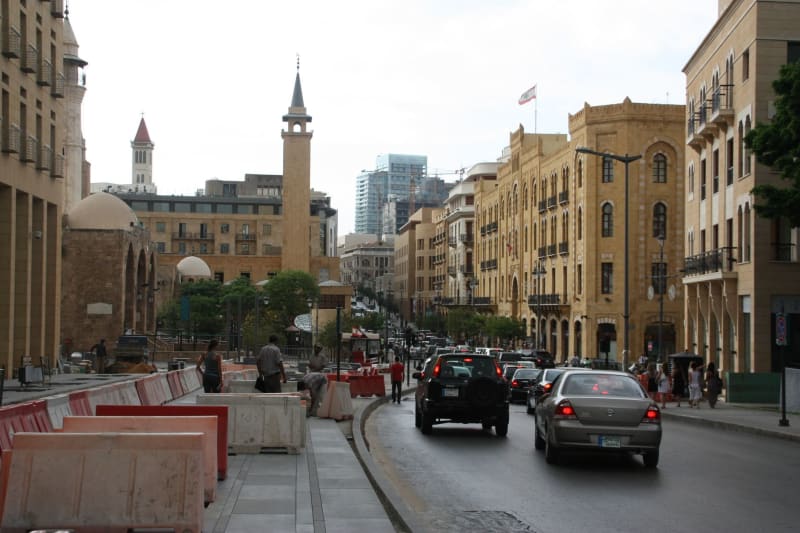
A city that keeps rebuilding itself from its own rubble and somehow comes out louder every time.
Explore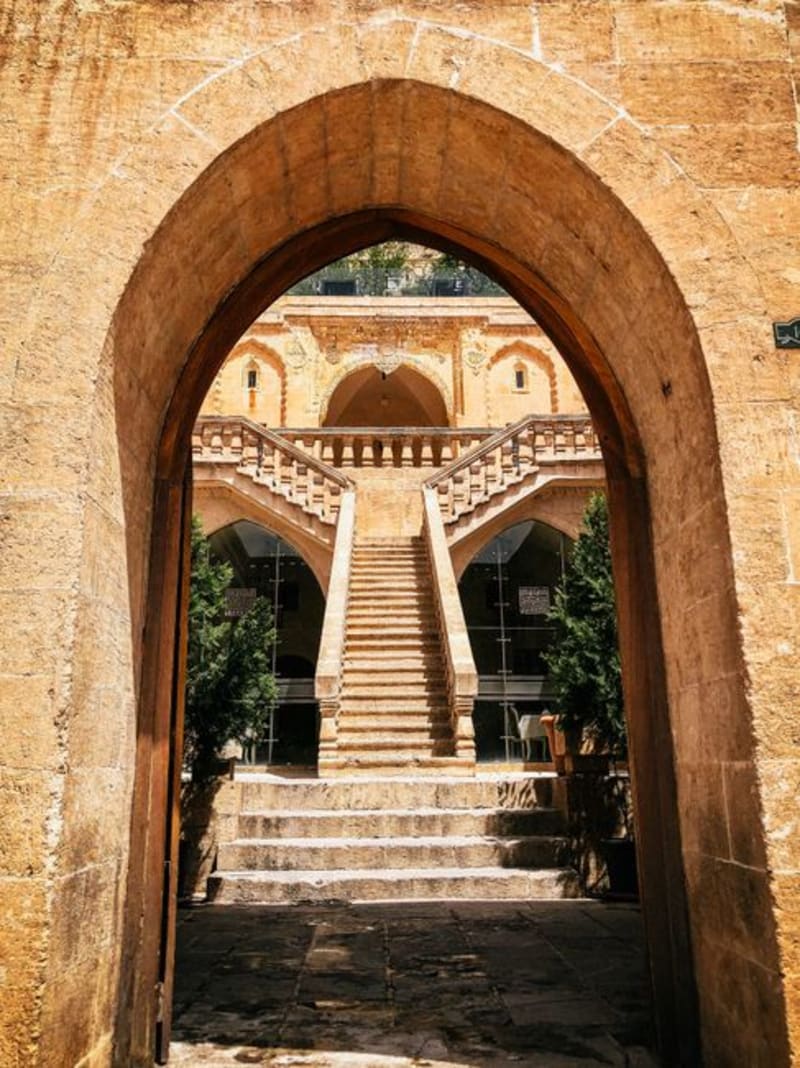 lebanon
 Beiteddine
A 19th-century emir's palace of carved stone and mosaic courtyards in the Chouf mountains, still hosting a summer arts festival under the same stars.
Explore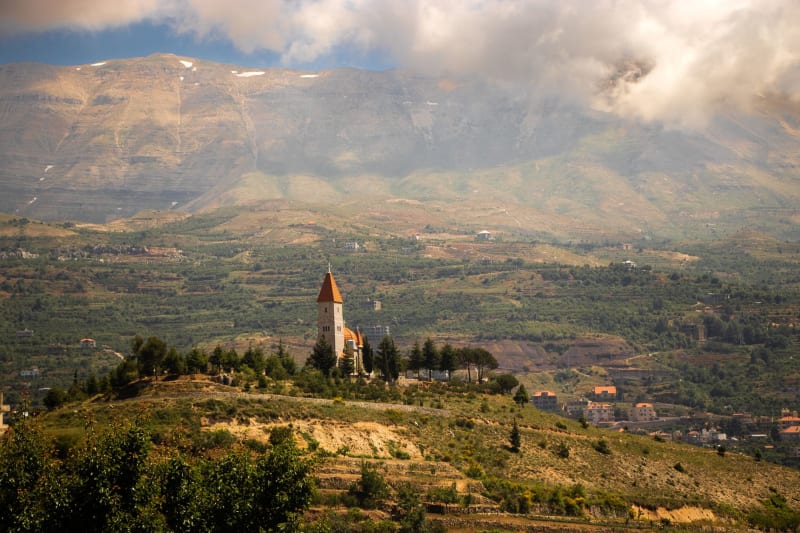 lebanon
 Bekaa Valley
A high flat valley between two mountain ranges where four thousand years of winemaking meets the most improbable agriculture in the Levant.
Explore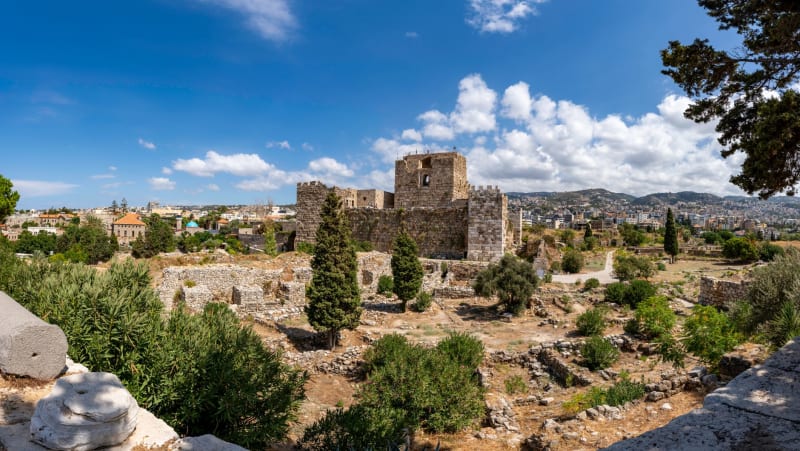 lebanon
 Byblos
Seven thousand years of continuous habitation compressed into one harbor town where Phoenicians once loaded ships with cedar and papyrus.
Explore lebanon
 Deir el Qamar
A perfectly preserved 17th-century capital of ochre stone houses and a silk-trade-era square, where the whole village feels frozen mid-conversation.
Explore lebanon
 Enfeh
A rocky peninsula of salt pans, sunken ruins visible through clear water, and one of the quietest coastlines left in Lebanon.
Explore