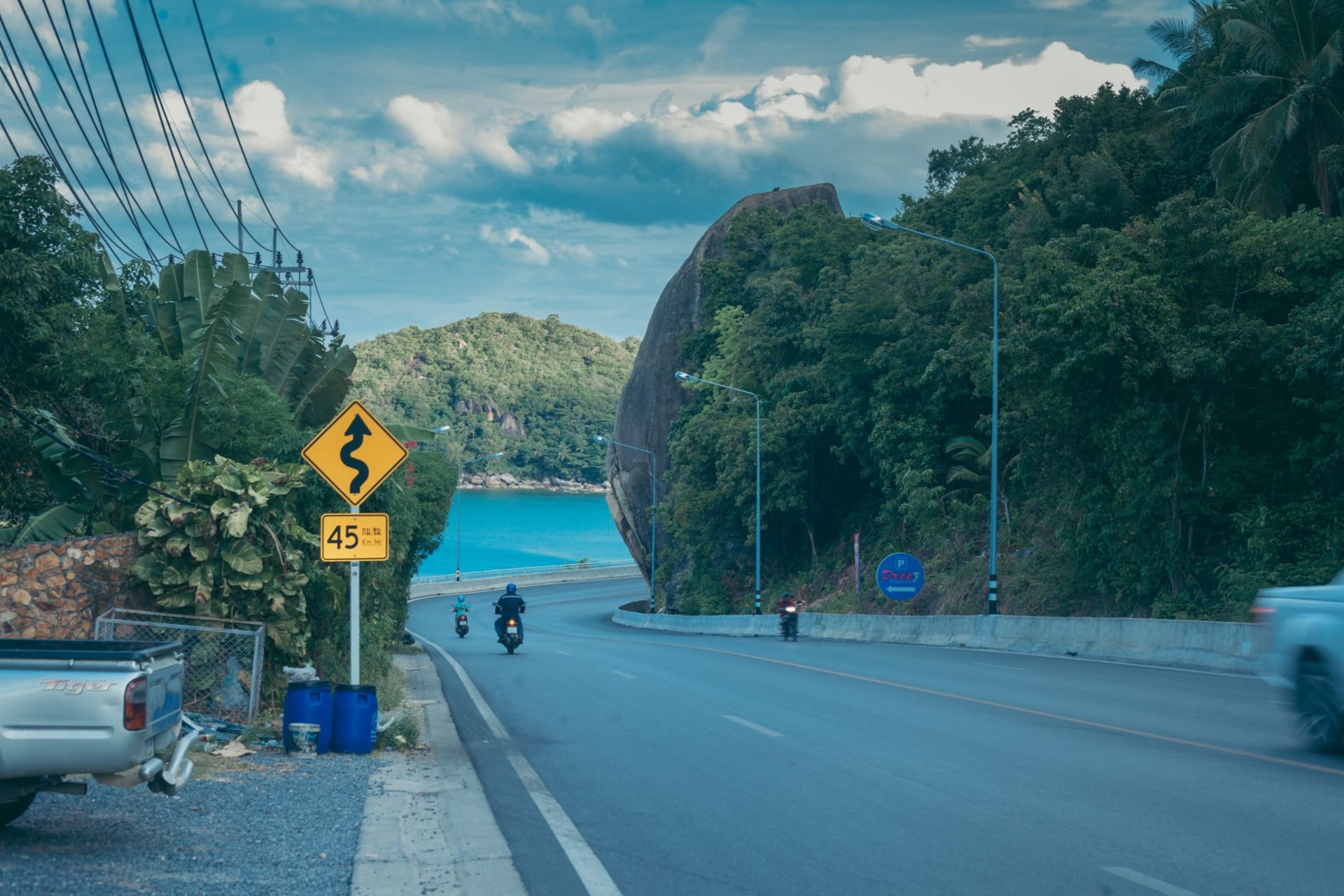
The north shore beach that moves at the pace of the tide, where the guesthouses are old and the evenings have nowhere to be.

The road into Mae Nam from the ring road is unmarked, which I think is deliberate on the universe’s part. You miss the turn once, maybe twice, and then on the third pass you slow down and see the gap in the trees and the glimpse of pale sand at the end of it, and you pull over and park the motorbike under a palm and walk down. The beach extends in a long, gentle arc — wider than it looks from the road, quieter than it has any right to be given how close it sits to the ferry port at Nathon and the market activity of the north shore. The sand is not the powdery white of the postcards but a pale gold, coarser, honest about what it is. The water is shallow and warm and very clear, and at low tide you can walk out fifty meters before it reaches your waist.
I stayed in a guesthouse in Mae Nam for eight days, which is the longest I stopped moving the entire trip. The guesthouse was run by a family from Surat Thani — the father had come over in the nineties, built three rooms, and somehow never expanded. The breakfast was included: khao tom with shredded chicken and a hard-boiled egg, served in an open-sided room where a television played something softly in Thai and cats came and went through the bamboo screen. I ate that breakfast every morning with the feeling that I had made some correct decision I couldn’t fully articulate.

The village behind the beach is functional in a way that Bophut, with its restored shophouses, is no longer quite trying to be. There is a market most mornings — not a tourist market, a shopping market, where the women from nearby villages come for vegetables and the butcher breaks down a whole pig before seven. There is a pharmacy, a school, a temple with a resident monk who sweeps the courtyard in the early morning in a way that seems meditative and probably is. The restaurants along the beach road are the kind that put their menu on a laminated card with photographs, which would be a warning sign elsewhere but here simply means the food is consistent and they are not trying to be anything other than what they are.
I ate green curry in Mae Nam twice that I can still taste in the specific way that certain meals stay with you. The first time it was at a place with four plastic tables set right on the sand, run by a woman who cooked everything herself and moved between the tables and the kitchen with the unhurried authority of someone who has been doing this for twenty-five years. The curry had that density I associate with Samui — more coconut than the Bangkok version, sweeter in a way that does not fight the heat but carries it. I ate with my feet in the sand. The sun was going down over the hills to the west. It was one of those evenings where you think about all the dinners that were not this and feel briefly sorry about them.

The pace here is the actual attraction. There is no famous temple to visit, no landmark beach bar, no snorkelling trip that is definitively better here than anywhere else. What Mae Nam has is space and quiet and a beach that at low tide becomes a kind of private plaza where the only activity is walking and watching the light. That sounds like nothing until you have been moving through Southeast Asia for three weeks and it becomes everything.
When to go: Mae Nam is a year-round destination — the north coast is sheltered from the worst of the northeast monsoon that hammers the east coast in October and November. The sweet spot is December through April, when the water is at its clearest and the evenings are cool enough to sleep under a single sheet.
Keep exploring
More from Koh Samui
 koh-samui
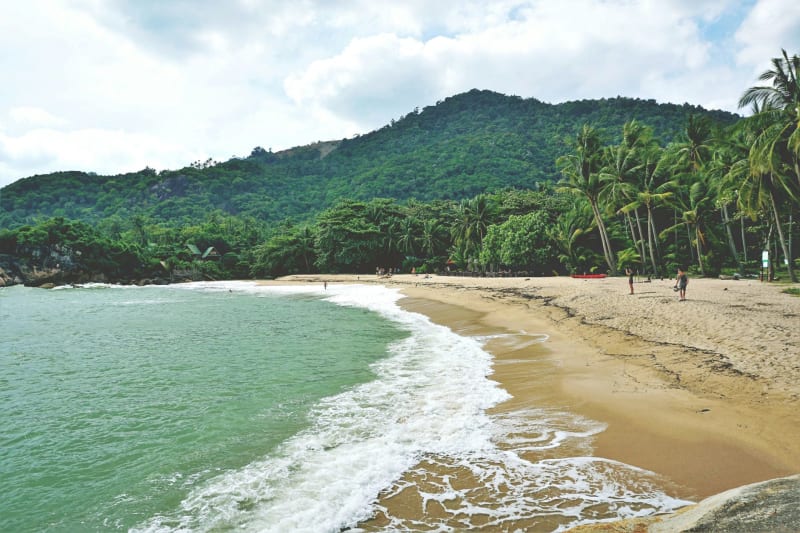
 Na Muang Waterfalls
Two falls hidden in Samui's jungle interior, where the island stops performing and lets the real landscape in.
Explore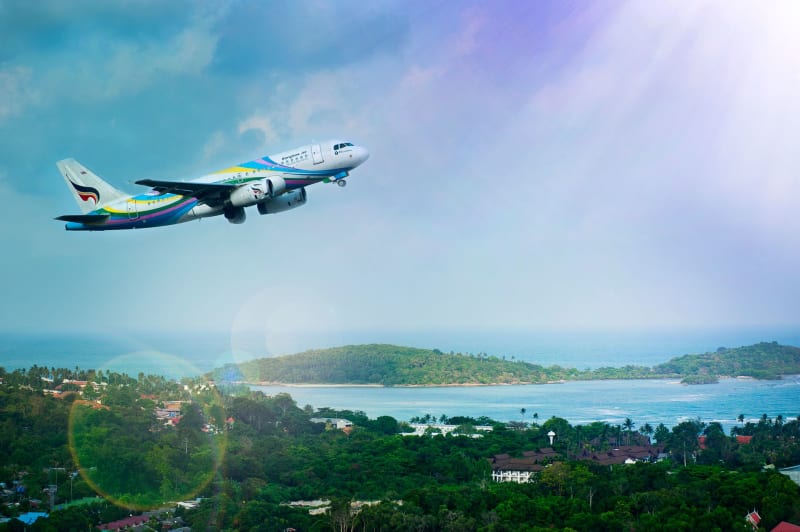 koh-samui
 Nathon
Samui's unglamorous working capital — where the ferries dock, the civil servants eat, and nobody is pretending to be on holiday.
Explore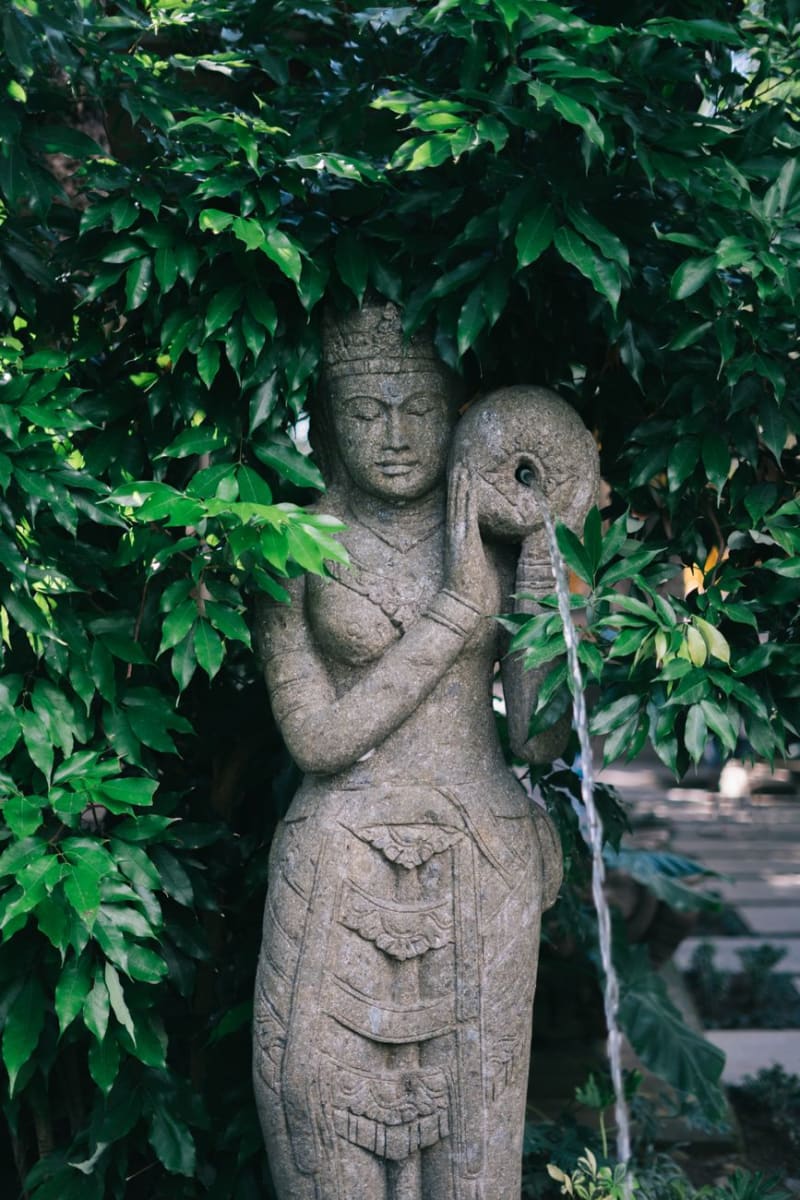 koh-samui
 Secret Buddha Garden
A hidden hillside shrine deep in Koh Samui's jungle interior, where one old durian farmer spent decades scattering stone statues among the boulders and streams of the island's highest slopes.
Explore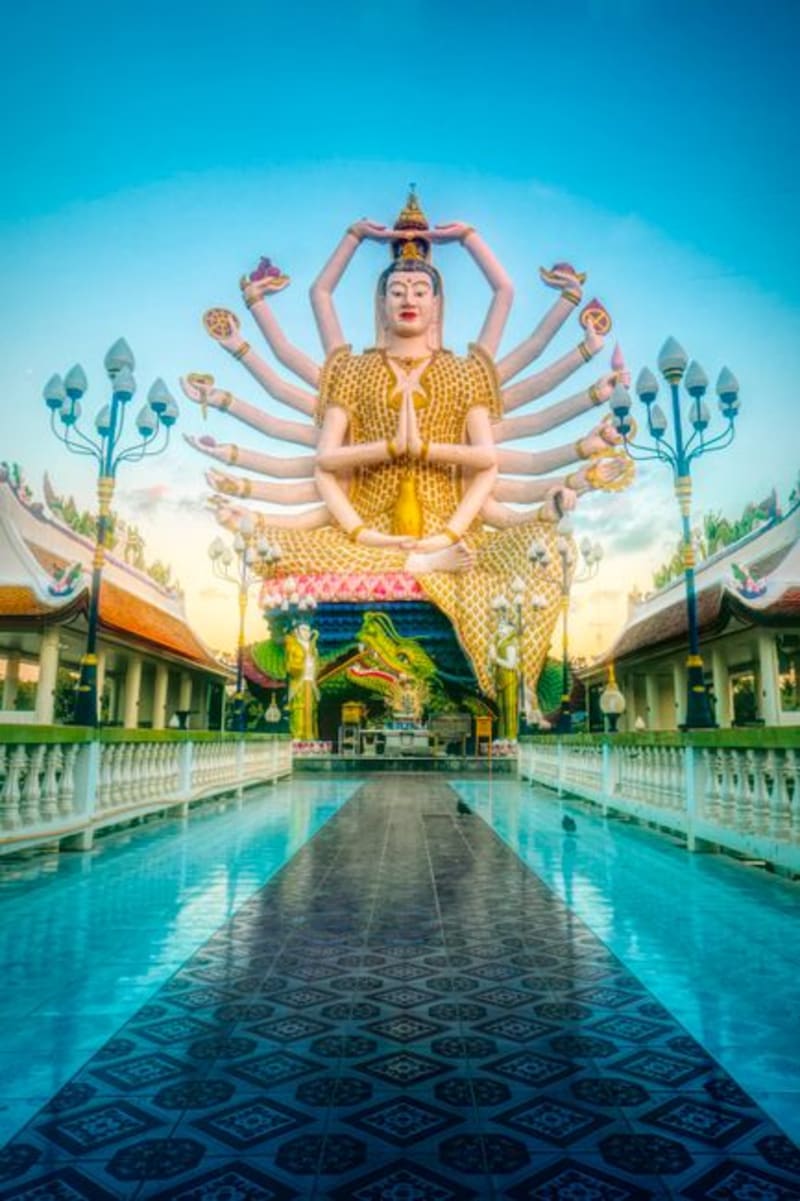 koh-samui
 Wat Plai Laem
A lakeside temple where an 18-armed Guanyin rises from still water and a golden Maitreya laughs at the sky.
Explore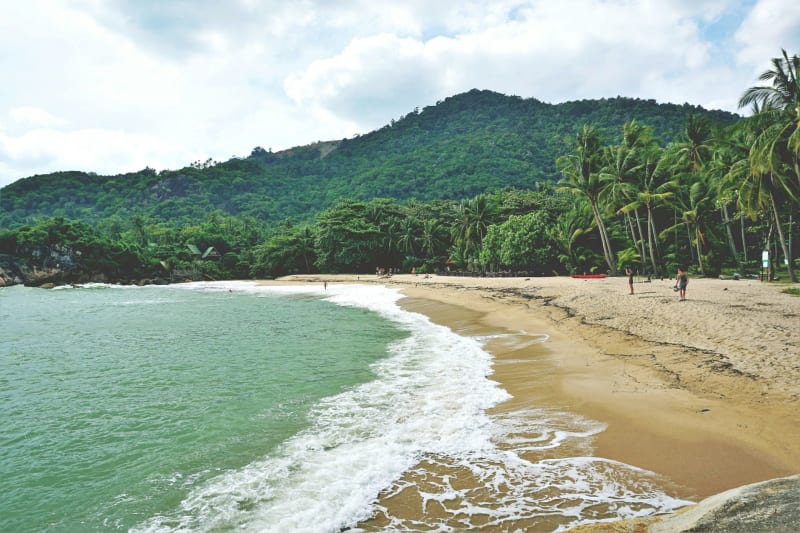 koh-samui
 Ang Thong National Marine Park
An archipelago of 42 limestone islands an hour from Koh Samui — the landscape that made Alex Garland put down his notebook and start inventing.
Explore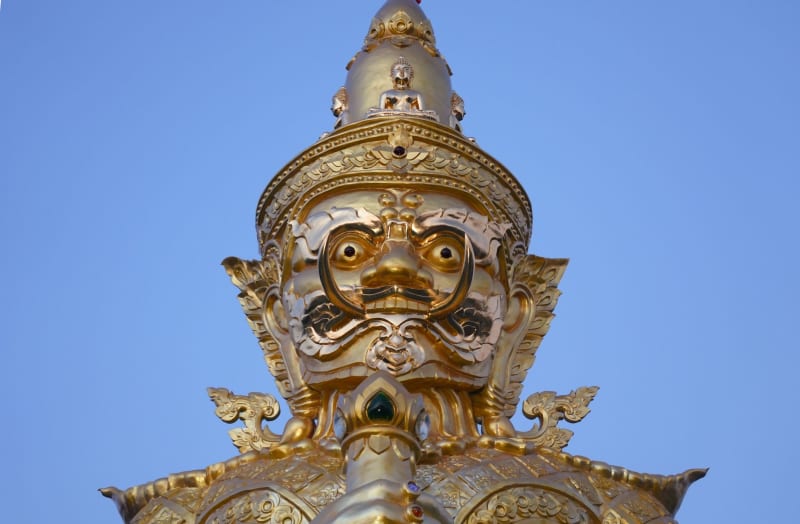 koh-samui
 Big Buddha Temple (Wat Phra Yai)
A twelve-metre golden Buddha visible from the ferry — and a temple complex that rewards the visitors who arrive before the tour buses.
Explore