
Shymkent
"In Shymkent the afternoon smells like plov and nobody seems to have anywhere to be."
Kazakhstan's warmest city — where Uzbek plov drifts from bazaar kitchens, the evenings stretch long and unhurried, and the south of the country announces itself.

Coming south to Shymkent from Almaty, the country changes in ways that are hard to pinpoint precisely but impossible to miss. The architecture softens. The pace slows perceptibly. The food gets richer. Something about the quality of the afternoon light — warmer, more horizontal, less of the sharp mountain clarity — announces that you are now in a different part of Kazakhstan, one that shares more with Tashkent, two hundred kilometers to the southwest, than with the Russified north. The Kazakh-Uzbek borderland has a texture of its own, and Shymkent is its most legible expression.
The central bazaar is where the day begins and where I spent most of mine. Arriving at eight in the morning when the plov pots were just getting their fires started, the smell was already establishing itself — rice and lamb and cumin and the specific smoky sweetness of cotton oil. The plov vendors here have their fires going in clay-lined pits, their enormous kazan pots — some of them a meter across — beginning to render the onions and lamb in a process that takes several hours and produces something worth walking a considerable distance for. I sat on a low bench at a communal table and ate two bowls and drank three cups of green tea and felt extraordinarily settled.

The bazaar has the stratified density of a market with centuries of practice: a dairy section with pyramid arrangements of kurt and wheels of pressed cheese, a textile hall where rolls of brightly patterned fabric lean against each other, a hardware section where men in work jackets examine tools with the seriousness of people who will use them, a produce area in the outer courtyard where the apricots in late summer are so ripe they bruise against each other in their crates. I bought a kilo of apricots, a packet of cumin-laced sunflower seeds, and a small paper bag of walnut halves and spent the afternoon eating all of it while sitting in a park near the old city.
The old quarter — what remains of the pre-Soviet settlement — has been partially absorbed into the modern city but retains corners of genuine age: low mud-brick walls, an old mosque with a simple unpainted minaret, teahouses where the tables are low and the carpets on the benches are worn in specific places by specific generations of elbows. I drank tea in one of these places for two hours while a television in the corner showed a drama nobody was watching and three old men discussed something at length and with quiet intensity at the next table.

What Shymkent offers that the larger cities of Kazakhstan don’t quite manage is a sense of unperformed dailiness — a city going about its life without much reference to what visitors might want from it. The streets near the bazaar in the evening are full of families walking, children eating ice cream, vendors selling watermelons from trucks. It is a city operating at a comfortable human scale, and the southern hospitality — the habit of offering tea, of making space, of engaging strangers with a warmth that feels neither commercial nor performed — makes the daily texture of the place something you notice and then miss when you leave.
When to go: April through May and September through October. The city sits at around 600 meters and has genuinely warm summers (37–40°C in July and August) but the heat is more tolerable than the steppe lowlands. Winter is mild by Kazakh standards, rarely dropping below -5°C.
Keep exploring
More from Kazakhstan
 kazakhstan
Turkistan
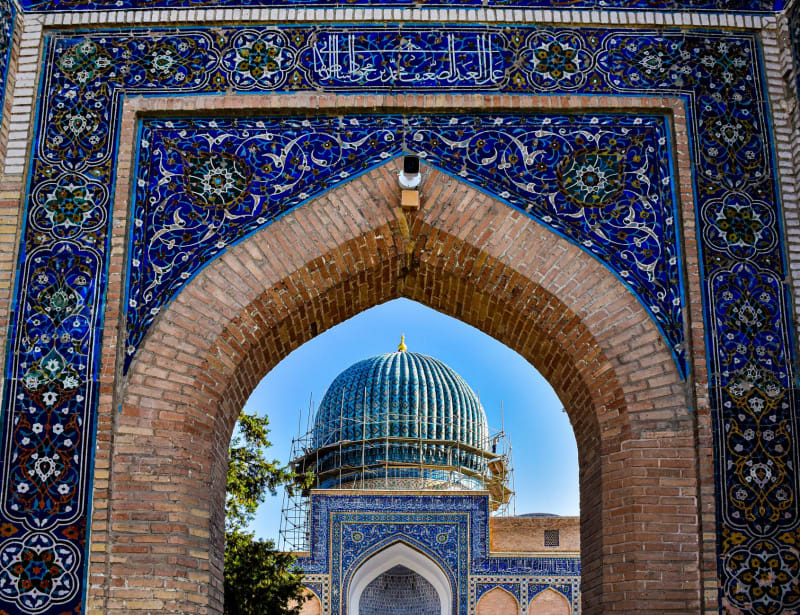
The ancient pilgrimage city of the steppe, where a 14th-century turquoise mausoleum still draws the faithful from across Central Asia.
Explore kazakhstan
Almaty
Kazakhstan's soulful former capital — a Soviet-alpine city where wild apple orchards began and the Tian Shan watches from every street corner.
Explore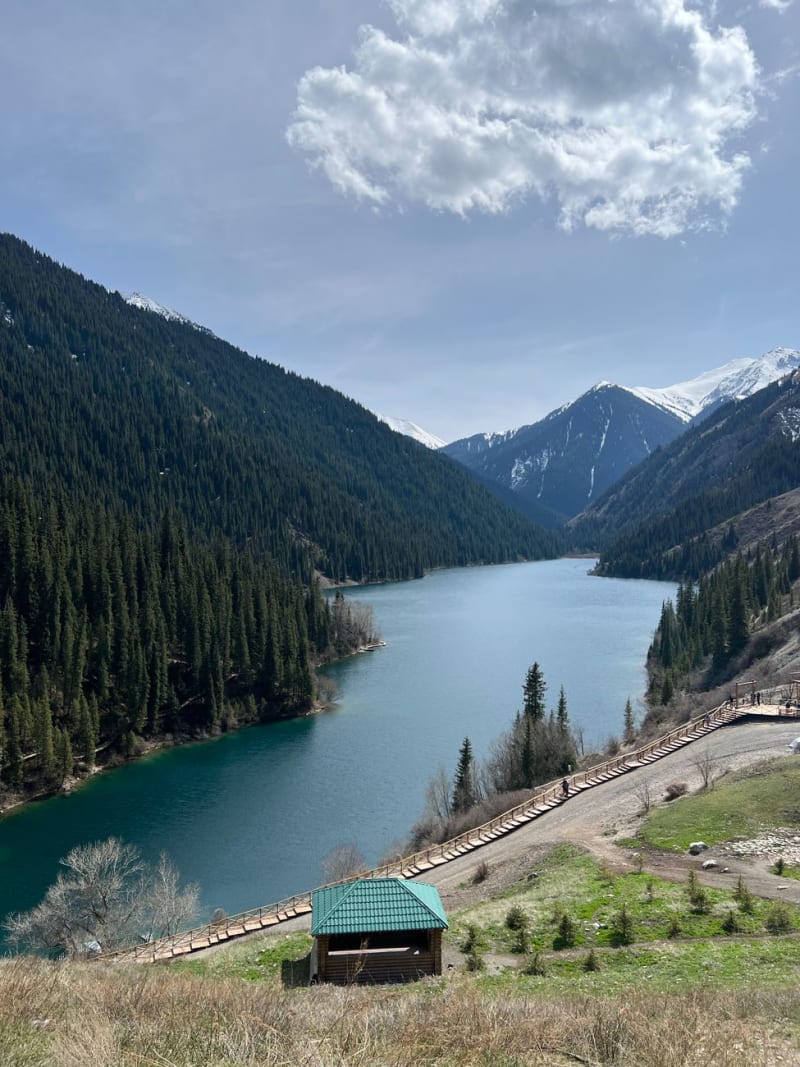 kazakhstan
Altyn-Emel National Park
A vast desert park east of Almaty where a single three-hundred-meter dune sings under your feet, rainbow-striped clay hills glow at dusk, and herds of wild kulan kick up dust on the steppe.
Explore kazakhstan
Aral Sea
The sea that died in living memory — its rusted ships now sit in desert sand where fishermen once pulled nets full of carp and bream.
Explore kazakhstan
Astana
A capital conjured from empty steppe in twenty years, filled with buildings that look like architecture students were given no brief and limitless money.
Explore kazakhstan
Baikonur Cosmodrome
A pilgrimage to the windswept steppe launch pad where Sputnik and Gagarin first left Earth, still firing rockets skyward today.
Explore