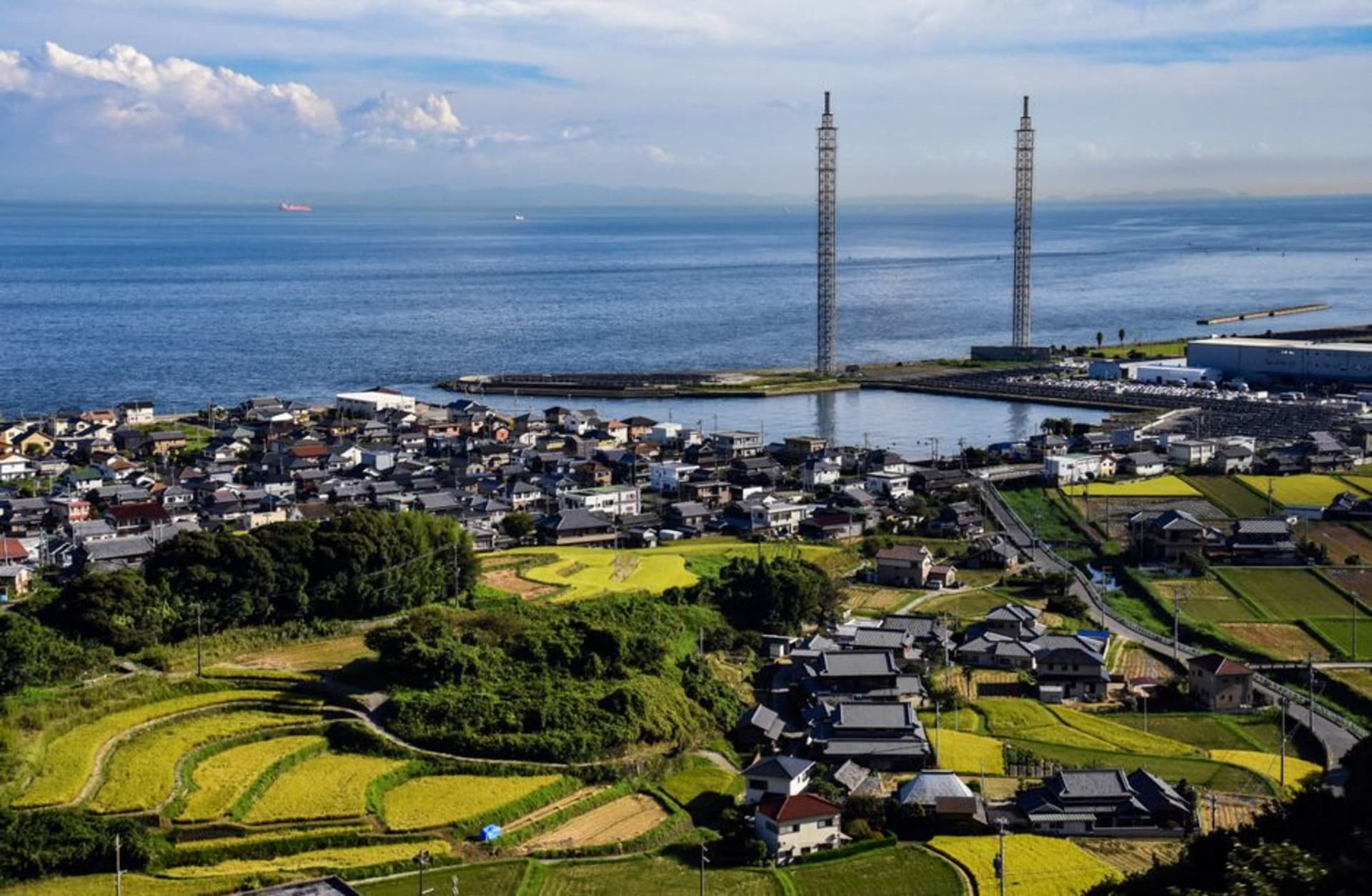
Karatsu
"A castle facing the open sea, a bay full of pines, and clay that potters have argued over for four hundred years."
A Saga castle town on the north coast of Kyūshū, where a white keep looks out to sea and a two-mile grove of wind-bent pines curves along the bay. Home to austere, deeply prized pottery and to an autumn festival of thundering painted floats. Salt air, clay, and rooted tradition.

Karatsu means, roughly, “the port for the Tang” — the place ships once left from bound for China — and something of that outward, seagoing character still clings to it. We came across from Fukuoka on a local line that ran right along the coast for the last stretch, the sea flat and grey-blue on our left, and stepped out into a town that smelled of salt and low tide. On its own spit of land, white against the water, stood Karatsu Castle, and beyond it curved the great sweep of the bay. Lia, who by this point in the trip had seen a good many castles, said this was the first one that looked like it belonged to the sea rather than to a lord, and she was right.
The Seafront Castle
Karatsu Castle sits on a rise called Mount Mitsushima, on a narrow tongue of land with the sea on nearly every side, so that from its upper floors you look out over open water in one direction and the long green line of the pine grove in the other. The keep is a modern reconstruction, but its setting needs no help — it is sometimes called Maizuru-jō, “dancing crane castle,” for the way the walls and the pines are said to spread like a crane’s wings along the shore.

We climbed it late in the day with the wind coming hard off the water, and stood on the top gallery watching fishing boats work back toward the harbour, the whole bay turning pewter as the sun dropped.
Niji-no-Matsubara and the Pottery
Along the bay from the castle runs Niji-no-Matsubara, the “rainbow pine grove” — a curving belt of tens of thousands of black pines, planted centuries ago as a windbreak and stretching for something like four miles along the sand in a long shallow arc. We walked into it and the noise of the town vanished; underfoot was soft needle-fall, overhead the pines leaned and hissed in the sea wind, all of them bent the same way by generations of it.

Karatsu is also a byword among the Japanese for pottery — Karatsu-yaki, austere, earthy stoneware glazed in browns and greys, prized for centuries by tea masters above almost any other. We spent an hour in a small gallery near the station, and I bought a single rough tea bowl that we still drink from.
The Karatsu Kunchi
The town’s great yearly release comes in early November with the Karatsu Kunchi, the festival of the Karatsu shrine, and though we were there in the wrong season we went to the Hikiyama Exhibition Hall to see the floats up close. They are extraordinary — fourteen enormous lacquered figures built up over generations, a scarlet lion, a golden fish, a samurai helmet, a dragon, each one hauled through the streets by teams of men to the pounding of drums and flutes.

Even standing still under the hall lights they had a kind of coiled energy, and the attendant who showed us round spoke about “his” float — the one his neighbourhood pulls — with the pride of a man talking about family.
Getting There
Karatsu lies on the north coast of Saga Prefecture in Kyūshū, a little over an hour west of Fukuoka (Hakata) on the JR Chikuhi line, which runs through from the Fukuoka subway — a straightforward, scenic ride ending at Karatsu station. The castle, pine grove, and pottery shops are all within walking distance or a short bus ride of the station. The Kunchi festival falls on 2–4 November each year and draws large crowds; outside those dates the town is calm, and a half-day to a full day sees it comfortably.
Keep exploring
More of Kyūshū & Okinawa
Keep exploring
More from Kyūshū & Okinawa
 japan
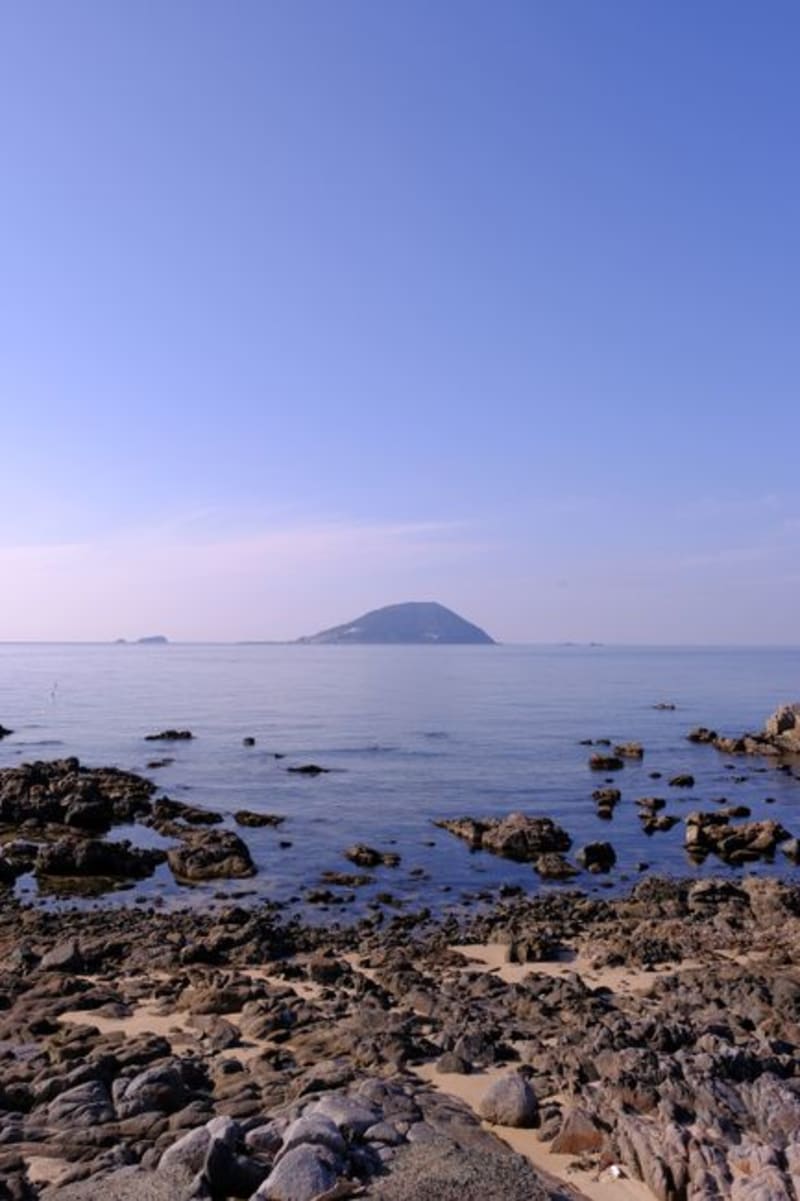
japan Itoshima
A coast of surf-shack cafés and low mountains an hour west of Fukuoka, where a lone white torii stands in the shallows facing the sunset. It felt less like Japan's postcard image and more like a slow Sunday that never quite ended.
Explore japan
japan Takeo Onsen
A small Saga hot-spring town built around a 3,000-year-old camphor tree and a library that people travel across Japan just to sit in. We came for the bath and stayed for the trees, which is not the order I expected.
Explore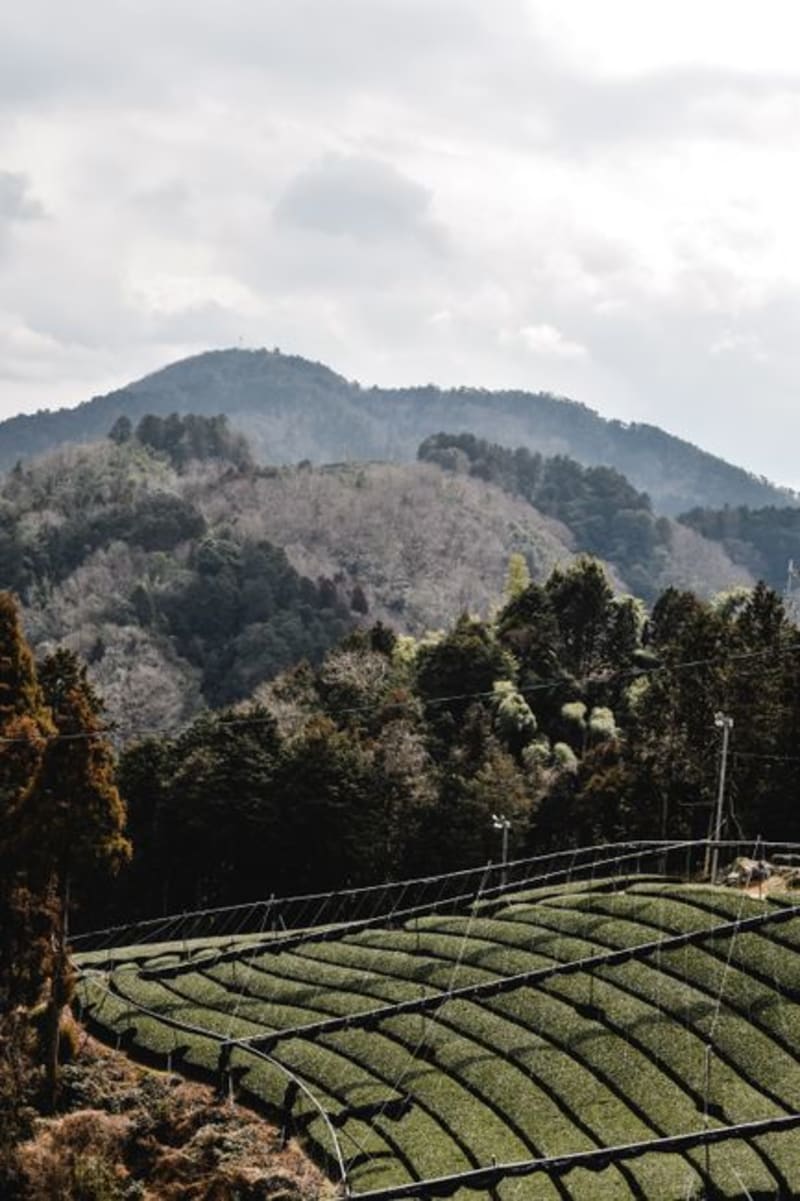 japan
japan Arita
The Saga town where Japanese porcelain was born four centuries ago, still lined with kilns, old shops, and a hillside shrine with torii and lanterns made of glazed ceramic. We went for pottery and left thinking about a single teacup for weeks.
Explore japan
japan Saga
The quiet capital of a quiet prefecture, ringed by rice plains on northern Kyūshū. Saga is castle grounds and moats, a sky full of balloons come autumn, and the ghosts of an ancient moated village older than most of history. We found a city that asks nothing of you and gives more than you expect.
Explore japan
japan Ureshino Onsen
A Saga valley where the hot-spring water is famously silky and the surrounding hills are combed with green-tea terraces. You can bathe in the morning and drink the same landscape in a cup by afternoon.
Explore japan
japan Sasebo
A Nagasaki port city facing a maze of pine-clad islets called the Kujūkushima, the Ninety-Nine Islands. Home to a Dutch theme park, a US-navy-born burger culture, and boat cruises that thread between green scraps of land scattered across a silver sea.
Explore