Kawagoe
"Tokyo burned and rebuilt itself out of all recognition. Kawagoe just kept standing there, black-walled and stubborn, remembering."
A Saitama town that kept its Edo-era face when Tokyo lost its own — a street of black clay-walled warehouses, a wooden bell tower that still marks the hours, and an alley that smells of burnt sugar. The easiest half-day escape from the capital I know.

We almost didn’t go. Kawagoe was a name on a list Lia had made, thirty minutes north of Ikebukuro, and on a grey Tuesday with rain threatening it seemed like the sort of place you save for a trip that never happens. We went anyway, mostly because the train was cheap and we had nothing better, and stepped out into a town that felt like Tokyo’s older, quieter cousin — the one who stayed home and kept the family furniture.
The street of black warehouses
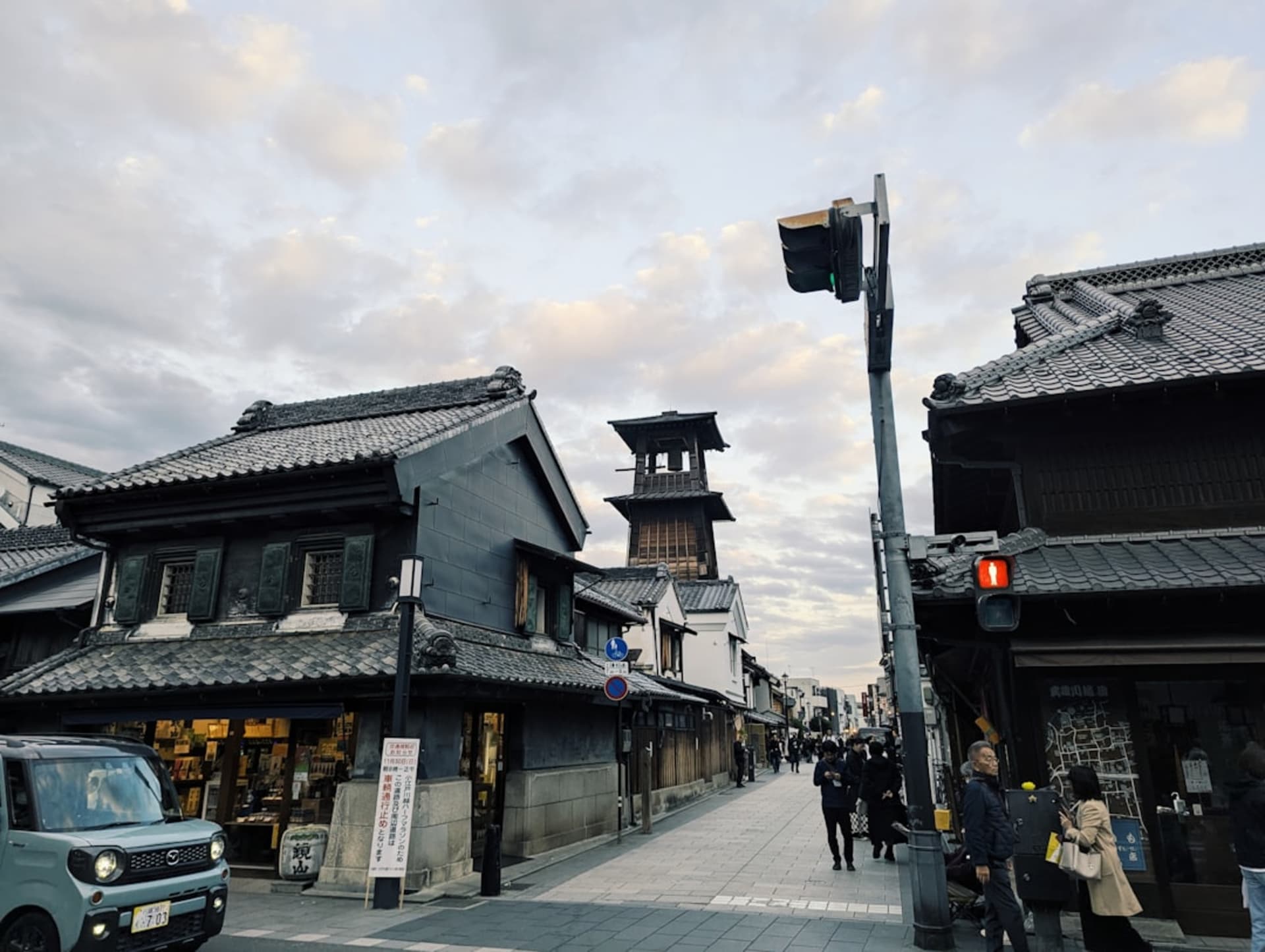
The heart of Kawagoe is a single street lined with kurazukuri — thick-walled merchant storehouses built of clay and finished in near-black plaster, with heavy tiled roofs that curl up at the ends like eyebrows. They were built this way to survive fire, which is exactly why they’re still here: Tokyo’s own Edo-era townscape burned and rebuilt itself into glass and concrete, while Kawagoe, a prosperous merchant town that supplied the capital by river, simply endured. Walking it, you understand why people call the place Koedo, “Little Edo.” The wealth is legible in the walls. These were the houses of men who dealt in sweet potatoes and textiles and did very well out of both.

The bell that still keeps time
Halfway along, a wooden tower rises above the rooflines — the Toki-no-Kane, the “Bell of Time,” a three-tiered belfry that has told Kawagoe the hour for roughly four centuries. The one standing now is the fourth rebuild, raised after a great fire in 1893, but it still rings, four times a day, an electric mechanism now doing the work that a bell-keeper once did by hand. We happened to be standing beneath it when it sounded at noon, and I watched a whole street of people not react at all — the surest sign that a thing belongs. Lia said it was the plainest tower she’d seen in Japan and somehow her favourite, and I knew what she meant. It isn’t grand. It’s just faithful.

Candy Alley
Behind the main street runs Kashiya Yokochō — Candy Alley — a short cobbled lane of shops that have made dagashi, cheap old-fashioned sweets, for generations. It smells, honestly, of childhood: burnt sugar, roasting soy, the caramel edge of freshly pulled candy. We bought far too much — sweet-potato crisps, glassy amber candy on sticks, a length of the longest, thickest fu-gashi I’ve ever seen — and ate it walking, like the schoolchildren the alley is really for. Kawagoe is potato country, and the sweet potato is everywhere: in the candy, in ice cream, in a purple soft-serve Lia declared the best thing we ate all day. I had the beer-flavoured one, which was a mistake, and hers, which was not.

Getting There
Kawagoe sits in Saitama, directly north of central Tokyo. From Ikebukuro the Tobu Tojo line runs to Kawagoe Station in about thirty minutes; the Seibu Shinjuku line reaches Hon-Kawagoe Station, closest to the old town, in around forty-five. From either station it’s a fifteen-minute walk or a short loop-bus ride to the kurazukuri street. It’s an easy half-day from central Tokyo — go on a weekday if you can, as weekends fill the warehouse street shoulder to shoulder.
Keep exploring
More of Kantō
Keep exploring
More from Kantō
 japan
japan Tokyo
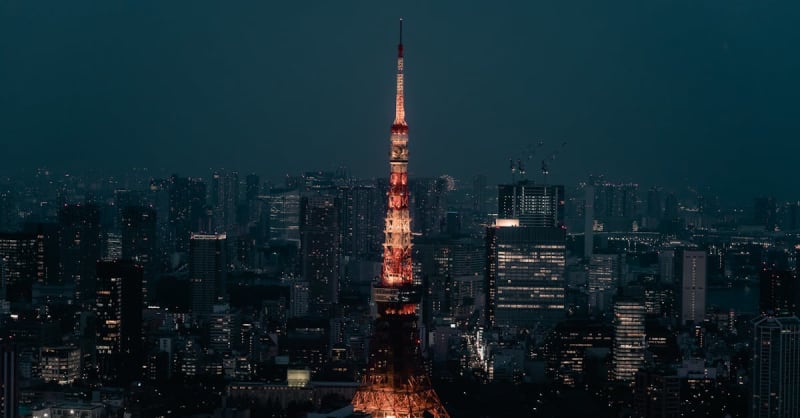
A city that runs on precision, kindness, and the best street food on earth. Tokyo overwhelmed me — and then it made perfect sense.
Explore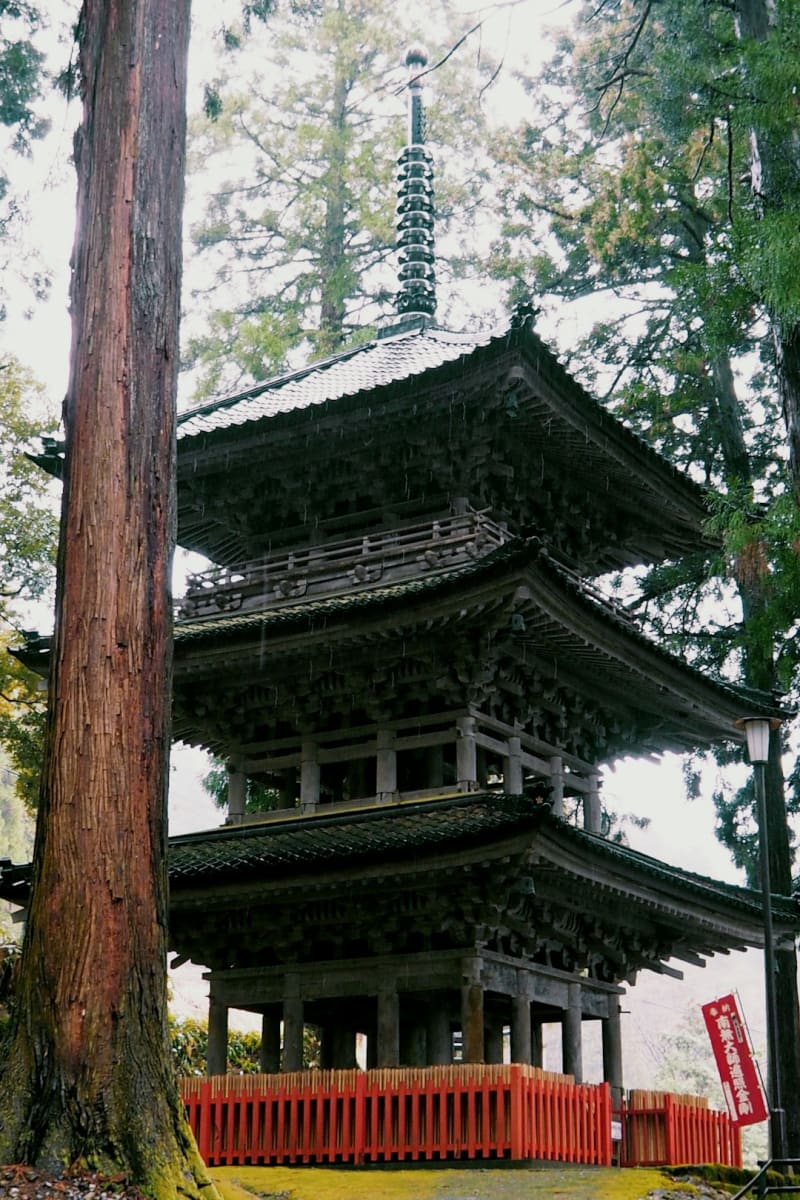 japan
japan Mount Takao
Tokyo's beloved forested mountain at the western edge of the city, where cedar trails climb to a clifftop temple, tengu goblins watch from the shadows, and Mount Fuji floats on the horizon on a clear day. The capital's easiest true escape into nature.
Explore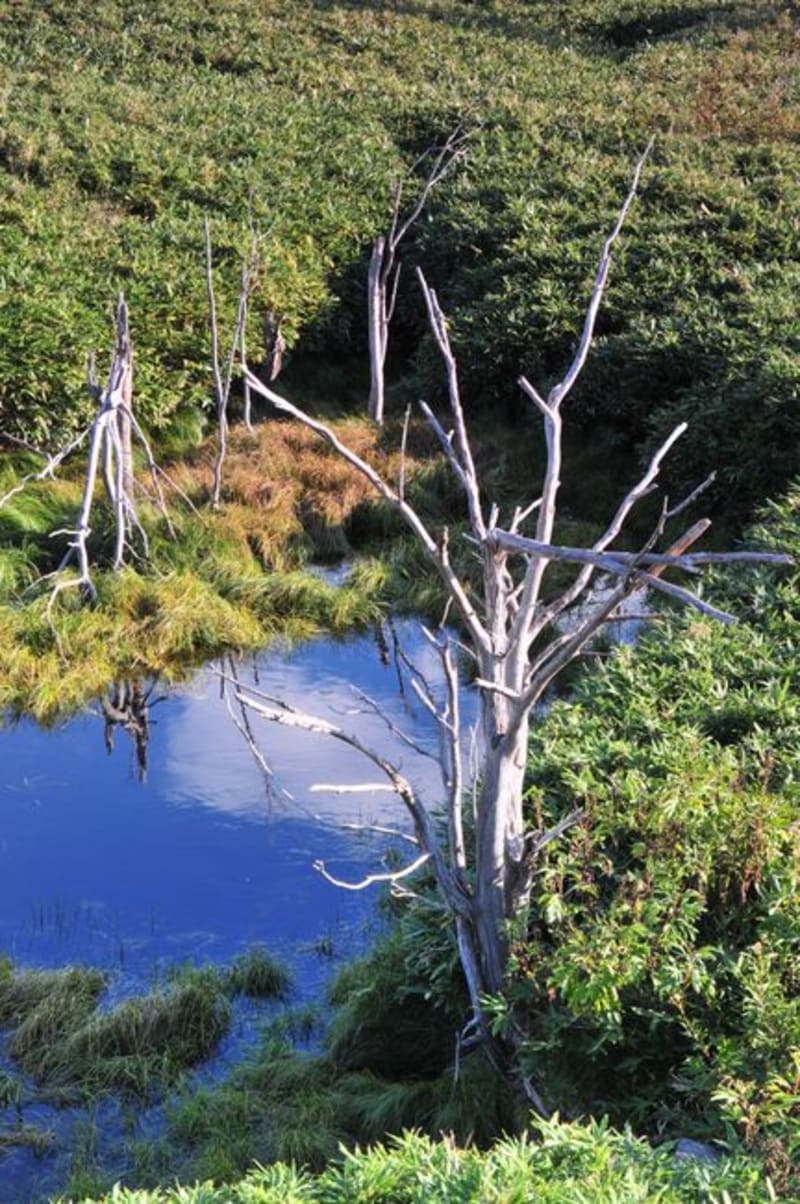 japan
japan Oze
A vast high marshland straddling four prefectures, laced with wooden boardwalks that float across the wet moor. In late spring the skunk cabbage blooms in white drifts; in summer the tiny nikkokisuge lilies turn the plain gold. A rare, tender wilderness reached only on foot, hushed and huge under a wide mountain sky.
Explore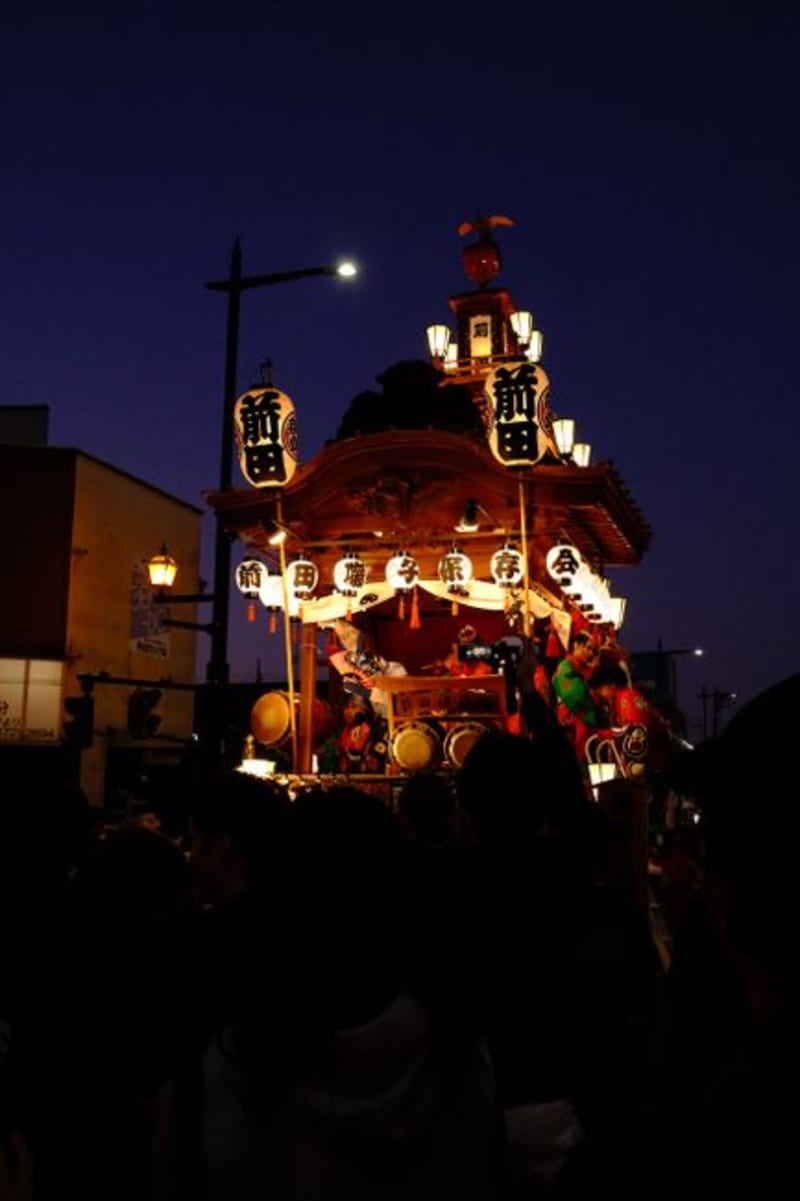 japan
japan Chichibu
A mountain-ringed basin in western Saitama, close to Tokyo and yet somehow overlooked — a district of old shrines and river valleys, of pilgrim temples and pink hills of moss phlox, and of one December night when floats hung with lanterns are hauled up a hill under fireworks.
Explore japan
japan Nokogiriyama
A jagged former quarry mountain across Tokyo Bay in Chiba, where a vertiginous clifftop lookout offers a 'peek into hell', a giant stone Buddha sits carved into the rock, and hundreds of weathered arhats watch from the hillside. Raw stone, sweeping bay views, and an easy escape by ferry.
Explore japan
japan Okutama
Tokyo's forgotten western edge, where the metropolis dissolves into cedar mountains and a jade-green reservoir. Lia and I came here to remember that the world's largest city keeps a wilderness in its back pocket. Two hours from Shinjuku and suddenly we could hear the river.
Explore