Kusatsu Onsen
"The town has a river of boiling water running through its centre, and everyone just goes about their evening beside it as if that were normal. In Kusatsu it is."
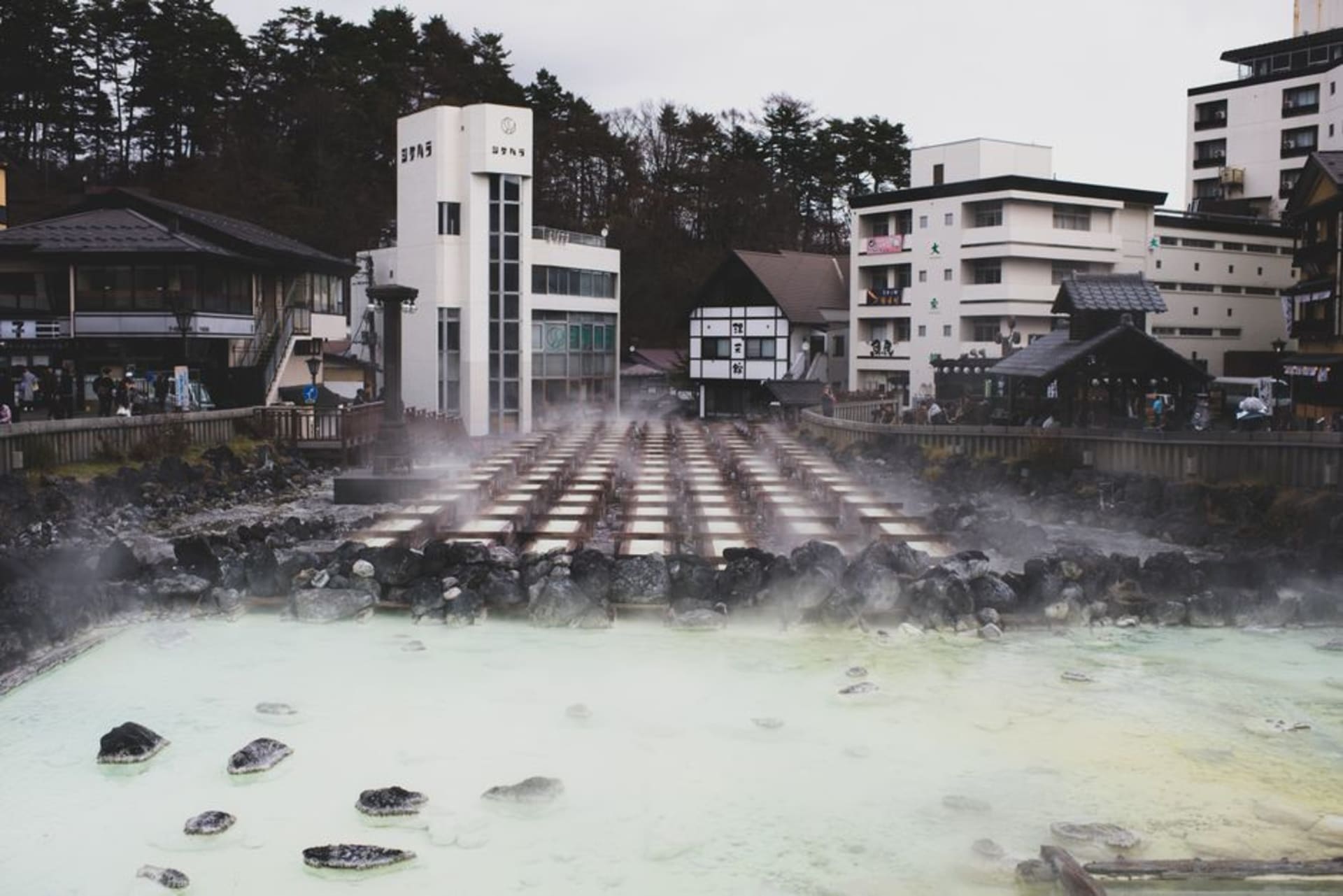
A hot-spring town high in the Gunma mountains, built around a steaming field of scalding water that pours through the middle of the streets. Sulphur in the air, snow on the roofs, and women singing as they cool the water by hand with wooden paddles.

You smell Kusatsu before you see it. We came up on the bus from the valley, climbing through pine forest into thinner, colder mountain air, and somewhere on the last bends the sulphur reached us — that eggy, mineral, unmistakable hot-spring smell that told Lia, who had been asleep, exactly where we were before she opened her eyes. Kusatsu is one of the three or four great onsen towns of Japan, and unlike the discreet ones that hide their springs behind screens, it puts its water right in the middle of everything.
The hot-water field
The centre of town is the yubatake — literally “hot-water field” — and it’s the strangest, best town square I’ve stood in. Scalding spring water, over ninety degrees at the source, gushes up and is run through long open wooden troughs down the middle of a stone basin, cooling and depositing pale yellow-grey sulphur as it goes, before pouring off a low fall in a permanent cloud of steam. The whole thing steams and reeks and glows, lit at night, with the town’s inns and shops ranged around it. We stood at the rail a long time. There is something deeply satisfying about a town organised entirely around the thing coming out of the ground, making no attempt to hide it or apologise for it.

Yumomi — cooling the water by hand
Kusatsu’s water comes out too hot to enter, and rather than dilute it with cold — which would weaken the minerals the whole place is famous for — the old solution was to cool it by hand. This is yumomi: teams of women stir and beat the water with long flat wooden paddles, working it back and forth to bring the temperature down, and they do it in time to a folk song, the Kusatsu-bushi, which they sing as they work. We caught a demonstration at the Netsu-no-Yu hall — half performance now, half preservation of a real technique — and it was oddly moving: the rhythm of the paddles, the steam, the old melody, a whole ritual grown up around the simple problem of water that loves you a little too fiercely.

The bath itself
And then, of course, you bathe. We soaked at Sainokawara, a big open-air rotenburo set in a park at the edge of town where hot streams run down the hillside, and I lowered myself into water that was, even cooled, at the very outer edge of what I could stand — Kusatsu water is strong, acidic enough to sting a cut and, they say, to kill most things it touches. I lasted a proper Japanese few minutes, red as a boiled crab, and climbed out into the freezing mountain air with my skin singing. Lia stayed in longer, of course, and emerged looking annoyingly serene. We walked back through the snow to our inn with wet hair and no need of coats, warm from the inside out in a way no radiator has ever managed.

Getting There
Kusatsu Onsen sits high in the mountains of Gunma, north-west of Tokyo. The usual route is the JR limited express from Ueno toward Naganohara-Kusatsuguchi Station (around two and a half hours), then a JR bus up the last winding half-hour to the town’s bus terminal. Direct highway buses also run from Tokyo Station and Shinjuku in roughly four hours. The town centre around the yubatake is small and walkable once you arrive. Come in winter for snow and steam, but pack for real mountain cold.
Keep exploring
More of Kantō
Keep exploring
More from Kantō
 japan
japan Shima Onsen
A hushed hot-spring village strung along a river gorge deep in the Gunma mountains, where the water runs an unearthly blue-green and legend says it cures forty thousand ailments. Shima is the onsen you go to when you want to hear the river and nothing else.
Explore japan
japan Ikaho Onsen
A hot-spring town built up the side of a Gunma mountain around a single, famous stone stairway of 365 steps, lined with bathhouses, game halls, and steam rising into the cedar dusk. Ikaho is old-fashioned onsen Japan at its most atmospheric.
Explore japan
japan Mount Haruna
A collapsed Gunma volcano cradling a still crater lake and a shrine older than most nations. Lia and I climbed here for the quiet and found something stranger — a place where the mountain itself seems to be watching. The kind of stillness that makes you lower your voice.
Explore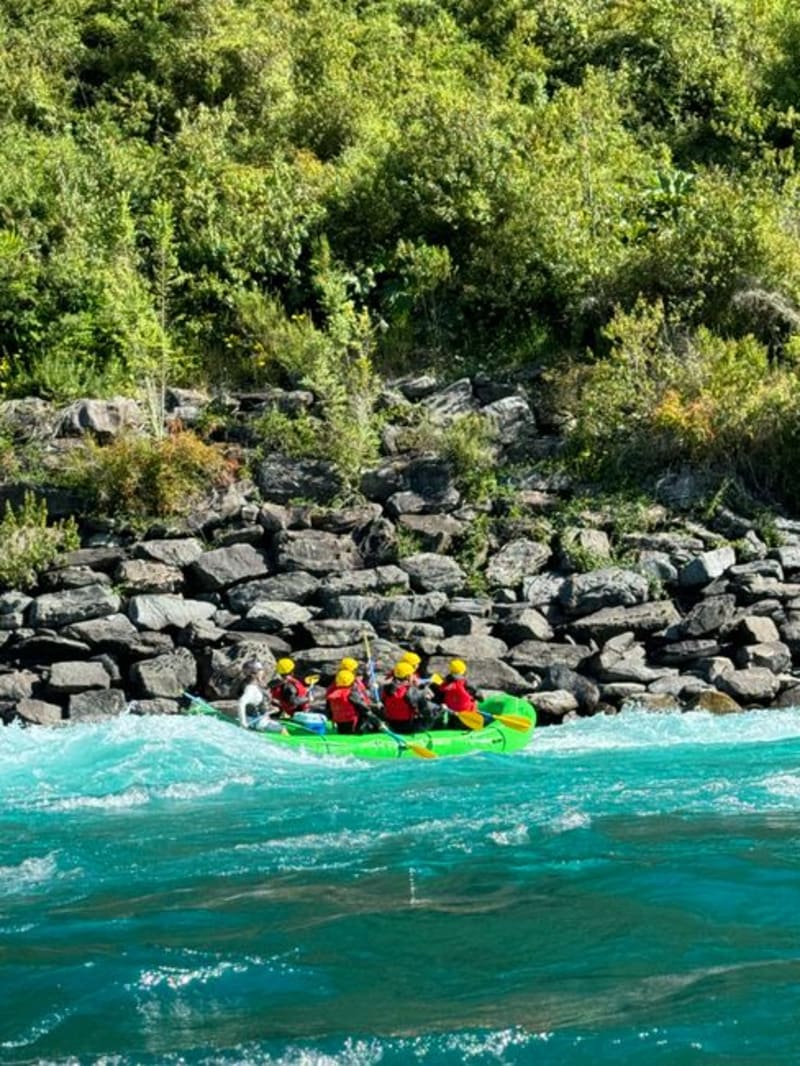 japan
japan Minakami
A mountain hot-spring town in northern Gunma where the upper Tone river tears out of the peaks and adventure outfitters share the valley with old wooden onsen. In summer you raft; in winter the snow falls in metres and you sink into steaming water with white all around.
Explore japan
japan Tomioka
A quiet Gunma town built around a red-brick silk mill that once dressed half the world. The Tomioka Silk Mill is a UNESCO monument to the moment Japan chose to modernise, and to the young women whose fingers made it happen. It's a place about thread, and about everything thread can pull along behind it.
Explore japan
japan Takasaki
A working Gunma city where most of Japan's red daruma dolls are born, one painted eye at a time. Beneath its unglamorous surface lies a quiet devotion to luck, patience, and the long game. Come for the daruma, stay for the ramen and the giant white Kannon watching over the hills.
Explore