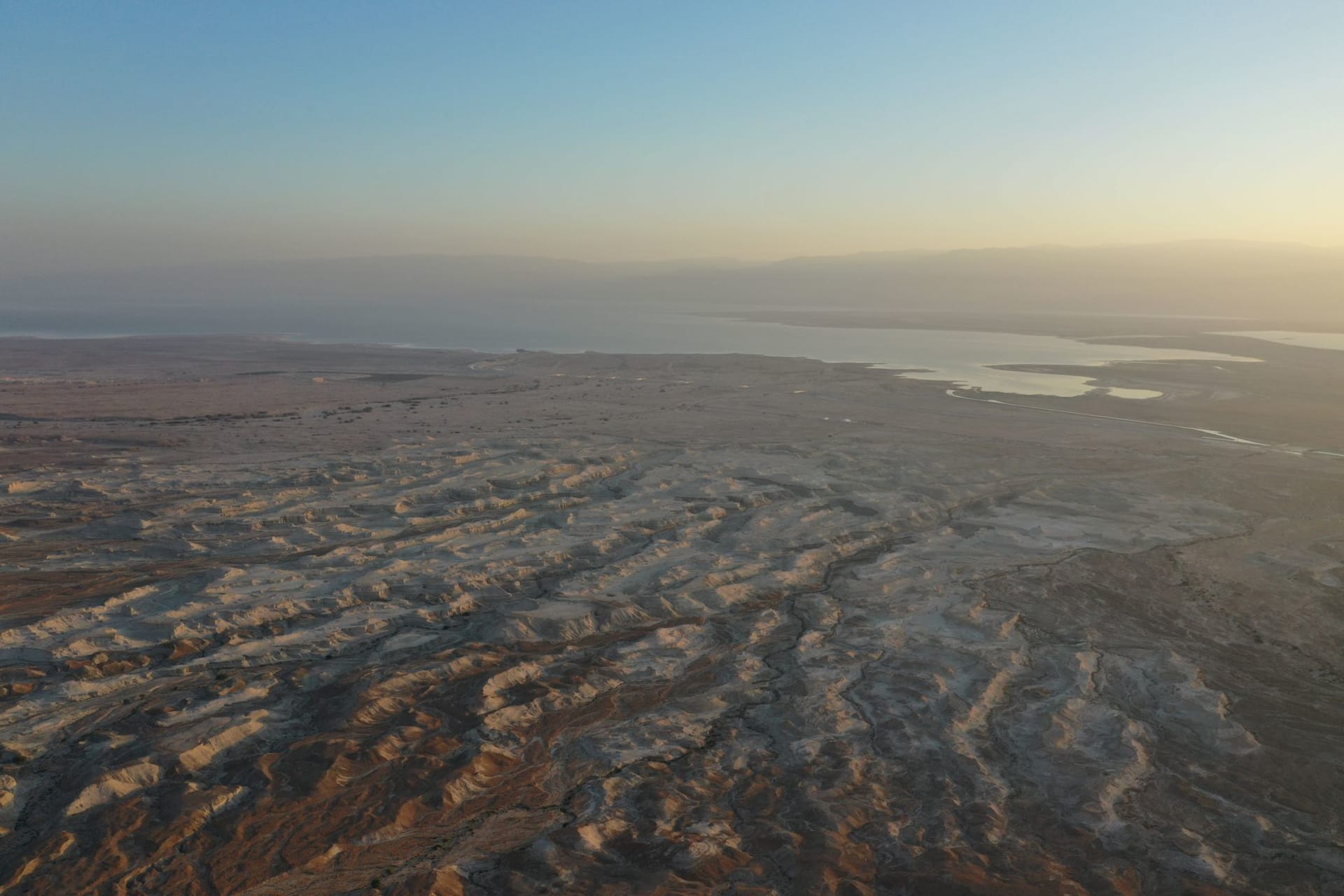
The lowest point on Earth is a hyper-saline lake ringed by desert cliffs where you float without trying and slather yourself in black mud like it's perfectly normal.

The Dead Sea is one of those places that earns the adjective remarkable before you’ve even set foot in the water. You’re at 430 meters below sea level — the lowest exposed point on the planet’s surface — in a landscape that looks like it was designed by someone who wanted to illustrate geological extremes. The cliffs of the Judean Desert drop into a lake so salty that nothing lives in it. The water shimmers with a faint iridescence. The air smells mineral and clean.
I’d been told about the floating. Everyone tells you about the floating. It still catches you off guard.
The Physics of Not Sinking
The salinity of the Dead Sea runs around thirty percent — roughly ten times that of the ocean. Your body simply cannot sink. I waded in at a small public beach on the Israeli side, the water warm and dense against my legs, and when I leaned back I rose without effort to a position that felt like lying in an invisible hammock. I tried to turn over and swim normally and couldn’t do it. Every instinct about how water behaves was wrong here.
The water has a quality I can only describe as silky — it coats your skin rather than washing off it. Within five minutes any small cut or nick burns with a focused sharpness that clarifies exactly how much salt is present. The shoreline has a strange mineral crust, white and crystalline, that crunches underfoot at the waterline. Don’t splash your face. I did it once, reflexively, and spent the next ten minutes rinsing my eyes at the freshwater station.
The Mud Ritual
Near the beach entrance, a concrete tub holds dark, thick mud dredged from the lakebed. You’re meant to coat yourself with it, wait for it to dry in the sun, and then rinse off. This is not a subtle spa experience — you look ridiculous, standing in thirty-degree heat with grey-black mud cracking across your shoulders while other tourists do the same and pretend it’s elegant. The mud is fine-grained and smooth. It smells faintly of sulfur. Whether it does anything for your skin, I genuinely don’t know, but the novelty is real and the sun drying it has a satisfying tightening sensation.
The Shrinking Sea
What nobody tells you is how visibly the Dead Sea is disappearing. The water level drops roughly a meter per year as the Jordan River is diverted upstream for agriculture and the sea itself is channeled for mineral extraction. Sinkholes have swallowed sections of the original shoreline. Hotels that once sat at the waterline now have a four-hundred-meter walk across cracked, salt-encrusted lakebed before you reach the water. This isn’t background information — it’s visible and it changes how you experience the place. The existing beaches are managed oases in what is becoming a wider desert.
The Desert Beyond
The Ein Gedi nature reserve, just up the road, offers a counterpoint: flash-green oases fed by springs where ibex graze on cliffs above freshwater pools and the contrast with the dead lake below is almost theatrical. I spent a morning hiking the David Stream trail in the cool shade of canyon walls, listening to waterfalls that sounded preposterously lush given where they were.
When to go: October through April, when temperatures are manageable. Summer heat at the Dead Sea is genuine and relentless — think 40°C with no shade on the beach. Winter days can be warm and the light is exceptional. Avoid Shabbat at the main resort beaches if you want parking and facilities without a queue.
Keep exploring
More from Israel
 israel
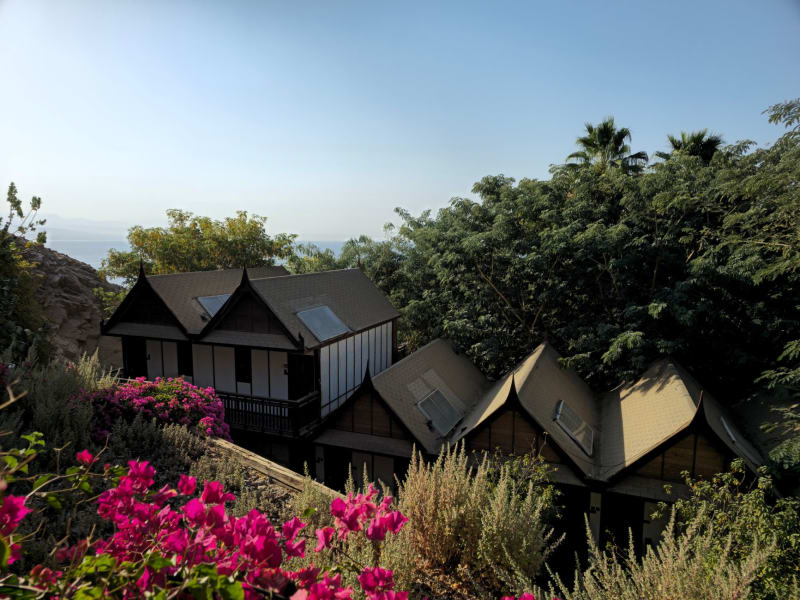
 Eilat
Israel's southernmost city sits at the tip of the Negev on a finger of the Red Sea, where the coral reefs are world-class and the surrounding desert makes the turquoise water feel genuinely surreal.
Explore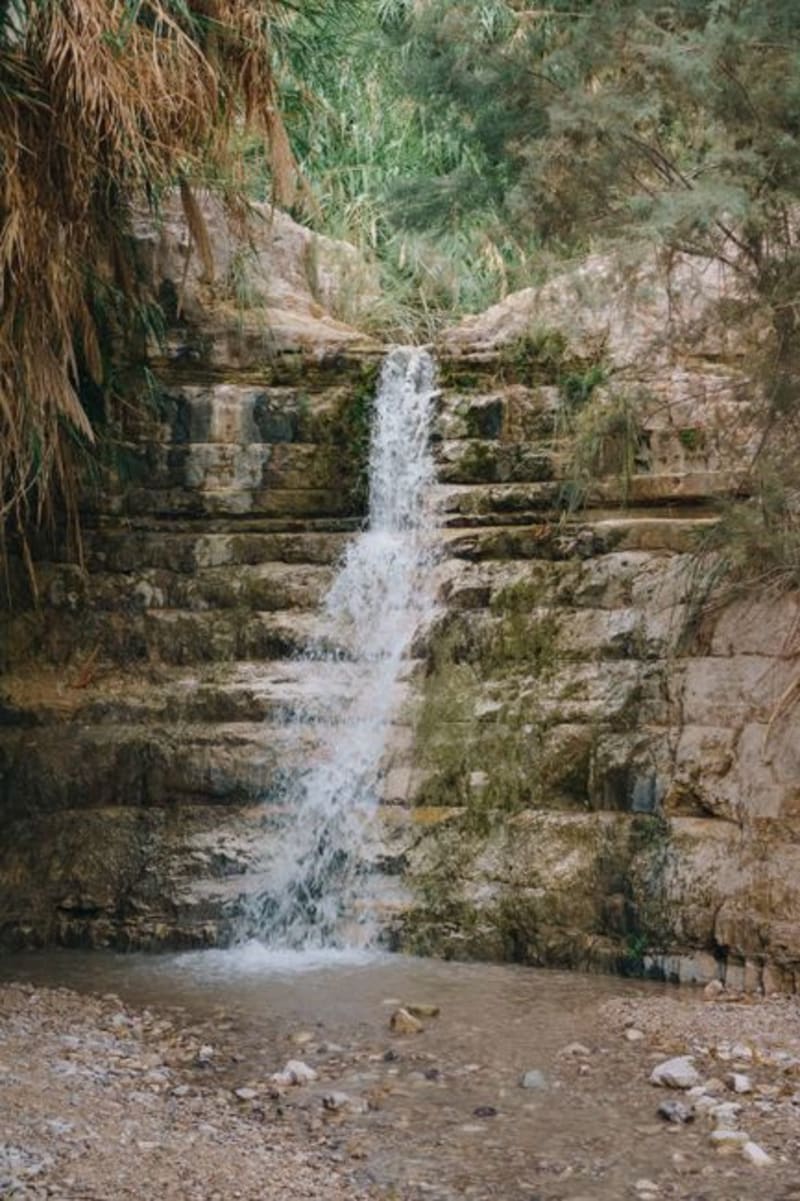 israel
 Ein Gedi
A freshwater oasis of waterfalls and ibex trails cut into the desert cliffs above the Dead Sea, where a spring-fed canyon proves the Judean Desert isn't as dead as it looks.
Explore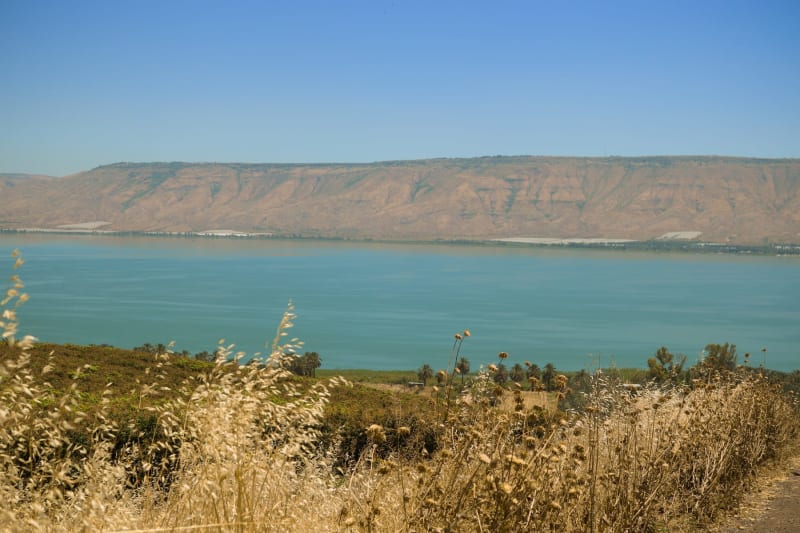 israel
 Galilee
Rolling hills, ancient synagogues, and the Sea of Galilee — where spirituality and nature are inseparable.
Explore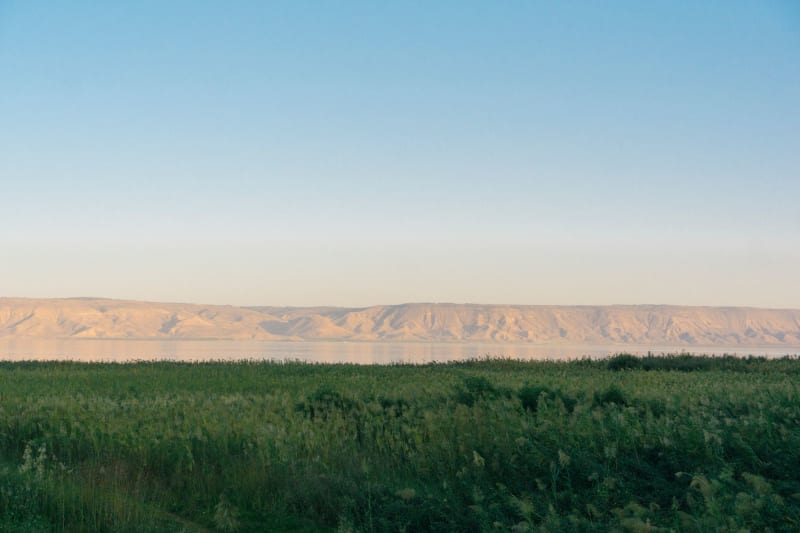 israel
 Golan Heights
A volcanic plateau seized in 1967 and still contested on maps, where vineyards grow in basalt soil, abandoned Syrian villages stand untouched, and Mount Hermon's snowpack is visible from the valley below.
Explore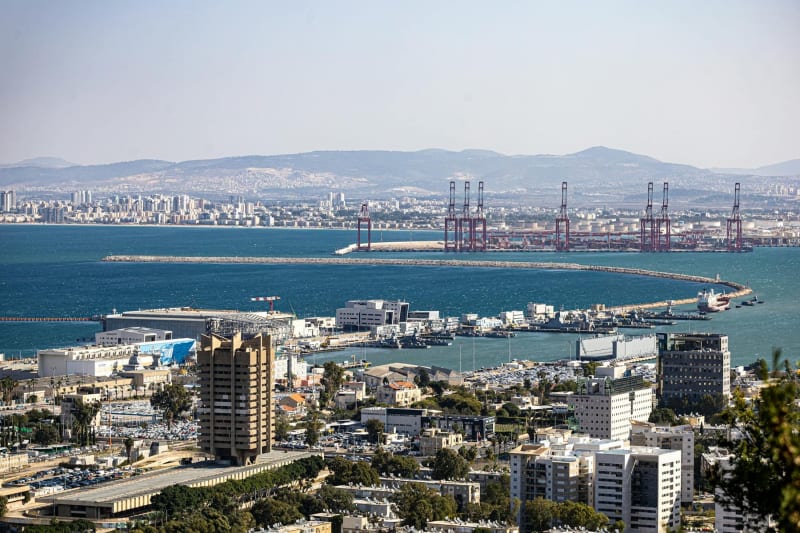 israel
 Haifa Baha'i Gardens
Nineteen perfect terraces cascading down Mount Carmel to the sea, a sacred site of extraordinary geometry.
Explore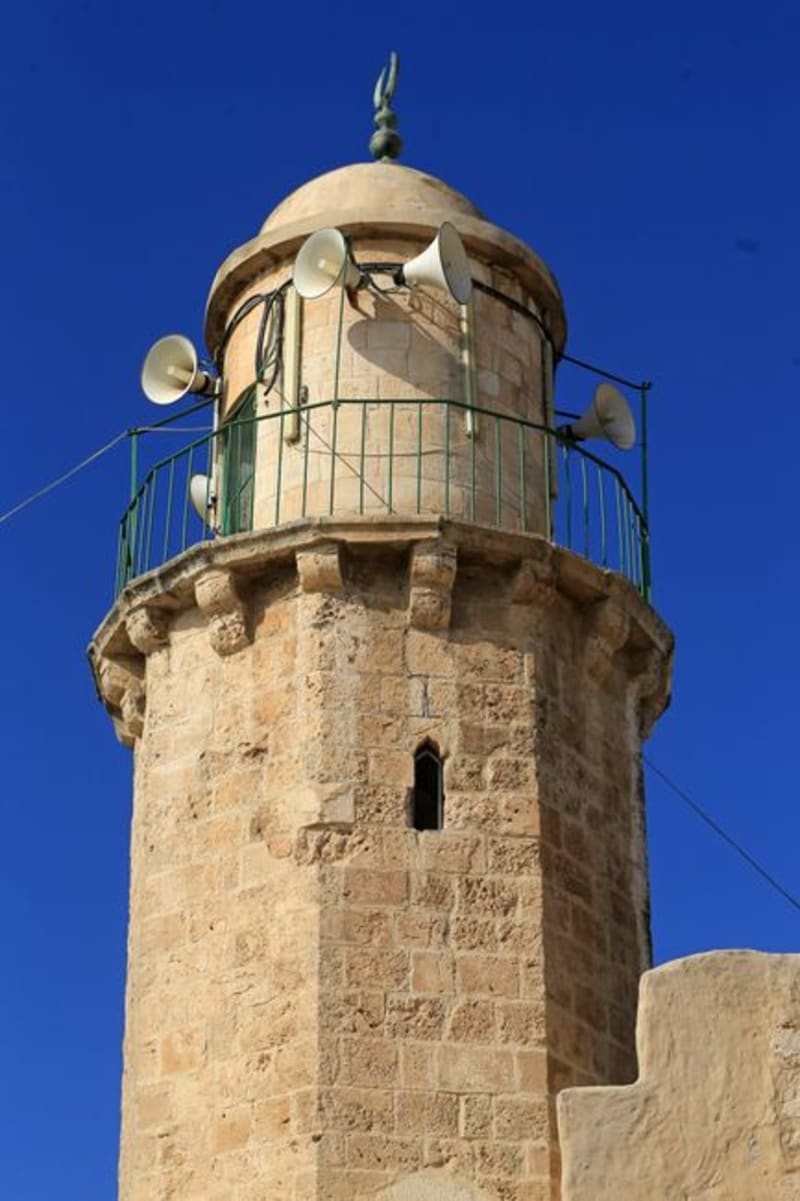 israel
 Jaffa
An ancient port city fused onto the southern edge of Tel Aviv, where Ottoman clock towers, a flea market that never stops haggling, and one of the oldest working harbors on Earth sit ten minutes from the beach bars.
Explore