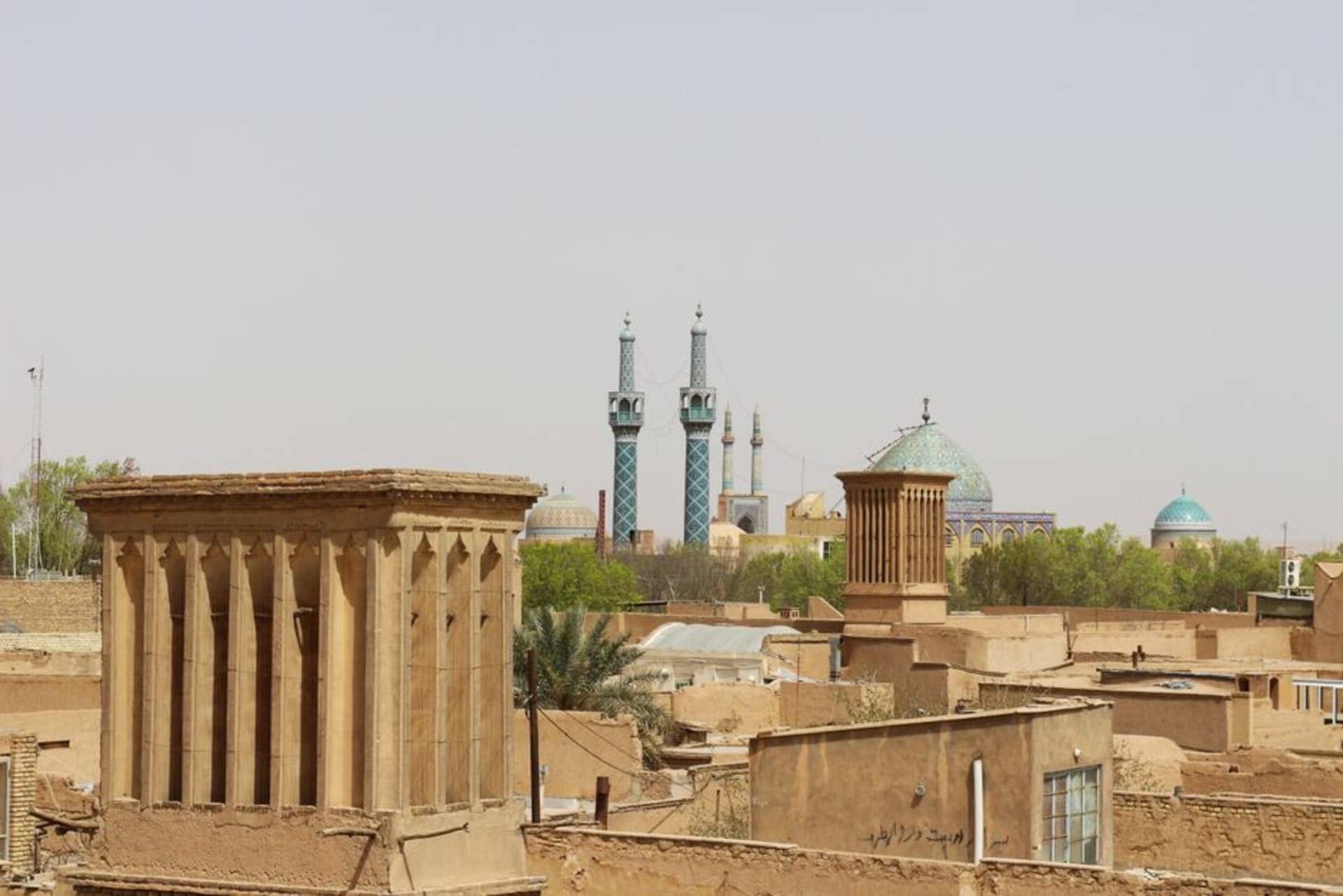
Jameh Mosque of Yazd
"I've seen taller buildings. I've never seen a taller invitation to look up."
The tallest minarets in Iran rise above a mosque entrance so precisely tiled it looks printed rather than built by hand.
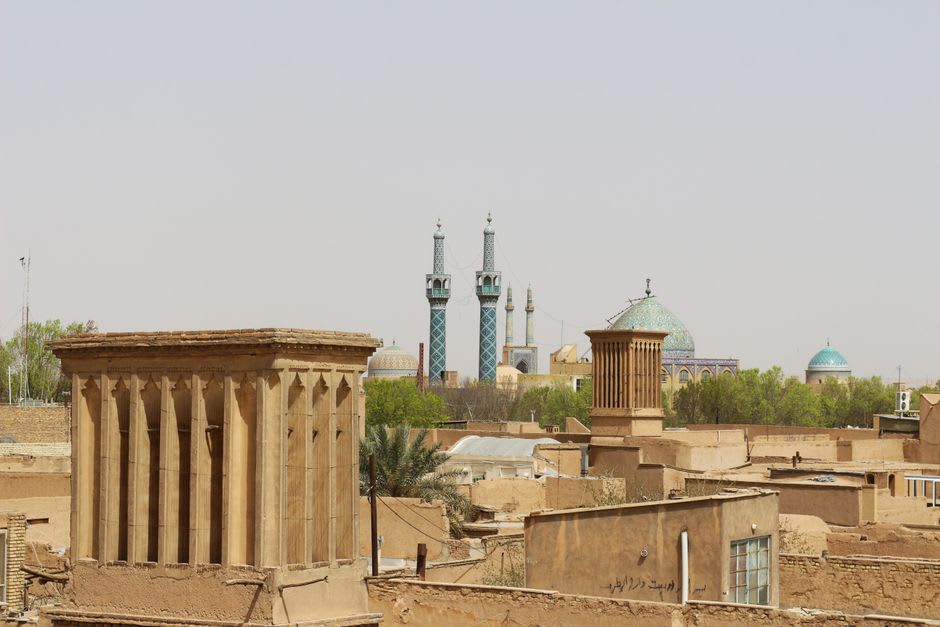
I kept walking back to look at it from a different angle, which is a strange thing to admit about a building I’d already photographed a dozen times. The Jameh Mosque of Yazd sits at the end of a narrow lane in the old city, and you don’t see it coming — the alley is low, mud-walled, ordinary — until suddenly the minarets are there, over forty meters up, the tallest in Iran, and the whole street seems to lean back to make room for them.
An Entrance That Rewards Standing Still
The portal, or iwan, dates to the fourteenth century and carries some of the finest mosaic tilework I saw anywhere in the country — denser and more geometrically intricate than Isfahan’s showpieces, if less famous for it. I stood underneath it for a long time doing nothing but tracing the pattern with my eyes, the way you’d follow a piece of music, because it genuinely doesn’t resolve into a single repeating unit at a glance. Lia pointed out that the blue shifts subtly across different sections, older tiles beside restored ones, and once she said it I couldn’t stop noticing the seams between six centuries of maintenance.
Inside, a Different Kind of Quiet
The interior courtyard is smaller and more intimate than the grand mosques of Isfahan, and that scale changes the experience. There were maybe a dozen other people inside when I visited, mostly local men arriving for afternoon prayer, and nobody paid me any attention at all. The mihrab is decorated in the same dense blue and turquoise mosaic as the entrance, and the prayer hall’s coolness after the desert heat outside felt almost medicinal — thick walls doing exactly the job they were built for eight hundred years ago.
Finding It in the Old City Maze
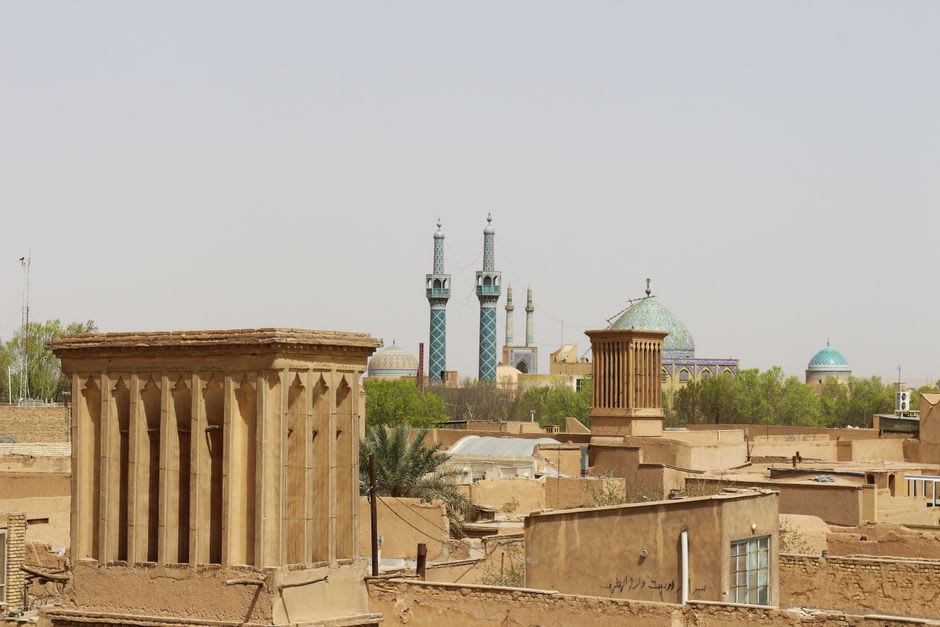
The mosque sits deep enough in Yazd’s covered-alley old city that a map only gets you partway; the last stretch is best navigated by following other people heading the same direction, or by asking anyone nearby — a bakery owner walked me the final two turns without being asked twice. That disorientation is part of the appeal. You arrive at something monumental after fifteen minutes of feeling completely lost in a residential maze of mud-brick walls, which is a better way to encounter a fourteenth-century mosque than pulling up in a tour bus.
When to go: Early morning or an hour before sunset, when the light hits the tilework at a low angle and the courtyard is close to empty. Avoid midday in summer — the stone holds heat and there’s little shade in the open courtyard itself.
Keep exploring
More from Iran
 iran
iran Jamshidieh Stone Garden
A terraced rock garden built into the Alborz foothills, where waterfalls, teahouses, and a Tehran skyline view make for the easiest half-day escape from the city center.
Explore iran
iran Javaherdeh
One of the highest permanently inhabited villages in Iran, reached by a punishing mountain road above Ramsar, where summer pastures and stone houses sit above the cloud line.
Explore iran
iran National Jewelry Treasury
A basement vault beneath Iran's central bank holding one of the largest jewel collections on Earth, including a pink diamond the size of a walnut and a globe made of solid gemstones.
Explore iran
iran Jolfa
A quiet border town on the Aras River where Iran, Armenia, and Azerbaijan nearly touch, and where an Armenian quarter of walled gardens hints at a much larger community that vanished centuries ago.
Explore iran
iran Kandovan
A troglodyte village of volcanic rock cones near Tabriz, still inhabited after seven centuries, that looks like Cappadocia's quieter, less-discovered cousin.
Explore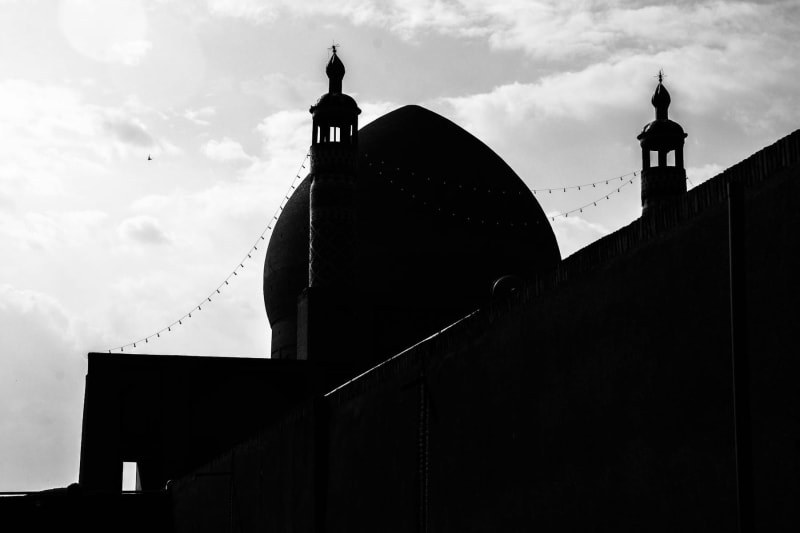 iran
iran Kashan
Exquisite Qajar mansions with courtyard gardens, and the world's finest rose-water distilleries in bloom each May.
Explore