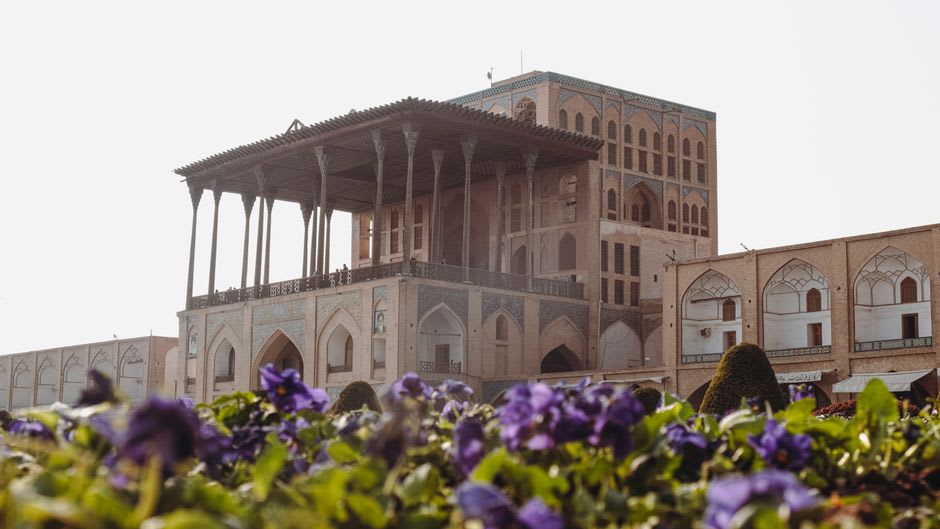
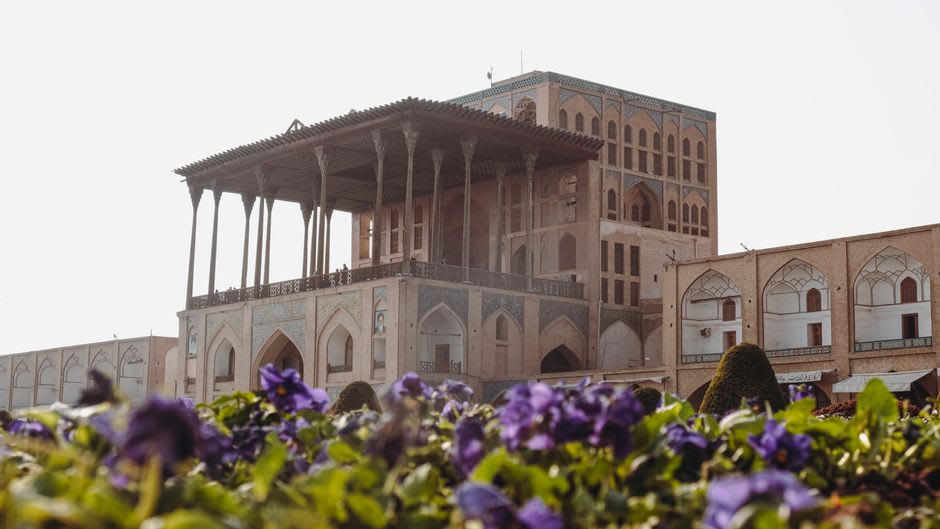
A six-story royal grandstand overlooking Naqsh-e Jahan Square, topped by a music room whose plaster walls are carved into hollow instrument shapes for acoustics, not decoration.
Ali Qapu doesn’t look like much from the square — a tall, somewhat awkward rectangular block wedged between the bazaar entrance and the mosque, nowhere near as photogenic as its turquoise neighbors. I almost skipped it. That would have been a mistake.
The Best View in Isfahan
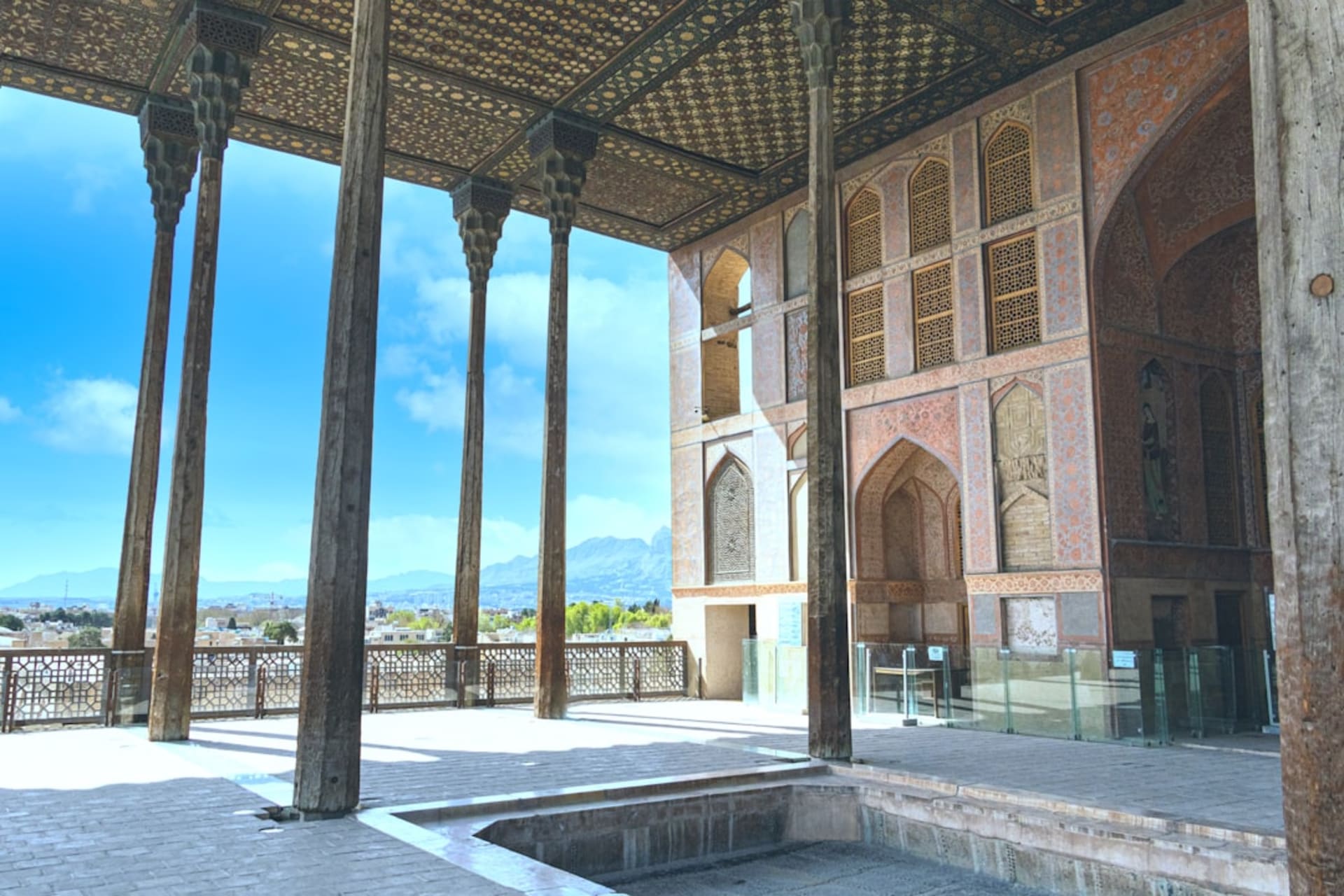
The palace was built as a gatehouse and grandstand for the Safavid court, and its wooden-columned terrace — supported on slender wooden columns, open on three sides — was where Shah Abbas I and his successors watched polo matches, military parades, and public executions in the square below. Climbing the narrow, worn stone staircase to the terrace, I found the vantage impossible to overstate: the entire length of Naqsh-e Jahan spreads out below, the Sheikh Lotfollah dome to your left, the Shah Mosque directly opposite, framed by the terrace’s own carved wooden columns like a viewfinder someone built four hundred years before photography.
The Music Room
Higher still, on the top floor, is the room that made the visit for me: the music hall, its walls and ceiling niches carved not into flowers or geometric tile but into the hollow silhouettes of vases, cups, and musical instruments. The carving isn’t ornamental in the way I assumed at first glance — it’s acoustic engineering, designed to absorb and diffuse sound so that music played there wouldn’t echo harshly off flat plaster. A guide demonstrated by clapping once, sharply, and the sound simply disappeared into the walls instead of bouncing back. Lia asked him to do it twice more. He obliged, clearly pleased someone had noticed.
The stairs up are steep, uneven, and occasionally near-vertical near the top — not a place for anyone with knee trouble or a fear of heights on open terraces — but it’s the only building on the square where you get to stand roughly where the Safavid court itself stood.
When to go: Late afternoon, an hour or two before sunset, when the terrace view across the square catches the same golden light everyone photographs from ground level, except from forty meters up.
Keep exploring
More from Iran
 iran
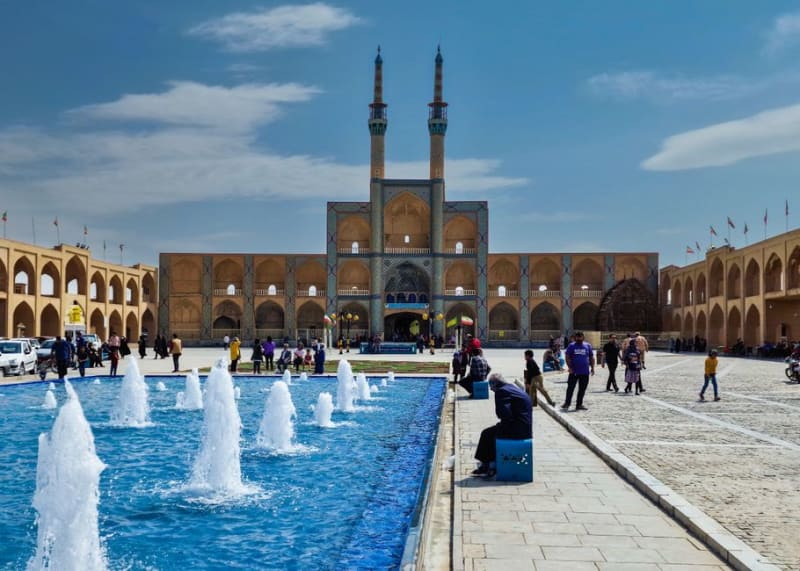
iran Amir Chakhmaq Complex
A three-tiered facade of symmetrical sunken alcoves that turns into Yazd's evening living room the moment the sun goes down.
Explore iran
iran Aran va Bidgol
A carpet-weaving desert town at the edge of a salt lake, where you can watch a rug take shape thread by thread and then walk out onto white crust to the horizon.
Explore iran
iran Ardabil
A cool, mountainous city built around the shrine of a Sufi saint whose descendants founded the Safavid dynasty — the tomb complex that essentially launched modern Iran, wrapped in tile work most travelers never see.
Explore iran
iran Ardestan
A dusty desert town with one of Iran's oldest Friday mosques, where a millennium of architectural additions are stacked in visible layers.
Explore iran
iran Atashgah Fire Temple
A crumbling Zoroastrian hilltop ruin on Isfahan's western edge, older than the mosques by centuries, where a single fire once burned as a beacon across the plain.
Explore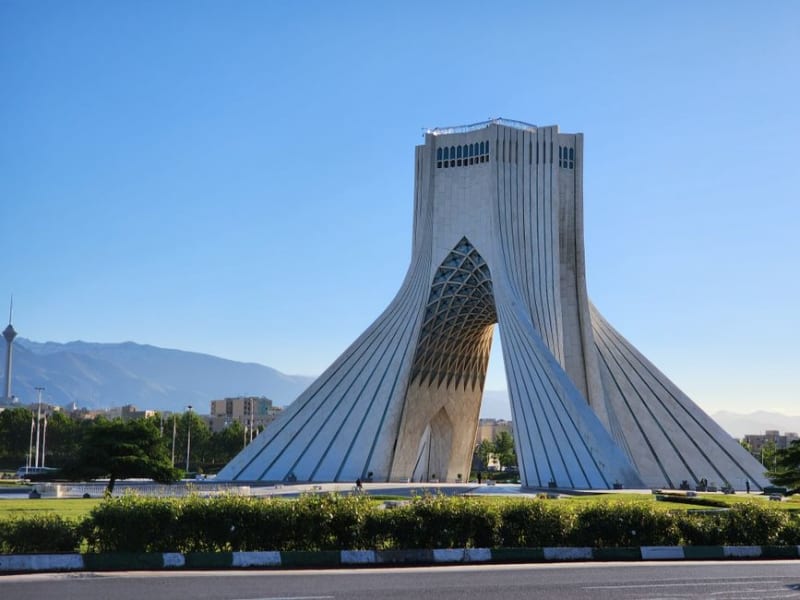 iran
iran Azadi Tower
The white marble arch that has watched over every major moment in modern Iranian history from the same traffic circle, and the underground museum most visitors never find.
Explore