
Langde
"They welcome you in with rice wine from buffalo horns — and somehow it still feels like walking in on something private."
A small Miao village near Kaili that opens its festivals to visitors without losing the sense that the celebration is for itself.

The welcome ceremony at Langde Upper Village involves rice wine. This is not a metaphor. Twelve women in full festival dress stand in two lines across the village entrance, each holding a small bowl of locally brewed mijiu, and visitors must pass between them drinking each cup. The bowls hold perhaps two sips each. By the time you have passed through the gauntlet and entered the village, the rice wine has settled warmly in your chest and your perspective has been correctly calibrated — you are a guest, not an observer, and there is a difference.
Langde is a small Miao village about twenty-five kilometers southeast of Kaili along a valley road that follows the Bala River through terraced hillsides. Unlike Xijiang, which has grown significantly with tourism infrastructure, Langde remains genuinely small — perhaps one hundred and fifty households, arranged on a series of terraces above the river, the wooden stilt houses darkened to near-black with age. It was one of the first Miao villages to formally open cultural performances to outside visitors, in the 1980s, and it has managed — improbably — to maintain a quality of authenticity in those performances that larger and more visited places have sometimes lost.

The performance in the central courtyard involves singing, lusheng reed-pipe music, and a form of dancing where the women’s heavily embroidered and pleated skirts function almost as an instrument — the spinning creating a visual rhythm that mirrors the percussion. The older women dance with a quality of complete unselfconsciousness that is distinct from the younger performers, who are very good but know they are being watched. The old women do not seem to know, or do not care. Watching this difference operate within the same performance is one of those small revelations that travel offers and that cannot be anticipated.
Between the formal performances, the village simply continues. I walked the lanes above the main courtyard and found a woman weaving on a backstrap loom outside her kitchen door, the click of the heddle audible from twenty feet. Her pattern was geometric, derived — she indicated through gesture — from a river fish scale motif that has been in her family’s repertoire for generations. She was weaving a skirt that would take several more months to complete. The thread she was using had been dyed with indigo from plants she grew herself.

The festival calendar for Langde centers on a celebration called Guzang, the grand ancestor worship ceremony of the Miao, which occurs on a thirteen-year cycle. When it happens — and coordinating a visit requires knowing which village in the region is observing it in any given period — it involves buffalo sacrifices, multi-day feasting, and the full activation of every element of Miao ceremony and dress simultaneously. I have never attended one, which means I carry it as an unrealized aspiration, the kind of thing that gives you a reason to return to a place.
For visitors, Langde is best combined with a day in Kaili and possibly a second village such as Matang, a Gejia Miao settlement a short distance away where the embroidery tradition takes a different form — wax-resist techniques that produce a visual language I could stare at for hours.
When to go: The spring festival season (February to April, by the lunar calendar) brings the most consistent ceremonial activity to the Kaili region. October is excellent for weather and for the golden color of the rice harvest on the surrounding terraces. The Guzang ceremony, on its thirteen-year cycle, requires research into local calendars well in advance — when it falls in an accessible village, plan around it.
Keep exploring
More from Guizhou
 guizhou
 Libo
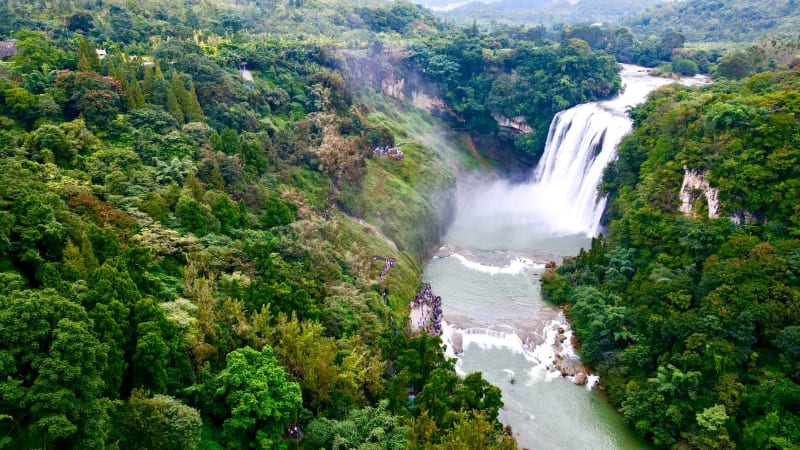
A karst landscape of cone-shaped hills and lakes so green they look digitally enhanced, where the water genuinely is that color.
Explore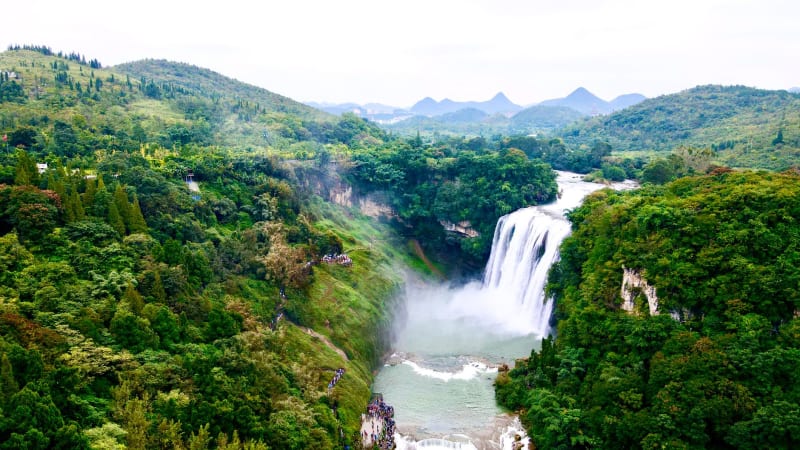 guizhou
 Rongjiang
A river-junction town in the deep south where Dong and Miao cultures overlap and the weekly market is the most vivid hour of any traveler's week.
Explore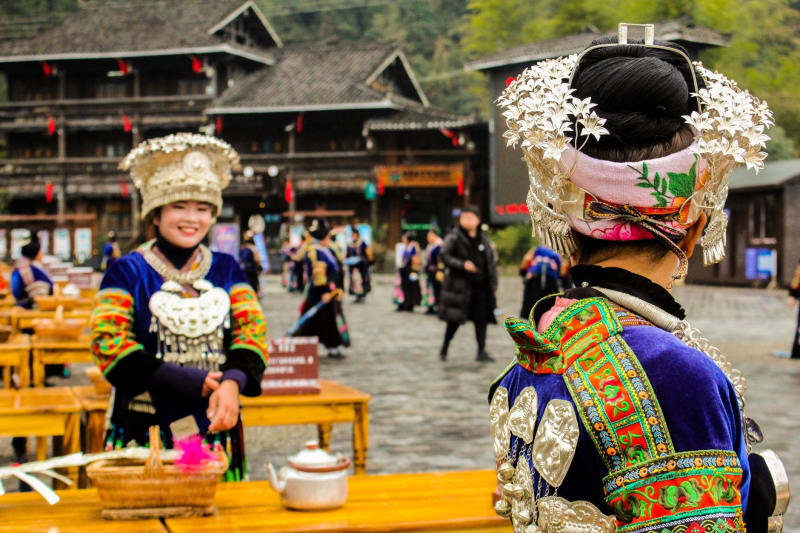 guizhou
 Xijiang
The world's largest Miao village, most electrifying at dawn before the tour buses arrive and the smoke is still rising from breakfast fires.
Explore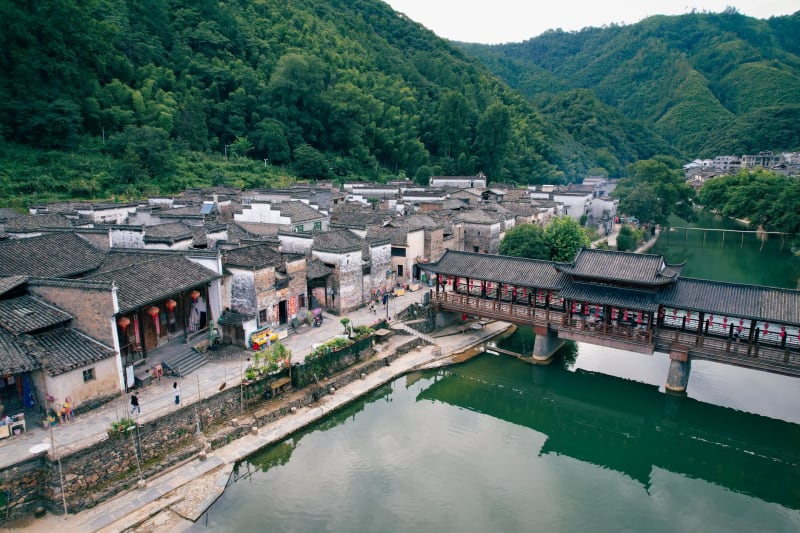 guizhou
 Zhaoxing
A Dong village of five drum towers in a valley so remote it took me three buses and a motorcycle to reach — worth every transfer.
Explore guizhou
 Zhenyuan
An ancient garrison town compressed between a cliff and a river, where every meal tastes better eaten on a platform hanging over the water.
Explore guizhou
 Zunyi
The city where Mao took control of the Long March in 1935, now producing the country's finest baijiu and keeping its revolutionary past in immaculate Communist Gothic.
Explore