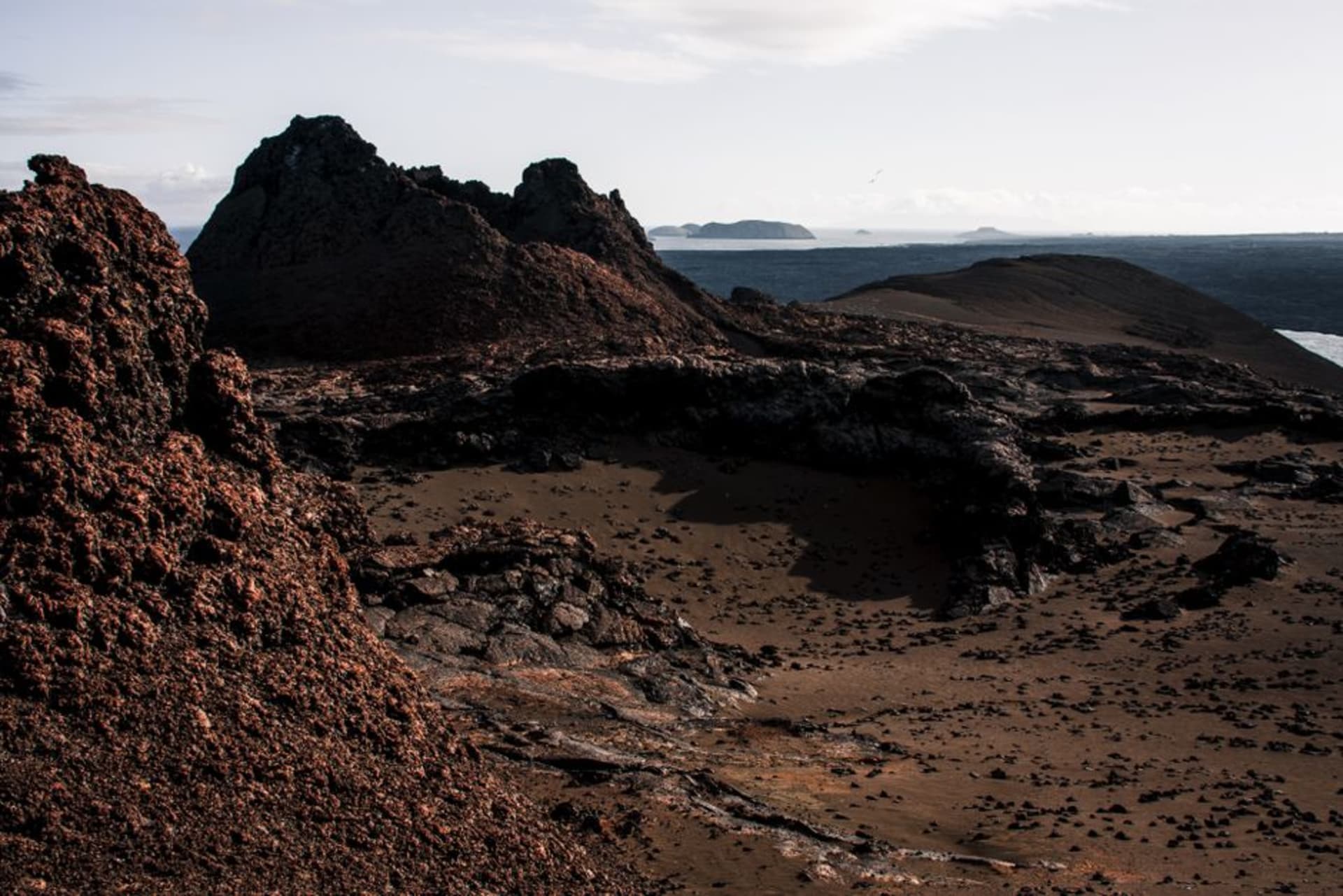
Sierra Negra Volcano
"We came out of the mist at the rim and the caldera just kept going and going, so wide I couldn't see the far side until the clouds finally broke."
A ten-kilometer-wide active caldera hiked through misty highland farmland and cracked black lava on Isabela Island.

Getting to Sierra Negra means starting in the highlands above Puerto Villamil, and that alone surprised me — after days of beach landings and dry coastal scrub, suddenly we were in cattle pasture and cloud forest, damp and green and cool enough that I actually needed the jacket I’d packed and never used anywhere else in the Galápagos. We hired a truck to take us up the muddy track to the trailhead, bouncing around in the flatbed with a handful of other travelers, and by the time we hopped out we were solidly in the mist, unable to see more than about twenty meters ahead.
The hike itself is a couple of hours each way, mostly flat and easy underfoot, which lulled me into thinking the whole day would be gentle. Then the trail broke out of the cloud cover right at the rim, and the caldera opened up below us — ten kilometers across, one of the largest active calderas on the planet, a floor of black and rust-colored lava so vast that my brain kept trying and failing to register the scale. Lia just stood there for a solid minute without saying anything, which for her is a rare event.
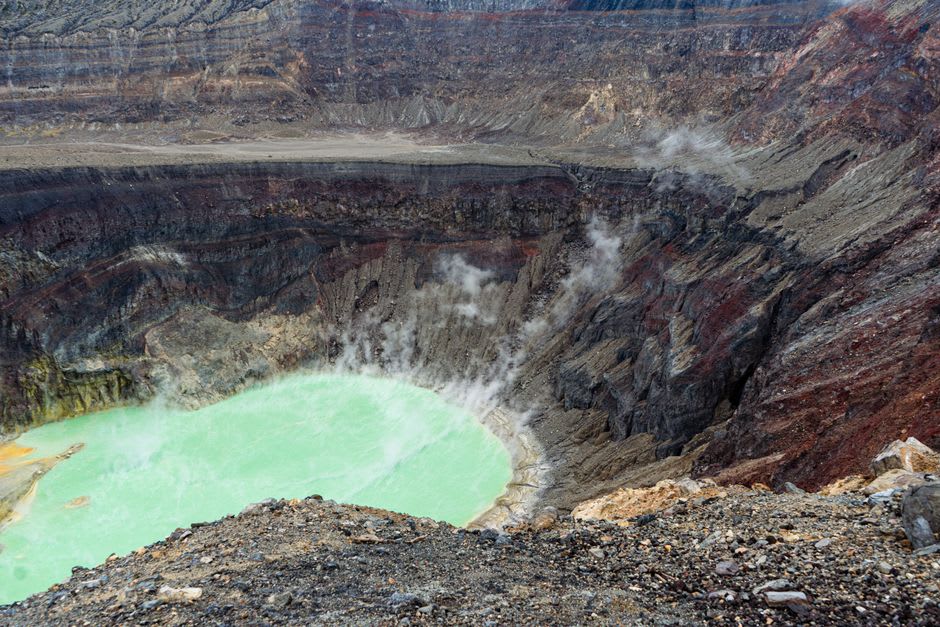
We continued around toward Volcán Chico, a satellite vent on the flank of Sierra Negra, and this stretch is where the volcano stopped being scenic and started feeling alive. Steam was still hissing out of cracks in the ground in places, the rock underfoot had that hollow, brittle sound to it, and the smell of sulfur drifted through every so often on the wind. Our guide told us the last major eruption was in 2018, which suddenly didn’t feel like ancient history at all — it felt like something that had happened recently enough to still be cooling.
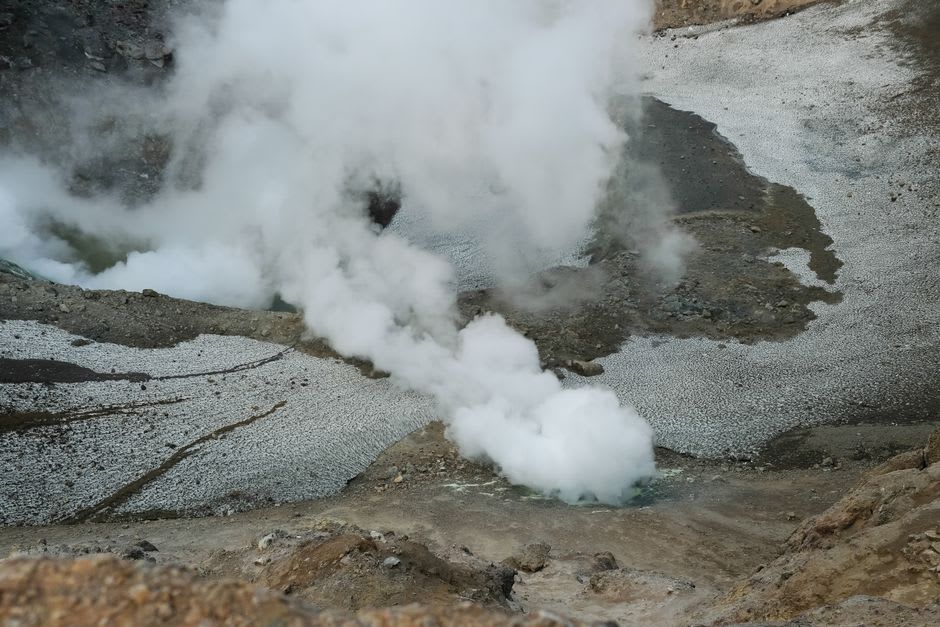
The walk back down felt longer than the walk up, the way descents somehow always do when your legs are tired and your brain has already checked out and started thinking about lunch. We ate ceviche in Puerto Villamil afterward with the kind of appetite you only get from a full day outdoors, and I remember thinking that Sierra Negra was the one part of the Galápagos trip that had nothing to do with wildlife at all, and somehow didn’t need to.
When to go: The dry season from June to December offers the clearest views into the caldera, since the highlands are prone to thick garúa mist for much of the rest of the year.
Keep exploring
More from Galápagos Islands
 galapagos-islands
 Bartolomé Island
A volcanic moonscape centered on Pinnacle Rock — the most photographed formation in the archipelago, and the only place you can swim with Galápagos penguins at close range.
Explore galapagos-islands
 Darwin Island
A remote northern speck reachable only by liveaboard dive boat, where hammerhead sharks circle in schools thick enough to blot out the sun.
Explore galapagos-islands
 Española Island
The archipelago's southernmost edge, where waved albatrosses perform their strange courtship ballet and cliffs drop into a blowhole that fires spray forty metres into the sky.
Explore galapagos-islands
 Fernandina Island
The youngest and most pristine island in the archipelago — a still-active shield volcano ringed by marine iguana colonies so dense they look like the lava itself has come alive.
Explore galapagos-islands
 Floreana Island
The most storied island in the archipelago — a place of flamingo lagoons, a 200-year-old postal barrel, and a mystery involving the disappearance of a self-declared countess that has never been resolved.
Explore galapagos-islands
 Genovesa Island
A drowned caldera in the remote northeast of the archipelago, ringed by low cliffs and so dense with nesting seabirds that the crews simply call it the bird island.
Explore