Lambaréné
"The river moves here like it has all the time in the world, and after two days, you start to believe it."
A river town on the Ogooué where Albert Schweitzer's hospital still operates and the forest presses in from every angle.

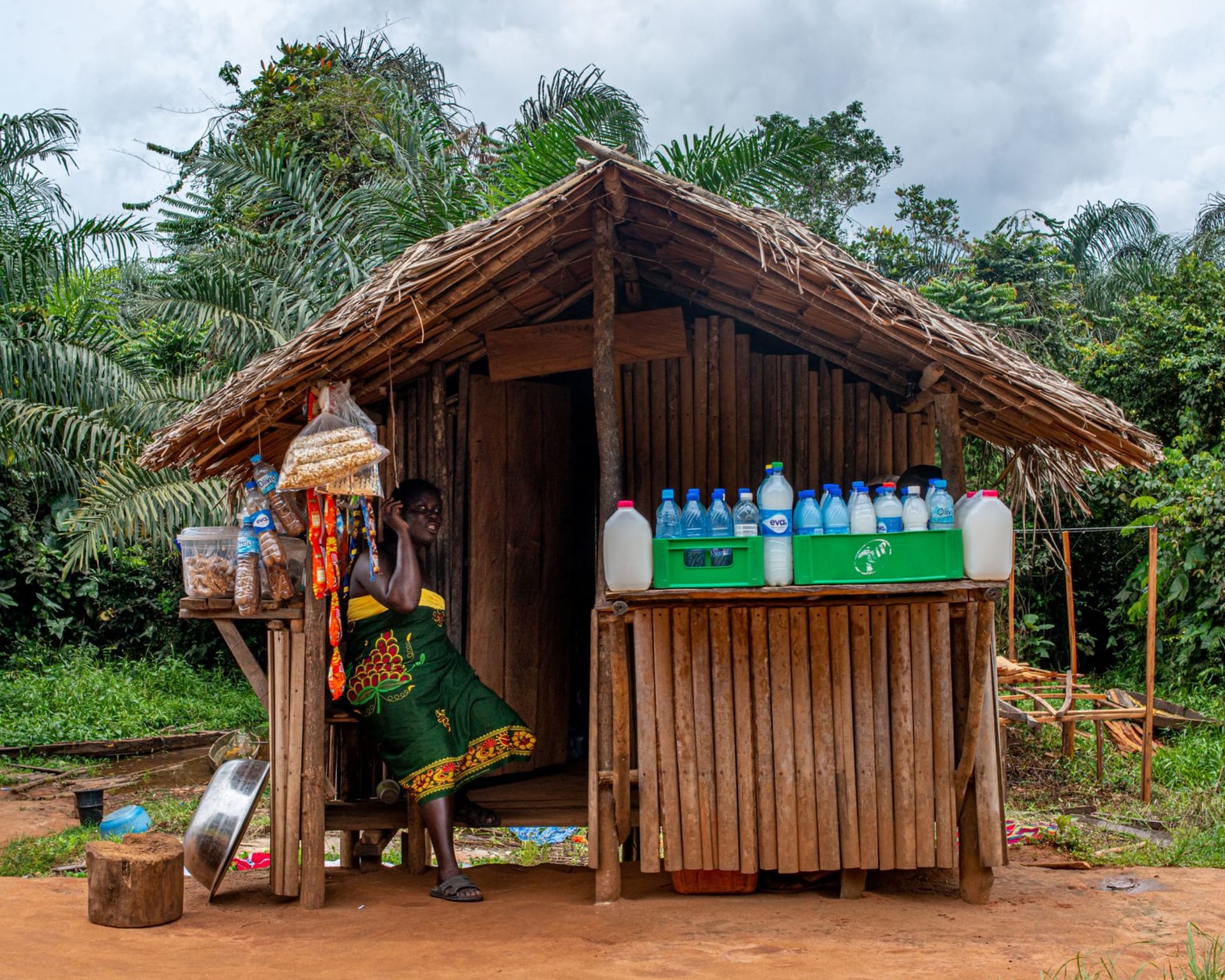
The road from Libreville to Lambaréné takes four hours and passes through a gradient of human density that goes from suburban sprawl to dense forest to occasional village in the space of a hundred kilometers, until the Ogooué River appears below you — wide and brown and moving with a quiet authority — and the road descends to follow it. Lambaréné sits on a series of islands and riverbanks in the Ogooué, surrounded by lakes and forest, and arriving there you feel something ease in you that you didn’t know was tense.
The town carries Albert Schweitzer’s presence in a way that is neither hagiographic nor hostile, simply matter-of-fact. Schweitzer arrived here in 1913 to build a hospital, and his hospital — the Albert Schweitzer Hospital — still operates on the original site across the river from the main town, still treating patients, still maintaining the small museum of his life and work in the original bungalows where he lived and worked for decades. I crossed by pirogue to visit it on my first morning, five minutes on the water in a boat that sat very low, piloted by a man who had clearly made this crossing ten thousand times and found my nervousness gently amusing.

The museum is modest and genuine. His rooms have been preserved as he left them, or as close as humidity and decades allow: the old upright piano he played Bach on, the kerosene lamps, the medical instruments laid out in rows. What struck me was how working it still felt — not a monument to nostalgia but a place that has been continuously occupied, continuously purposeful, for over a century. Patients move through the compound. Nurses cross between buildings. The chickens that wander the grounds seem to have been there since Schweitzer’s time.
The lakes and waterways around Lambaréné — Lac Zilé, Lac Onangué — are a different world from the hospital grounds. I hired a pirogue and a guide for an afternoon and we moved through channels lined with papyrus and water lilies, the forest rising on either side, hornbills calling from the high branches. We passed fishing villages where dugout canoes were drawn up on muddy banks and women were smoking fish over low fires, the smoke heavy and sweet. The Ogooué basin holds enormous biodiversity in its waterways — otters, monitor lizards, crocodiles that slide off banks with impressive composure when you get too close.

The town itself runs at a pace that the river seems to set. The main market fills in the morning with produce from the surrounding villages — yams, avocados the size of my fist, cassava in different stages of preparation, live catfish in plastic tubs. A few restaurants serve the local staples: grilled fish, plantain, cassava bread. The evenings are warm and quiet, the river going dark, the frogs beginning their argument.
When to go: Lambaréné is accessible year-round, and the Ogooué is navigable in all seasons, though the water level changes dramatically. June through September, the dry season, gives the clearest roads and the most predictable boat travel. The rainy season (October through May) transforms the landscape — the floodplain fills, the lakes expand, and the forest turns an almost violent shade of green — and for those comfortable with mud and rain, it offers a different and equally compelling version of the place.
Keep exploring
More from Gabon
 gabon
gabon Libreville
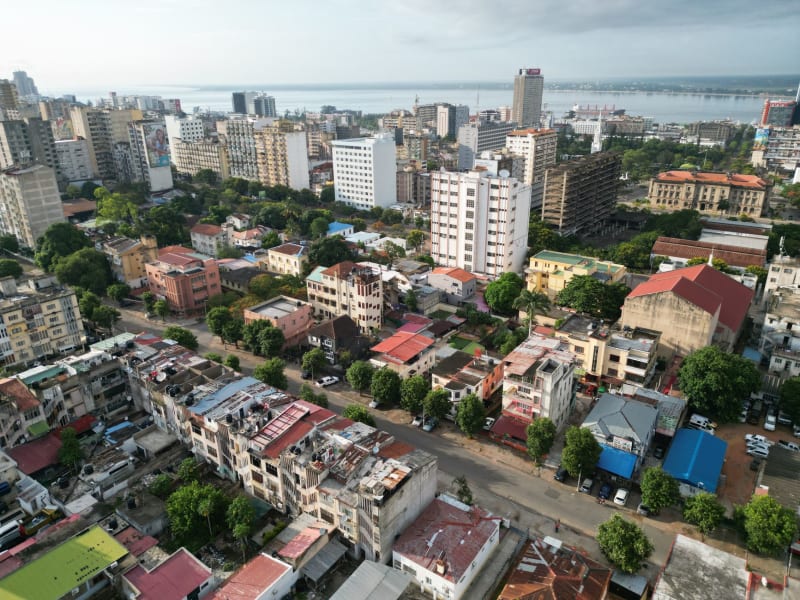
A port capital that smells of the ocean and the rainforest simultaneously, and has never quite decided which one it prefers.
Explore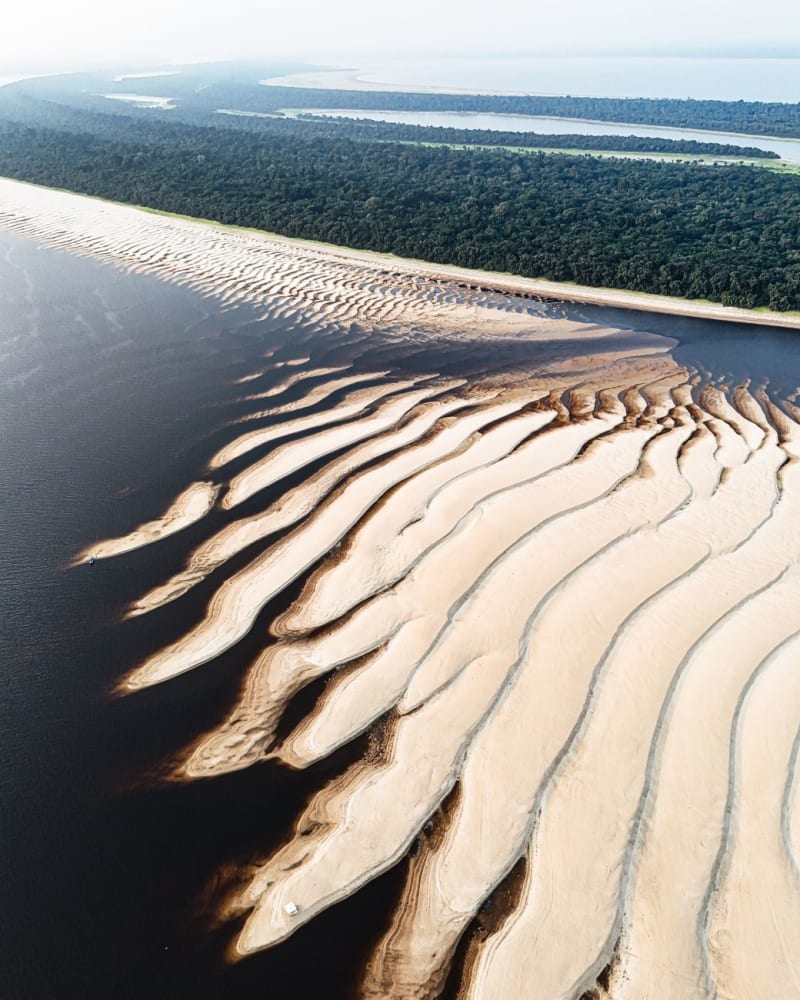 gabon
gabon Loango National Park
The stretch of Gabonese coast where rainforest meets the Atlantic and elephants, buffalo, and hippos wander out onto empty surf beaches.
Explore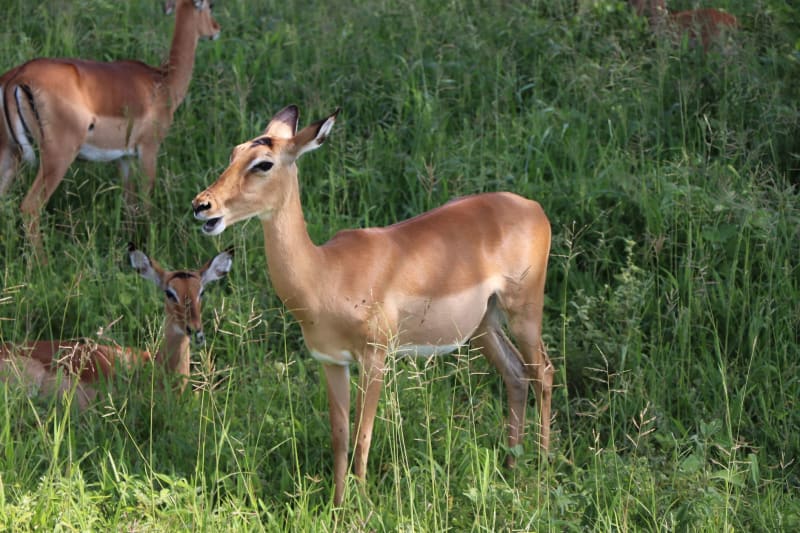 gabon
gabon Lopé National Park
Where Congo Basin rainforest meets ancient savannah and forest elephants walk past your vehicle like you don't exist.
Explore gabon
gabon Mayumba
At the southern end of the world's longest unbroken stretch of beach, leatherback turtles the size of sofas crawl ashore in the dark.
Explore gabon
gabon Monts de Cristal
A granite biosphere reserve an hour from Libreville where waterfalls run over black rock and primates are more reliable than people.
Explore gabon
gabon Moukalaba-Doudou National Park
In the deep southwest, western lowland gorillas move through gallery forest that almost no one has walked through before you.
Explore