Franceville
"Gabon spent three weeks convincing me it was all rainforest, then Franceville opened onto grass and sky."
A manganese boomtown on the edge of the Bateke Plateau, where savanna grasslands break Gabon's wall of rainforest.
We’d been in Gabon long enough that the canopy had started to feel like a ceiling — green pressing in on every road, every riverbank. Then the plane dropped toward Franceville and the forest just quit. Below us: rolling grassland, ochre tracks, a haze of dry-season light over hills that looked more like the Serengeti than anything I associated with Central Africa. Lia had her forehead against the window the whole descent. I remember thinking, half out loud, that Gabon had been hiding a second country inside itself.
Franceville itself doesn’t try to charm you at first. It’s a working city — founded in 1880 by Pierre Savorgnan de Brazza and named for France, then transformed decades later when manganese was struck at nearby Moanda in the 1950s. You feel that history in the rhythm of the place: ore trucks grinding through town, the SETRAG line humming somewhere behind the hotel we stayed at, hauling manganese six hundred kilometers to the port at Owendo near Libreville. Our host, a soft-spoken engineer named Serge, told me over breakfast that without that railway, “half this country doesn’t get paid on Friday.” I hadn’t thought about a train as an economic artery before, but here it clearly is one.
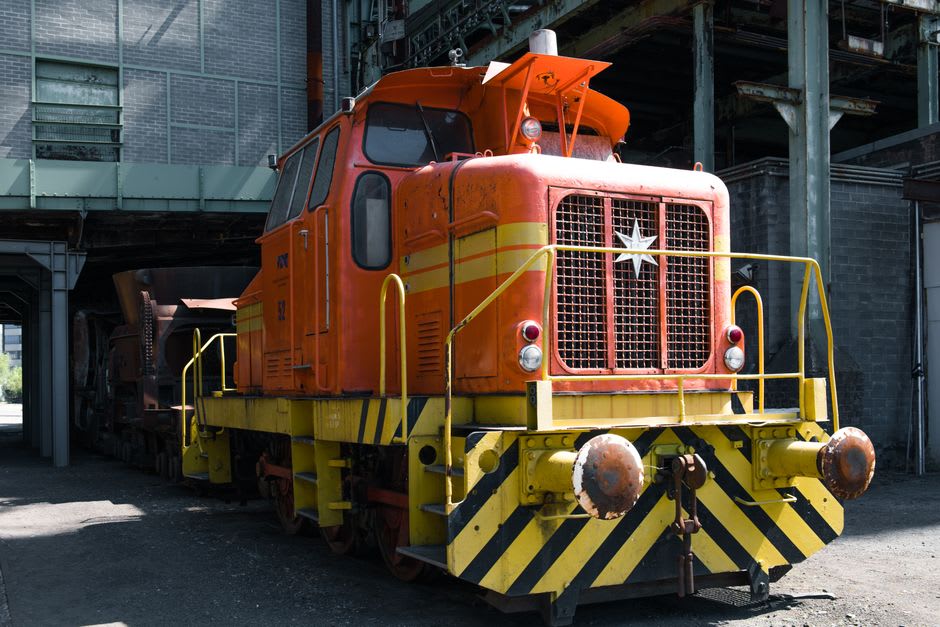
What surprised me most, though, was how present Omar Bongo still is here — this was his home region, and he poured money into it accordingly. We wandered the grounds near Léon Mba University one late afternoon, and Lia pointed out how incongruous the scale felt against the modest houses a few streets over: a university this ambitious, a presidential residence nearby, all set against a savanna backdrop that owes nothing to the capital. It’s a strange, specific kind of monument-building, and you feel Franceville’s particular place in Gabon’s story just by walking between the two.
The real reward, for me, was getting out onto the Bateke Plateau itself the next morning. We drove out at first light — dry season roads held up fine, dusty but firm — and climbed into that grassy upland cut by dark green forested valleys, utterly unlike anywhere else we’d been in the country. I ate cold mango slices sitting on the hood of the car while Lia photographed a hawk riding the thermals over one of the valleys. No crowds, no fences, just wind moving through grass that came up past my knees.
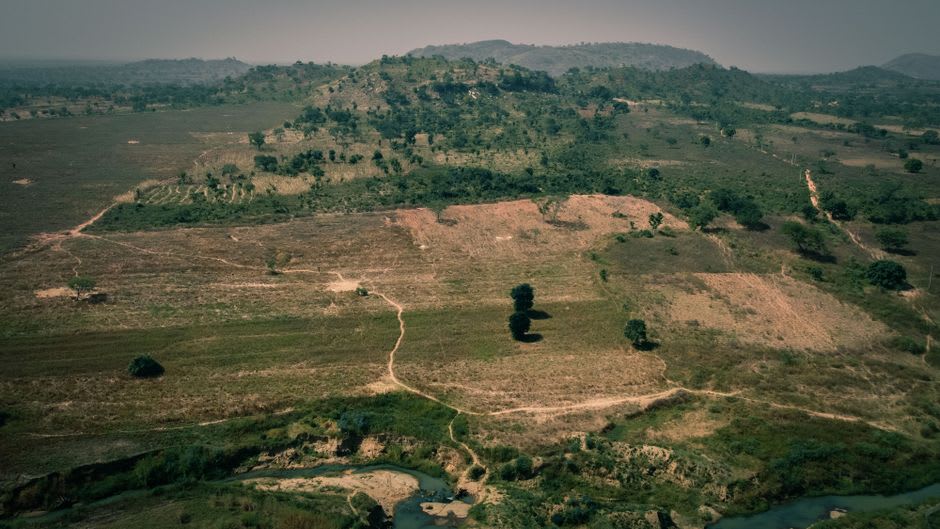
When to go: Aim for the dry season, June through September — the plateau roads stay firm and passable, and the light sits clearer and longer over the grasslands than it does in the wetter months.
Keep exploring
More from Gabon
 gabon
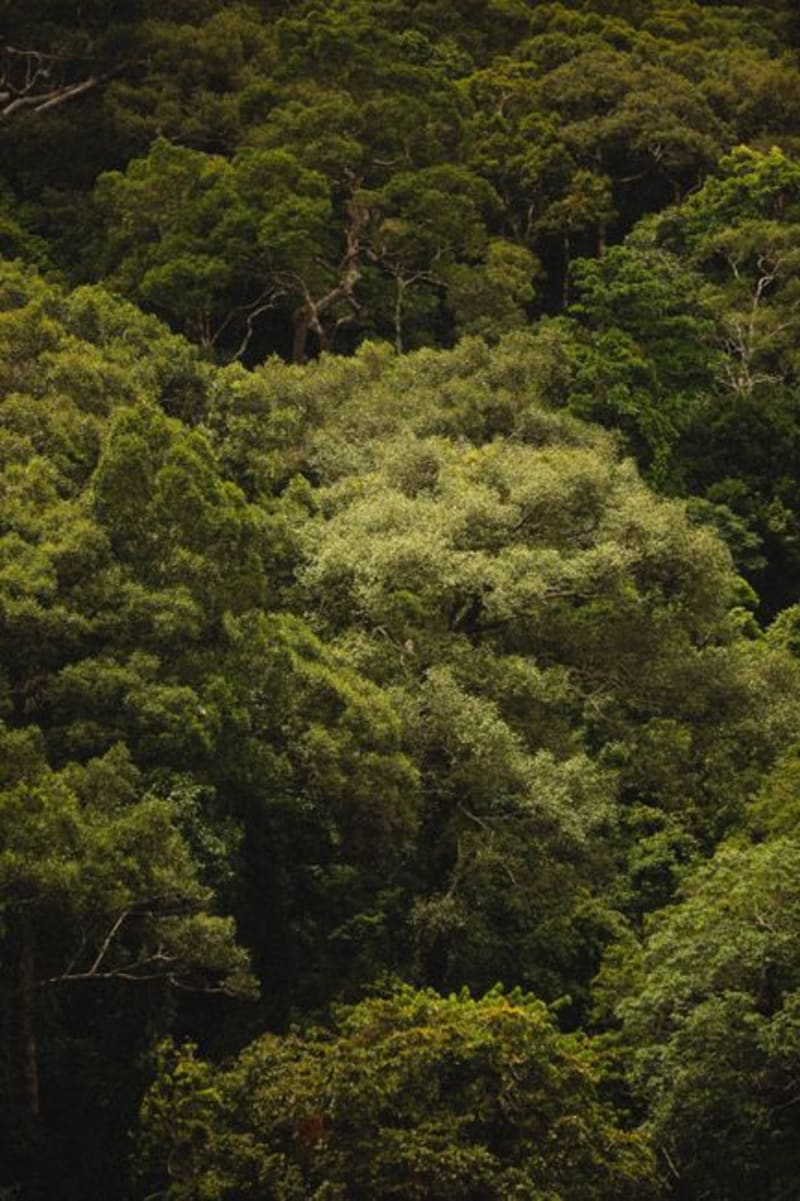
gabon Ivindo National Park
A roadless expanse of rainforest where forest elephants gather at a hidden clearing and a river thunders over ancient falls.
Explore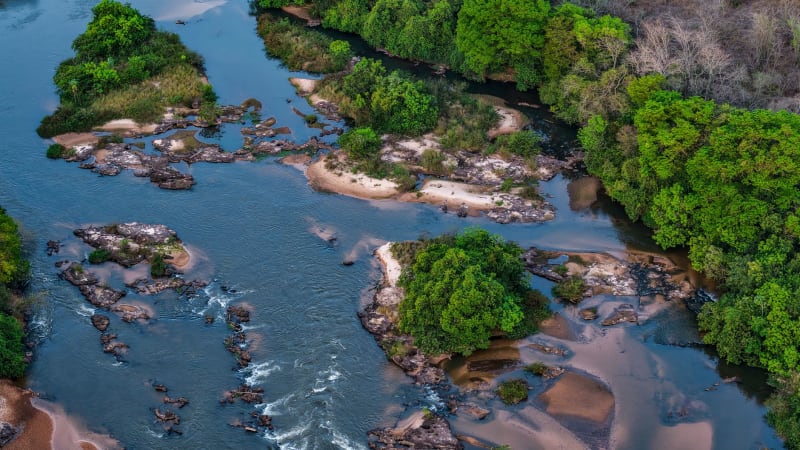 gabon
gabon Kongou Falls
The Ivindo River drops into a basalt gorge with a roar you feel before you hear it, and not a single refreshment stand in sight.
Explore gabon
gabon Lambaréné
A river town on the Ogooué where Albert Schweitzer's hospital still operates and the forest presses in from every angle.
Explore gabon
gabon Libreville
A port capital that smells of the ocean and the rainforest simultaneously, and has never quite decided which one it prefers.
Explore gabon
gabon Loango National Park
The stretch of Gabonese coast where rainforest meets the Atlantic and elephants, buffalo, and hippos wander out onto empty surf beaches.
Explore gabon
gabon Lopé National Park
Where Congo Basin rainforest meets ancient savannah and forest elephants walk past your vehicle like you don't exist.
Explore