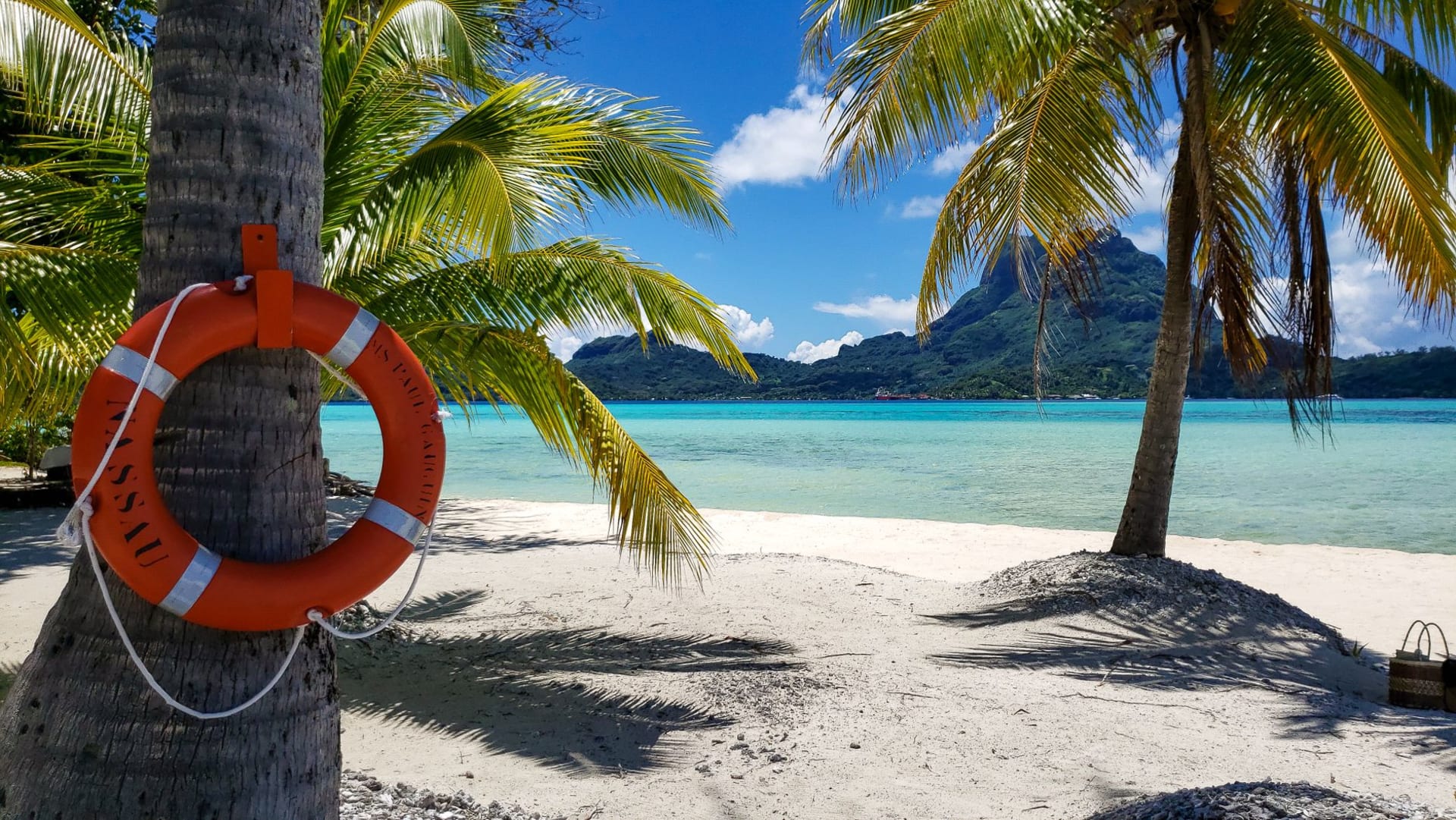
Bora Bora
"I floated above a manta ray at six in the morning and thought: some clichés exist for good reason."
The lagoon is actually that color — not a filter, not a lie, just water so impossibly blue it takes a day to accept.

The airport sits on a small motu — a coral islet — separated from the main island by a stretch of lagoon so vivid it feels like an affront to physics. They put you on a boat to reach your hotel, and during that ten-minute crossing, with Mount Otemanu rising black and volcanic against the morning sky and the water shifting beneath the hull through shades of teal and cobalt and a green so pale it nearly disappears, I understood why people cry when they arrive here. I’m not a crier. I gripped the railing and said nothing.
Bora Bora has been packaged and sold and photographed into something approaching abstraction. The overwater bungalows. The lagoon. The mountain. You’ve seen the images so many times that arriving feels like stepping into a document you’ve already read. And yet the place insists on being real. The air smells of tiaré flowers — Tahiti’s gardenia, white and waxy — mixed with salt and something faintly volcanic from the island’s interior. That smell is not in any photograph.

I woke at five-thirty on my second morning, before the excursion boats launched, and swam out from the dock. The lagoon was flat glass. Beneath me the coral gardens were still in the low light, and then a manta ray appeared — vast, slow, banking in lazy arcs maybe two meters below my kicking feet. Its wingspan was wider than I am tall. I floated motionless, watching it disappear into the deeper blue, and the whole encounter lasted perhaps three minutes. The resort charged four hundred dollars for a guided manta ray tour at ten a.m. I had seen this for free because I couldn’t sleep. Bora Bora rewards early risers in ways the brochures don’t mention.
The lagoon contains multitudes. There are coral gardens in the shallows where parrotfish crunch audibly at the reef, their bites carrying through the water like static. The outer barrier reef catches the swells from the open Pacific, and on the exposed eastern side the waves run hard and green. The interior of the main island — which most visitors never see, content with their bungalow and the lagoon view — is jungle crossed by rough tracks, with vanilla growing in the understory and wild chickens picking through the undergrowth.

The town of Vaitape on the western shore is the only settlement of any size: a string of restaurants, a Chinese grocery, a pearl shop, a few guesthouses that charge a fraction of the resort prices. I ate lunch there three days running at a roulotte — one of the mobile food vans that are the genuine culinary life of French Polynesia — where a man served mahi-mahi in a coconut cream sauce over rice, with a Hinano beer, for about what a coffee costs at the resort. The fish had been caught that morning. You could taste the honesty of it.
The mountain is the constant. From almost any point on the lagoon, Otemanu’s jagged black peak appears — a reminder that beneath all this impossible water and engineered luxury there is a real volcanic island that was here long before anyone thought to build a bungalow on stilts above it.
When to go: May through October is the dry season and the most comfortable — trade winds keep the temperature bearable, rainfall is minimal, and the lagoon visibility for snorkeling and diving is at its clearest. July and August are the busiest months; if you want the early-morning manta ray moment without competing with a flotilla of excursion boats, consider May or September. The wet season from December through March brings dramatic clouds, occasional heavy rain, and meaningfully lower rates on accommodation.
Keep exploring
More from French Polynesia
 french-polynesia
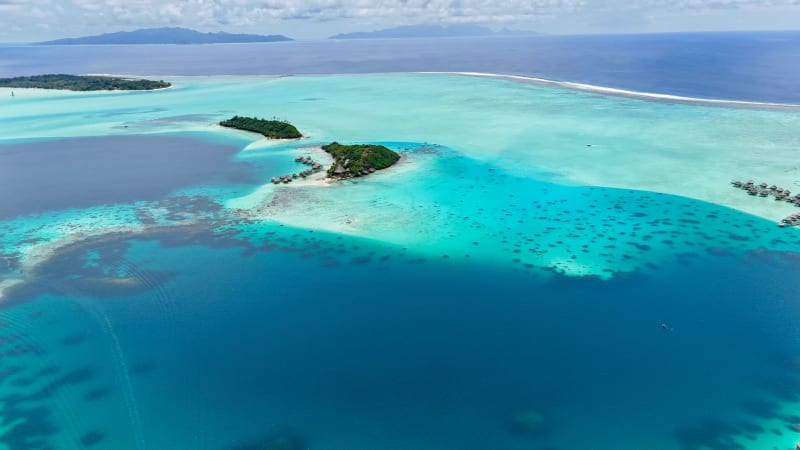
 Fakarava
A UNESCO biosphere reserve where the southern pass turns into a living wall of grey sharks at the right hour, and silence is the dominant weather.
Explore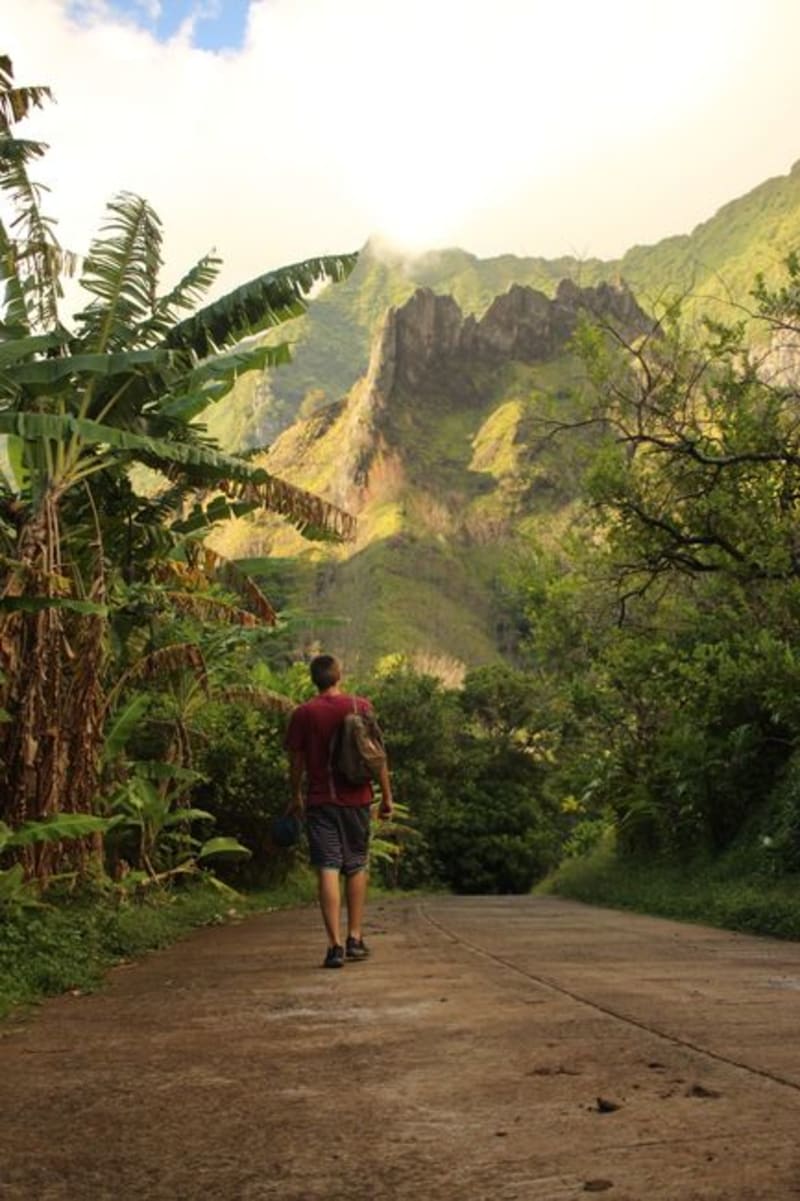 french-polynesia
 Fatu Hiva
The most remote inhabited island in the Marquesas, reachable only by boat, where the Bay of Virgins cuts a fjord-like gash into cliffs and tapa cloth is still pounded by hand.
Explore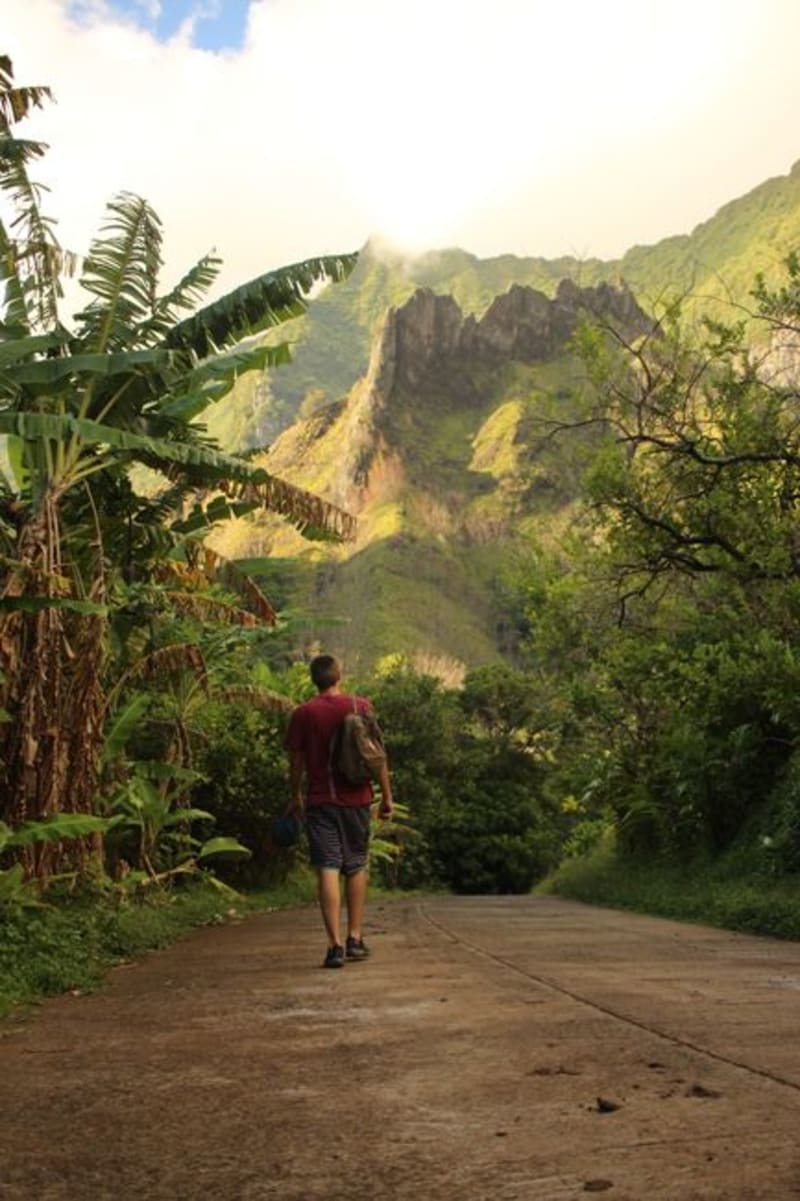 french-polynesia
 Hiva Oa
The Marquesan island where Gauguin and Brel both chose to die, ringed by black volcanic cliffs and stone tikis older than either of their legends.
Explore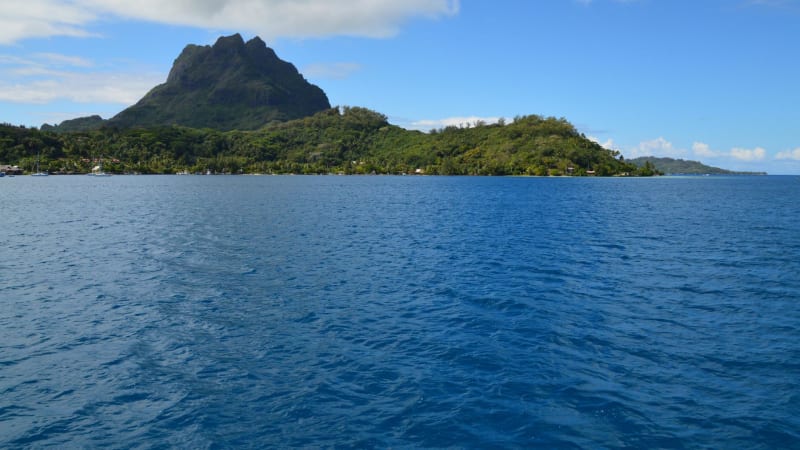 french-polynesia
 Huahine
The island French Polynesia forgot to develop, where ancient marae sit in the jungle and the lagoon is entirely yours.
Explore french-polynesia
 Maiao
A tiny Society Island barely anyone visits, ringed by a lagoon closed to any real boat traffic, where the mountain forest reaches almost to the sand.
Explore french-polynesia
 Mangareva
The main island of the remote Gambier archipelago, where a nineteenth-century cathedral built from coral stone rises improbably above pearl farms and near-total isolation.
Explore