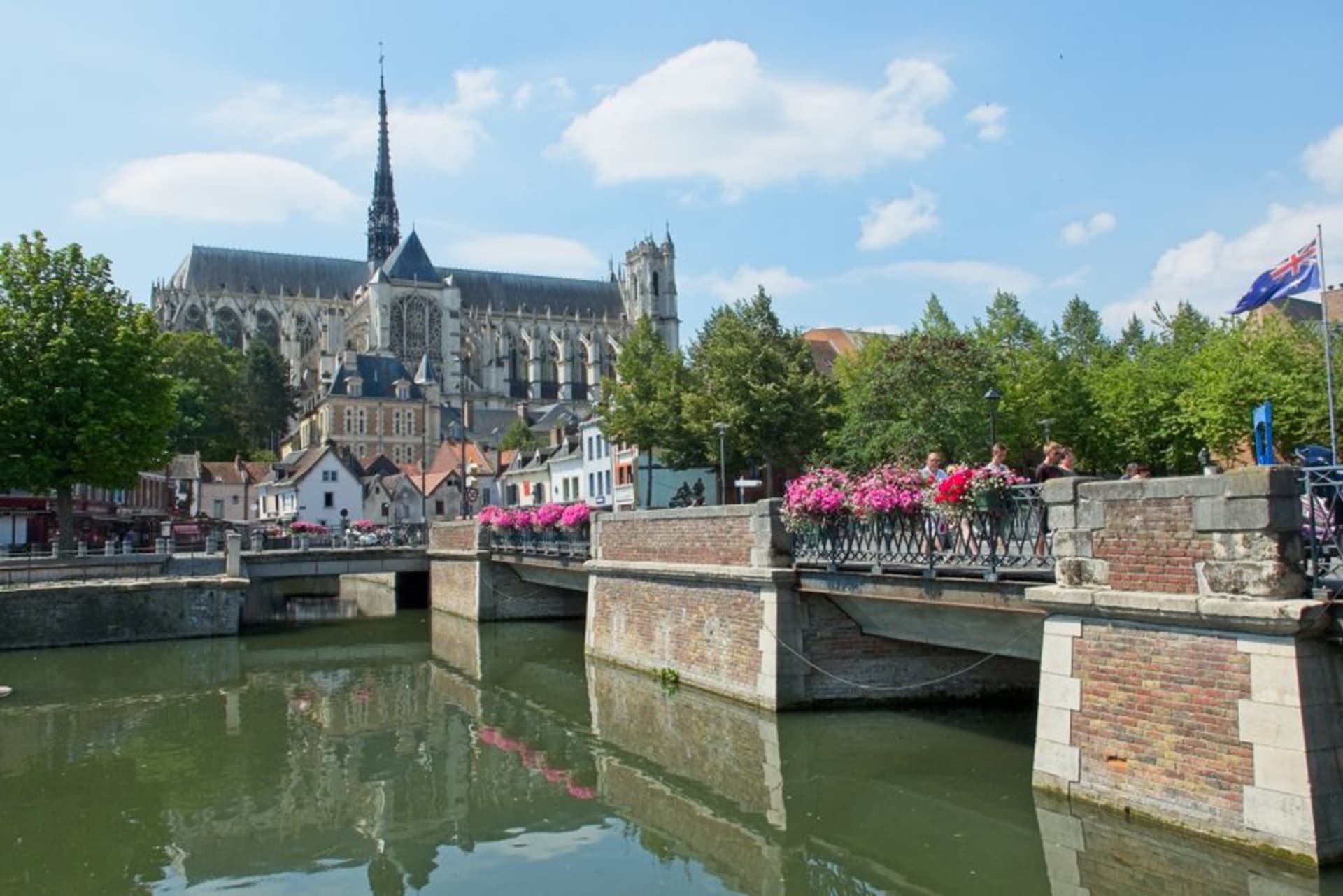
Riom
"Every building in Riom is the same color as a thundercloud, and somehow the town still feels warm."
A whole town built out of black lava stone, once the judicial capital of Auvergne, with enough Renaissance mansions hidden behind plain facades that we kept stopping to peer through carriage doors.

Riom is built almost entirely from the local volcanic stone, the same dark andesite that gives much of the Auvergne its distinctive look, but where Murol or Volvic wear the stone as ruins or quarries, Riom wears it as an entire well-preserved town center, block after block of dark grey facades that under an overcast Auvergne sky can look almost forbidding until the sun comes out and the stone starts catching flecks of mica and warming up considerably. Lia’s first reaction driving in was that it looked like a town built for a much more serious historical purpose than a modern French sous-préfecture, and she wasn’t wrong — Riom was the judicial and administrative capital of the whole Auvergne region for centuries, and the architecture never quite let go of that self-importance.
The lawyers’ town
Riom lost the title of Auvergne’s capital to Clermont-Ferrand back in the fifteenth century, but it kept its courts, and the town’s wealth of Renaissance and eighteenth-century mansions largely comes from generations of magistrates, lawyers, and parliamentary officials who built themselves increasingly elaborate townhouses along the same handful of streets. Walk down the Rue du Commerce and most of what you see is plain stone frontage, but push open one of the heavy wooden carriage doors — many are left ajar, or at least unlocked — and you find interior courtyards with spiral staircases, carved stone galleries, and the kind of hidden architectural flourish that only makes sense once you know the whole town was built by people who could afford to be discreet in public and lavish in private.

The Sainte-Chapelle and the black Madonna
The town’s other centerpiece is a small Sainte-Chapelle, built in the fourteenth century by Jean de Berry in imitation of the more famous one in Paris, its stained glass surviving in remarkably good condition given how much of the rest of Riom’s medieval fabric has been rebuilt over the centuries. A few streets over, the Basilique du Marthuret houses the Vierge à l’Oiseau, a delicate fourteenth-century stone Madonna with a bird perched on her hand, considered one of the finest examples of Auvergnat Gothic sculpture, and we stood in front of it for a while simply because the level of detail in seven-hundred-year-old stone seemed to demand it.

When to go: Spring or early autumn, when the light is soft enough to flatter the volcanic stone and the town’s Saturday market fills the main square with Cantal cheese and Puy lentils from the surrounding farms.
Keep exploring
More of Auvergne
Keep exploring
More from Auvergne
 france
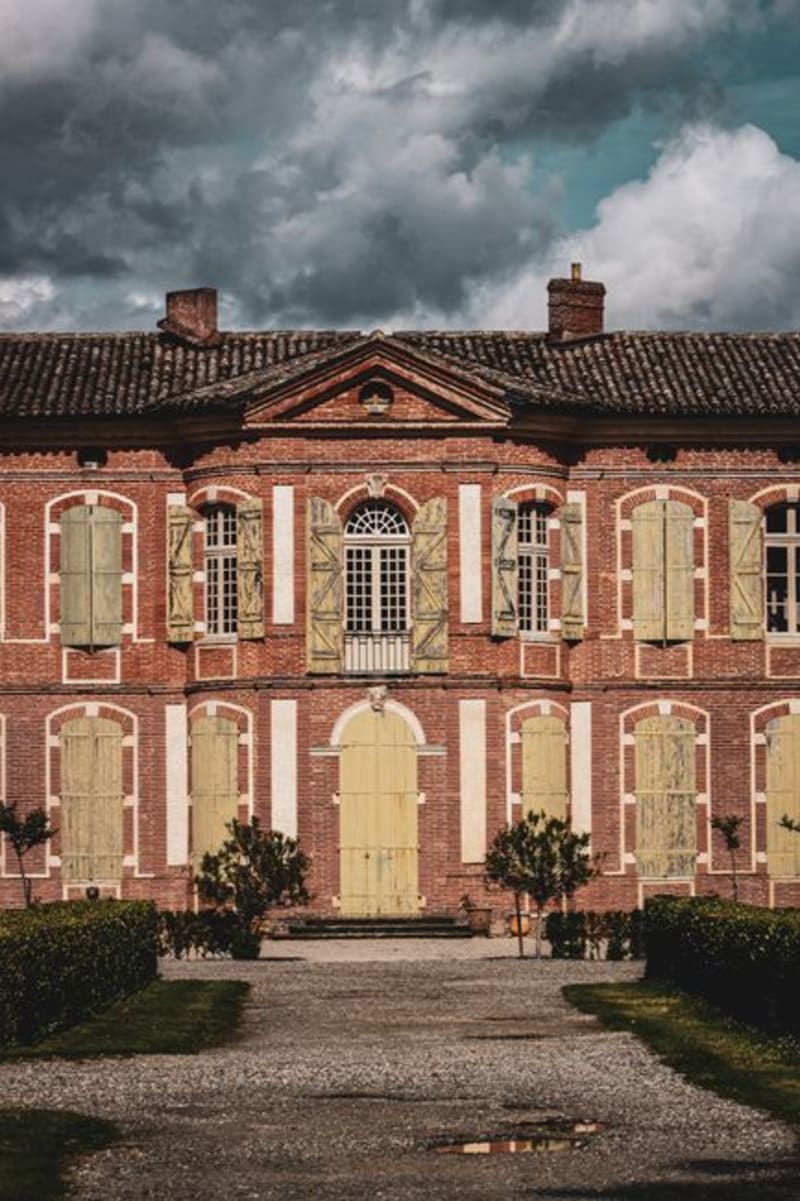
 Volvic
The quarry town behind the mineral water bottle in every French fridge, its dark lava-stone buildings quite literally cut from the same volcanic rock that filters the spring below.
Explore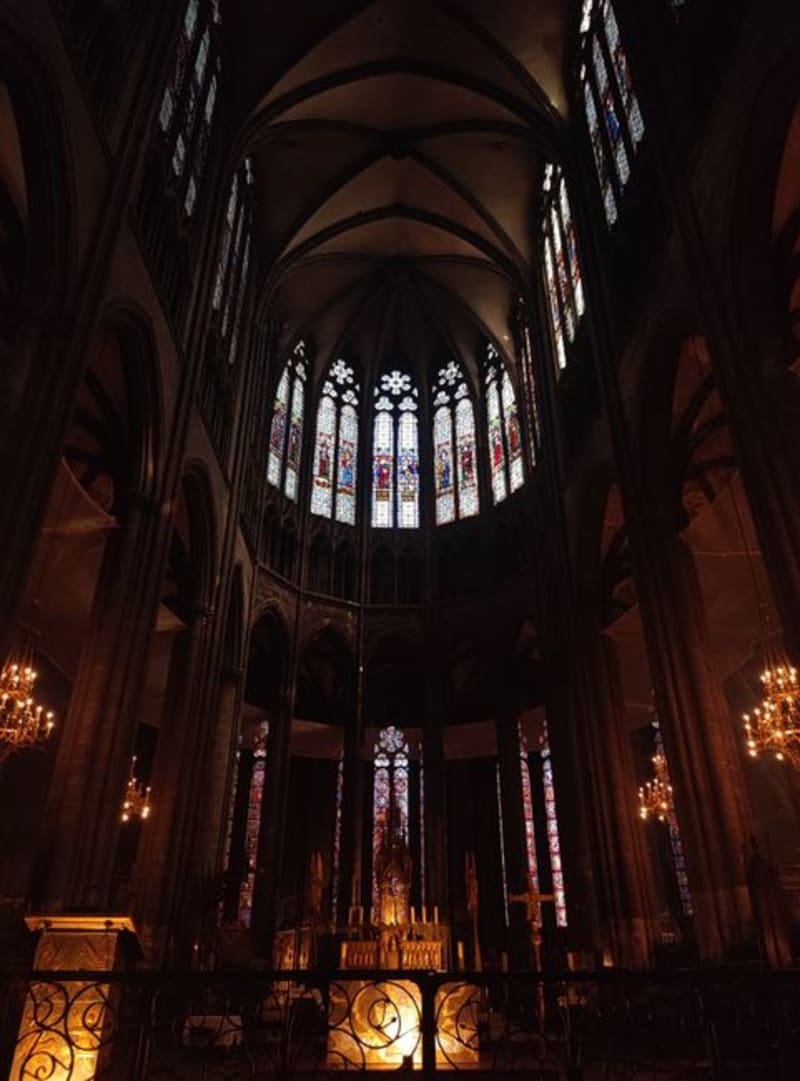 france
 Clermont-Ferrand
An Auvergne city built almost entirely from black volcanic stone, its cathedral rising like a dark silhouette over a skyline that has the perfectly domed shape of the Puy de Dôme watching from just outside town.
Explore france
 Royat
The thermal spa suburb where Clermont-Ferrand quietly ends and the Chaîne des Puys begins, with a fortified Romanesque church and Gallo-Roman bath ruins tucked behind the Belle Époque casino.
Explore france
 Billom
A medieval university town twenty minutes from Clermont-Ferrand where half-timbered houses lean over garlic stalls, and the whole place still smells faintly of it in late summer.
Explore france
 Saint-Nectaire
A village that gave its name to one of France's great cheeses, with a Romanesque church on the hill above and cellars below where wheels of Saint-Nectaire still age on straw the old way.
Explore france
 Orcival
A Romanesque pilgrimage basilica sitting in the bottom of a volcanic valley, in a village so small the church seems to have been built for a much bigger town that never showed up.
Explore