Eguisheim
"Everyone told me it would feel fake. It didn't — it felt like the village just kept being itself."
A concentric circle of a village outside Colmar, all timber and geraniums, that I go back to every autumn even though everyone says it's a tourist trap.

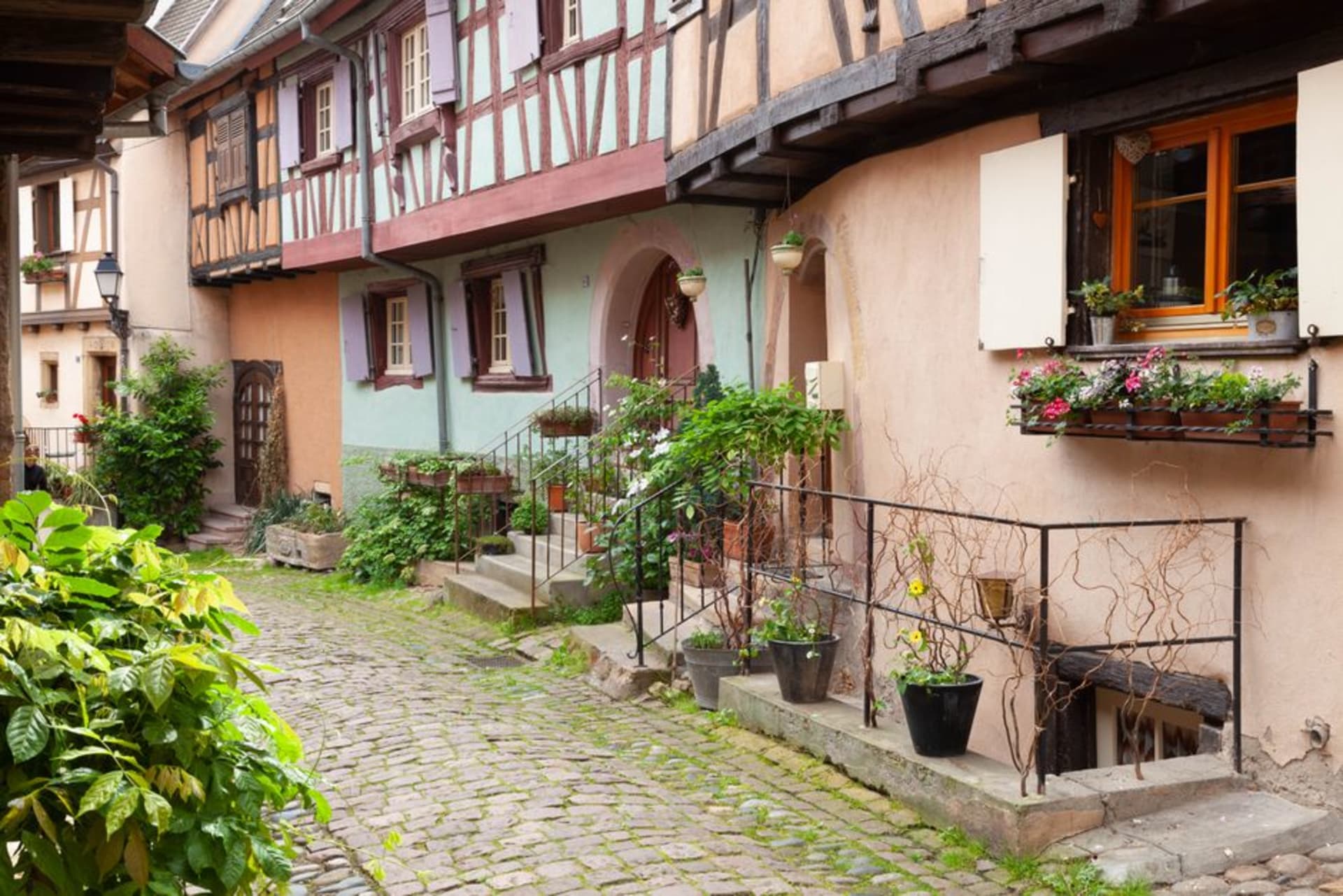
Eguisheim is laid out in rings, like a snail shell, because it grew inside its own medieval fortifications and simply had nowhere else to go. Lia noticed it before I did — we’d been walking the same curved street for ten minutes and kept passing what looked like the same corner. It wasn’t déjà vu. It was the shape of the town. I’d been warned by other travelers that Eguisheim was Colmar’s cuter, more Instagrammed cousin, overrun and roped off for photographs. It’s popular, no question, but nobody had mentioned that it’s also a working wine village where half the houses have a press or a cellar door at street level, and that alone kept it from feeling like scenery.
The rings and the grape
The outer ring, Rue du Rempart, follows the old fortified wall almost exactly, and if you walk it clockwise from the fountain in the central square you pass maybe forty houses that between them must account for half the geranium budget of Haut-Rhin. We stopped counting window boxes. What we didn’t stop doing was reading the small hand-painted signs bolted above certain doors — winegrower names, some dating back generations, because Eguisheim sits at the base of the Vosges foothills in some of Alsace’s oldest documented vineyard land, planted since at least the Middle Ages. We ducked into a cave at Domaine Bruno Sorg for a tasting of Pinot Gris and Gewürztraminer that the owner poured without once trying to upsell us, which I’ve come to think of as the surest sign of a place that doesn’t need to.

Léon IX and the quiet church
Eguisheim’s other claim, less photographed but more interesting to me, is that it’s the birthplace of Pope Léon IX, and the octagonal chapel built into the town’s central square marks the site of the castle where he was born in 1002. It’s a small, almost stern building next to all that pastel timber, and it’s usually empty. We sat on its steps eating a tarte flambée we’d bought two doors down — thin, blistered, smeared with crème fraîche and lardons — and watched a tour group photograph the geraniums fifteen metres away without ever glancing our way. It’s the kind of spot that rewards ten minutes of not moving.

When to go: Come in September or early October, during or just after the grape harvest, when the vineyards on the hillsides above town turn gold and red and the village empties out by early evening once the day-trip buses from Colmar leave.
Keep exploring
More of Alsace
Keep exploring
More from Alsace
 france
 Turckheim
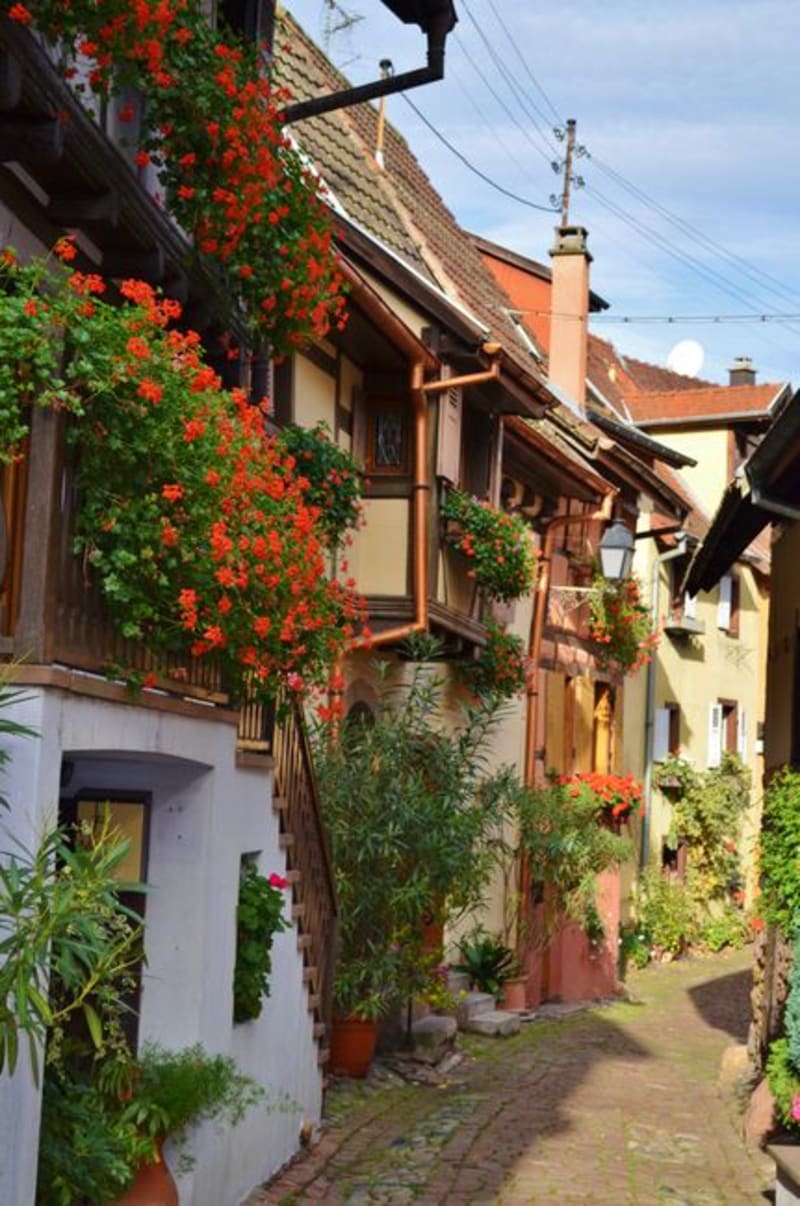
A tiny walled wine town outside Colmar that still sends a night watchman through its streets every summer evening carrying a lantern and a halberd, exactly as it has for centuries.
Explore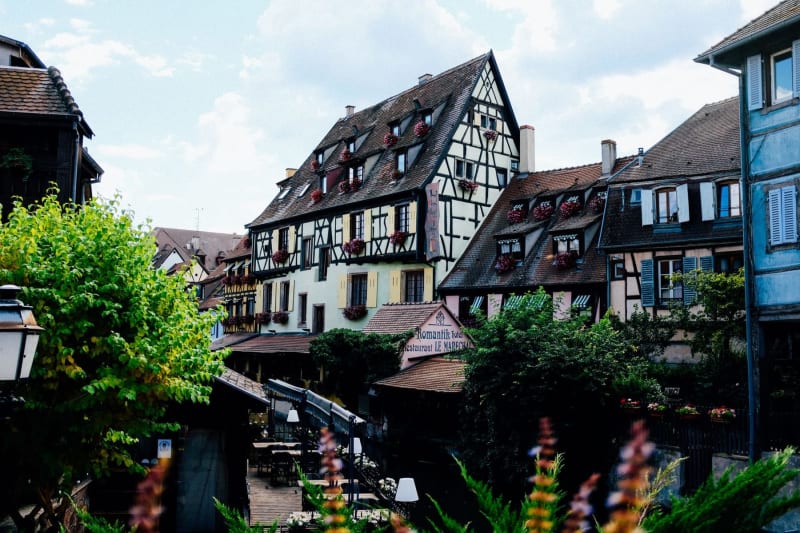 france
 Colmar
The most intact medieval wine town in Alsace — pastel half-timbered houses lean over flower-filled canals in a Little Venice that outcharms Venice.
Explore france
 Rouffach
The town on the Alsace wine road where I finally understood the geography of the region, because you can stand in one spot and see the Vosges, the vineyards, and the Rhine plain all fall into place.
Explore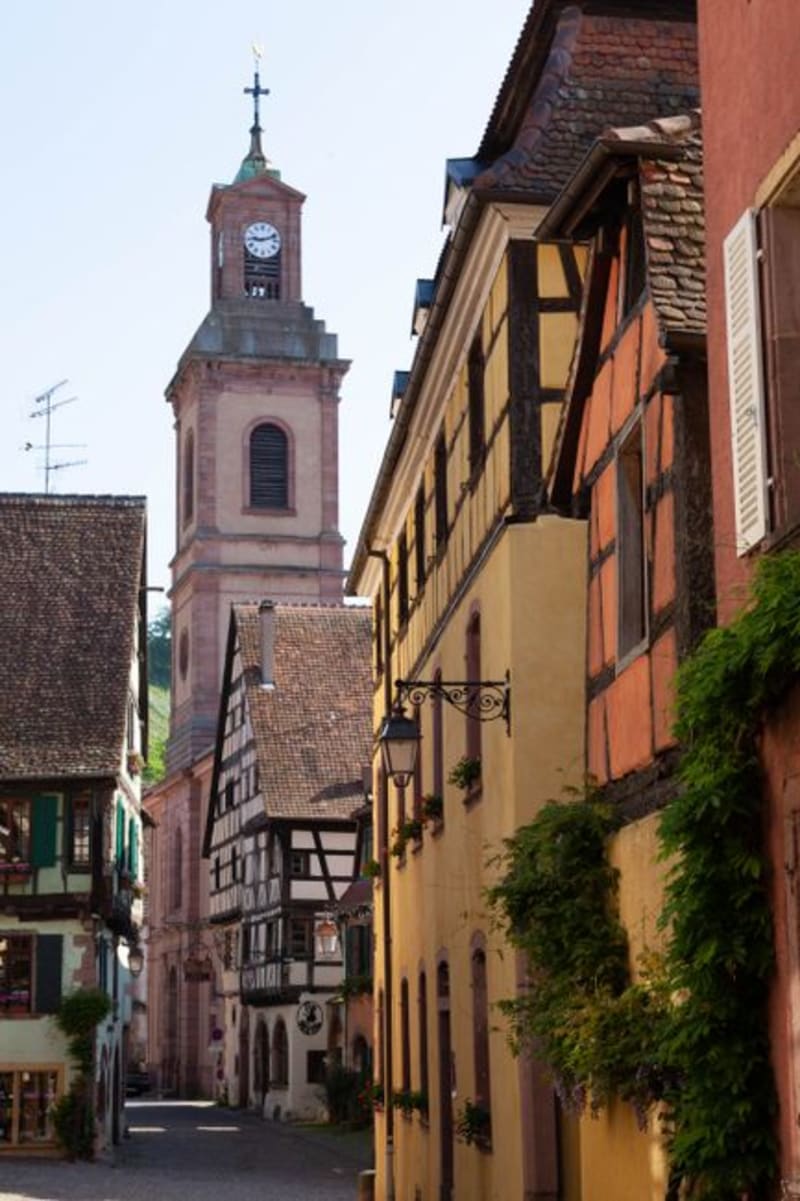 france
 Riquewihr
A walled wine town on the Alsace route des vins so intact it feels frozen in the sixteenth century, ringed by vineyards that climb straight up into the Vosges.
Explore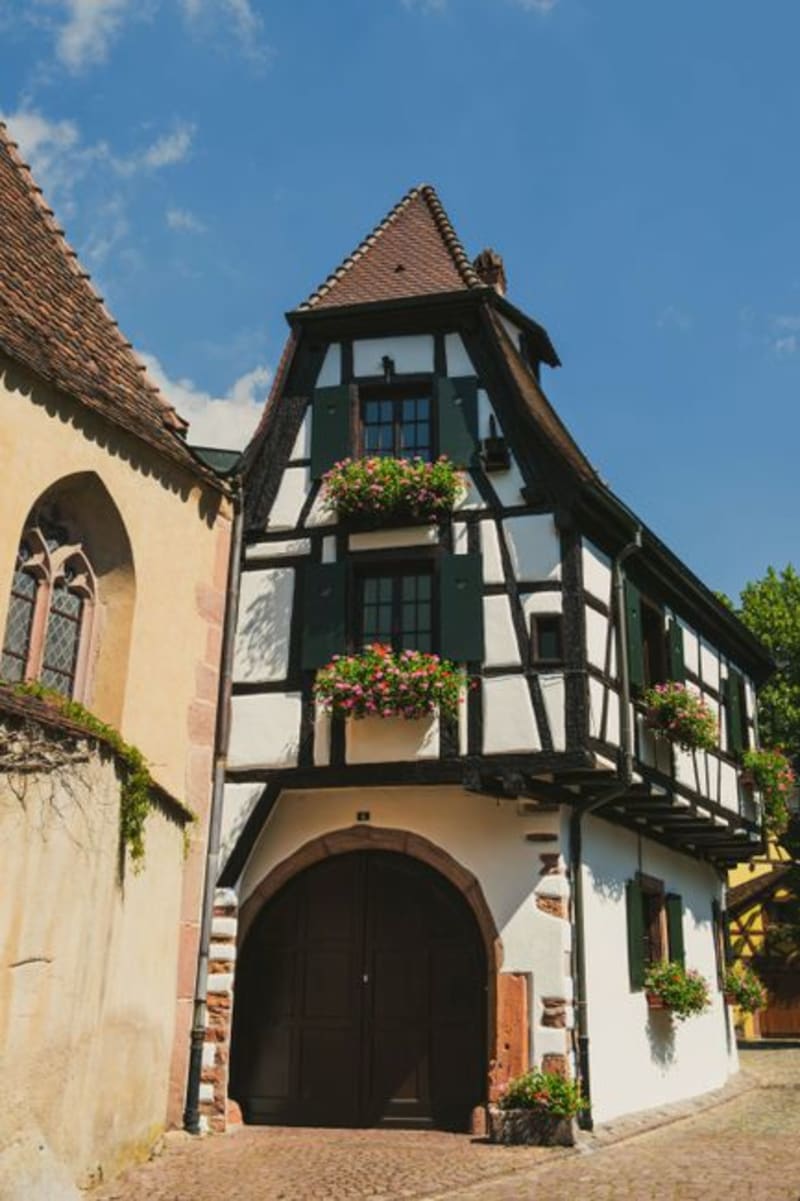 france
 Kaysersberg
A fortified valley town below a ruined imperial castle, birthplace of Albert Schweitzer, where a fortified bridge and a river running through the middle of the old town made me linger longer than planned.
Explore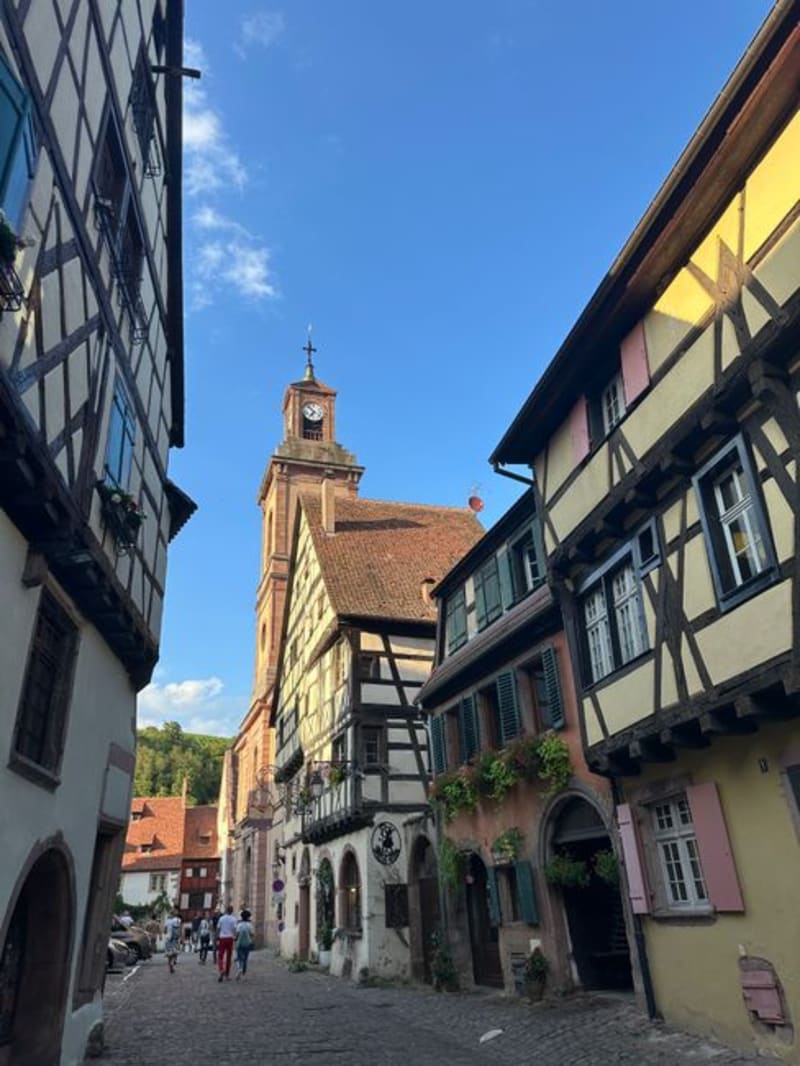 france
 Ribeauvillé
A wine town below three ruined castles on a single ridge, home to a stork colony and a pretzel festival I stumbled into completely by accident.
Explore