Monte Alén National Park
"Somewhere in that forest there were gorillas. I never saw them. The knowledge that they were there was enough."
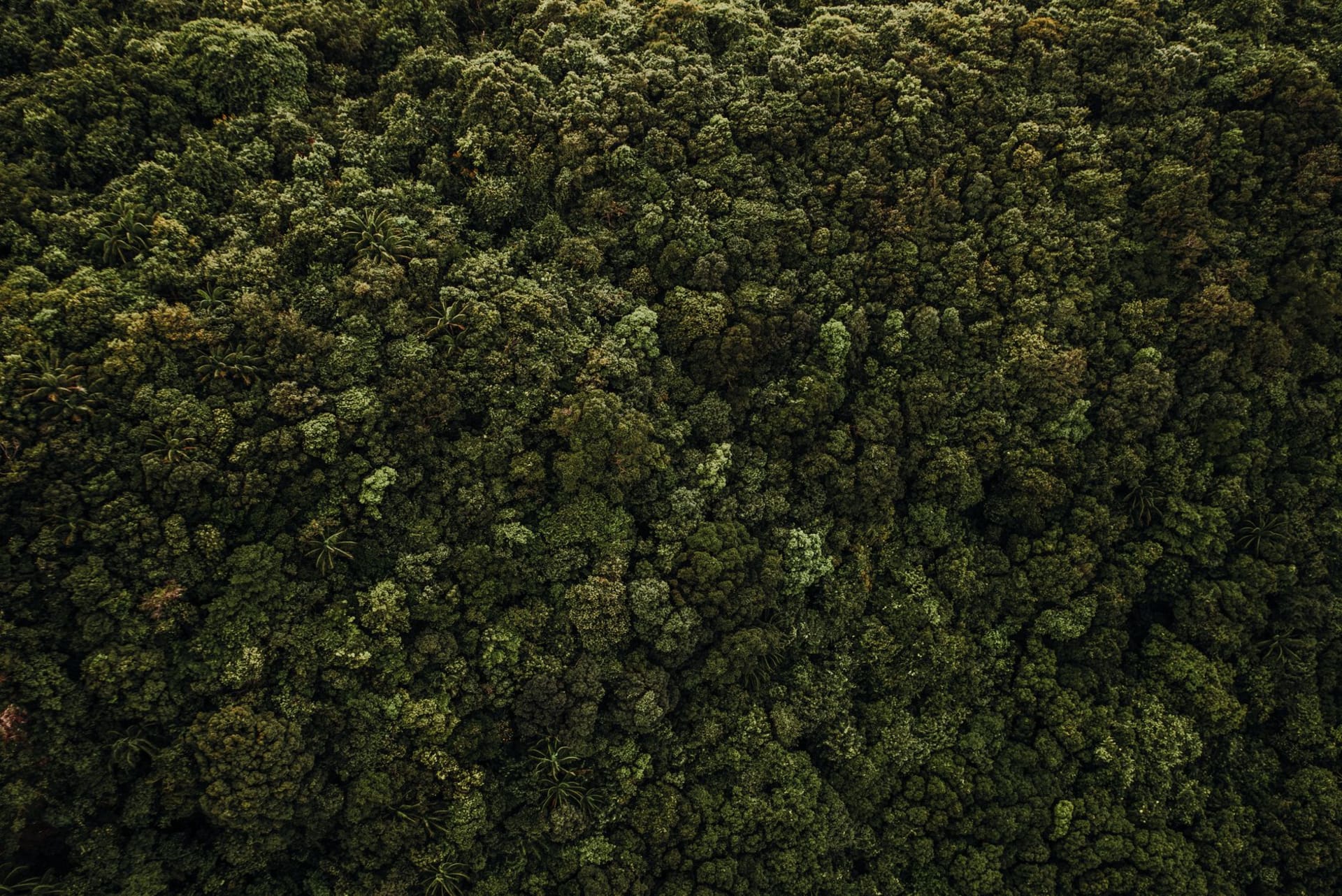
A vast tract of primary Central African rainforest where western gorillas and forest elephants move through trees that have never been logged.

The drive from Bata toward Monte Alén takes the better part of a day, and it is a journey that serves as its own preparation — the mainland’s landscape changing incrementally from coastal scrub to agricultural land to secondary forest and finally, as you approach the park boundary, into something that no longer has any human signature at all. My driver stopped the car at a point where the road simply ended at a treeline and said, with the matter-of-factness of a man stating the obvious: “This is it.” He was right. It was.
Monte Alén National Park occupies roughly two thousand square kilometers of Rio Muni’s interior, part of the Congo Basin forest complex that represents one of the largest continuous rainforest ecosystems remaining on Earth. The Equatoguinean section is not the most visited or the most talked-about part of that system — Gabon’s Lopé National Park and Cameroon’s Dja Reserve receive more attention and more infrastructure — but Monte Alén has something those places can offer only partially: near-total absence of other visitors. When I was there, a research team from a Spanish university and I were the only non-locals in the park.

The experience of Central African primary rainforest is harder to describe than it is to be inside. The scale of individual trees — some with buttress roots that spread three meters in every direction, trunks that disappear into a canopy sixty meters above — creates a spatial relationship with the environment that is simply different from anything outside this biome. You are very small in Monte Alén. This is not a metaphor. The physical proportions of the place assert it constantly. I kept stopping on the trail to look upward and losing my sense of how long I had been standing still.
The guide assigned by the park service was a local man who had been tracking the park’s wildlife since before it had formal protection status. He knew the forest in the way people know a house they have lived in for decades — not as a collection of information but as a space with a texture and a logic that he navigated by feel. He found gorilla knuckle-prints in mud, chimpanzee nests built into a fork twenty meters up, forest elephant dung still warm from a herd that had passed in the night. He showed me what a forest floor looks like when several tons of elephant have crossed it recently: a compression of soil and broken stems that looks violent and deliberate but is simply the ordinary weight of an animal existing in its habitat.
I did not see gorillas. I heard them twice — a distant crashing and then, once, a vocalization that carried through the forest as something between a bark and a cough, the kind of sound that puts evolutionary memory into your bones. My guide said this was normal; the habituated groups in the park had been disturbed recently and were keeping distance. He seemed neither disappointed nor apologetic. This was the forest doing what forests do. I felt the same.

Nights at the park’s basic research station were loud in the way of jungle nights everywhere: a constant, layered, biologically dense noise that resolves after a few hours into something almost musical. I lay on my cot listening to it and thought about the fact that the same sound has been produced in this forest every night for thousands of years, without anyone recording it or writing about it or making it into content for someone to consume. It was doing fine on its own.
When to go: December through March offers the driest conditions on the mainland and is easiest for forest trails. Advance coordination with the park authority in Bata is essential — access without authorization is not possible and accommodation is extremely limited. Plan at least two to three nights to justify the journey.
Keep exploring
More from Equatorial Guinea
 equatorial-guinea
 Pico Basilé
Bioko Island's volcanic spine rising into permanent cloud, where the forest gets stranger the higher you climb.
Explore equatorial-guinea
 Ureca
The most remote beach on Bioko Island, where leatherback turtles nest at night in numbers that would draw crowds anywhere else.
Explore equatorial-guinea
 Annobón
A remote volcanic island six hundred kilometers from the mainland, where Portuguese colonial history and complete isolation have created something that exists entirely on its own terms.
Explore equatorial-guinea
 Bata
The mainland's sprawling port city, where Central African market life runs louder and more kinetic than anything the island capital manages.
Explore equatorial-guinea
 Cogo
A crumbling Spanish colonial outpost on the Muni estuary, where fishing boats wait to carry you across to Corisco Island.
Explore equatorial-guinea
 Corisco
A flat, sandy island off the mainland coast where empty beaches meet clear equatorial water and almost no one arrives with a plan.
Explore