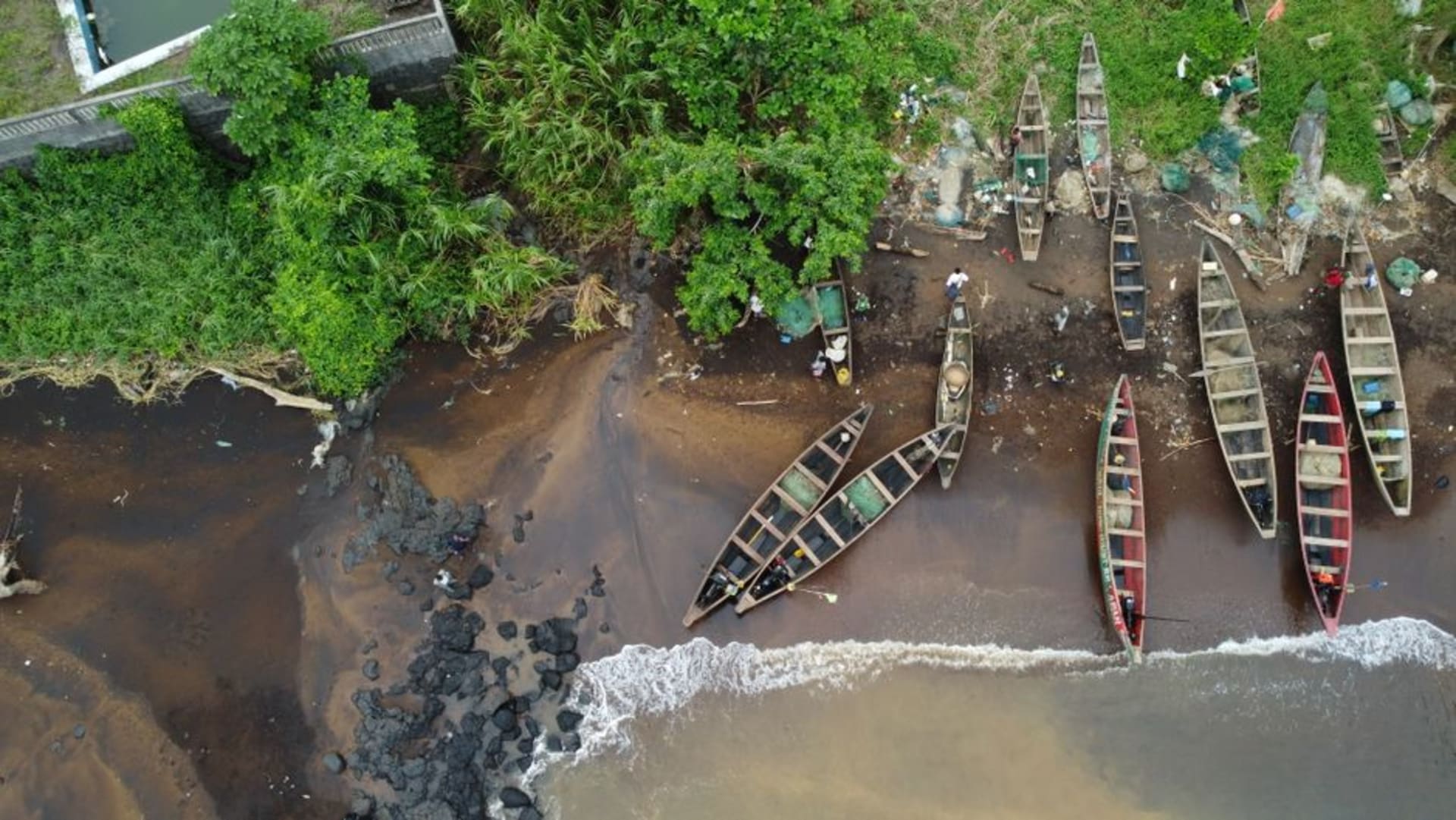
Cogo
"Cogo felt like the edge of a map that someone had started drawing and then just walked away from."
A crumbling Spanish colonial outpost on the Muni estuary, where fishing boats wait to carry you across to Corisco Island.

We got to Cogo the way most people seem to, which is by accident of logistics rather than by plan: we needed a boat to Corisco, and Cogo was where the boats left from. The road down from Bata took longer than the 121 kilometers suggested it should, the last stretch narrowing into something more red dirt than road, and by the time we rolled into town my shirt was stuck to the seat and Lia had stopped pretending to enjoy the potholes. But then the estuary opened up in front of us, wide and brown-green and glinting, and I understood immediately why this had been worth a Spanish governor’s attention a century ago.
Cogo used to be called Puerto Iradier, and you can still feel that other name in the bones of the place. Along the waterfront there are buildings that were clearly once grand — thick colonial walls, arched windows, the kind of proportions that only make sense if someone was trying to impress people back home in Madrid. Most of them are half-swallowed now, paint gone, roofs sagging, vegetation working its way through the mortar one root at a time. We spent a slow hour just walking the front street, and I kept stopping to photograph doorways that led into nothing, rooms open to the sky.

That evening we found a woman grilling fish right on the estuary bank, and we ate it standing up, off a paper plate, watching pirogues come in for the night. She didn’t speak much French or Spanish and we didn’t speak much of anything useful, but we managed with pointing and smiling, and it remains one of the best fish I’ve had anywhere in West or Central Africa — simple, smoky, still hot from the coals. Lia said afterward that Cogo felt less like a destination and more like a waiting room with a view, and she wasn’t wrong, but it was a good waiting room.
The next morning we were down at the dock before seven, negotiating a spot on a boat with three fishermen and a sack of rice, for the hour-long crossing to Corisco. The water was flat and the light was doing that pale gold thing it does early in the tropics, and Cogo shrank behind us into a smudge of green with a few white walls poking through.
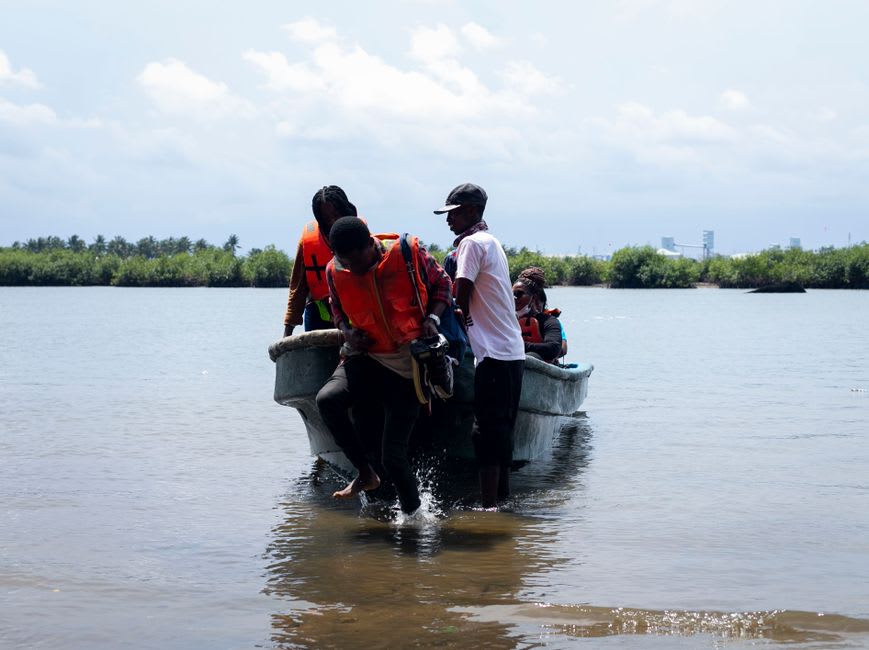
When to go: Aim for the dry season, either December to February or June to August — the crossing to Corisco can get rough outside those windows, and a calm Muni estuary makes the whole trip a lot more pleasant.
Keep exploring
More from Equatorial Guinea
 equatorial-guinea
 Corisco
A flat, sandy island off the mainland coast where empty beaches meet clear equatorial water and almost no one arrives with a plan.
Explore equatorial-guinea
 Evinayong
A hilltop trading town buried in Rio Muni's rainforest interior, where the old colonial capital still trades cacao and plantains under the mist.
Explore equatorial-guinea
 Luba
A quietly beautiful fishing harbor on Bioko's southwest coast, where the catch comes in at dawn and life moves at the speed of the tide.
Explore equatorial-guinea
 Malabo
A capital city where Spanish colonial plazas collide with oil-boom towers and the Atlantic mist never fully decides to leave.
Explore equatorial-guinea
 Mbini
A sleepy mainland river-mouth town where the Benito River pours into the Atlantic, the beaches run empty for kilometres, and the rhythm of life is set entirely by the tide and the ferry.
Explore equatorial-guinea
 Moka
A highland village in Bioko's volcanic interior, where crater lakes mirror the sky and the cloud forest presses in from every direction.
Explore