
Mbini
"The river was the colour of milky coffee and the sea was the colour of slate, and the line where they met kept moving all afternoon."
A sleepy mainland river-mouth town where the Benito River pours into the Atlantic, the beaches run empty for kilometres, and the rhythm of life is set entirely by the tide and the ferry.

I came to Mbini almost by accident. Lia and I had been in Bata for three days, and we were the kind of restless that comes from a city that doesn’t quite know what to do with visitors, so we hired a battered Toyota with a driver named Salomón and drove south down the coast road of Río Muni — the mainland slab of Equatorial Guinea that most people forget exists, because the postcards all come from Bioko Island and its volcano. The road is good in patches and an act of faith in others. After about an hour we reached the place where the Benito River — the Mbini, the Wele, depending on who you ask — runs out into the Atlantic, and the town named after it sits low and quiet on the southern bank.
A town that runs on the tide
There is not a great deal to do in Mbini, and that is precisely its appeal. The town is a scatter of low concrete houses and older timber ones with rusted roofs, a market that wakes up and goes back to sleep by mid-morning, and a waterfront where men mend nets with the unhurried competence of people who have done it ten thousand times. The river mouth is enormous — a brown, silt-heavy expanse that the Atlantic pushes back against twice a day — and crossing it means waiting for the ferry, a flat barge that loads cars and people and the occasional goat with no visible system and a great deal of shouting.
We waited two hours for it. I had expected to be annoyed. Instead I bought grilled fish and a hand of small sweet bananas from a woman who found my Spanish funny, sat on a concrete bollard, and watched pirogues cross the channel while the light went from white to gold. Lia fell asleep against a coil of rope. It was, in retrospect, one of the better afternoons of the whole trip, and absolutely nothing happened in it.
The beaches nobody is on
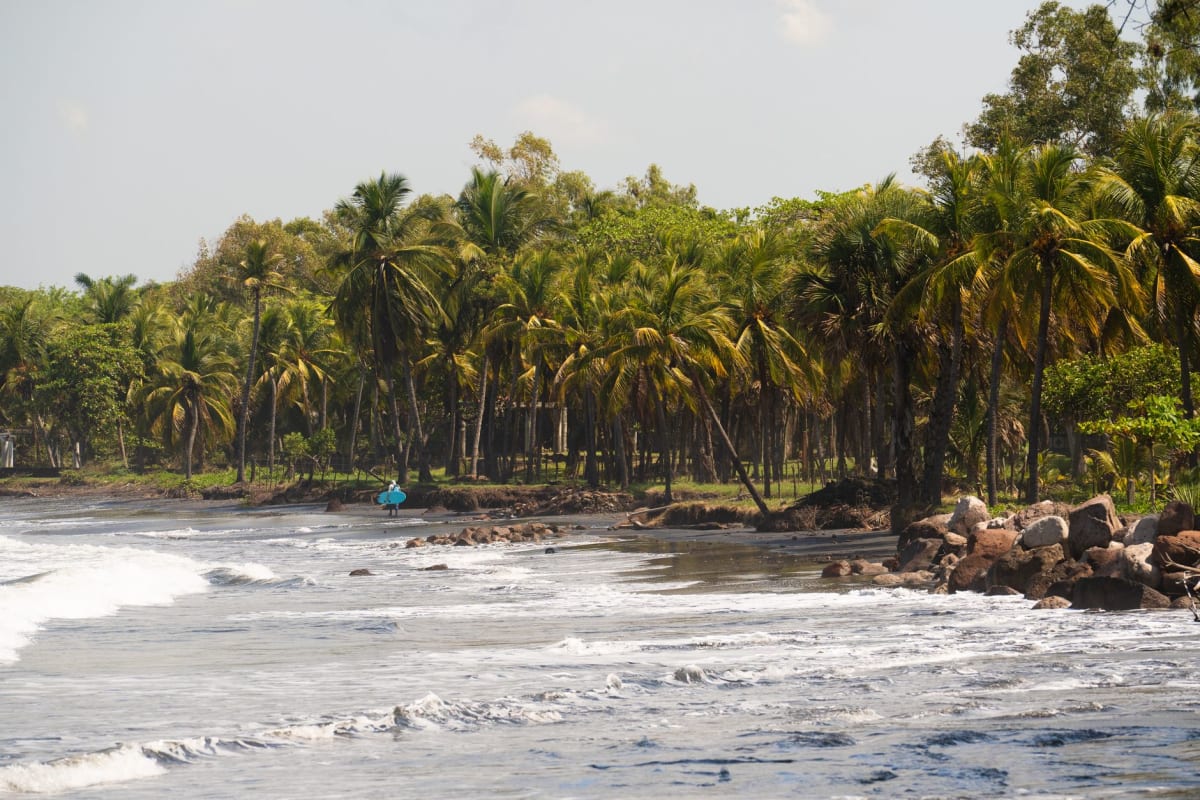
South of the river the coast opens into long beaches backed by coconut palms, and they are empty in a way that European beaches simply are not allowed to be anymore. We walked for what felt like a kilometre and met one fisherman, two children chasing a crab, and a dog with strong opinions about our presence. The sand is dark gold, the surf is heavier than it looks, and the palms lean out over it at the exact angle that travel magazines spend fortunes trying to stage.
I will be honest: Equatorial Guinea is not an easy place to travel. The permits, the checkpoints, the oil-money strangeness of it all — it asks more of you than most countries do. But standing on that beach with the river behind me and the whole Atlantic in front, nobody asking for anything, I understood why I keep coming back to the places that make me work for them. The reward is exactly this: a coast that still belongs to the people who live on it.

Getting there and being there
Mbini is a two-hour drive south of Bata along the coast; hire a car with a driver, carry your passport and permit copies, and expect checkpoints. Go for the slowness, not for sights. Eat the river fish, time your crossing with the ferry rather than against it, and bring cash — there is nothing to spend it on except food and patience, and you will want both.
Keep exploring
More from Equatorial Guinea
 equatorial-guinea
 Moka
A highland village in Bioko's volcanic interior, where crater lakes mirror the sky and the cloud forest presses in from every direction.
Explore equatorial-guinea
 Mongomo
A mainland city in Fang country near the Gabon border, where the forest closes in and the local culture asserts itself without apology.
Explore equatorial-guinea
 Monte Alén National Park
A vast tract of primary Central African rainforest where western gorillas and forest elephants move through trees that have never been logged.
Explore equatorial-guinea
 Pico Basilé
Bioko Island's volcanic spine rising into permanent cloud, where the forest gets stranger the higher you climb.
Explore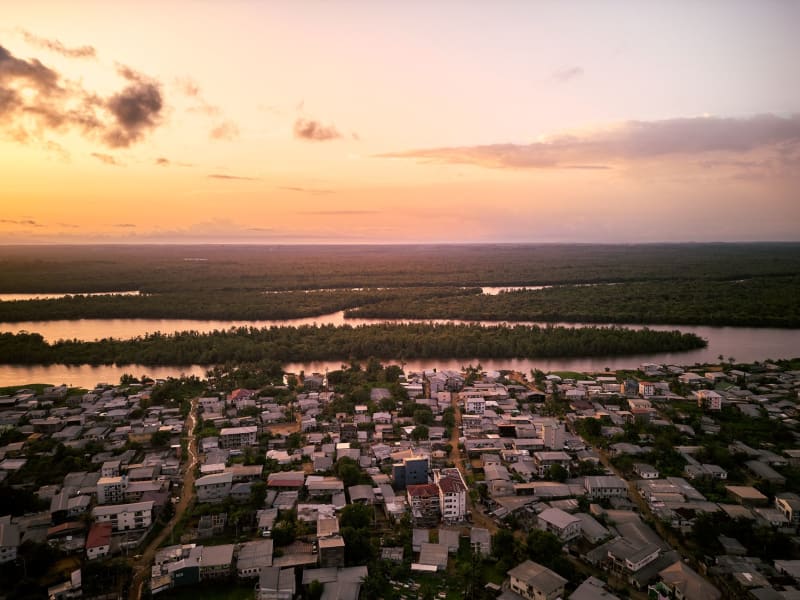 equatorial-guinea
 Ureca
The most remote beach on Bioko Island, where leatherback turtles nest at night in numbers that would draw crowds anywhere else.
Explore equatorial-guinea
 Annobón
A remote volcanic island six hundred kilometers from the mainland, where Portuguese colonial history and complete isolation have created something that exists entirely on its own terms.
Explore