Laguna de Alegría
"The lake is the color of a swimming pool and smells faintly of the inside of the earth, which is exactly what it is."
A turquoise, sulfur-tinted crater lake a short hike above town, where the water is said to heal what the hike itself tires out.
The hike up from Alegría to the crater lake takes less than an hour if you don’t stop, and I stopped constantly, which is really the whole point of it. The trail climbs through pasture and then patches of forest, the town shrinking below into its cluster of red roofs, until the path crests a rise and the crater opens up beneath you all at once — a nearly perfect turquoise disc held inside what used to be a volcano’s mouth, the color so saturated it looks retouched even in person.
Laguna de Alegría formed inside the collapsed crater of the Tecapa volcanic complex, and the color comes from dissolved minerals and sulfur compounds seeping up from below — the same geothermal activity that powers a plant not far away near Berlín. Locals have long claimed the water has therapeutic properties, good for the skin and for aching joints, and whether or not you buy the specific medical claims, there’s something to be said for floating in mineral-rich, faintly warm water at the bottom of an old volcano while your legs recover from the walk down.
Down into the crater
The path down to the shoreline is steeper than the approach and turns slippery where the mineral deposits have crusted the rock white and yellow, staining everything near the water’s edge in a way that made me think, more than once, that I was walking on the surface of somewhere other than Earth. A family from San Miguel had set up a small picnic on the black volcanic sand at the edge, and one of the kids was floating on his back with the particular unbothered joy of someone who has decided the sulfur smell is simply part of the deal.
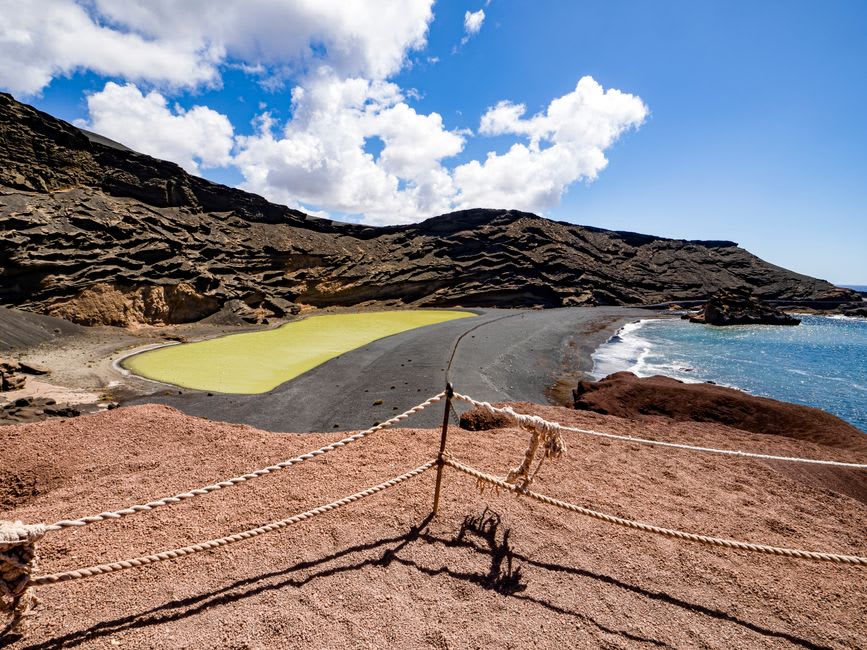
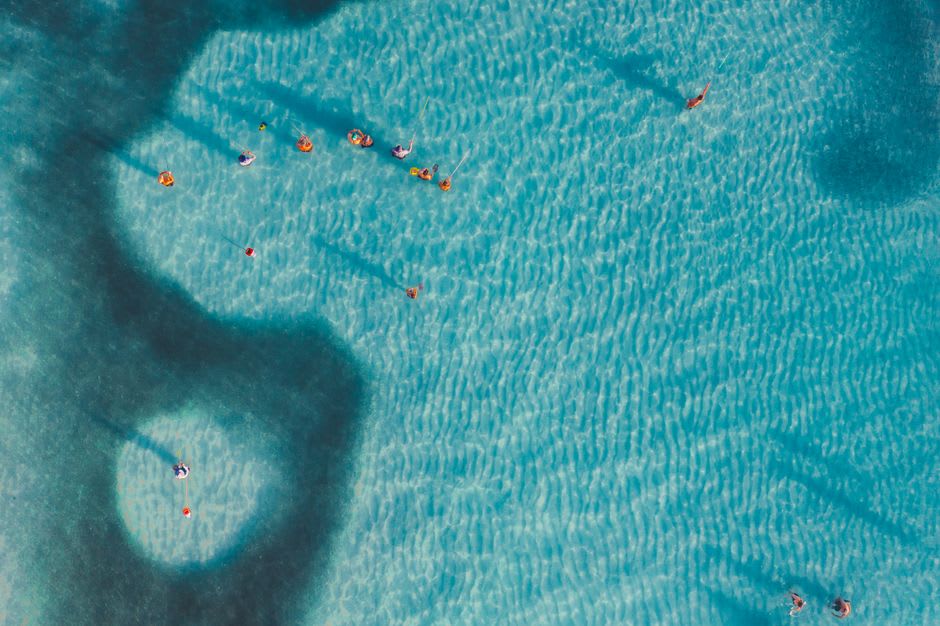
I got in slowly, the water warmer near a few spots where I could feel a faint current of heat rising from below, cooler further out. It has a slight sulfurous smell up close that I stopped noticing after ten minutes, replaced by the simple pleasure of floating in something so blue it made the surrounding crater walls look almost black by contrast. Someone had told me back in Alegría that the lake changes shade depending on the light and the mineral concentration that day, and floating there in the early afternoon, I believed it — the color seemed to shift every time a cloud crossed the sun.
I climbed back out of the crater with my skin faintly mineral-slick and my legs properly tired, and ate lunch back in Alegría’s plaza feeling like I’d earned it twice over — once for the hike, once for whatever the water had actually done to me.
When to go: Dry season, November through April, keeps the trail from turning muddy and slick; visit on a weekday morning to have the water mostly to yourself before families arrive for weekend picnics.
Keep exploring
More from El Salvador
 el-salvador
 Morazán
A mountainous eastern department where the war is still close enough to the surface that people talk about it in the present tense.
Explore el-salvador
 Nahuizalco
A Pipil artisan town where wicker and tule reed furniture lines the streets and indigenous tradition outlasted decades of forced erasure.
Explore el-salvador
 Perquín
A remote highland town that was the guerrilla command center during El Salvador's civil war and now carries that history with unusual honesty.
Explore el-salvador
 Playa El Zonte
The surf beach that became Bitcoin Beach, where cryptocurrency and a laid-back point break coexist with a shrug most tourists never even notice.
Explore el-salvador
 Playa Las Flores
An eastern right-point break with fewer footprints in the sand than El Tunco and a wave that peels for what feels like a full minute.
Explore el-salvador
 Ruta de las Flores
The mountain road linking Sonsonate to Ahuachapán through coffee country and flower-draped villages, best experienced by pulling over whenever something catches your eye.
Explore