Cotacachi
"Every third storefront on the main street sells leather, and by the second block I'd stopped being able to tell the good workshops from the tourist traps."
A leather-working town at the foot of its namesake volcano, a short drive from a crater lake so still it doubles the mountain on its own surface.
Cotacachi is a smaller, calmer town than its more famous neighbor Otavalo, twenty minutes down the road, and it has built its own single-industry identity just as thoroughly around leather as Otavalo has around textiles. The main street, 10 de Agosto, is lined block after block with leather shops — jackets, bags, boots, belts — some genuinely excellent family workshops that have been at it for generations, others selling imported goods relabeled for the tourist trade. Telling the difference took me longer than I expected.
Learning to Tell the Workshops Apart
I spent a morning asking around and eventually found a small family operation set back from the main strip, where the owner cut and stitched a jacket by hand while explaining, patiently, what separates their work from the mass-produced storefronts closer to the plaza — the quality of the hide, the stitching density, the difference between goods actually made in Cotacachi and goods trucked in from elsewhere and sold under the town’s reputation. I bought a belt directly from him rather than from any of the flashier shopfronts, at a price that felt fair on both sides of the transaction, which is not always how it goes in towns built around a single tourist-facing craft.
Laguna Cuicocha
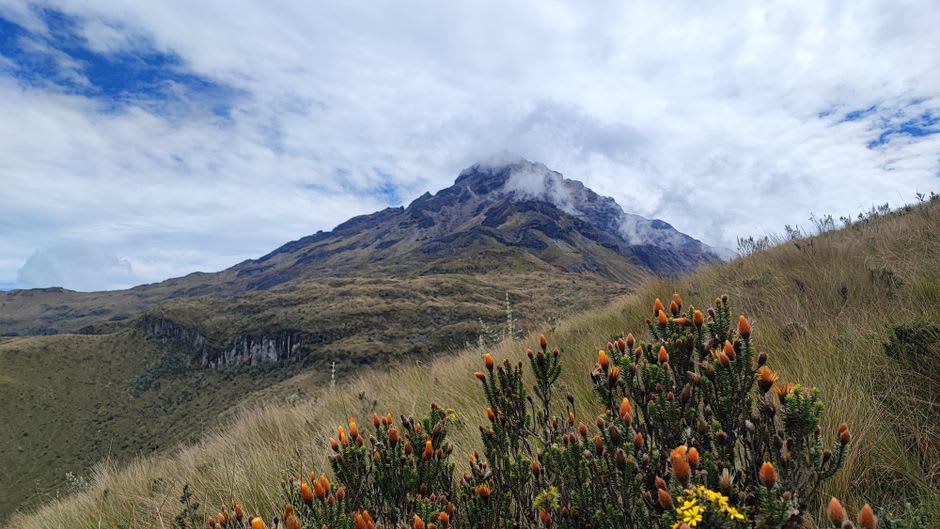
The real reason to linger in Cotacachi beyond an afternoon of leather shopping is Laguna Cuicocha, a crater lake formed inside the caldera of the dormant Cotacachi volcano, roughly twenty minutes above town by road. Two small volcanic islands break the surface near the center, and a trail circles the entire rim — about five hours if you do the full loop — with the volcano’s peak visible on one side and, on a still morning, its reflection sitting almost perfectly on the lake’s surface below. I did a shorter section of the rim trail rather than the full circuit, with views down into water so clear and undisturbed it looked less like a lake than a held breath.
The Volcano Itself
Cotacachi volcano, which gives both the town and the lake their name, last erupted centuries ago and is currently dormant, its jagged, eroded peak visible from most of the town on clear days. Locals I spoke with treated it with the same mix of pride and wary respect I noticed around Tungurahua in Baños — a fixture of daily scenery that everyone is quietly aware isn’t necessarily finished.
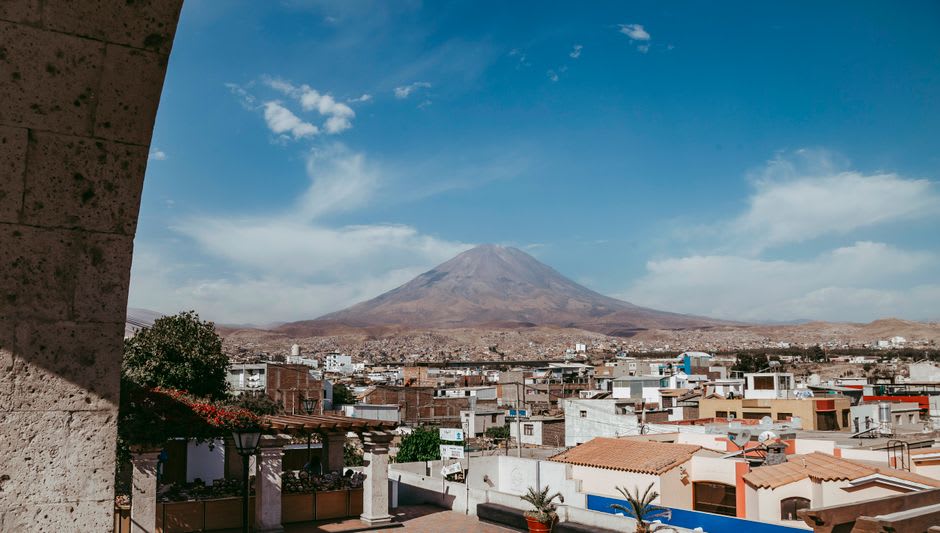
When to go: June through September gives the clearest views for the Cuicocha rim trail and the best odds of catching that mirror-still reflection in the morning before wind picks up. Combine a leather-shopping morning in Cotacachi with an afternoon at the lake for an easy full day trip from Otavalo or Ibarra.
Keep exploring
More from Ecuador
 ecuador
 Cotopaxi
A near-perfect volcanic cone at 5,897 meters that dominates the Andean skyline south of Quito, visible from so far away it seems less like a mountain and more like a fact of the landscape.
Explore ecuador
 Cuenca
A colonial city so perfectly preserved it feels less like a living place and more like an argument about what the Spanish Empire could have been.
Explore ecuador
 Cuyabeno Wildlife Reserve
A flooded forest reserve in the northeastern Amazon where you travel by canoe more than by foot, and pink river dolphins surface beside the boat without much ceremony.
Explore ecuador
 Galapagos Islands
Where evolution put on its most extravagant show — animals evolved with no fear of humans and show it.
Explore ecuador
 General Villamil
Guayaquil's closest beach, a straightforward working fishing town turned weekend getaway where wooden balsa rafts still put out from the same sand the sunbathers use.
Explore ecuador
 Guayaquil
Ecuador's largest city and economic engine, a hot, humid river port that spent two decades rebuilding its waterfront into one of South America's more genuinely successful urban makeovers.
Explore