Americas
Ecuador
"Four worlds stacked on top of each other, none of them optional."
A country the size of a rumor that somehow contains cloud forest, Galápagos, Amazon, and the exact spot where the earth's equator bisects a colonial capital.
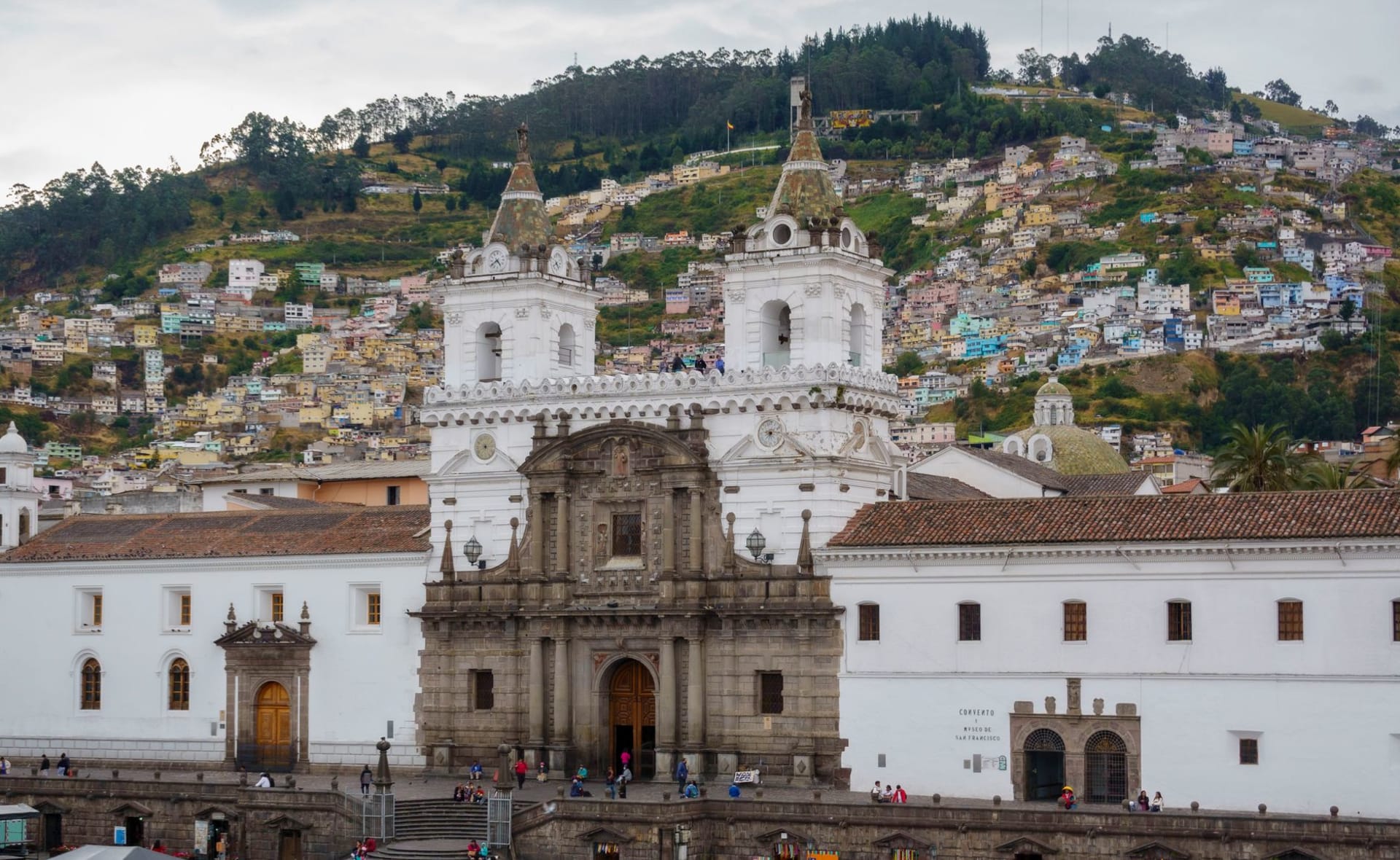
I landed in Quito at midnight and couldn’t breathe properly for the first hour. Not from anxiety — from altitude. At 2,850 metres, Quito is the second-highest capital on earth, and the air has this quality of being just slightly insufficient, like a sentence that ends before the last word. By morning I had adjusted enough to walk out onto the terrace of the hostal and find the Centro Histórico spread below me in the early light, the gilded domes of La Compañía catching the sun, the Andes rising impossibly close on every side. The scale of the thing is disorienting. You feel simultaneously very high up and very enclosed.
Quito’s old city is one of the best-preserved colonial centres in Latin America and also one of the most lived-in, which means it doesn’t feel like a museum district. The street food stalls selling hornado — slow-roasted pork scraped from massive blackened pans — are wedged between churches that would anchor the skylines of much larger European cities. I ate caldo de bola de verde one morning on a plastic stool outside the Mercado San Francisco, a soup of green plantain dumplings stuffed with pork and egg that warmed me completely in the cold mountain air. That kind of meal is why I travel.
Ecuador’s genius is compression. Within a few hours from Quito you can be in cloud forest at Mindo watching tanagers at eye level, or descending into Amazonian lowlands around Tena where the rivers run clear green and the nights are loud with frogs. The Avenue of the Volcanoes — Chimborazo, Cotopaxi, Tungurahua lined up like sentinels — is something you see from the bus window and have to remind yourself is real. Cuenca in the south is quieter and more elegant, its residents convinced — not entirely without reason — that they live in the superior city. And then there are the Galápagos, which operate by entirely different rules: animals that look at you with something between curiosity and indifference, the evolutionary record written in beaks and feet.
When to go: June through September is the dry season in the Sierra and the best window for climbing and trekking. The Galápagos are visitable year-round, though December to May brings warmer water and more marine life near the surface. The Amazon is wettest from December to April but accessible in all seasons. Quito sits at altitude so bring layers regardless of when you arrive.
What most guides get wrong: They treat Ecuador as a layover between Peru and Colombia, or reduce it to the Galápagos plus one day in the old city. The Quilotoa Loop — a multi-day trek through indigenous villages around a crater lake that turns the exact colour of jade — is one of the best walks on the continent and half the visitors it deserves. The food is also consistently underrated: ceviche de camarón, llapingachos, the insane variety of native potatoes at any highland market. Ecuador is not a country you pass through. It is a country you underestimate once and then return to fix the mistake.
Explore
Places in Ecuador
 ecuador
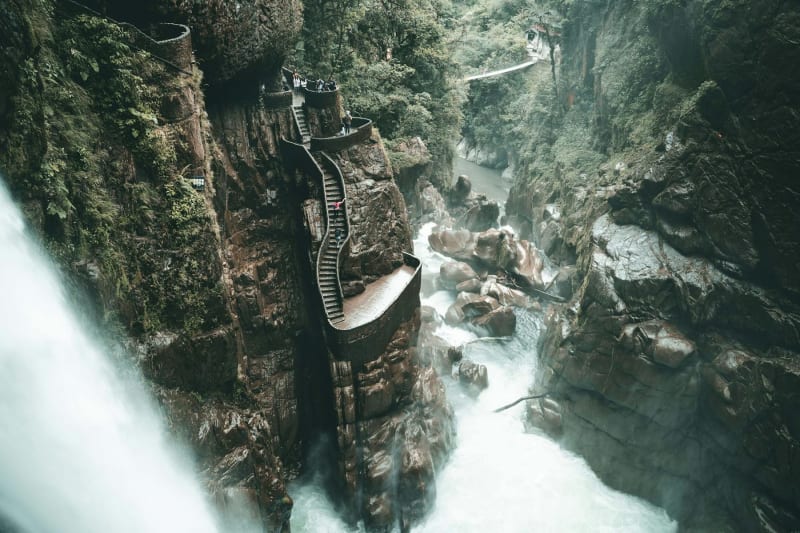
 Banos de Agua Santa
The swing at the end of the world, taffy pulled on every corner, and an active volcano looming overhead.
Explore ecuador
 Cajas National Park
A high-altitude páramo above Cuenca with 235 lakes at 4,000m, where polylepis trees grow in twisted groves between the glacial lakes.
Explore ecuador
 Chimborazo
An extinct volcano whose summit, because of the bulge of the equator, is the farthest point on the planet's surface from the centre of the earth, watched over by herds of half-wild vicuñas.
Explore ecuador
 Cotopaxi
A near-perfect volcanic cone at 5,897 meters that dominates the Andean skyline south of Quito, visible from so far away it seems less like a mountain and more like a fact of the landscape.
Explore ecuador
 Cuenca
A colonial city so perfectly preserved it feels less like a living place and more like an argument about what the Spanish Empire could have been.
Explore ecuador
 Galapagos Islands
Where evolution put on its most extravagant show — animals evolved with no fear of humans and show it.
Explore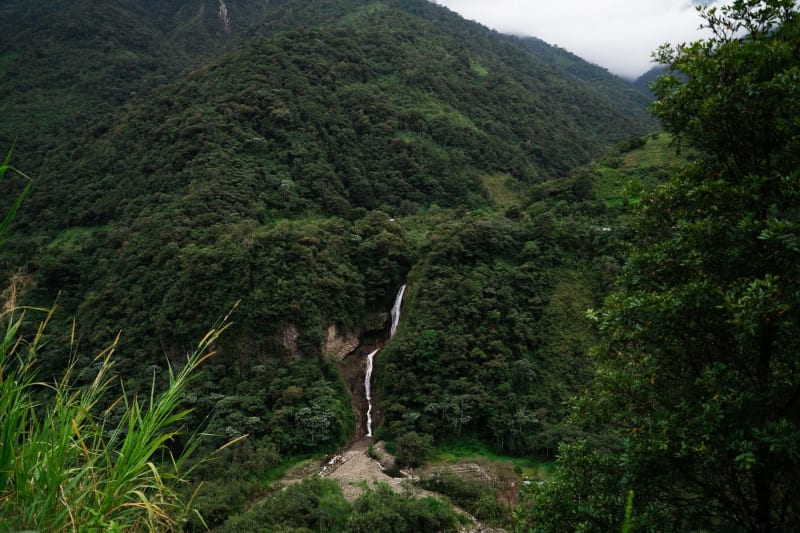 ecuador
 Mindo Cloud Forest
A birdwatcher's paradise where 400 species share cloud forest trails with chocolate farms and butterfly gardens.
Explore ecuador
 Montañita
A Pacific surf town that runs on cheap ceviche, consistent left-hand breaks, and a social metabolism that doesn't start until well after dark.
Explore ecuador
 Otavalo
The largest indigenous market in South America, where Kichwa traders have been selling textiles on this same plaza for centuries and show no signs of stopping.
Explore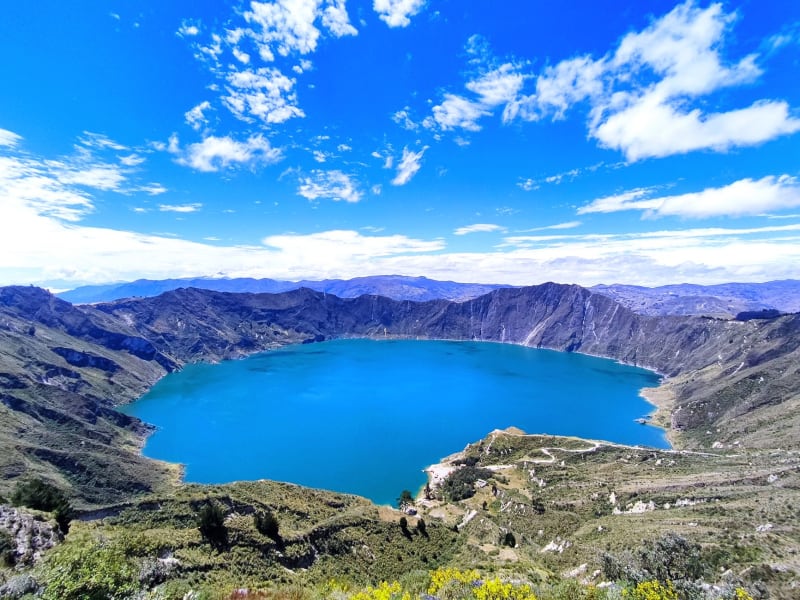 ecuador
 Quilotoa
A collapsed volcano filled with a crater lake of improbable green, sitting at the end of a four-day walk through indigenous villages that most travelers skip entirely.
Explore ecuador
 Quito
The world's best-preserved colonial center sits at 2,850m surrounded by snowy Andean volcanoes.
Explore