Quito
"Quito is a colonial masterpiece that happens to be floating at the edge of the clouds."
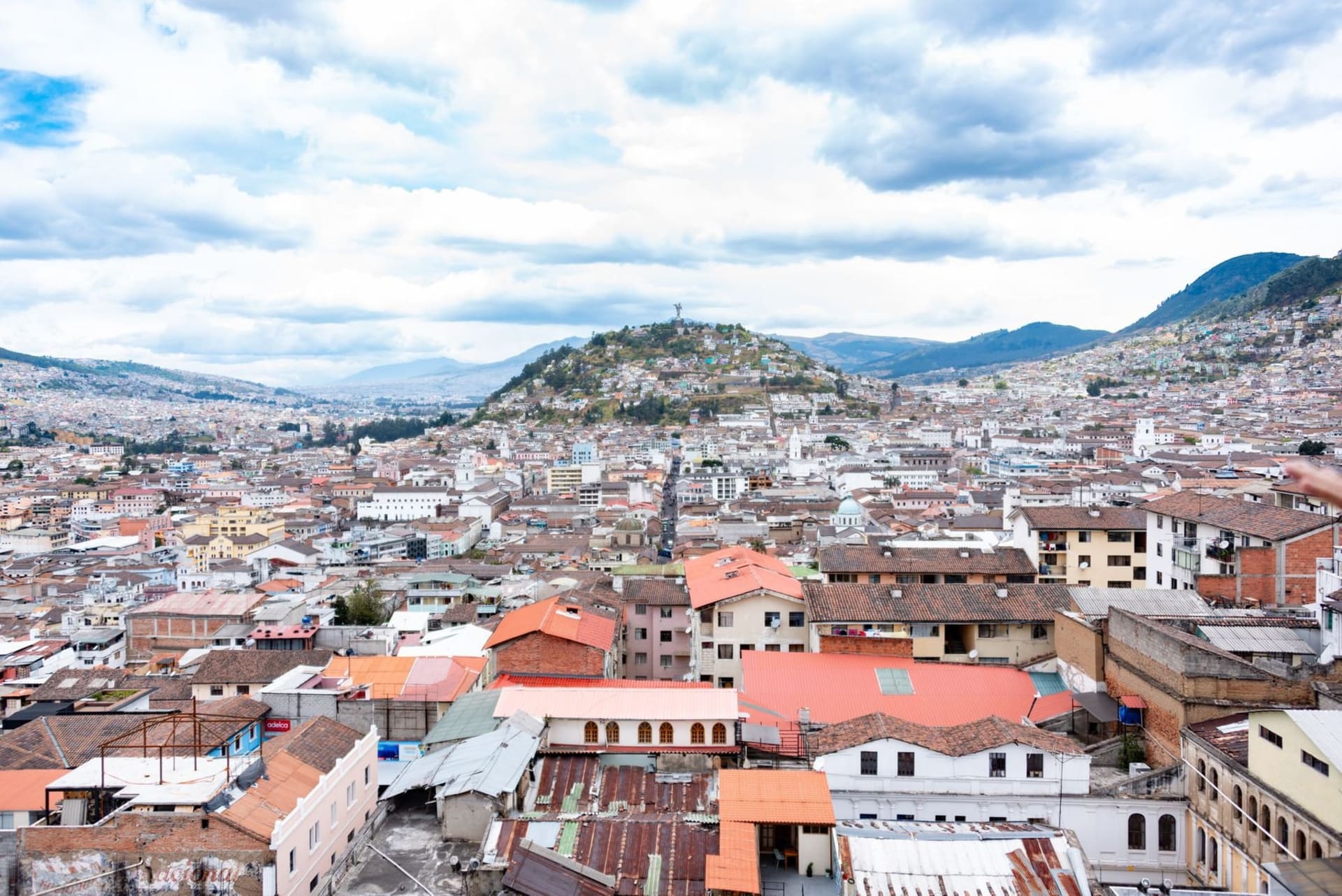
The world's best-preserved colonial center sits at 2,850m surrounded by snowy Andean volcanoes.
I arrived in Quito with a headache I hadn’t earned. The altitude — 2,850 meters, higher than most cities I’d ever set foot in — announced itself within the first hour, a tight pressure behind the temples that no amount of coca tea entirely dissolves. Still, I stood at the window of our hotel on Calle García Moreno and watched the evening light turn the dome of La Compañía de Jesús the color of old brass, and I forgot, briefly, that I had a skull.
A City That Refused to Be Destroyed
The Centro Histórico is not a reconstruction. That’s the thing that keeps stopping me in my tracks here. These streets — the uneven cobblestones of La Ronda, the colonnaded arcades of Plaza Grande — survived the centuries largely intact, which is why UNESCO declared Quito the first World Heritage City in 1978. Walking south from the Plaza de la Independencia toward the Monasterio de San Francisco, I kept having the same vertiginous sensation: that I’d slipped a gear in time. The white-and-gold nave of La Compañía, carved in a frenzy of Baroque excess that took 160 years to complete, is so overwhelming it’s almost funny. Lia stood at the entrance for a long moment, then turned to me and said, very quietly, “They really meant it.”
Light, Altitude, and a Bowl of Locro
The quality of light in Quito is singular. Because the city sits nearly on the equator, the sun moves almost straight overhead, and the shadows it casts are short and dramatic even at midday. Everything looks slightly too vivid — the bougainvillea spilling over a convent wall on Calle Sucre, the chrome carts selling fresh-cut fruit dusted in chili and lime outside the Mercado Central. I ate locro de papa at a counter inside that market, a thick potato and cheese soup with half an avocado balanced on the rim, and it tasted like something that had been perfected over generations in cold mountain kitchens. It probably had been.
The Surprise at Panecillo
The unexpected discovery came from looking down rather than up. Most visitors climb the hill of El Panecillo for the view of the city spread below — and it is extraordinary, a basin of terracotta and white ringed by volcanoes. But what surprised me was the neighborhood on the way back down, a tangle of steep lanes where women were hanging laundry between wrought-iron balconies and someone was frying something that smelled of cumin and hot oil. Quito, I realized, was not a museum with people in it. It was just a city, dense and alive and indifferent to being admired.
When to go: Quito’s spring-like climate holds year-round, but the driest months run from June through September — clear skies make the surrounding volcanoes visible and the light in the historic center at its most photogenic. Avoid the wettest weeks of March and April if you’re planning to walk.