
Besalú
"I crossed the bridge and nobody else was crossing it. Twelve centuries of stone underfoot and complete silence."
A medieval market town in inland Catalonia so intact and unhurried it makes you wonder what century you drove into.

I arrived in Besalú on a Tuesday morning in May having taken the inland road from Girona rather than the coastal route everyone takes. The approach is good — the town appears on a slight rise above the Fluvià river, and the bridge presents itself before anything else: a Romanesque fortified span of eleven arches, twelfth century, completely intact, a gatehouse with a crenelated tower standing guard at the midpoint. There were no other cars when I pulled over and got out. No tour buses. A man was cycling across it with a bag of groceries, unhurried. I waited for him to pass and then walked to the middle and stood there for a while listening to the river below and feeling the particular kind of stillness that old stone produces when nobody is rushing past you.
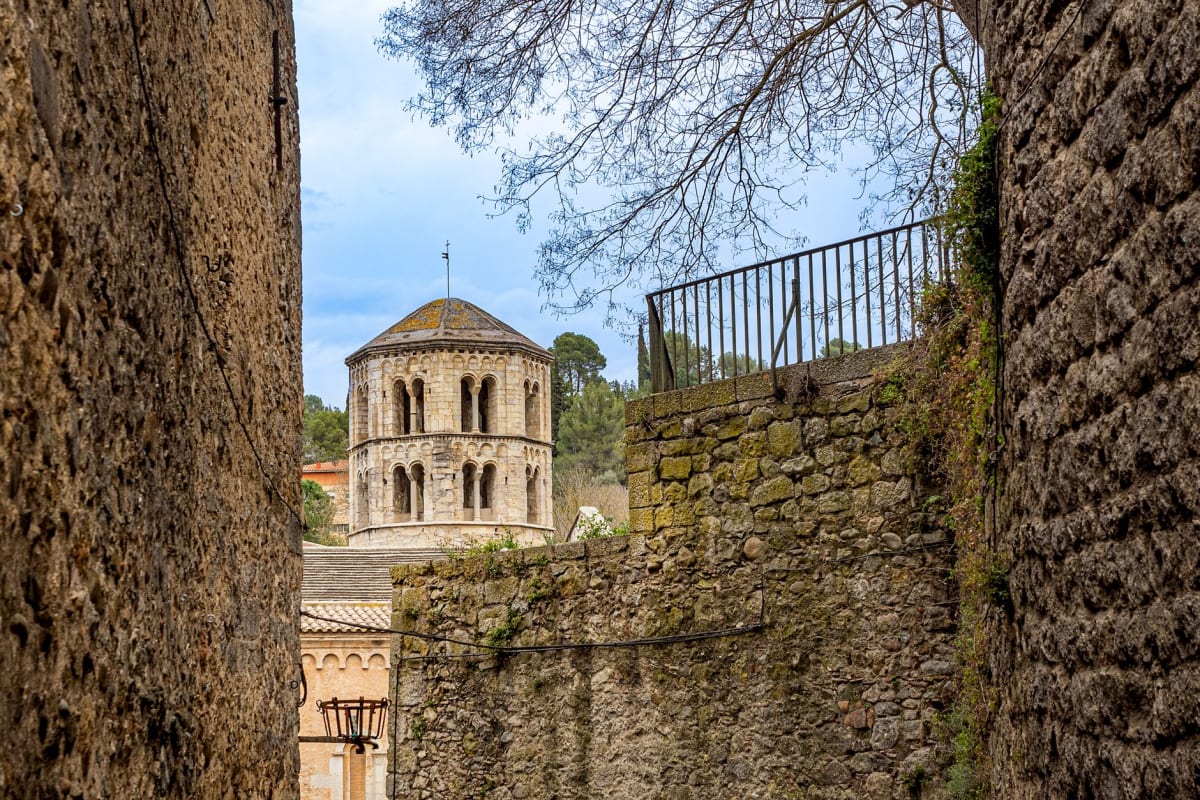
Besalú was the capital of an independent county from the ninth to the twelfth century — a real political entity that minted its own coins and operated its own courts before being absorbed into the Crown of Aragon. That history left behind a concentration of Romanesque architecture unusual even by Catalan standards: the collegiate church of Sant Pere, the church of Sant Vicenç, the arcaded Plaça de la Llibertat where the weekly market has been held since the medieval period. The market square has elegant stone porches running along two sides, the kind of colonnade that shelters both commerce and conversation in equal measure, and on Saturday mornings it fills with local producers from the surrounding Garrotxa and Pla de l’Estany — vegetables, olive oil, wine, craft cheeses from the farms above town. The stallholders speak Catalan among themselves and Spanish to visitors, and the distinction is not lost on anyone.
The Jewish community here was one of the most significant in medieval Catalonia. The Jueria — the Jewish quarter — occupies a compact set of alleyways near the river, and the ritual bath, the mikveh, was discovered in the twentieth century and is now partially excavated and visitable. It is one of very few surviving medieval Jewish ritual baths in Spain. Standing in the narrow stone chamber beside it, looking down the steps into what would have been the water, you feel the weight of the community that used it and then was gone. The forced conversion of 1391, then the expulsion of 1492 — Besalú’s Jews simply ceased to exist as a community, and the quarter that bore their presence was absorbed into the town without a trace until archaeologists started digging. The silence in those alleyways has a different quality than the silence elsewhere in the town.

Lunch in Besalú means one of the restaurants tucked under the porticoed arcades or along the riverside — places that do local Catalan cooking with conviction rather than performance: beef stew with wild mushrooms from the Garrotxa, rice with cuttlefish and alioli, crema catalana that arrives in its proper clay dish still warm from the broiler. I had a very good rabbit with romesco that nobody had told me to order. I chose it by pointing at the table next to me where someone was already eating it. The waiter approved with a small nod and the food arrived and it tasted of the specific place — the garlic, the almonds, the smoked pepper — in a way that restaurant food often claims to and rarely delivers. After lunch I walked the bridge again in the other direction and drove on toward Olot, feeling like I’d been briefly allowed into a version of Catalonia that the coastal road keeps secret.
When to go: Spring and autumn are both excellent. May brings the surrounding countryside into flower and the Saturday market is at its fullest. October means truffle season begins in the surrounding hills and the restaurants shift their menus accordingly. The town is small enough that even moderate tourism feels dense in midsummer — weekday visits in July and August are preferable to weekends.
Keep exploring
More from Catalonia
 catalonia
Cadaqués
A whitewashed fishing village at the end of a vertiginous road that Dalí chose and the world has been following him to ever since.
Explore catalonia
Costa Brava
A rugged Mediterranean coastline where pine forests fall straight to turquoise water and the best coves require an effort to reach.
Explore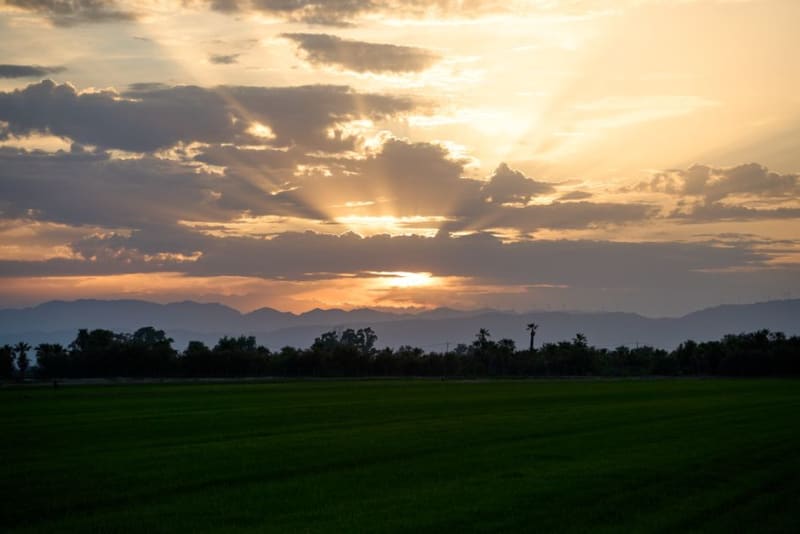 catalonia
Delta de l'Ebre
A flat, wind-scoured river delta of rice paddies and lagoons where flamingos outnumber people and the horizon barely bends.
Explore catalonia
Figueres
A provincial Catalan market town that contains, in its old center, what may be the most surreal building any artist has ever made of themselves.
Explore catalonia
Garrotxa
A volcanic landscape of crater lakes and beech forests in inland Catalonia where the mist is a feature, not a problem.
Explore catalonia
Girona
A medieval city of layered walls and a river-reflected old town that rewards slower travel the way Barcelona rewards its first-timers.
Explore