Capillas de Marmol
"Lia kept touching the walls like she didn't believe the color was real, and honestly, neither did I."
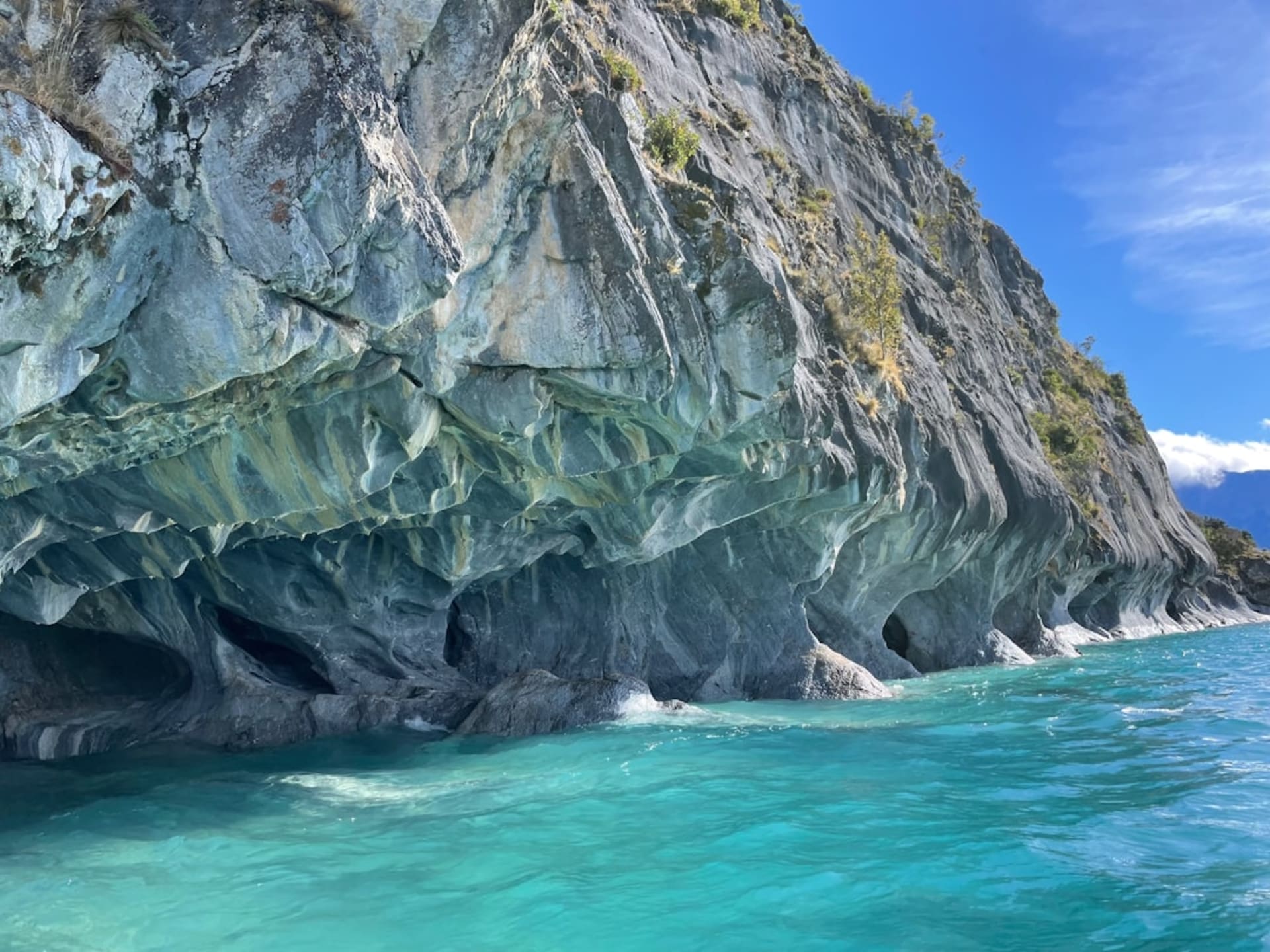
Swirling marble caves carved by decades of wave action on Lago General Carrera, reachable only by small boat from Rio Tranquilo.

I’d seen the photos everyone posts of the Capillas de Marmol and assumed, the way you do, that they’d been color-corrected into oblivion. They hadn’t. We booked a boat out of Puerto Rio Tranquilo around nine in the morning, when the lake was still glassy, and within twenty minutes the guide cut the engine and let us drift into a chamber of marble so pale and veined it looked like the inside of a seashell blown up to the size of a house. The water underneath us was this improbable milky turquoise, glacial sediment doing what glacial sediment does, and it threw light up onto the cave ceiling in moving ribbons. I remember laughing out loud, not because anything was funny but because my brain didn’t have a category for it.
What nobody tells you is how small the boats feel once you’re actually inside the formations. Ours sat maybe eight people, and the pilot threaded it through gaps in the rock with maybe a meter of clearance on either side, cutting the motor and paddling by hand through the tightest bits so as not to chip anything. Lago General Carrera is the second-largest lake in South America, shared with Argentina where it’s called Lago Buenos Aires, and the sheer scale of it made the caves feel like a secret tucked into something much bigger. The wind can whip up fast on that lake too — our guide mentioned more than once that afternoon crossings get canceled when it does, which is why everyone pushes for the early slots.

The formations themselves have names — the Cathedral, the Chapel, the Cave — though I couldn’t tell you which was which by the time we got back to shore. What stuck with me instead was the texture: centuries of wave action against calcium carbonate has polished the stone into these smooth, almost muscular curves, striped grey and white and the occasional streak of rust. Our guide explained that the lake level shifts with snowmelt and rain through the season, so the same cave photographed in December looks different by March, sitting higher or lower against the water. It’s not a static monument. It’s still being carved, slowly, right now.

We did the standard hour-long circuit, but there’s also a kayak option that a French couple on our boat had done the day before and wouldn’t stop raving about — no motor noise, no other tourists in your photos, just the slap of the paddle against that milky water. I wish we’d had the extra day for it. Next time, Lia says, and I believe her, because we’ve already caught ourselves scrolling flights back to Balmaceda.
When to go: Go between November and March when the weather cooperates and book the earliest morning departure — the lake is calmest then and the light hits the marble at its most dramatic angle.
Keep exploring
More from Carretera Austral
 carretera-austral
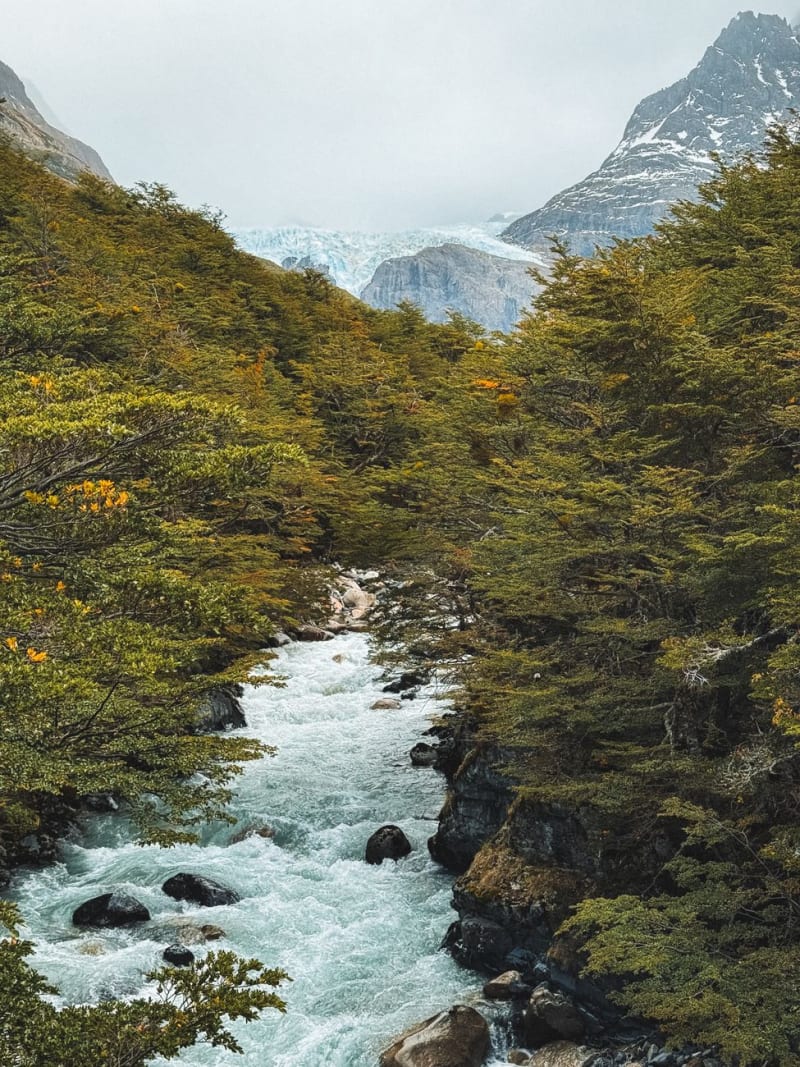
Cerro Castillo National Park
A wall of basalt spires south of Coyhaique that looks like a ruined fortress and trekkers compare, quietly, to Torres del Paine without the crowds.
Explore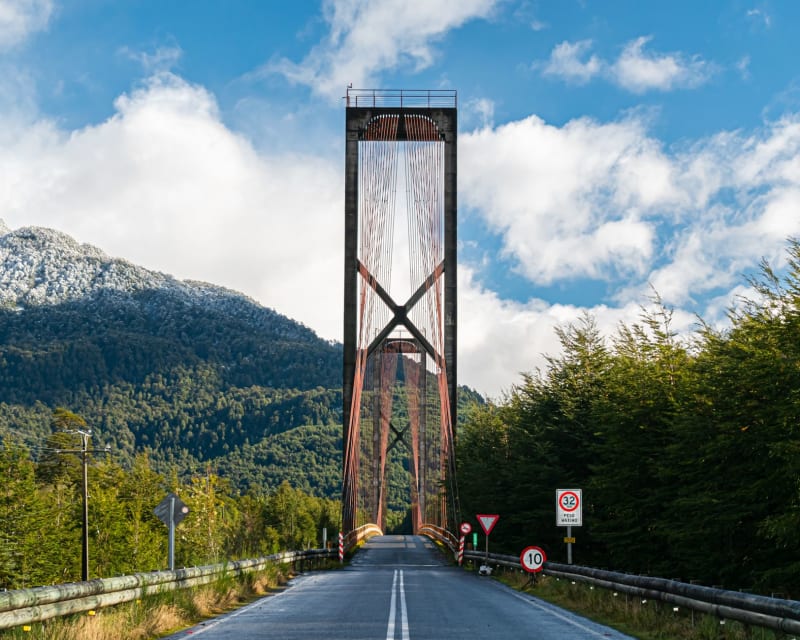 carretera-austral
Chaitén
A small port town rebuilt from volcanic ash — the ghost-house district remains, half-swallowed by jungle, honest and eerie.
Explore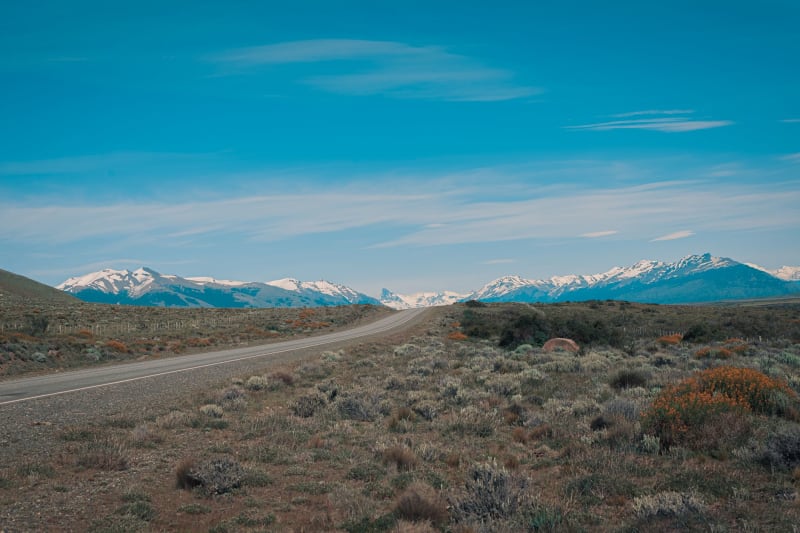 carretera-austral
Cochrane
A frontier town at the edge of the Baker River valley where the butcher shop is the finest restaurant and the lamb is beyond argument.
Explore carretera-austral
Coyhaique
The unlikely capital of Chilean Patagonia — a city of 50,000 that feels genuinely remote, with outstanding lamb and a square you won't forget.
Explore carretera-austral
Futaleufú
A small border town sitting beside one of the world's great whitewater rivers — where the river's reputation draws a very specific kind of person.
Explore carretera-austral
La Junta
A crossroads village in the Palena valley where two rivers meet and travelers refuel, eat well, and stay longer than planned.
Explore