
Özkonak
"A farmer's field kept swallowing his irrigation water, and that's how an entire underground city got found."
A smaller, less-visited underground city near Avanos, discovered by accident in 1972, with defense holes designed for pouring hot oil on invaders.

Every guidebook sends you to Derinkuyu or Kaymaklı for Cappadocia’s underground cities, and both deserve the reputation, but I liked Özkonak precisely because almost nobody else was there. The story of its discovery is almost too good: in 1972, a local farmer noticed his irrigation water kept vanishing into the ground near his field, and when he investigated, he found a hole leading down into a network of carved chambers that nobody in living memory had known existed. Excavation has since opened around ten levels, though only a handful are accessible to visitors, and it’s still thought that much of the city remains unmapped.
What makes Özkonak distinct from its more famous neighbors is a detail I hadn’t read about anywhere before a guide pointed it out: rows of holes bored through the ceiling of certain passages, angled downward, which the original builders used to pour hot oil onto anyone who managed to breach the tunnels below. Combined with rolling stone doors that could be sealed from the inside, the whole complex reads less like a shelter and more like a fortress designed by people who had thought carefully, specifically, about exactly how an attack would unfold. Ventilation shafts, wells, and small chapels carved into the rock are all still visible, along with grooves worn into the stone floor by centuries of feet moving through the same narrow passages.
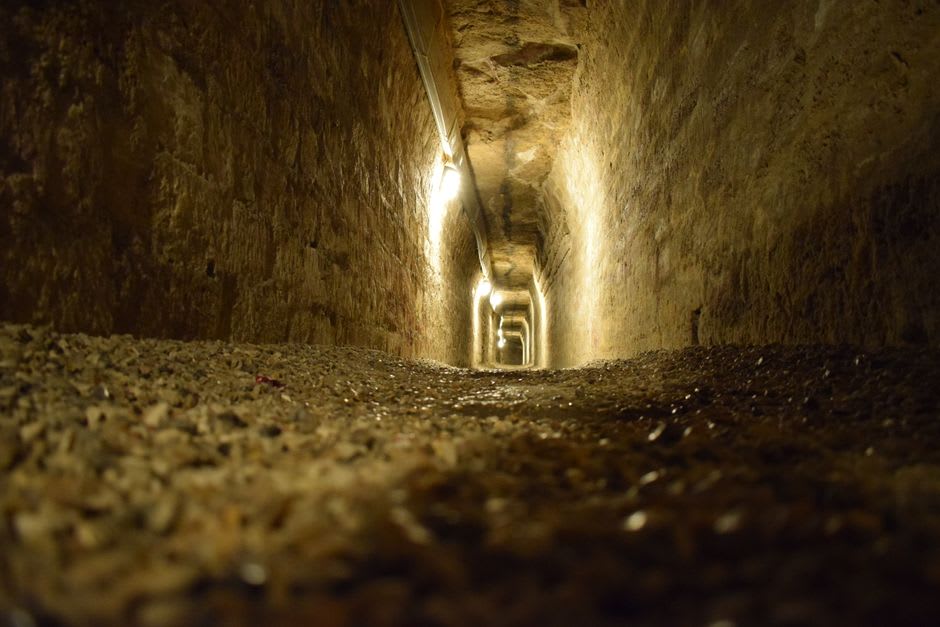
Because Özkonak sees a fraction of Derinkuyu’s visitor numbers, I moved through the open levels almost alone, ducking through low passages with a single strand of bulbs for light and no queue forming behind me at any pinch point — a real advantage in tunnels barely wide enough for one adult to pass through comfortably. The nearby village above ground is small and calm, a good stop for a glass of tea after the claustrophobia of the descent.

When to go: Özkonak is a year-round destination since it’s entirely underground; go whenever Derinkuyu’s crowds sound unappealing. Wear closed shoes with good grip — some of the passages are uneven, low, and slick.
Keep exploring
More from Cappadocia
 cappadocia
Pancarlık Valley
A small, nearly empty valley near Ürgüp where painted rock churches sit unguarded and unqueued, reachable only on foot.
Explore cappadocia
Paşabağı
The valley of triple-headed fairy chimneys where a monk once carved himself a hermit's cell inside the tallest cone, still visible near the top.
Explore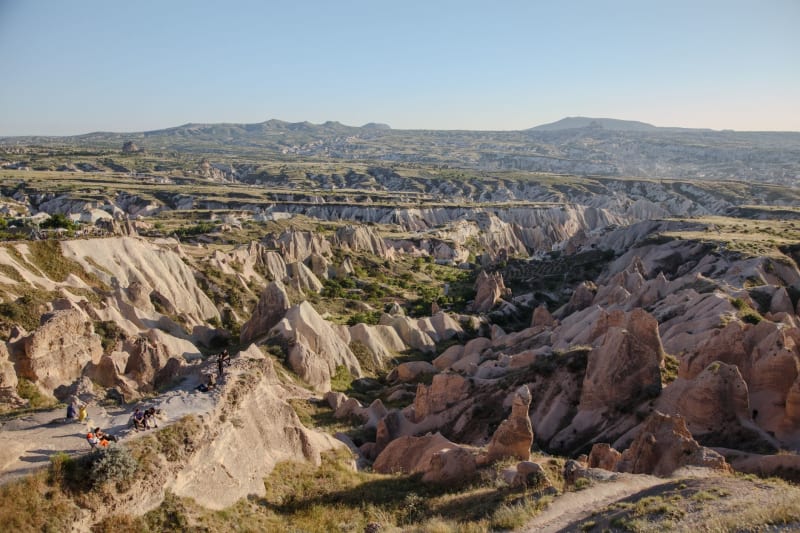 cappadocia
Rose Valley
The valley that turns pink at sunset, whose rock shifts colour by the hour and whose trails connect Byzantine churches the tour buses never reach.
Explore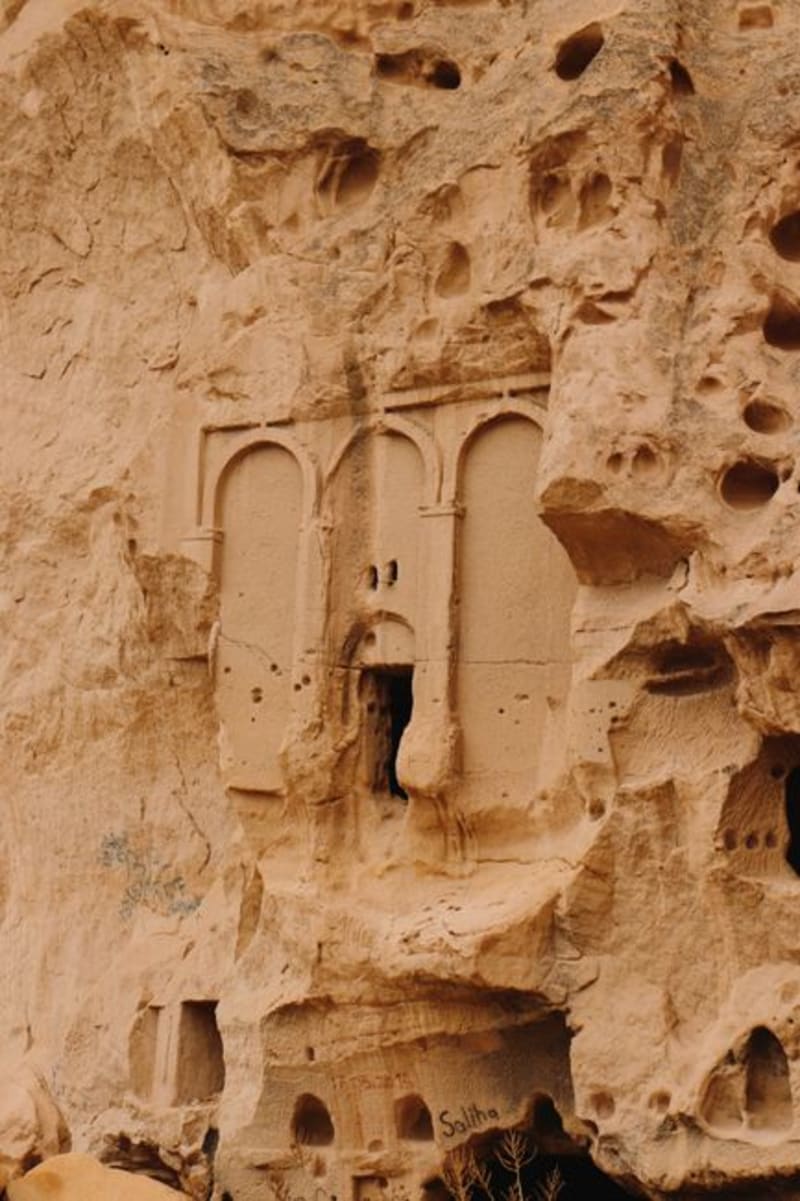 cappadocia
Selime Monastery
A cathedral-sized monastery carved entirely into a single rock face at the northern mouth of Ihlara Valley, its cavernous halls big enough to feel like architecture rather than caves.
Explore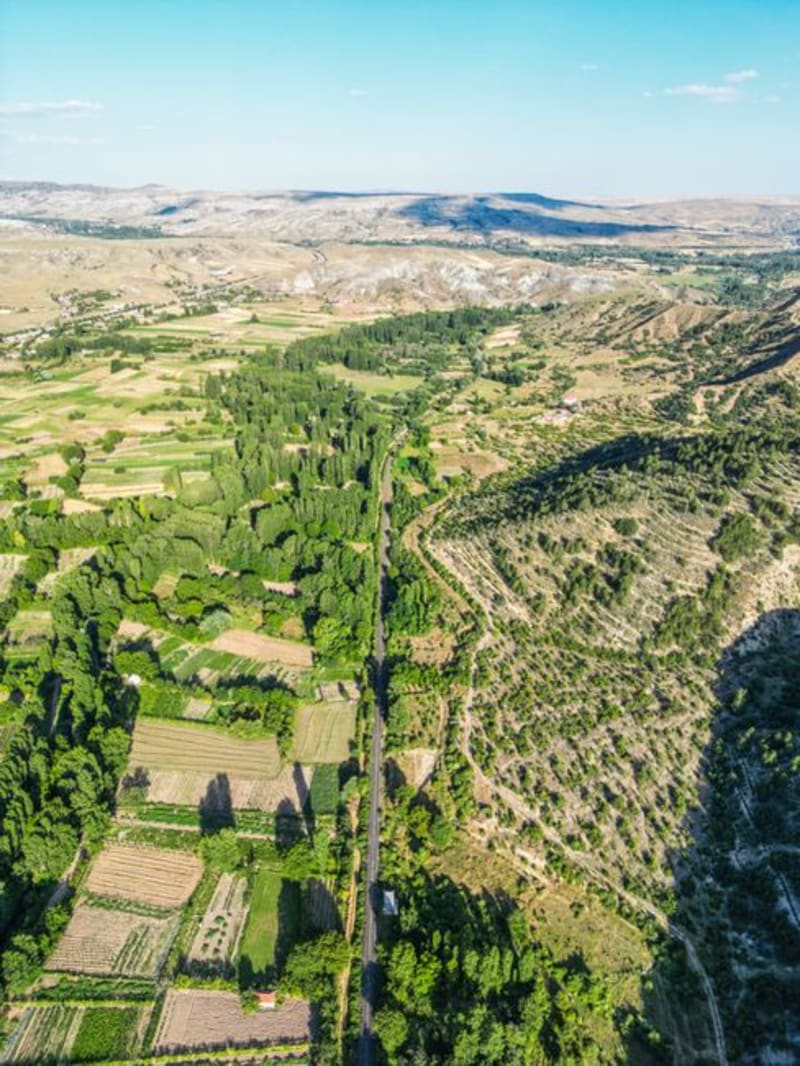 cappadocia
Soğanlı Valley
A remote valley of Byzantine rock churches and fairy chimneys wearing double stone caps, where grandmothers still sell handmade dolls at folding tables.
Explore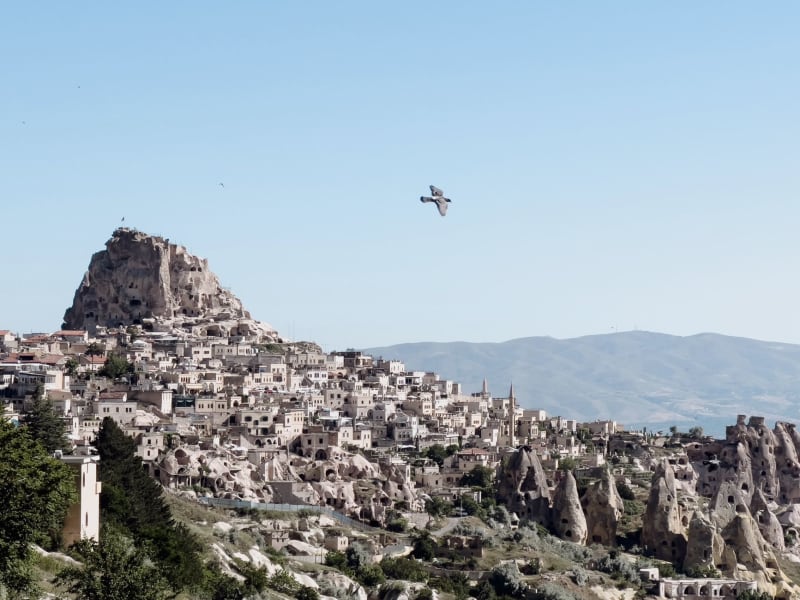 cappadocia
Uçhisar
A village built into an enormous natural rock castle — the highest point in Cappadocia, with the whole region spread below like a map of itself.
Explore