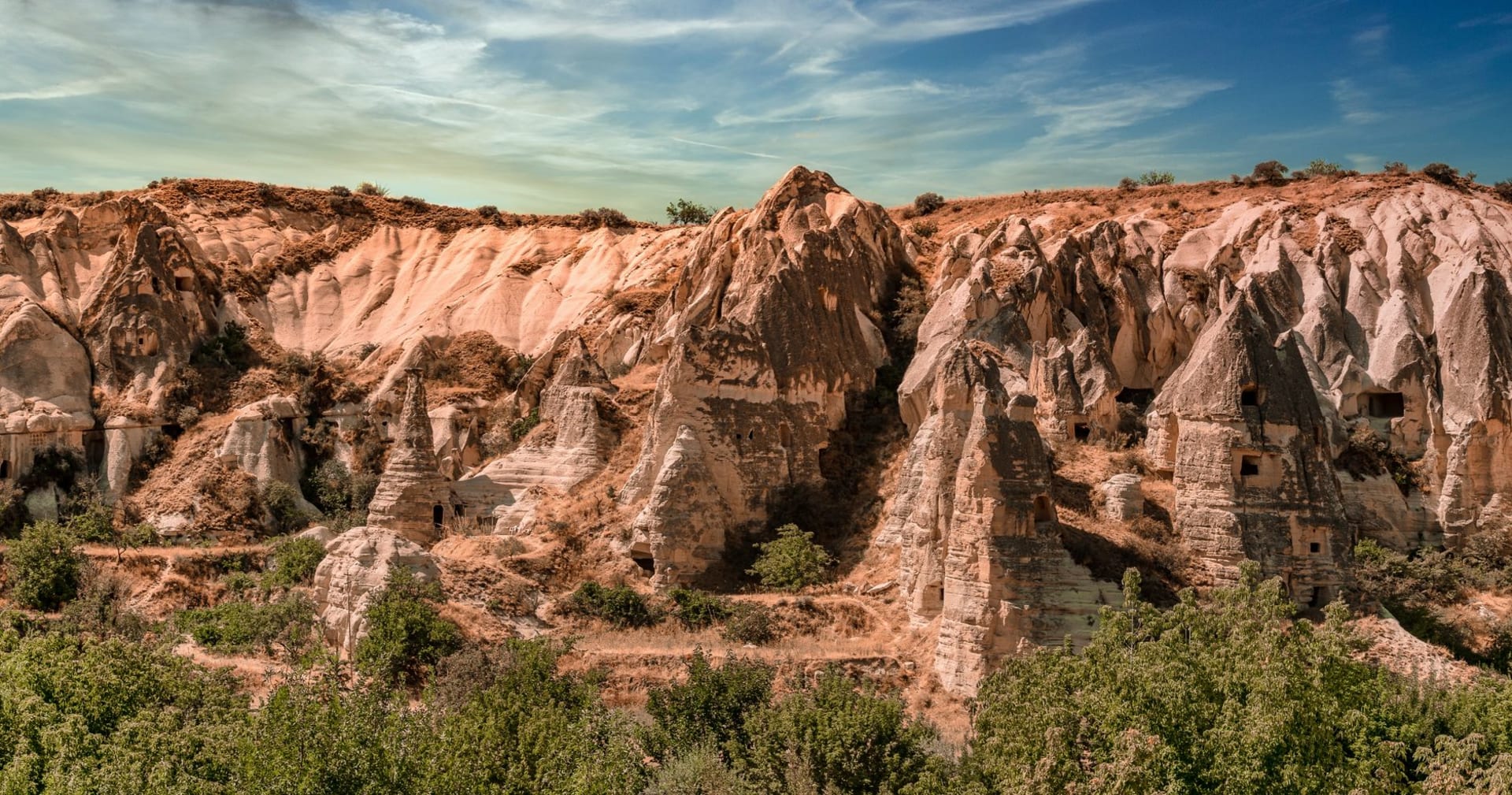
Kaymaklı
"It's not the depth that gets you — it's the domesticity. A stable. A kitchen. A wine cellar. Just home, ten metres underground."
An underground city more labyrinthine than Derinkuyu, where the passages branch into dozens of daily-life chambers still carved with their original purpose.

Kaymaklı is different from Derinkuyu in a way I didn’t expect. Derinkuyu goes deeper — eleven levels to Kaymaklı’s eight — and has that vertiginous quality of looking up through the ventilation shaft at a disc of sky from the bottom of the world. But Kaymaklı spreads sideways more than downward, and its passages are more labyrinthine, branching and reconnecting in ways that require the small directional arrows painted on the rock or you will circle back to a horse stable for the second time thinking you have found a new section. It is a denser maze, and more domestic in character.
I went early on a September morning before the buses arrived from Göreme, and in the first twenty minutes I had the passages mostly to myself. The chambers here are specific in a way that tells you about daily life: this one has niches carved at regular intervals for storage, this one has a clay oven built into the corner, this one has holes in the floor where the fat from pressed olives would have drained into collecting jars below, this one is clearly a stable because the ceiling is lower and the hollows carved in the walls are the right size for animal heads. All of it eight to ten metres underground. The temperature down there is steady around thirteen degrees regardless of season, which in summer — coming down from the Anatolian heat above — feels like walking into a refrigerator made of geology.

The round stone doors are the most physically astonishing thing. Each one is a disc of basalt roughly the size and shape of a millstone, weighing hundreds of kilograms, fitted into a channel in the passage floor and designed to roll sideways to seal the tunnel. The pivoting mechanism — a small hole bored through the disc’s centre to allow an iron bar to control the roll from the inside — is an elegantly simple solution to the problem of sealing a door that no one outside could break down. I put my hand on one and tried to push it and it didn’t move at all.

What remains with me from both Kaymaklı and Derinkuyu is not the engineering — extraordinary as that is — but the simple fact of thousands of people deciding to live underground because the world above had become too dangerous. The ventilation systems they carved, the water channels, the wine presses, the stables: all of it built by hand in soft rock over generations. The level of organisation and patience required is something I keep returning to.
When to go: Go as early as possible — the site opens at 8 a.m. and fills quickly once the Göreme tour buses start running around 9:30. Spring and autumn mornings are ideal. The underground temperature stays constant year-round, which makes it a genuinely good summer destination for the cool air alone. Kaymaklı and Derinkuyu are thirty kilometres apart and can be combined in a single day trip from Göreme with a rental car.
Keep exploring
More from Cappadocia
 cappadocia
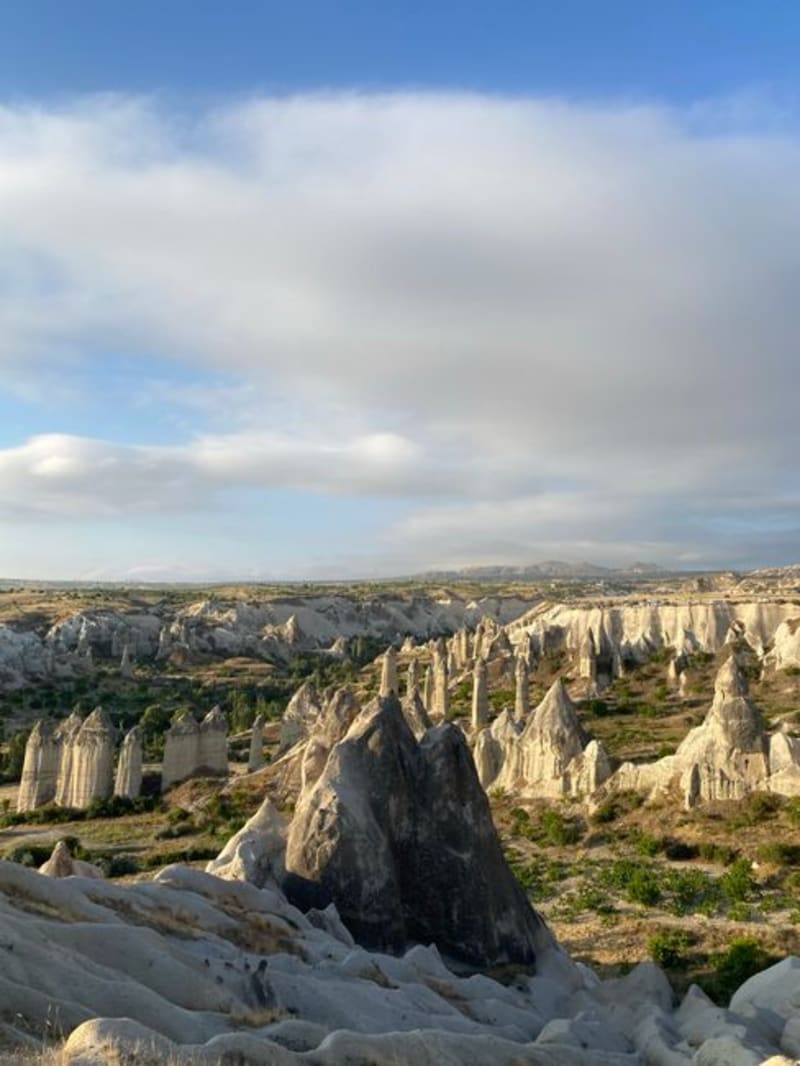
Love Valley
A ridge of tall, unmistakably shaped fairy chimneys between Göreme and Avanos, best walked at sunset when the hikers thin out.
Explore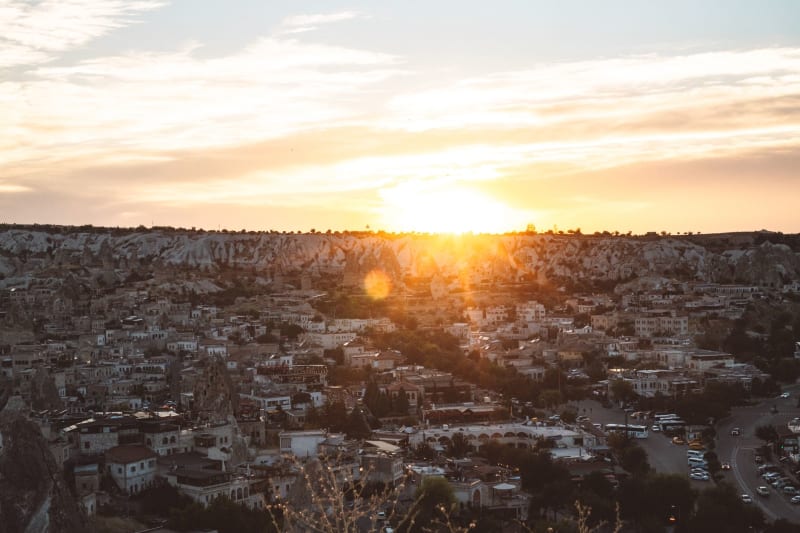 cappadocia
Mustafapaşa
A Greek Orthodox village of carved stone mansions, frozen since 1923, where the silence feels almost designed by those who left.
Explore cappadocia
Ortahisar
A working town built around its own rock citadel, where caves are used for storing citrus and potatoes, not selling postcards.
Explore cappadocia
Özkonak
A smaller, less-visited underground city near Avanos, discovered by accident in 1972, with defense holes designed for pouring hot oil on invaders.
Explore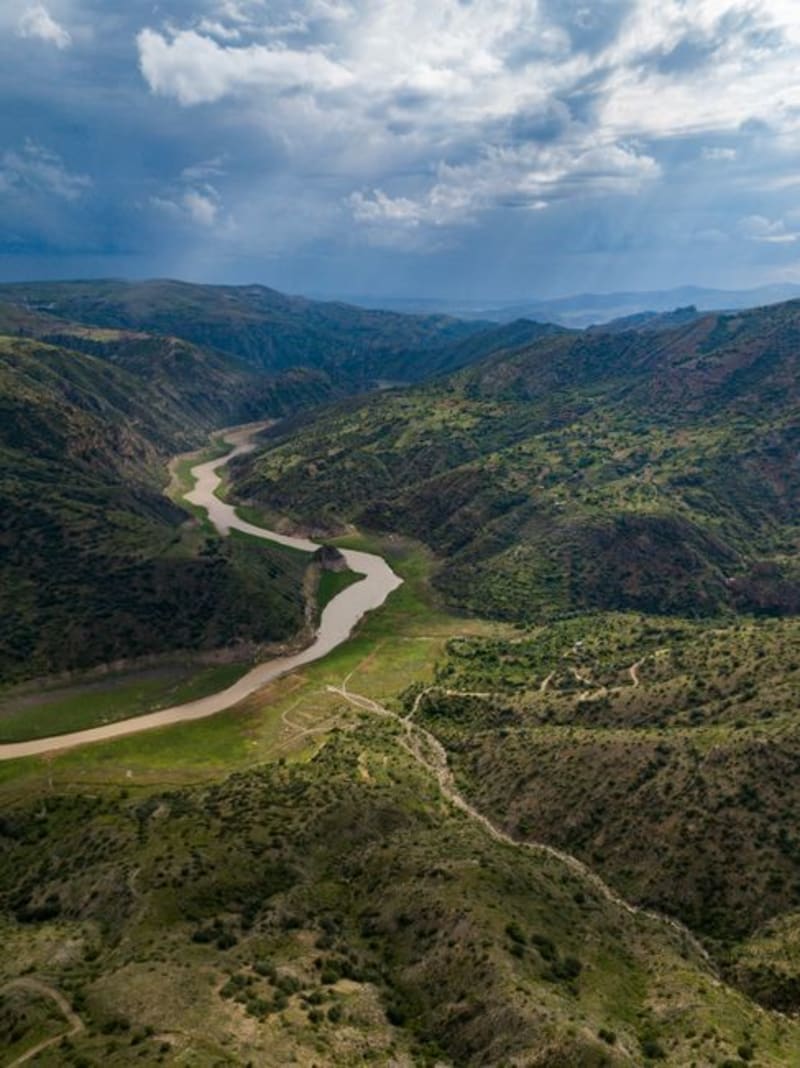 cappadocia
Pancarlık Valley
A small, nearly empty valley near Ürgüp where painted rock churches sit unguarded and unqueued, reachable only on foot.
Explore cappadocia
Paşabağı
The valley of triple-headed fairy chimneys where a monk once carved himself a hermit's cell inside the tallest cone, still visible near the top.
Explore