
Scarborough
"Scarborough is where the Peninsula runs out of ambition and starts telling the truth."
The last village before the reserve, windswept and quiet, where people came to escape and forgot to leave.

The M65 descends to Scarborough through fynbos that, in a southeast wind, bends so uniformly it looks liquid. I pulled over just before the village because the sea below was charcoal-colored and the light was that specific Atlantic grey that isn’t depressing — it’s clarifying, the kind of light that removes options and leaves you looking at what’s there. I stood at the roadside for longer than I meant to. When I finally drove the remaining kilometer into Scarborough, the village seemed exactly right for what surrounds it.
Scarborough is very small — a few hundred houses scattered among the dunes above a beach that gets strong surf when the southeaster is up, which is often. The houses are simple and low, most of them facing the sea, many of them with boards on the windows for the bad weather season. It looks nothing like a resort and everything like a place people actually chose, deliberately, knowing what they were getting into. There are no hotels. There is one restaurant. There is a small shop. There is a great deal of wind.
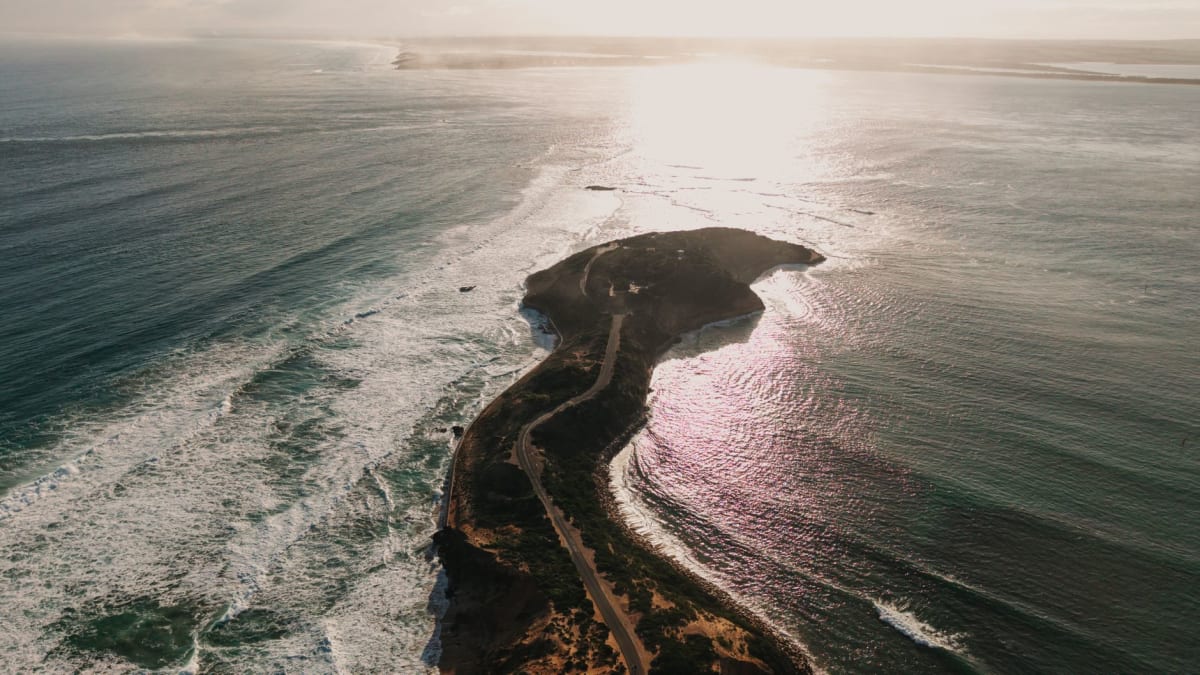
The beach is long and empty on most days — a pale sweep of sand with reliable shore break, cold water, and almost no infrastructure. In summer the bodyboarders arrive and the small car park fills by mid-morning. Out of season, the Atlantic puts on its full performance: large sets rolling in from the southwest, swells that have crossed thousands of kilometers of open ocean and arrive here with their full weight intact. The village faces this without shelter.
The restaurant — The Camel Rock, named for a distinctive formation on the beach — has been operating for years and is, in the way of places that survive at the end of the road, exactly what’s needed: simple food, a view of the beach, an atmosphere of having found something that most people don’t bother looking for. I ate a bowl of tomato soup there on a winter afternoon while the wind buffeted the windows and felt genuinely, unreasonably content.

The drive south from Scarborough into the Cape Point Nature Reserve is one of the wildest on the Peninsula. The road descends through low fynbos and scrub with the sea visible on both sides as the land narrows, and there is a point a few kilometers in where you can see the Atlantic to your right and False Bay beginning to appear on the left, and the peninsula is so thin here that neither ocean feels more than a short walk away.
Staying the night in Scarborough — there are a handful of self-catering cottages — changes the experience entirely. The day-trippers leave by mid-afternoon, and in the evening the village is left to itself and the ocean, which is more than enough.
When to go: Spring and autumn are most balanced — warm enough to swim, not yet at peak summer crowds. Winter brings the best surf and the stormiest drama; the village shrinks further and becomes even quieter than usual. Summer weekends draw Cape Town day-trippers; a Monday or Tuesday in January gives you the summer light without any of the crowd.
Keep exploring
More from Cape Peninsula
 cape-peninsula
Simon's Town
A Victorian naval town on False Bay where the main street has barely changed since the 1890s and the penguins live at the bottom of it.
Explore cape-peninsula
Boulders Beach
A sheltered cove where African penguins colonized the neighborhood so completely that the humans had to negotiate shared terms.
Explore cape-peninsula
Camps Bay
A palm-lined beach suburb beneath the Twelve Apostles, where sunset drinks matter more than actually getting in the water.
Explore cape-peninsula
Cape Point
Where the Atlantic finally runs out of continent and the cliffs drop four hundred meters into churning swells below.
Explore cape-peninsula
Chapman's Peak
A cliff road blasted through sheer mountain above Hout Bay that earns the word spectacular without apology or irony.
Explore cape-peninsula
Fish Hoek
A sheltered False Bay beach town where families still swim safely under the watchful eyes of shark spotters on the mountain.
Explore