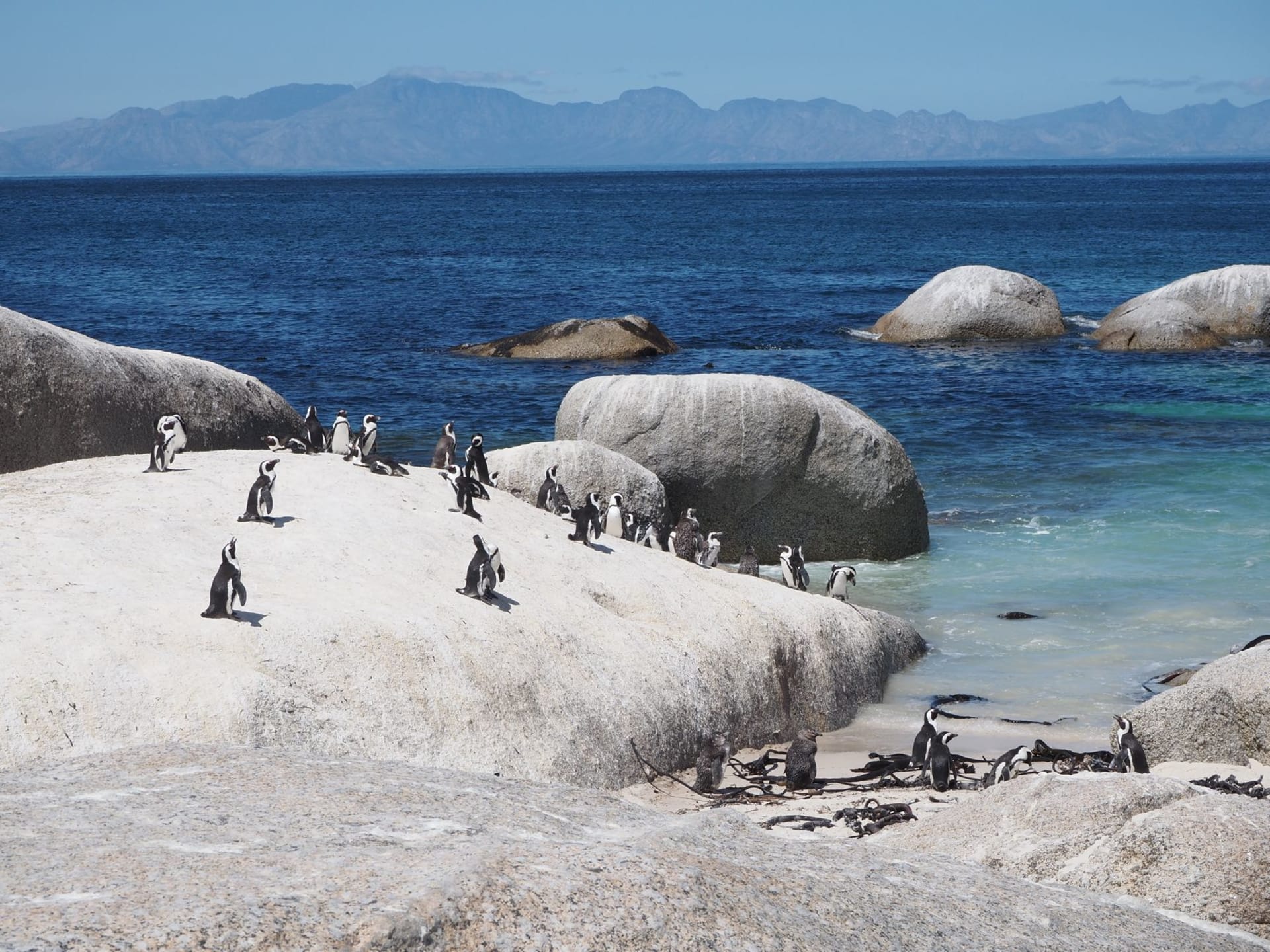
Boulders Beach
"The penguins don't notice you. That's the point. You're on their turf, and they've known it longer."
A sheltered cove where African penguins colonized the neighborhood so completely that the humans had to negotiate shared terms.

The smell reaches you first. It is not unpleasant exactly — more of a marine-biological fact, the concentrated scent of colony life: fish and guano and sun-warmed feathers. I came around the boardwalk corner expecting the penguin colony to look smaller in person, the way famous things sometimes do, and instead found myself three feet from a nesting pair who looked back at me with the expression of officials reviewing an application. The penguins of Boulders Beach are neither shy nor aggressive. They’re simply busy.
The colony here — one of the only land-based African penguin populations in the world — arrived in the early 1980s when two breeding pairs set up at this sheltered cove south of Simon’s Town. The boulders that give the beach its name protect the cove from the full force of the Atlantic swells, and the shallow, relatively warm False Bay water makes for accessible fishing. Within a decade, the colony had grown to thousands. The residents of the adjacent suburb of Boulders — who had bought their houses for the seclusion, not the penguins — woke up one morning and found their garden walls full of birds.

The boardwalk system runs through the colony and you can get very close without disturbing the birds. The key is to move slowly and let them come to you, which they will if you stop walking. I stood still for about four minutes near one of the sandy nesting areas and a penguin waddled directly to within eighteen inches of my shoe, regarded me without enthusiasm, and then turned and walked away. I felt simultaneously chosen and dismissed. The chicks in breeding season — September to November — are an almost unbearable grey fluff, enormous-seeming compared to the eggs they came from.

The beach itself, accessed through the penguin reserve, is genuinely one of the best swimming spots on the Peninsula. The granite boulders break the wind, the False Bay water is warmer than the Atlantic side, and the quality of light in the late afternoon — bouncing off pale sand and pale granite — is something I have not encountered duplicated anywhere else. I swam here in February in water that felt almost warm, while penguins bobbed past me five meters away, and had one of those experiences that seems improbable enough that you stop and make a deliberate note.
The entry fee to the reserve goes toward conservation, and the colony here has been part of a broader African penguin recovery effort that has seen some measured success. Their populations were devastated by the commercial fishing industry’s impact on their prey fish — sardines and anchovies — and it is worth knowing this while watching them waddle past in their tuxedos, apparently unconcerned with the broader picture.
When to go: Year-round, but September to November for chick season — the fluffy juveniles are extraordinary. Arrive before 9am to beat the tour groups from Cape Town. Late afternoon light is spectacular but the boardwalk can be busy on weekends. Weekday mornings in winter give you near-solitude with the birds and all the time you need.
Keep exploring
More from Cape Peninsula
 cape-peninsula
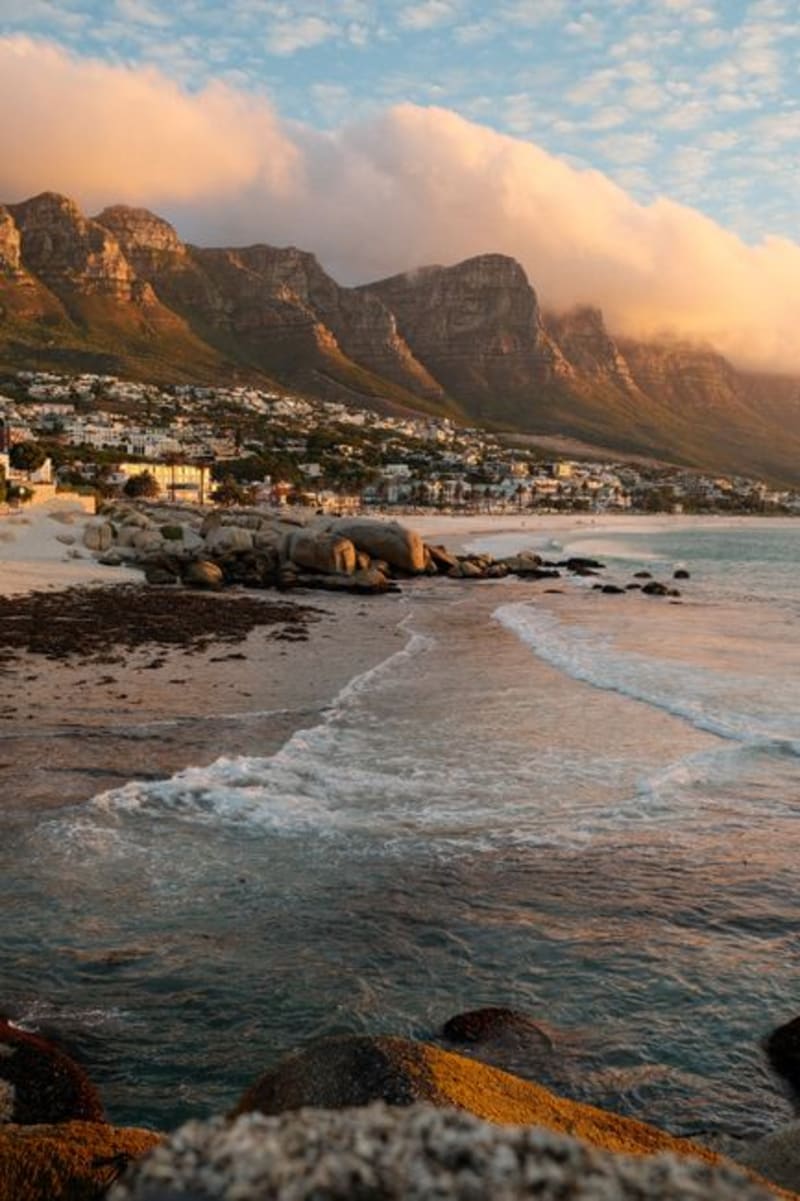
Camps Bay
A palm-lined beach suburb beneath the Twelve Apostles, where sunset drinks matter more than actually getting in the water.
Explore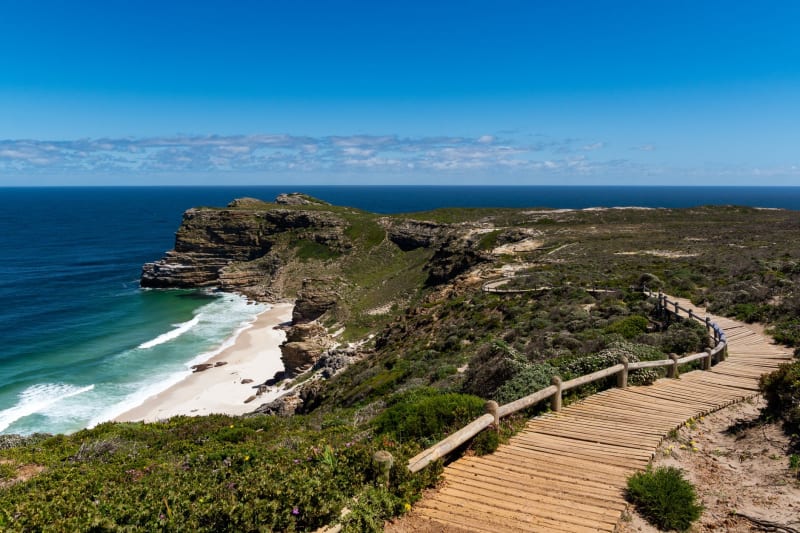 cape-peninsula
Cape Point
Where the Atlantic finally runs out of continent and the cliffs drop four hundred meters into churning swells below.
Explore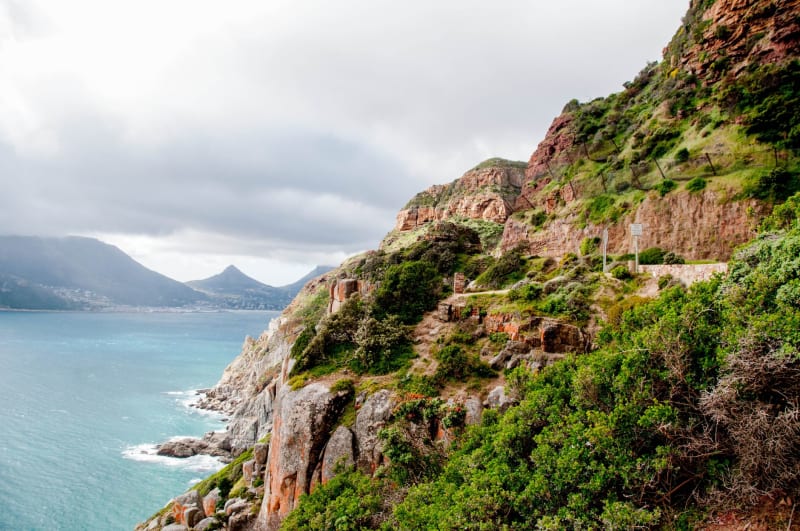 cape-peninsula
Chapman's Peak
A cliff road blasted through sheer mountain above Hout Bay that earns the word spectacular without apology or irony.
Explore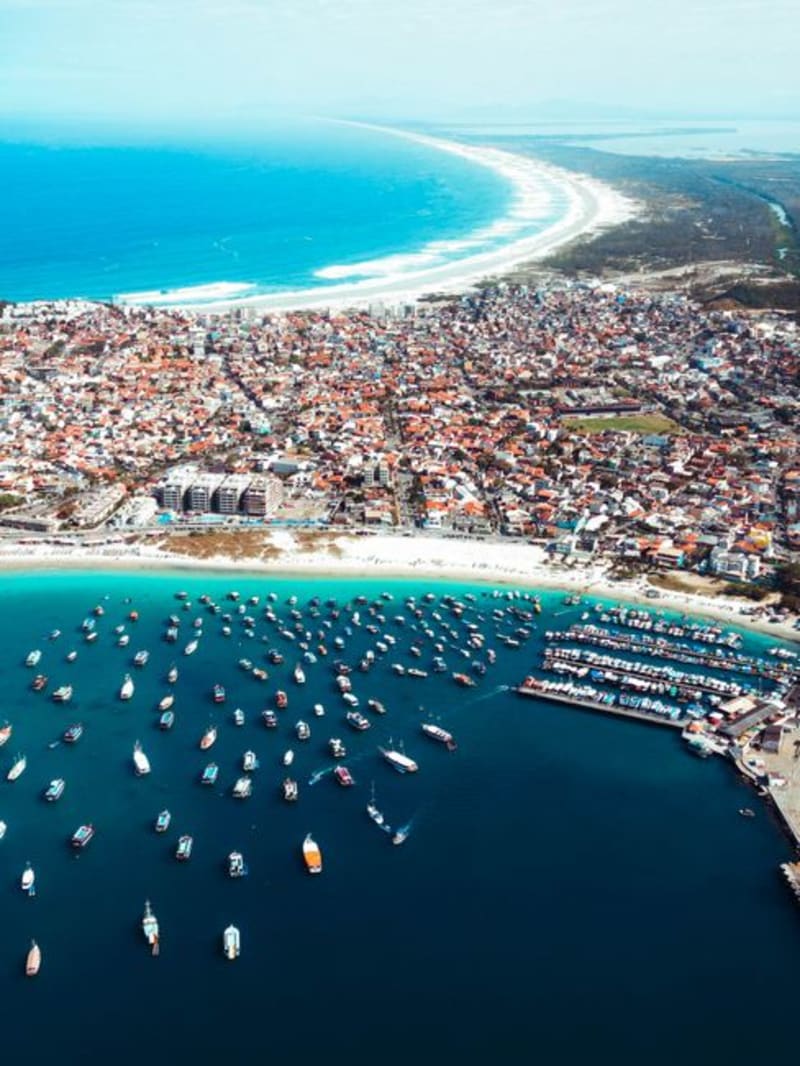 cape-peninsula
Fish Hoek
A sheltered False Bay beach town where families still swim safely under the watchful eyes of shark spotters on the mountain.
Explore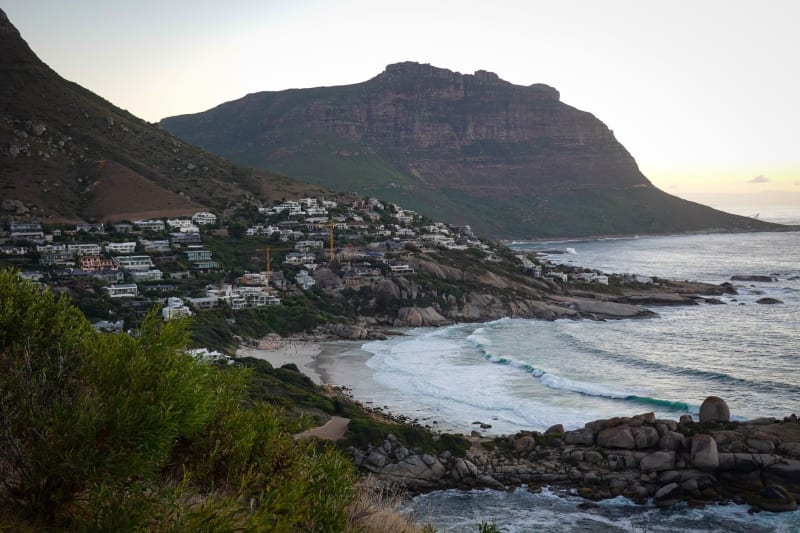 cape-peninsula
Hout Bay
A working harbor town enclosed by mountains and sea, where trawlers land their catch and seals mob the jetty before lunch.
Explore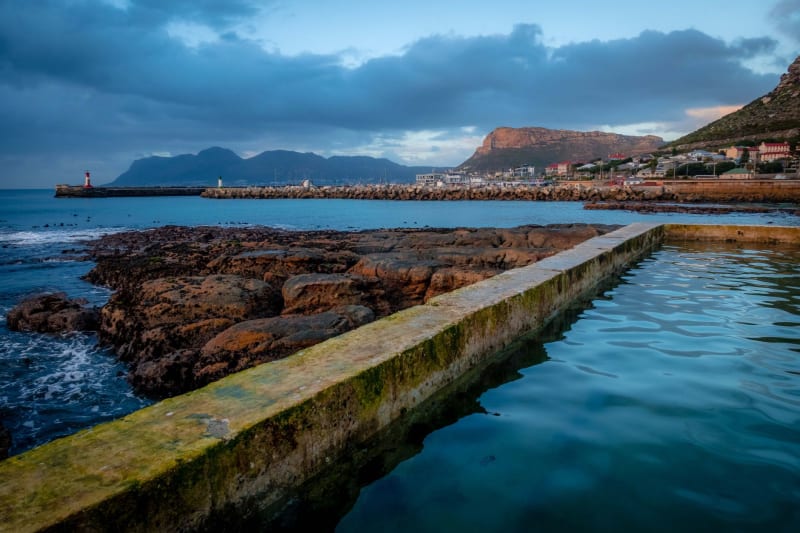 cape-peninsula
Kalk Bay
A fishing village dense with exactly the right things: fresh snoek, antique shops, a working harbor, and the best train line in South Africa running past the window.
Explore