
Kutná Hora
"The Bone Church doesn't make you think about death. It makes you think about the sheer number of people who have already lived."
A medieval silver-mining capital whose most famous monument is a church decorated entirely with human bones — and it's more meditative than morbid.

The Sedlec Ossuary is about two kilometres outside Kutná Hora’s centre, in the suburb of Sedlec, and I walked there along a road that passed a supermarket and a car wash, which felt wrong until I arrived and it felt entirely right. The ossuary is in the lower chapel of a Gothic church, and the bones of approximately forty thousand people have been arranged within it — into chandeliers, garlands, coats of arms, and four enormous bell-shaped piles in the corners. I have never seen anything quite like it and I have thought about it fairly regularly since. It is not, despite everything, a horror. It is strangely orderly, and it smells of cold stone, and the light that comes through the high windows is silver-grey, and standing among those arranged bones I felt something closer to wonder than to dread. Someone organized all of this. Someone looked at forty thousand sets of human remains and thought: these should be symmetrical.
The bones come from medieval plague victims and from the Hussite Wars, and they were arranged in their current configuration in 1870 by a woodcarver named František Rint, who also spelled his name in bones near the entrance. The chandelier in the centre of the chapel reportedly contains at least one of every bone in the human body. I counted ribs for a while and then stopped because I wasn’t going to get far. The whole thing has the logic of extreme craft applied to extreme material, and that combination is both the disturbing thing and the reason it endures.
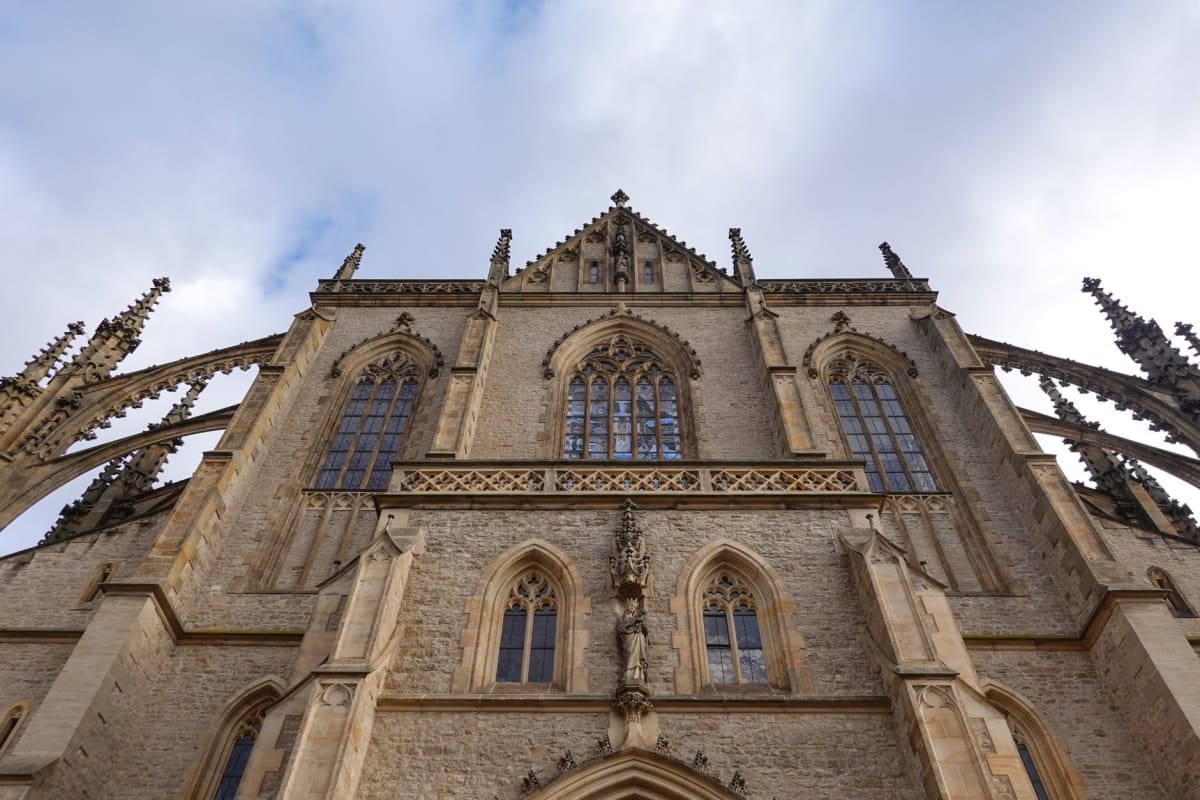
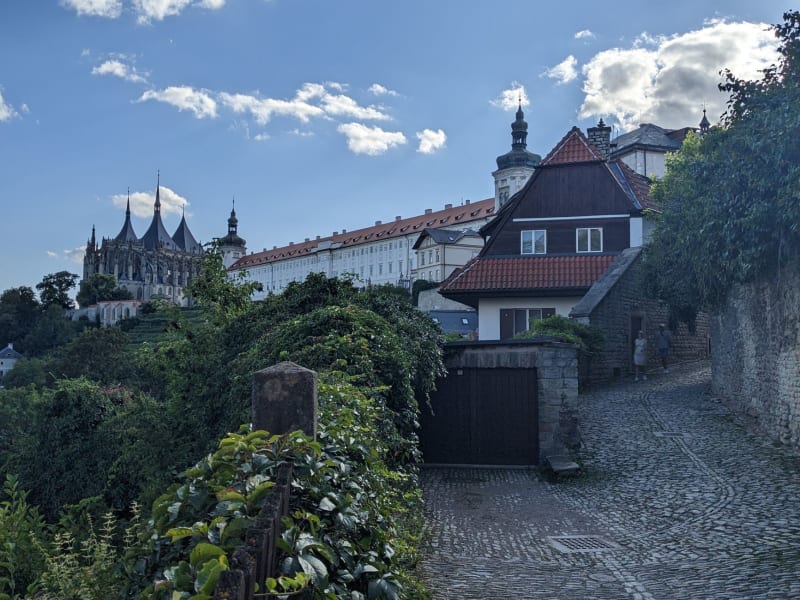
Kutná Hora itself is a more conventional pleasure, though conventional is not quite the right word for a town that extracted enormous quantities of silver from its soil in the thirteenth through sixteenth centuries and spent the resulting wealth on architecture. The Cathedral of Saint Barbara — patron saint of miners, which is why they built her a cathedral — is the centrepiece. It sits at the western edge of the old town on a promontory above a river valley, and its three tent-like Gothic vaulting spires are visible from a considerable distance. I spent an hour inside it in the morning light, watching the pale stonework shift from cream to gold to something between grey and white as clouds moved. The vaulted ceiling of the nave has the quality of very slow music.
The Vlašský Dvůr — the Italian Court, the former royal mint — is where the Prague groschen were coined, the silver currency that was the standard unit of Central European trade for centuries. I took the guided tour more for the painted interiors of the Wenceslas Chapel than for the minting history, though the minting history is interesting too. The combination of church, ossuary, and royal mint makes Kutná Hora feel less like a museum and more like an argument about what silver and death and faith mean when they occur in the same place.

The town centre of Kutná Hora — Palacký Square and the streets radiating from it — is smaller than a place of this historical importance should be, which gives it a pleasantly unassuming quality. I ate lunch at a restaurant on the main square, pike perch with dill and boiled potatoes, and drank a glass of Bernard beer from Humpolec and watched two old men play chess at a table near the fountain for an hour without either of them making a move I could identify as decisive. The afternoon light on the stone façades around the square turned the whole thing into something almost impossibly photogenic, which is a problem Kutná Hora has that it can do nothing about.
When to go: April through October, with May and June particularly good — the cathedral and ossuary are accessible, the crowds are present but manageable, and the light in the late afternoon has a quality the grey winter months can’t match. The Ossuary is open year-round. Kutná Hora makes an excellent day trip from Prague (one hour by train), though the evening, when the day-trippers leave, reveals a quieter and more genuine version of the town.
Keep exploring
More from Bohemia
 bohemia
Loket
A tiny castle village pinched into an elbow of the Ohře River gorge — so improbably beautiful it looks like the set for a fairy tale no one wrote down.
Explore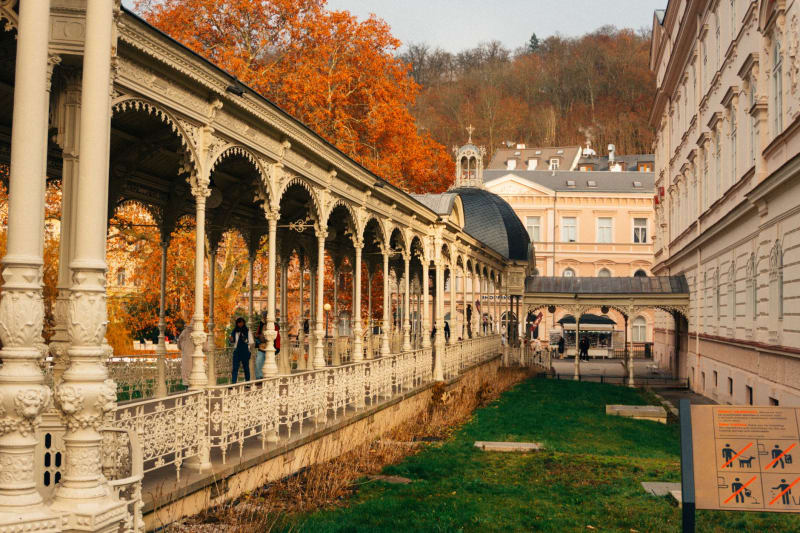 bohemia
Mariánské Lázně
A greener, quieter cousin to Karlovy Vary where the forest comes to the edge of the colonnades and the cure-seekers outnumber the tourists.
Explore bohemia
Plzeň
The city that invented Pilsner beer, where the brewery tour ends with a glass at the source and everything tastes different after that.
Explore bohemia
Šumava
A vast spruce and beech wilderness on the Bavarian border where the Iron Curtain once ran and the forest has quietly been reclaiming what it lost.
Explore bohemia
Třeboň
A walled medieval town surrounded by a labyrinth of fish ponds that turns gold at sunset — and serves the freshest carp you'll eat anywhere in Central Europe.
Explore bohemia
České Budějovice
The unhurried capital of southern Bohemia, where the main square is genuinely one of Europe's finest and the local beer debate is treated as a civic matter.
Explore