
Dochula Pass
"We came for the snow peaks and got the clouds — and somehow it was better that way."
A 3,100-metre mountain pass on the road from Thimphu to Punakha, crowned with 108 memorial chortens and, on a clear morning, a wall of snow Himalayas.

The road east out of Thimphu climbs hard, switchbacking up through blue pine and rhododendron until it tops out at Dochula, a pass at around three thousand one hundred metres where the whole point is to stop. We did, like everyone does, and stepped out into thin cold air thick with the smell of incense and pine resin. The pass is famous for two things: a cluster of 108 chortens built in tiers on a knoll, and a view of the eastern Himalaya that is either spectacular or completely absent, depending entirely on the mood of the clouds.
The 108 Chortens
The chortens are properly called the Druk Wangyal Khang Zhang, commissioned by the eldest Queen Mother in the early 2000s to honour Bhutanese soldiers. They sit in concentric tiers, small whitewashed stupas with gold finials, and walking up among them clockwise — always clockwise, our guide reminded us gently — is a quietly affecting thing. Prayer flags run from the pines in every direction, thousands of them, faded to soft pastels and snapping in the wind.

I had expected something solemn and got something almost cheerful instead. Bhutanese families picnicked on the grass below the chortens, monks in maroon robes took photographs on their phones, and the whole pass had the feel of a place people genuinely like to be, rather than a monument they feel obliged to visit. Lia spun a row of prayer wheels along the path and pronounced the spot the most peaceful place we had found in the country, which after a week of monasteries was saying something.
Waiting for the Mountains
On a clear winter morning Dochula offers one of the great Himalayan panoramas — Gangkhar Puensum among them, at over seven thousand metres the highest unclimbed mountain on earth, which Bhutan keeps off-limits out of respect for the spirits said to live there. I love that fact more than I can say.

We, of course, got cloud. A soft grey ceiling sat exactly where the peaks should have been, and we drank butter tea at the little café by the pass and waited, and the mountains never showed. And yet — the incense, the snapping flags, the cold clean air, the families laughing among the chortens — I did not feel cheated. Some places give you the postcard. Dochula gave us the atmosphere instead, and I have come to think that is the rarer gift.
When to go: October to February for the clearest mountain views, with crisp dry days and the best odds of seeing the full Himalayan wall at dawn. Spring brings the rhododendrons into bloom on the slopes below, though the peaks more often hide behind haze.
Keep exploring
More from Bhutan
 bhutan
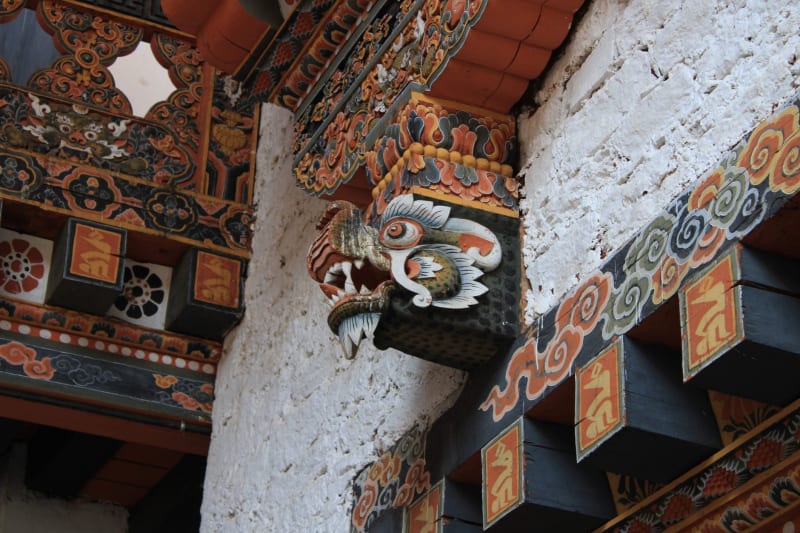
 Gasa
A restored dzong at the end of a two-day walk from Punakha, natural hot springs at the base of Himalayan peaks, and the silence that comes from being somewhere genuinely hard to reach.
Explore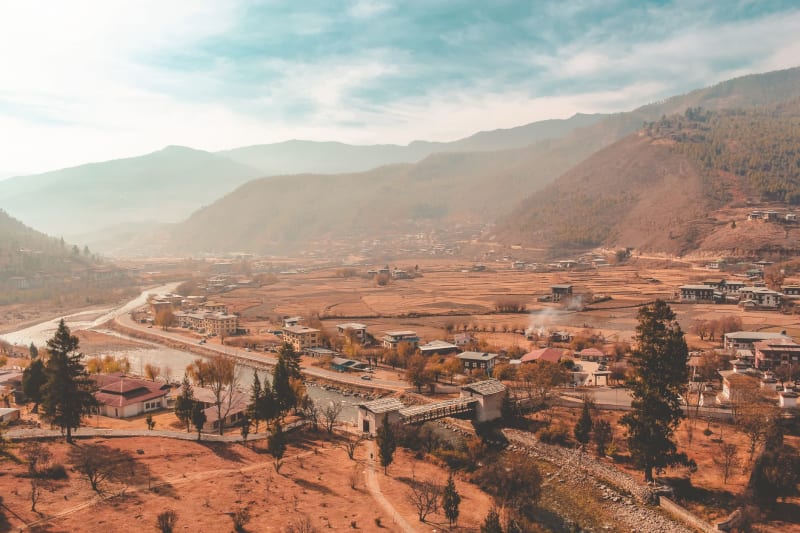 bhutan
 Haa Valley
One of Bhutan's most remote and least-visited valleys, sealed from the outside world until 2002, where twin medieval temples face each other across an empty field.
Explore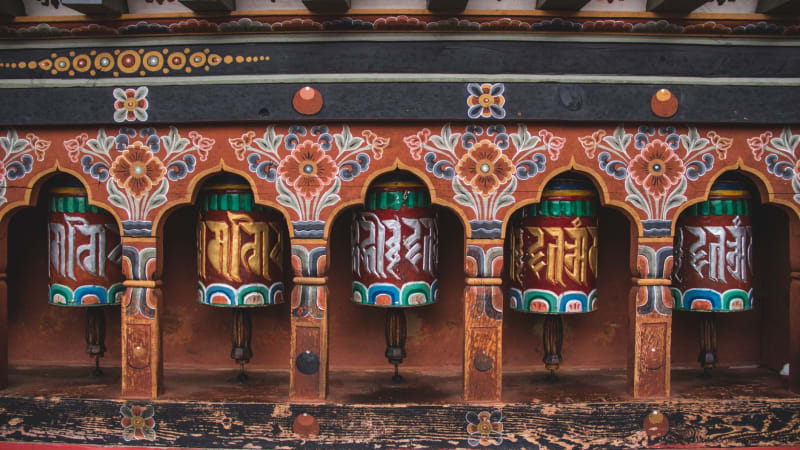 bhutan
 Lhuentse
The ancestral seat of Bhutan's royal family, a white dzong perched impossibly above a northern gorge, and the weavers who make the finest textiles in the kingdom.
Explore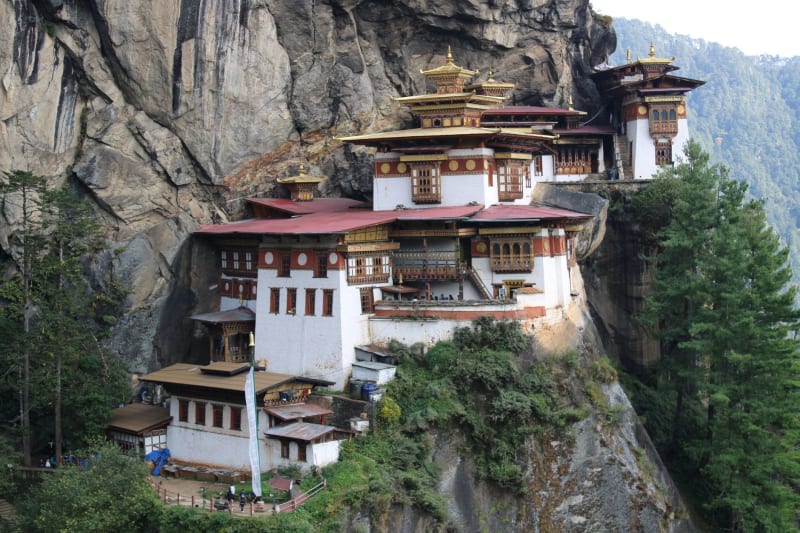 bhutan
 Paro
The valley where you land sideways between pine-covered mountains and where the kingdom's most sacred monastery hangs from a cliff face.
Explore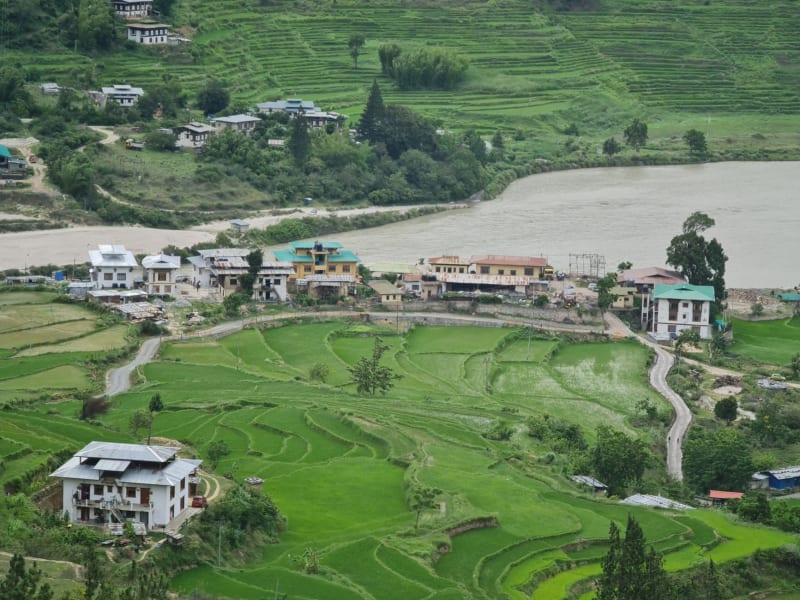 bhutan
 Phobjikha Valley
A glacial bowl valley where black-necked cranes fly in from Tibet each winter and the whole country seems to hold its breath waiting for them.
Explore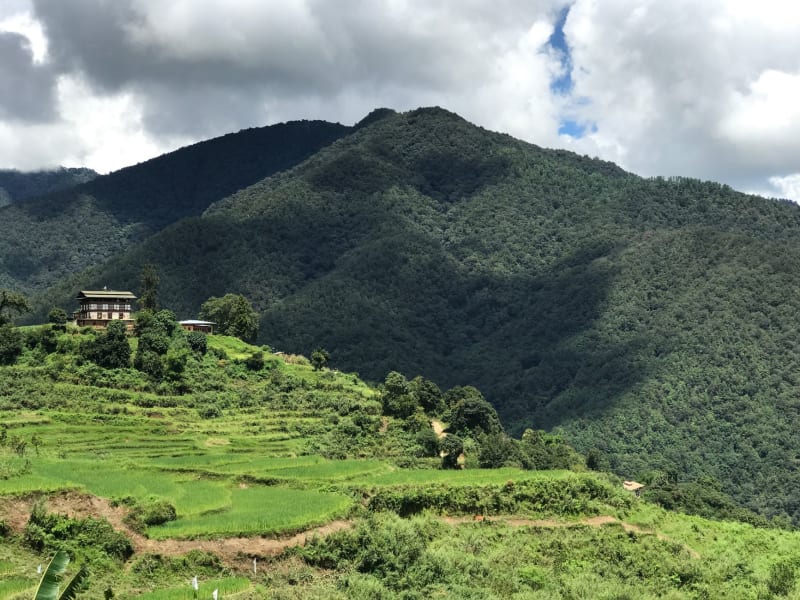 bhutan
 Punakha
Bhutan's former winter capital sits where two rivers meet, its ancient dzong built on the tongue of land between them like a ship run aground in paradise.
Explore