Salar de Tara
"Some places you visit. Salar de Tara, you endure a headache to earn."
A remote salt flat at 4,300 meters where stone monks guard flamingo lagoons and the silence feels older than the mountains.
Lia and I almost turned back twice on the road to Salar de Tara, not because of the washboard gravel or the blind curves along the Argentine border, but because of the altitude. Our guide had warned us the night before in San Pedro: at 4,300 meters, even sitting still can leave you short of breath, and there’s no clinic for a hundred kilometers in any direction. That’s exactly why so few tour operators bother running the trip — it’s a full day of driving for a few hours on the salar, and the reserve limits how many vehicles can be inside at once. By the time our truck crested the last ridge and the basin opened up in front of us, I understood why. We had it almost to ourselves.
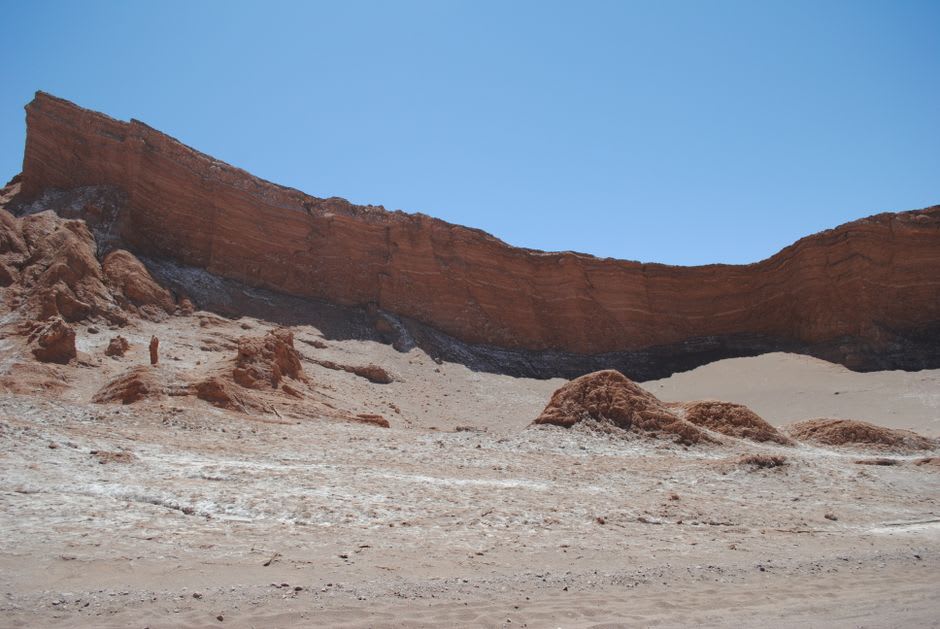
The Monjes de la Pacana are what everyone comes for, and photos genuinely undersell them. These are eroded volcanic towers, some taller than a two-story building, standing in loose clusters on a floor so flat and pale it looks like a dry lakebed painted onto the desert. I remember standing next to Lia in dead silence, both of us just staring, because there was nothing else making noise — no wind that morning, no birds, nothing. Cerro Tara loomed behind them, snow dusted even in the warmer months, and for a second the whole scene felt like a movie set someone had abandoned mid-shoot.
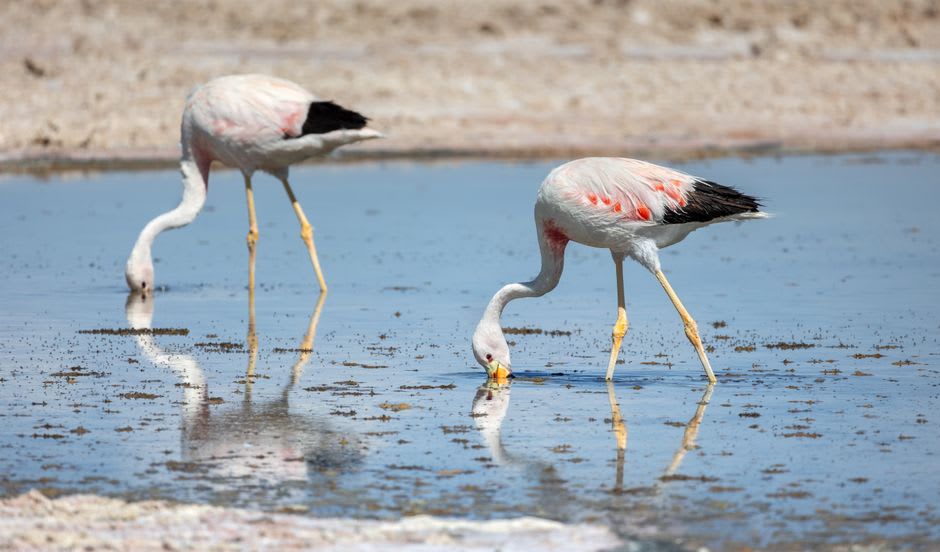
What surprised me more than the rocks, honestly, was the wildlife. We came around a bend in the track and there was a small herd of vicuñas grazing the altiplano grass like it was nothing, barely glancing up as we idled past. Then, maybe twenty minutes later, the shallow lagoons appeared, rimmed with a crust of salt and dotted with flamingos wading through the mineral-tinted water. Our guide pointed out the differences between the Andean, James’s, and Chilean species feeding there, though I’ll admit that by the third lagoon I’d stopped trying to tell them apart and just watched Lia photograph them, her breath fogging a little in the thin, cold air.
We ate lunch sitting on a rock near the vehicles, sandwiches that tasted better than they had any right to at that altitude, watching the light shift over the Monjes as clouds moved in from the direction of Argentina. Nobody talked much. It’s the kind of place that makes conversation feel unnecessary. On the long drive back to San Pedro, ears popping as we dropped elevation, I kept thinking that Salar de Tara rewards exactly the people willing to be a little uncomfortable to reach it, and punishes no one else for staying away.
When to go: Aim for October through March, the Southern Hemisphere summer, when conditions at this altitude are milder and the flamingo lagoons are at their most active — outside that window, cold and access can make the trip far harder than it needs to be.
Keep exploring
More from Atacama Desert
 atacama-desert
 San Pedro de Atacama
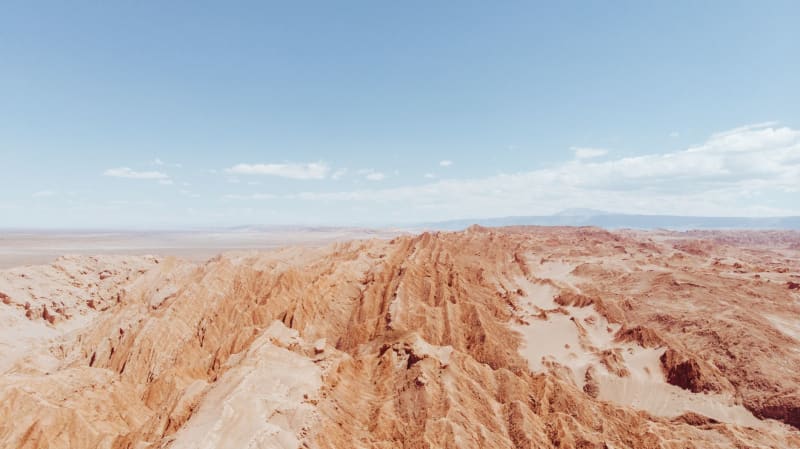
The dusty adobe hub of the desert where altitude sharpens every sensation and the nights are criminally clear.
Explore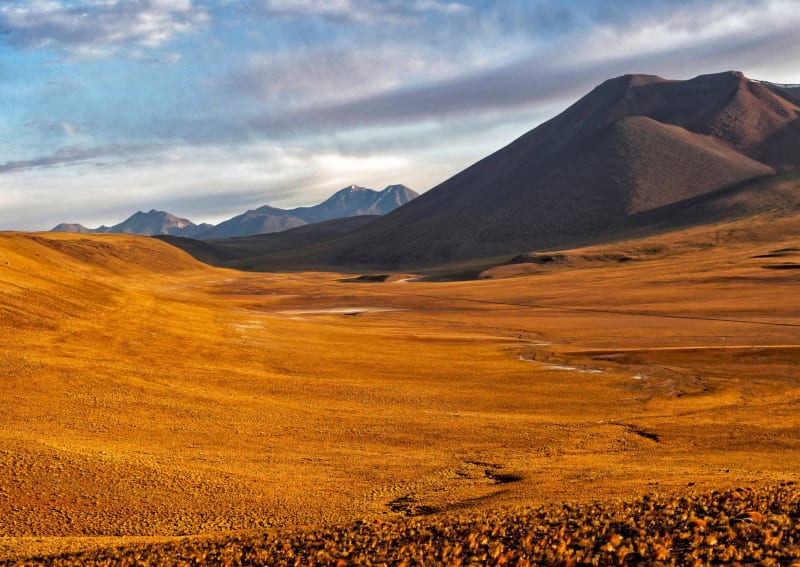 atacama-desert
 Toconao
A whitestone Atacameño village where a green quebrada cuts through the desert and the colonial bell tower glows amber at sunset.
Explore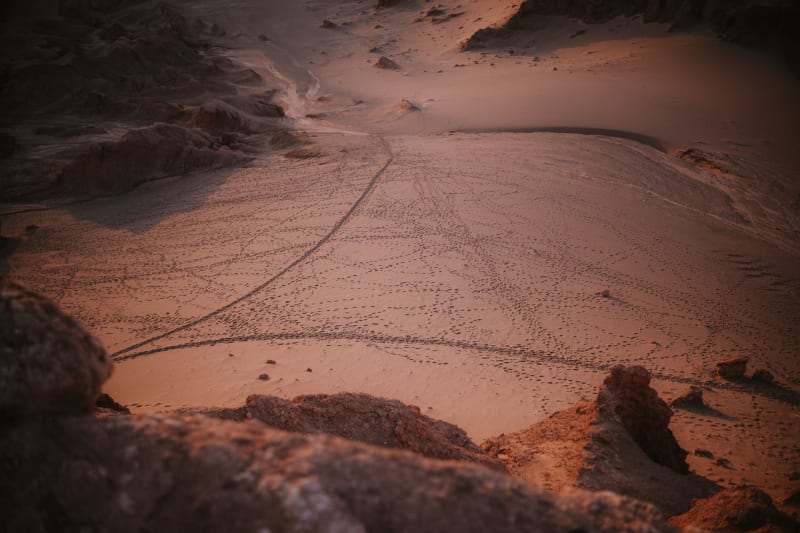 atacama-desert
 Valle de la Luna
A valley of salt and rock so lunar in atmosphere that NASA once sent geologists here to train for Mars missions.
Explore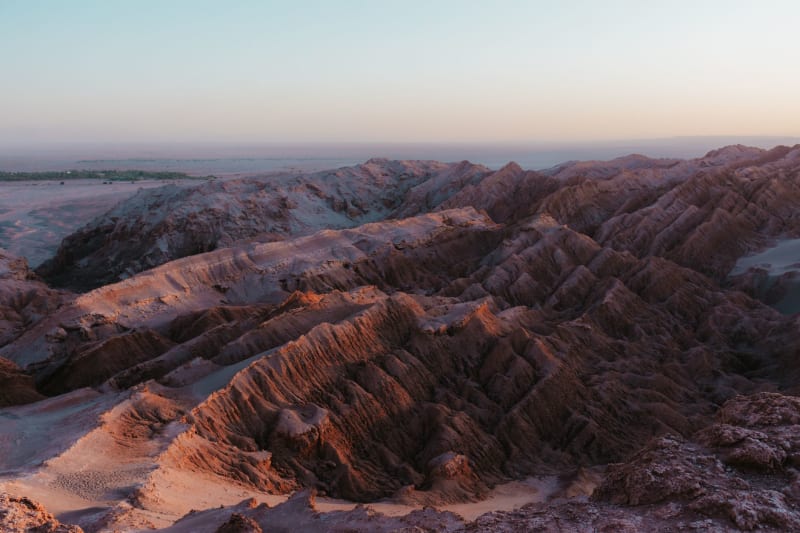 atacama-desert
 Valle de la Muerte
A valley of blood-red dunes and volcanic rock where the afternoon heat is medieval and the sandboarding is unexpectedly real.
Explore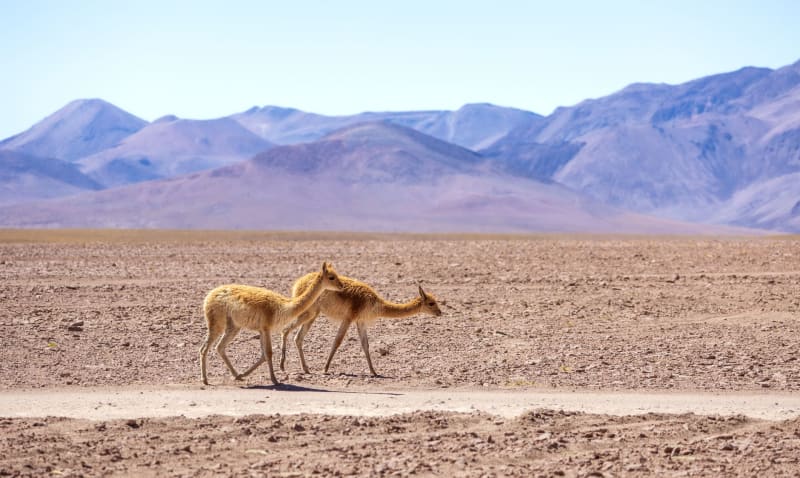 atacama-desert
 Chiu Chiu
An oasis village on the Loa River where Chile's oldest surviving church stands in a square that time has politely misplaced.
Explore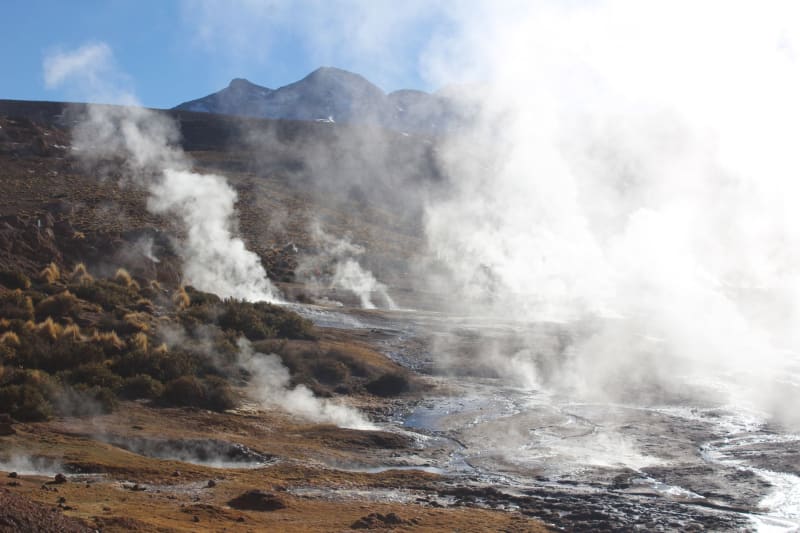 atacama-desert
 El Tatio Geysers
The world's highest geyser field at 4,300 meters, erupting before dawn into an arctic darkness that feels genuinely supernatural.
Explore