Americas
Atacama Desert
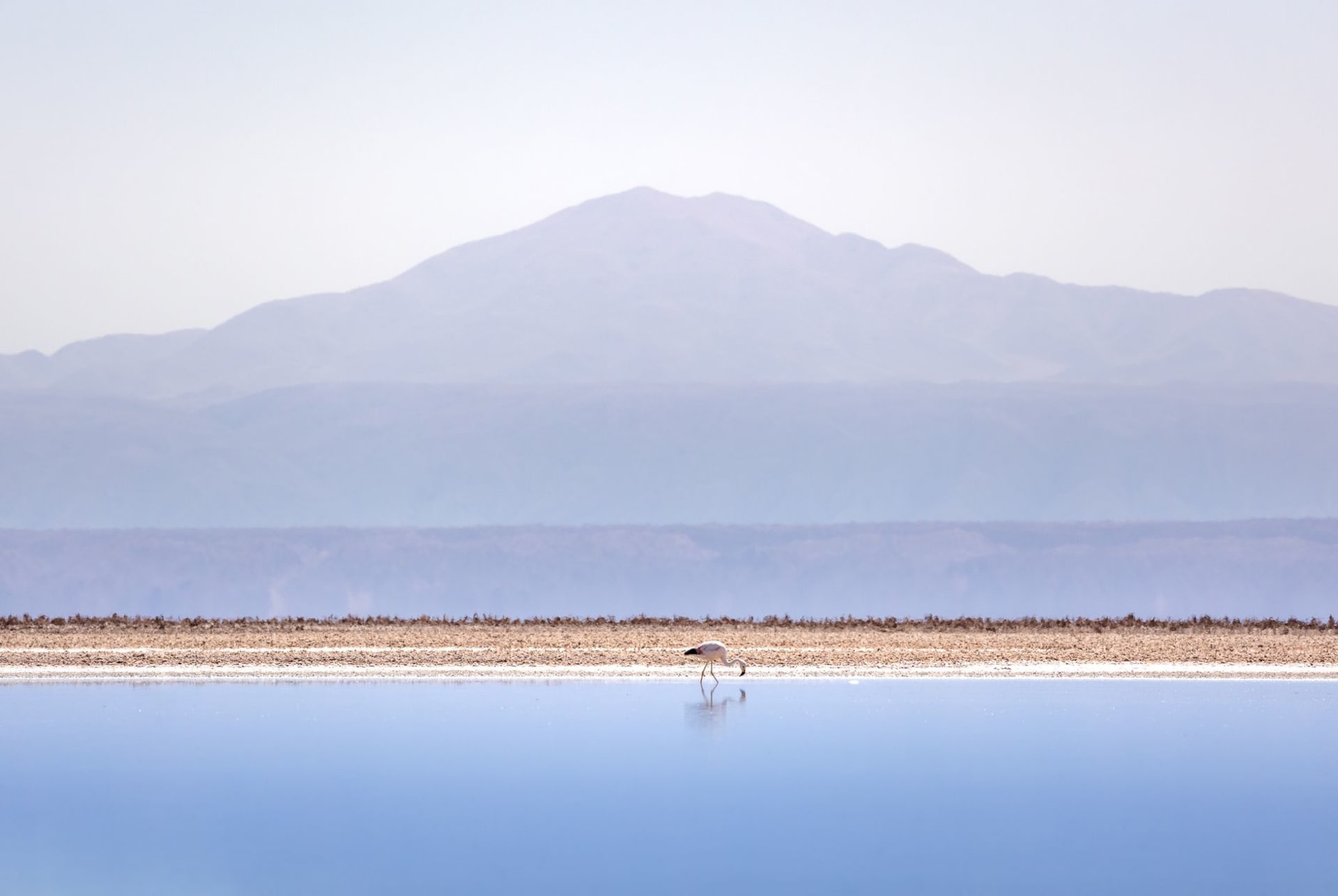
"I didn't expect to feel so small standing next to a flamingo in the middle of a desert."
The driest non-polar desert on Earth, where flamingos wade through mirror-flat salt lakes under skies so clear they feel borrowed from another planet.

I arrived in San Pedro de Atacama after an overnight bus from Calama, groggy and coated in a fine layer of dust I couldn’t quite explain. The altitude hit first — 2,400 meters, lungs tightening like someone had turned the air down a notch — and then the light hit. That flat, relentless Atacama light that has no interest in being flattering. Everything looked etched. The adobe walls, the cracked streets, the mountains burning ochre in the distance. No softness anywhere. I was immediately awake.
What gets me about the Atacama is how much it contradicts itself. You expect total lifelessness and instead you find flamingos — actual flamingos, dozens of them — picking their way through the shallows of Laguna Chaxa like they own the place. The salt crust around the lagoon sparkles like broken glass. Geysers at El Tatio blow at 4,300 meters before sunrise, steam columns rising in the freezing dark while you stand there in every layer you packed. And then at night, the darkness is so complete and the air so dry that the Milky Way looks almost aggressive, like it’s showing off. I lay on my back in the desert for an hour and didn’t move.
The Valle de la Luna gave me something I didn’t expect: silence so deep it has texture. I hiked it at dusk, when the salt formations turn violet and the shadows pool in impossible places. No phone signal, no other sounds, just wind carving geometry into rock that’s been here for millions of years. I ate a simple lunch of humitas — corn masa stuffed and steamed — that a woman sold from a plastic cooler near the entrance. It was the best thing I ate all week. The Atacama has a way of making ordinary things feel essential.
When to go: March through May or September through November. The shoulder seasons avoid the summer crowds and the altiplano rains (January–February can flood some roads). Nights are cold year-round — pack accordingly — but winters (June–August) at elevation can be genuinely brutal.
What most guides get wrong: Everyone tells you to see the geysers at sunrise, which means everyone is there at sunrise. Yes, it’s spectacular. But the Valle de la Luna at sunset, when the tour buses have cleared out and the light goes strange and pink, is quieter and arguably more beautiful. The Atacama rewards people who linger past the itinerary.
Explore
Places in Atacama Desert
 atacama-desert
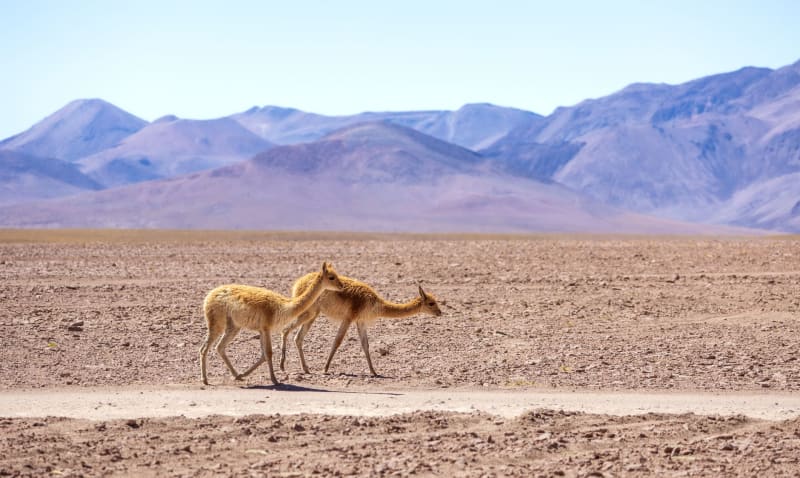
 Chiu Chiu
An oasis village on the Loa River where Chile's oldest surviving church stands in a square that time has politely misplaced.
Explore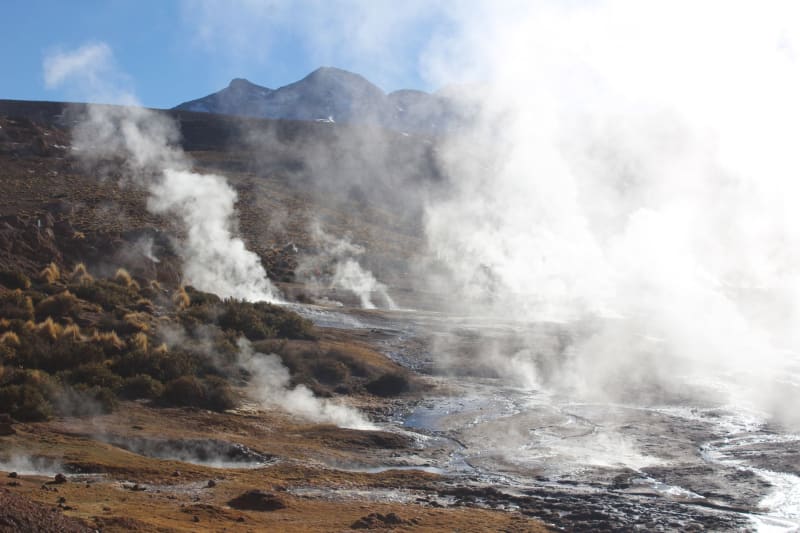 atacama-desert
 El Tatio Geysers
The world's highest geyser field at 4,300 meters, erupting before dawn into an arctic darkness that feels genuinely supernatural.
Explore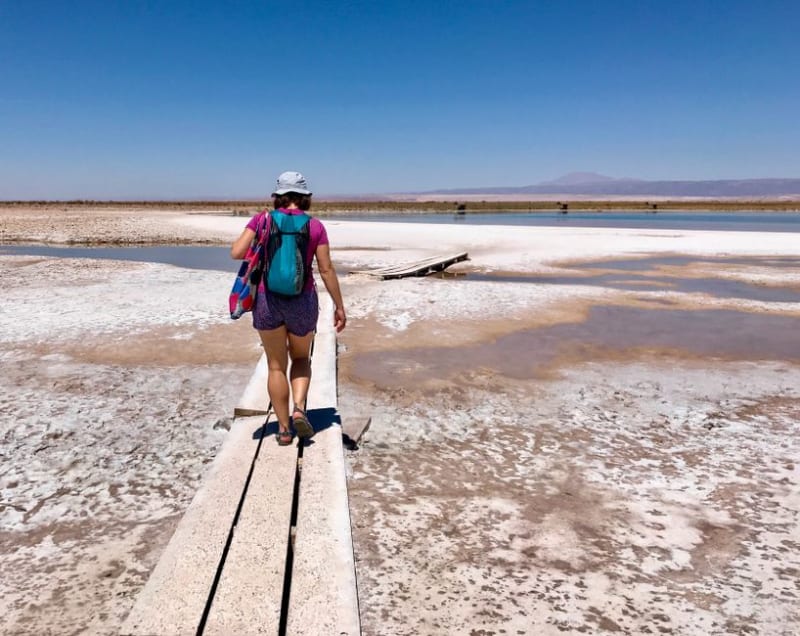 atacama-desert
 Laguna Cejar
A sinkhole lagoon in the salt flats where you float like a cork and watch Licancabur turn pink at dusk.
Explore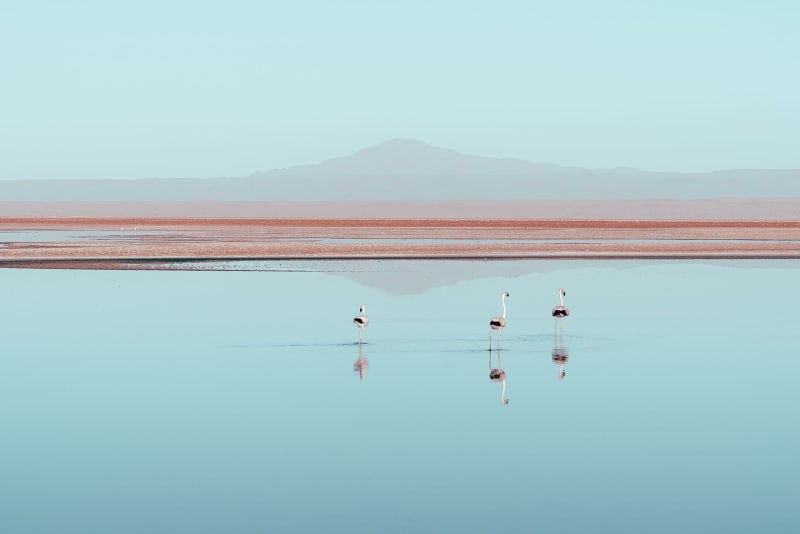 atacama-desert
 Laguna Chaxa
A shallow flamingo lagoon at the heart of the Salar de Atacama where the birds stand in their own reflections like something from a fever dream.
Explore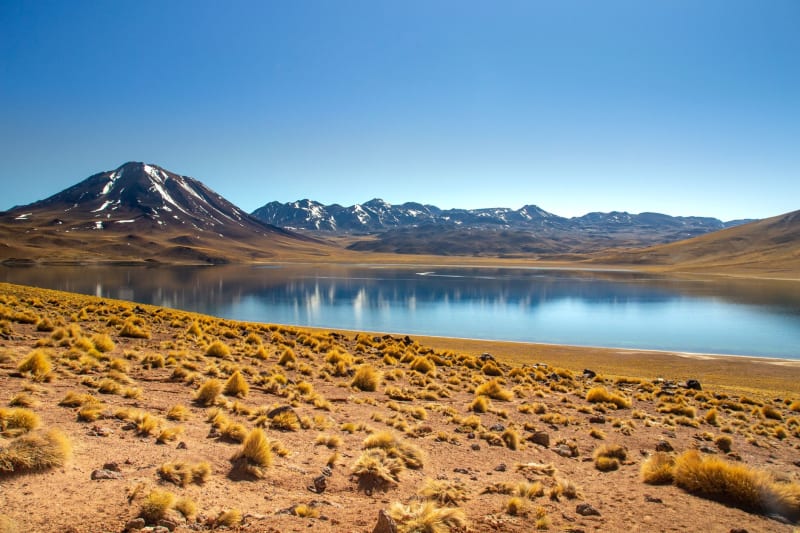 atacama-desert
 Laguna Miscanti
A high-altitude lagoon at 4,200 meters painted in Andean blues and greens, ringed by volcanoes and populated by birds that seem genuinely unbothered by you.
Explore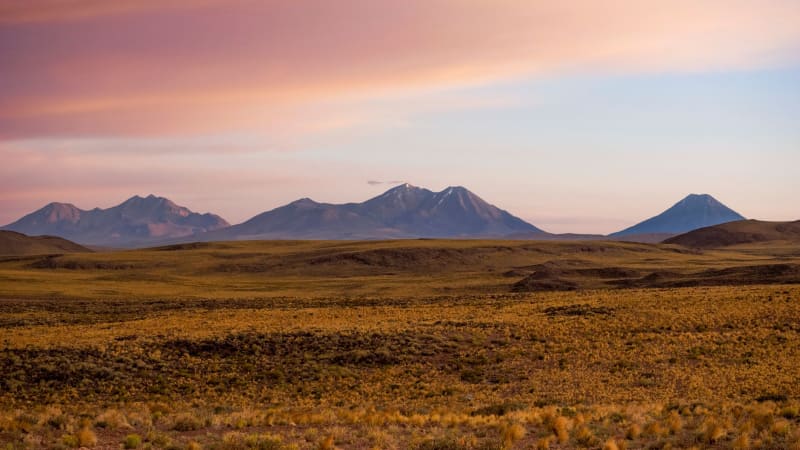 atacama-desert
 Piedras Rojas
A high-altitude expanse of iron-red rock and turquoise lagoon on the southern edge of the Salar de Atacama, where the colors look retouched but are not.
Explore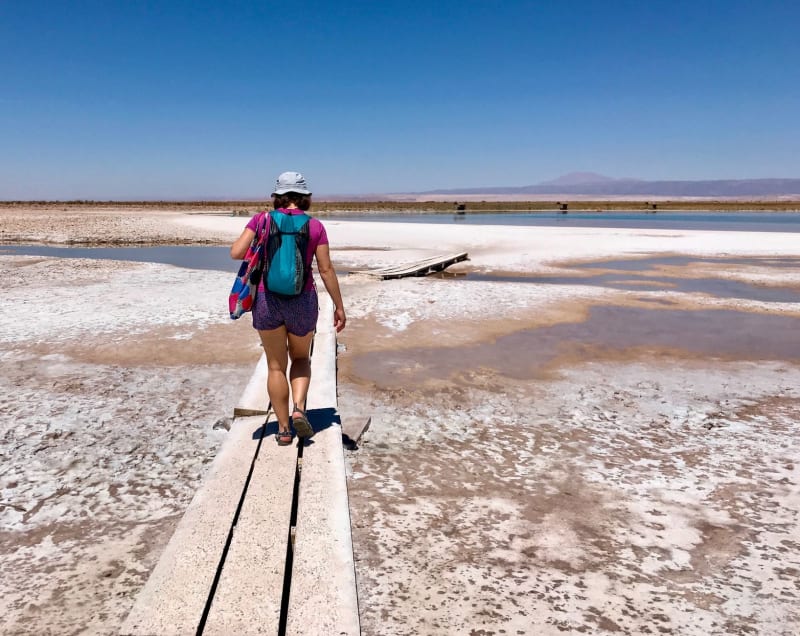 atacama-desert
 Puritama Hot Springs
Eight thermal pools cascading down a desert canyon where 33-degree water meets cold air and you stop keeping track of time entirely.
Explore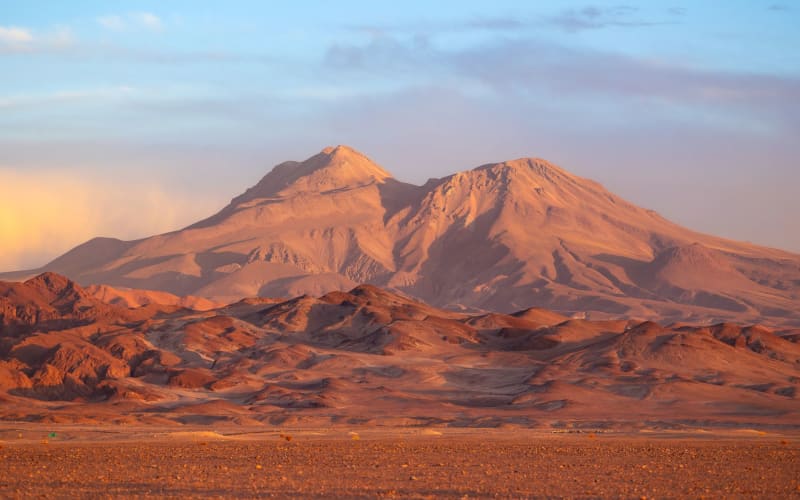 atacama-desert
 Salar de Atacama
Chile's largest salt flat and the world's lithium frontier — a white plain so vast it breaks your sense of scale before you have walked fifty meters.
Explore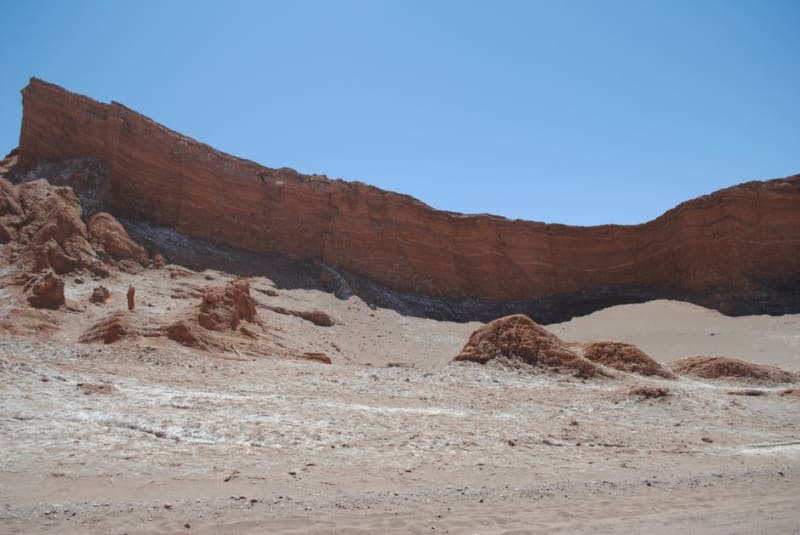 atacama-desert
 Salar de Tara
A remote salt flat at 4,300 meters where stone monks guard flamingo lagoons and the silence feels older than the mountains.
Explore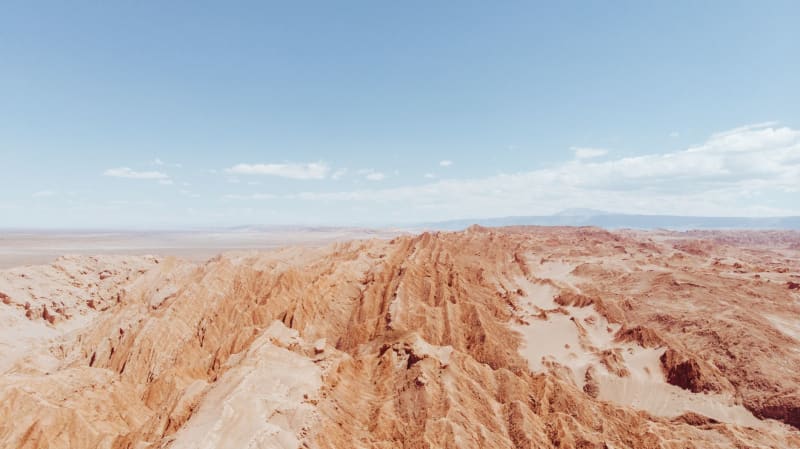 atacama-desert
 San Pedro de Atacama
The dusty adobe hub of the desert where altitude sharpens every sensation and the nights are criminally clear.
Explore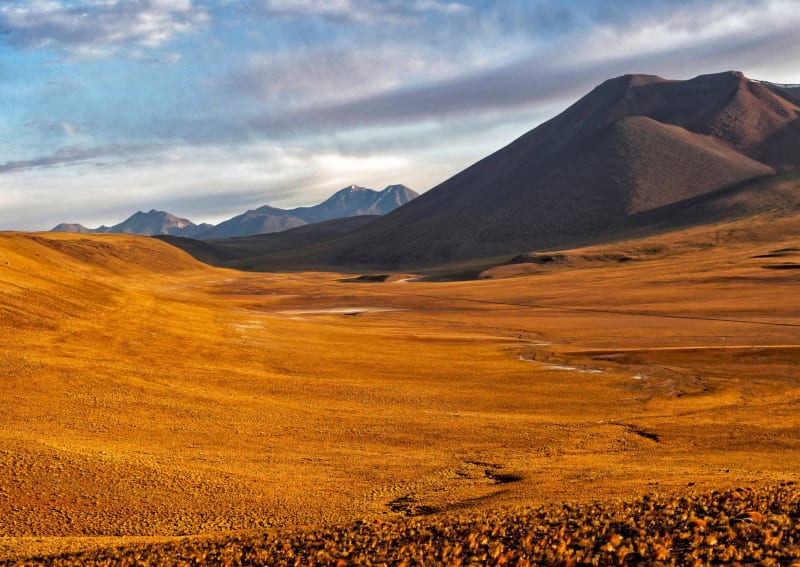 atacama-desert
 Toconao
A whitestone Atacameño village where a green quebrada cuts through the desert and the colonial bell tower glows amber at sunset.
Explore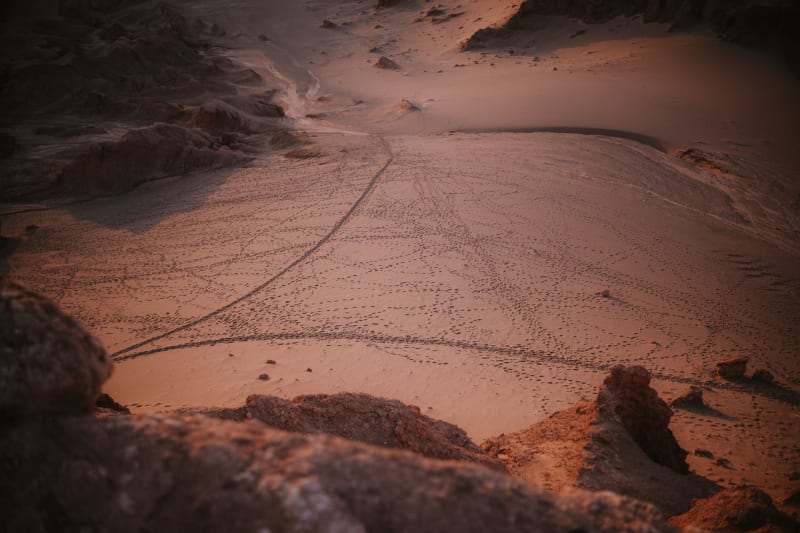 atacama-desert
 Valle de la Luna
A valley of salt and rock so lunar in atmosphere that NASA once sent geologists here to train for Mars missions.
Explore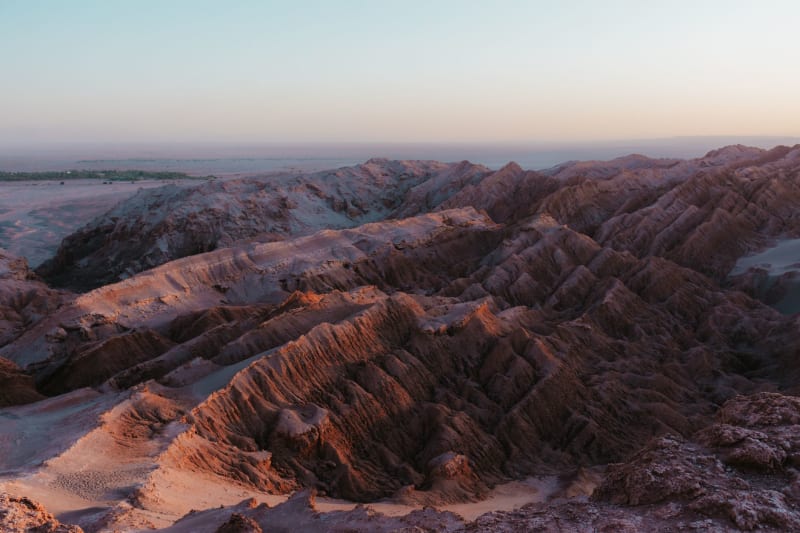 atacama-desert
 Valle de la Muerte
A valley of blood-red dunes and volcanic rock where the afternoon heat is medieval and the sandboarding is unexpectedly real.
Explore