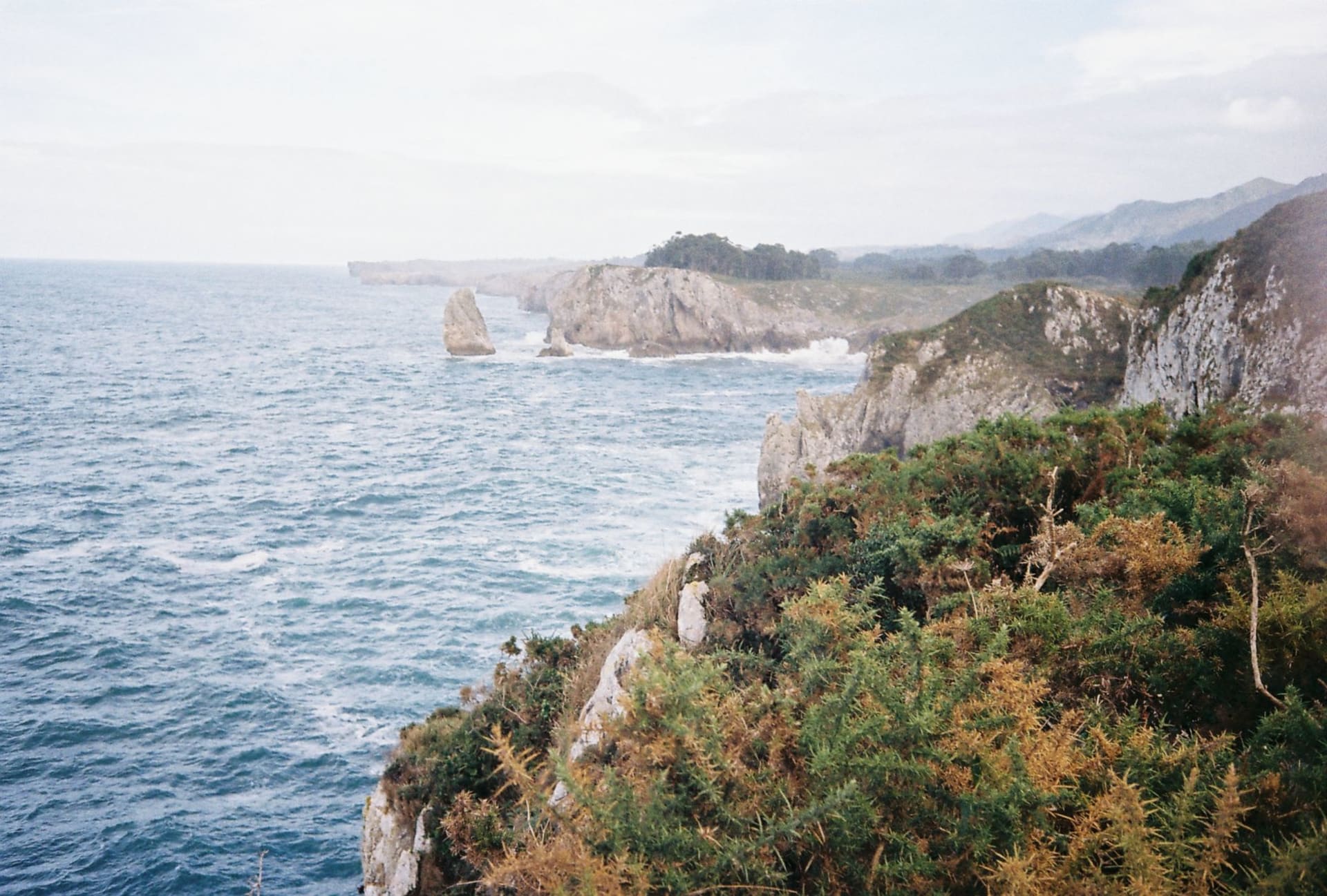
Asturias's largest city wears its industrial past openly — a working port, a long beach, and a cider scene that needs no tourist permission to exist.

Gijón doesn’t ease you in. I came by train from Oviedo on a Tuesday, stepped onto the platform, and within ten minutes was walking along the Playa de San Lorenzo — a two-kilometre crescent of dark sand that somehow sits directly against the city’s working face, apartment blocks and a covered market at one end, the old fishing quarter of Cimadevilla at the other. The waves were doing what Atlantic waves do without asking permission: arriving hard, dragging back loudly, making the beach sound perpetually busy even in the cold. A man was walking a dog. A teenager was attempting to surf. I sat down on a bench and watched all of this happen.
Cimadevilla is the oldest part of Gijón, a peninsula of steep cobbled lanes that juts into the sea like a fist and has, for centuries, housed the fishing families who provisioned the rest of the city. Walk up through it and the streets narrow to the point where outstretched arms could touch both walls. At the top, the Elogio del Horizonte — Eduardo Chillida’s massive concrete sculpture — frames the Cantabrian Sea through its hollow center, a gesture so deliberately elemental it either moves you immediately or looks like a drain. I fell into the first category, standing there longer than I’d intended while the wind came in off the water.

The eating here is serious and completely without ceremony. The covered market — Mercado del Sur — opens early and has counters where you can have a coffee and a tortilla standing up, elbow-to-elbow with people who work the boats or the nearby factories. The seafood is astonishing in that way that seafood always is when it’s been in the water twelve hours ago: clams in a thin parsley broth, percebes that look like alien fingers and taste intensely of the sea, anchovies cured and laid flat on toast with a slick of good oil. The sidrería culture runs parallel to Oviedo’s but feels rougher here, less observed — bars in the El Natahoyo neighborhood where the floor is already sticky by noon and the conversation runs loud.
What Gijón has that Oviedo lacks is the texture of a city that has worked hard and not been prettified for outside consumption. The port still operates. Fishing boats still come in. The industrial history — Gijón was one of northern Spain’s steel centers until the industry collapsed in the 1980s — is present in the broad avenues, the modernist workers’ architecture, the residual sense of a city built for a different kind of scale. That collapse was devastating and the city has not fully reinvented itself, which gives it an authenticity that more polished places spend fortunes trying to fake.

On summer evenings, the promenade along San Lorenzo fills with the full social spectrum of the city — families, teenagers, elderly couples, groups of friends who have arranged to meet at a specific bench and are now arguing about where to eat. The light goes slowly here, the sun setting late in July, the sky turning colors over the water that seem extravagant for a place that calls itself overcast.
When to go: June and early July before the peak August crowds are ideal — the beach is swimmable, the light is extraordinary, and the city is still on its own rhythms. Avoid the last two weeks of August when every apartment within range of the coast fills up. November through March the city belongs to itself again, which is its own kind of pleasure.
Keep exploring
More from Asturias
 asturias
Lastres
A steep fishing village tumbling down a cliff to a working harbour on the Asturian coast, where the streets are too narrow for cars and the catch still comes in on small boats each afternoon.
Explore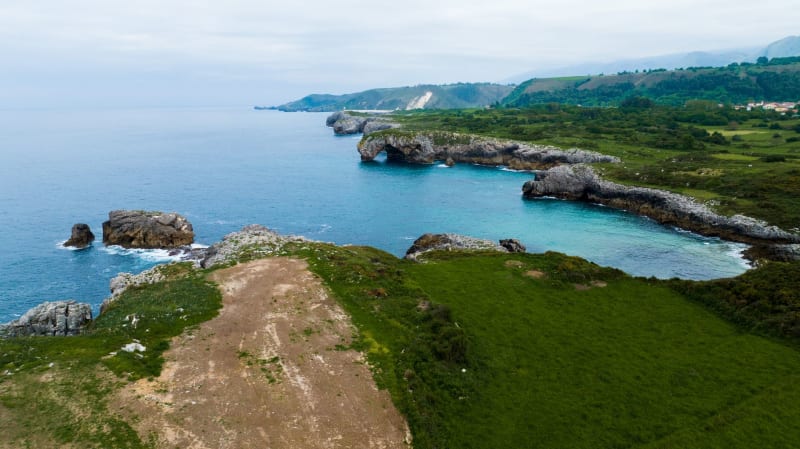 asturias
Llanes
A walled medieval town on the Asturian coast where brightly painted sea-cubes guard the harbor and secret coves hide just minutes away.
Explore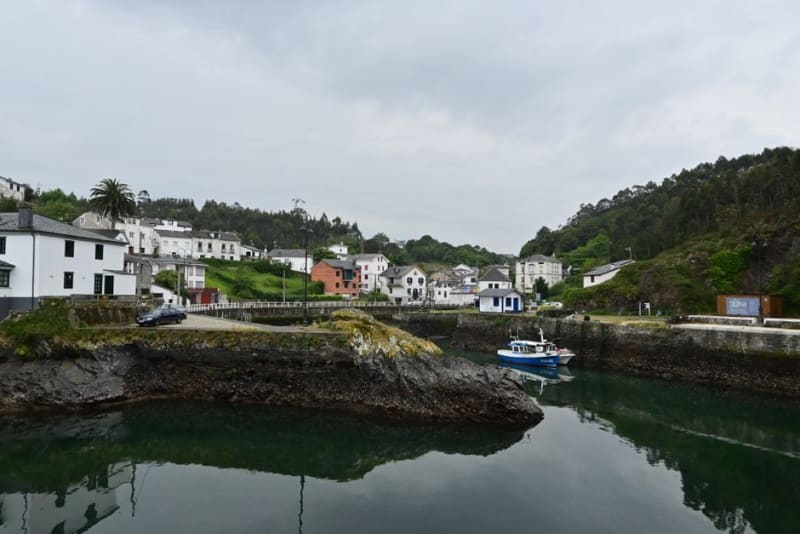 asturias
Luarca
A whitewashed fishing town wrapped around a river mouth, where a hilltop cemetery watches over the boats coming home.
Explore asturias
Naranjo de Bulnes
A vertical limestone spire in the heart of the Picos de Europa that took me two failed attempts and one lucky clear morning to actually see.
Explore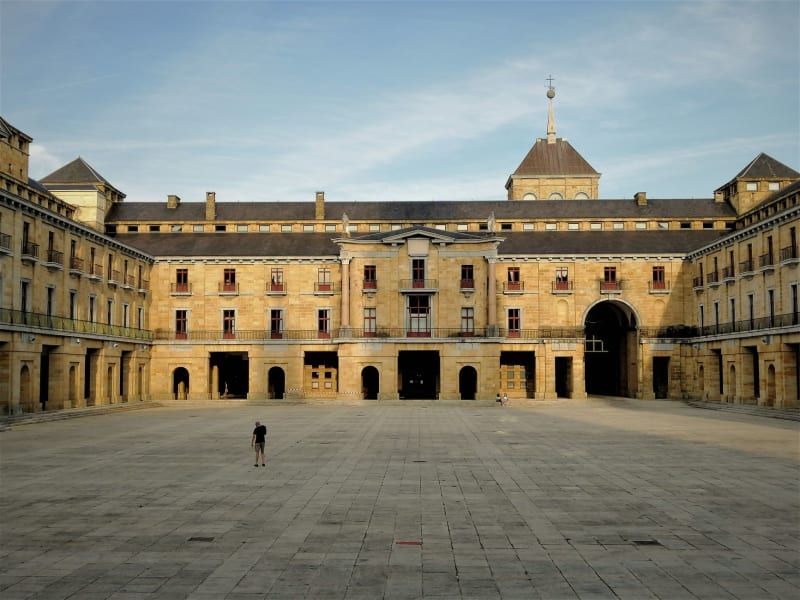 asturias
Oviedo
Asturias's quiet capital where pre-Romanesque churches stand between cider bars and the best cheese counters in northern Spain.
Explore asturias
Picos de Europa
Limestone peaks so vertical they seem structurally impossible, sheltering gorges, brown bears, and a silence that makes cities feel like the aberration.
Explore