
A flat-footed fishing town where Roman mosaics sleep under the pavement and ricotta gnocchi still gets rolled by hand.

We came to Minori almost by accident, ducking off the coast road after a morning of switchbacks left Lia a little green around the edges. What we found was the first flat ground we’d stood on in two days — a proper promenade running along the water, no stairs, no cliffside scramble, just a wide stretch of stone where old men sat with their trousers rolled up and kids chased a ball into the surf. After Positano’s vertical chaos, Minori felt like exhaling.
The town’s history caught me off guard. I’d expected fishing boats and lemon groves, not a Roman villa, but there it was, a few steps back from the beach: the Villa Marittima, unearthed in 1932 and sitting quietly below street level like nobody had told it the empire ended. We paid a couple of euros to walk through the nymphaeum and the old thermal baths, and the geometric mosaic floors were still sharp enough that I found myself checking my shoes before stepping on them, an old habit from cathedrals that clearly doesn’t belong here but came out anyway.

Lunch is where Minori really won me over. I’d read about ‘ndunderi somewhere, these ricotta gnocchi that food historians argue might be an ancestor of the gnocchi we know now, and I made Lia sit through an entire meal while I interrogated the poor waiter about it. He shrugged and said his grandmother made it the same way for sixty years, tomato sauce, a little basil, nothing fancy, and honestly that was the whole appeal. Dessert was a sfusato lemon delizia, and I remember thinking the lemons here tasted almost floral compared to the ones we get in Mexico, sharper somehow but less acidic.

What stays with me about Minori isn’t any single sight but the pace of it. Amalfi’s medieval trading ships used to load and unload right here, and there’s still something working and unpretentious about the place, the shipbuilding port energy hasn’t fully left even now that the boats are mostly for tourists like us. When to go: we’d point you toward May or the tail end of September, when the light is soft and the promenade belongs to locals again rather than the Positano-bound crowds passing through in August.
Keep exploring
More from Amalfi Coast
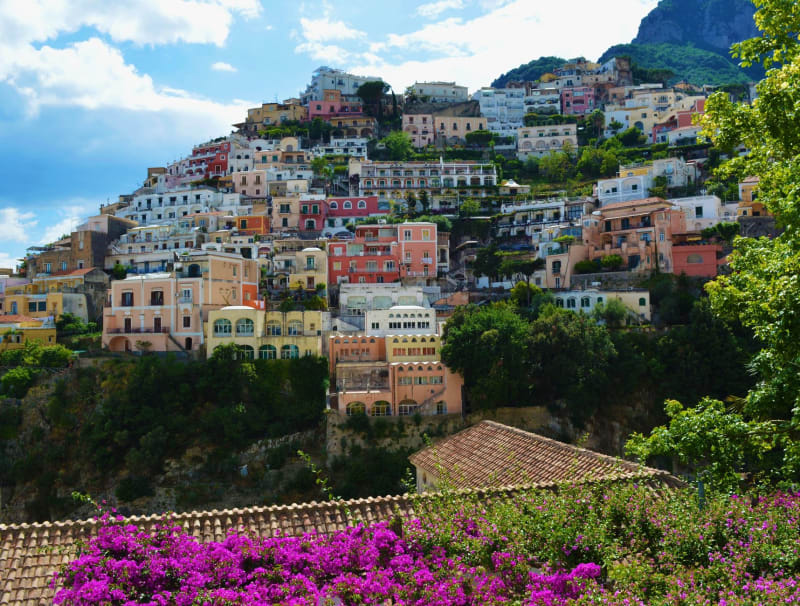 amalfi-coast
Positano
The most photographed village on the Italian coast, where pastel houses cascade to the sea and somehow the reality still outpaces the cliché.
Explore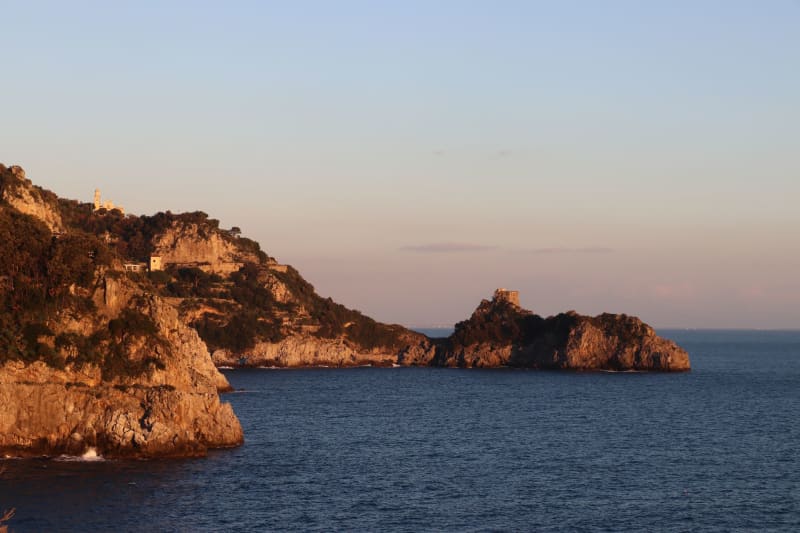 amalfi-coast
Praiano
The village the coast road bisects at midnight speed but rewards anyone who actually stops — quieter than Positano, cheaper, and with a beach hidden in a gorge that feels like a discovery.
Explore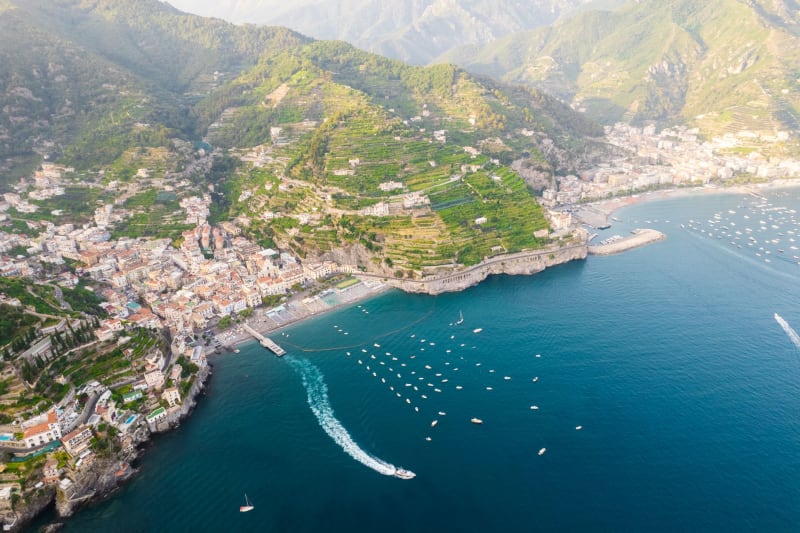 amalfi-coast
Ravello
A hilltop town three hundred meters above the sea where Wagner wrote opera, the gardens have no bottom, and the crowds somehow never follow you up.
Explore amalfi-coast
Scala
The oldest town on the Amalfi Coast, where quiet stone lanes and a Romanesque crypt sit above the crowds, facing Ravello across the ravine.
Explore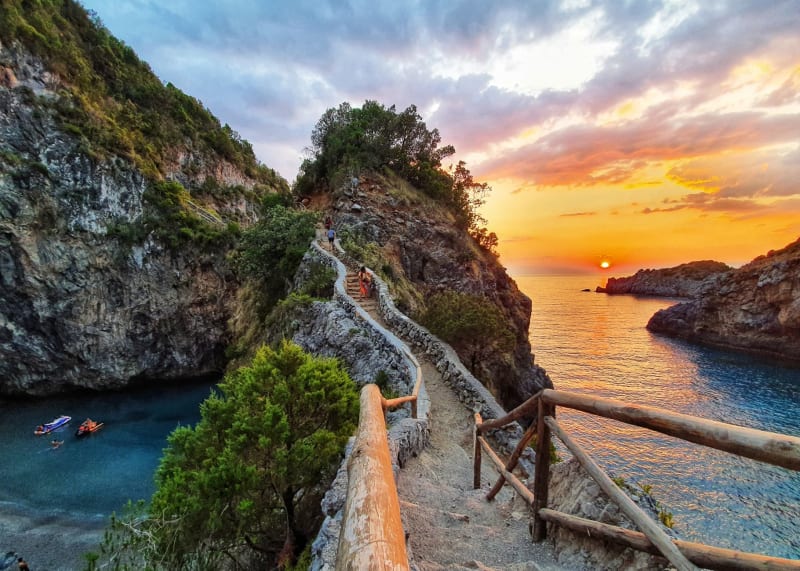 amalfi-coast
Sentiero degli Dei
The Path of the Gods — a ridge trail above the coast that offers the one view of the Amalfi Coast that the Amalfi Coast itself cannot give you.
Explore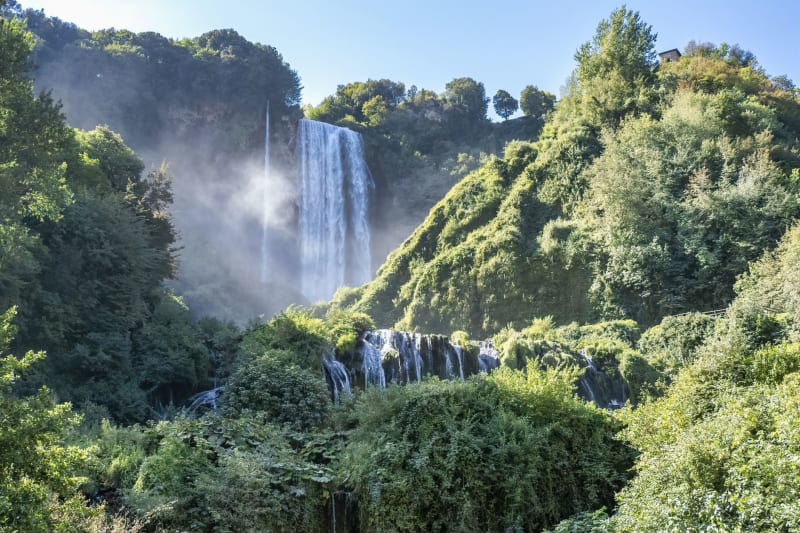 amalfi-coast
Valle delle Ferriere
A cool green valley above Amalfi where old paper mills rot beautifully among waterfalls, ferns, and lemon groves — the coast's only real escape from the coast.
Explore