
Monsaraz
"Standing on Monsaraz's walls at dusk is the closest Portugal gets to stopping time entirely."
A medieval village frozen on its hilltop, watching the vast Alqueva reservoir turn copper at dusk from behind its castle walls.

The road up to Monsaraz winds through olive groves and cork oaks, the village invisible until the last moment, when it appears suddenly above you like something remembered from a dream. It is almost aggressively picturesque — whitewashed walls, black-framed windows, the bulk of a Moorish castle at the far end of a single main street narrow enough to touch both sides at once — and yet the place does not feel like a museum. On the afternoon I arrived, a dog was sleeping in the exact center of the cobblestones, and nobody seemed to think this required any action.
Monsaraz has perhaps five hundred permanent residents, a number that drops further each winter when the last tourist leaves and the village returns to itself. What remains is a kind of distilled Alentejano life: the elderly men at the café by the main gate, the women who hang laundry across the same alleys their grandmothers did, the smell of wood smoke mixing with rosemary in the evenings. I found a room in a guesthouse where the beds had embroidered covers and the owner brought me a glass of the local wine without asking, standing in the doorway for a moment to watch the light change over the reservoir below.
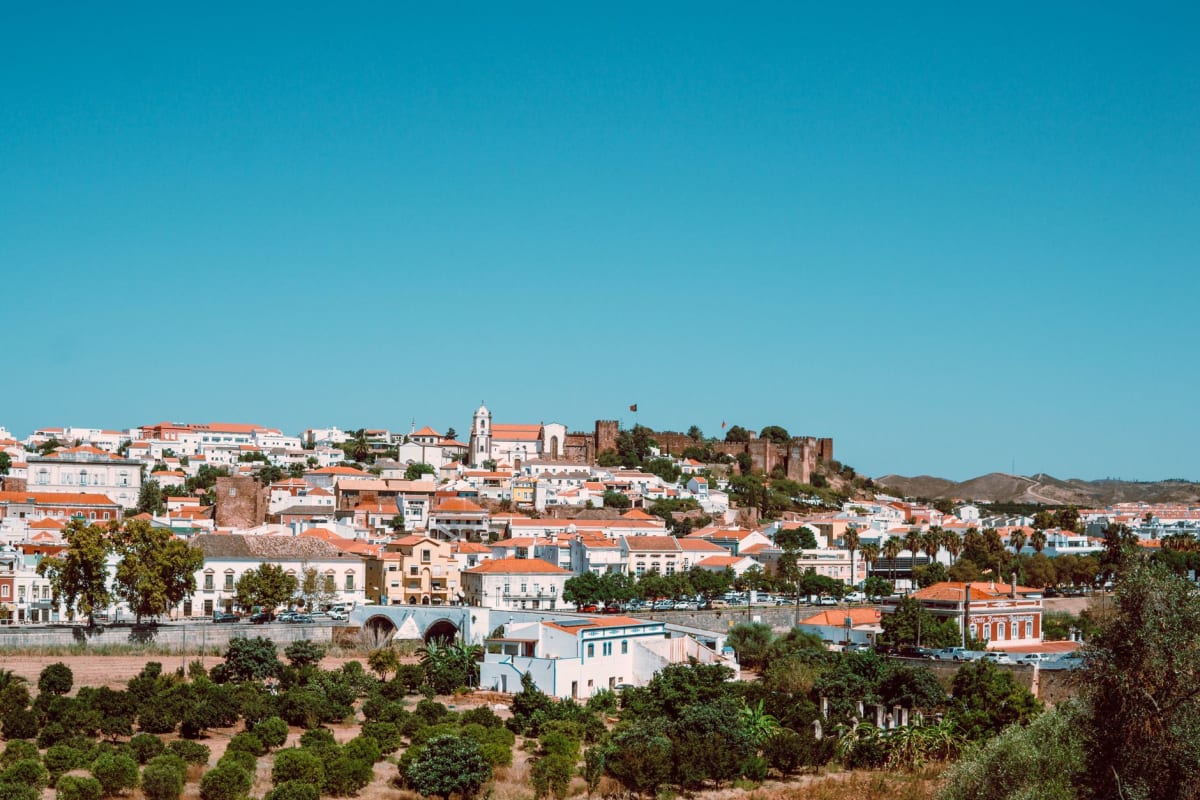
The Alqueva is the context that makes Monsaraz feel consequential. Europe’s largest artificial lake spreads south and east to the Spanish border, an enormous sheet of still water that was created in 2002 when the Guadiana River was dammed. From the castle walls, the reservoir below catches the last of the afternoon light in a way that turns it from blue to bronze to a deep, arterial red, and then to nothing at all. I stood there watching this happen with a glass of wine I had carried up from the café, and I thought: this is the kind of view that makes you want to write things down and then makes you realize you cannot possibly describe it adequately.
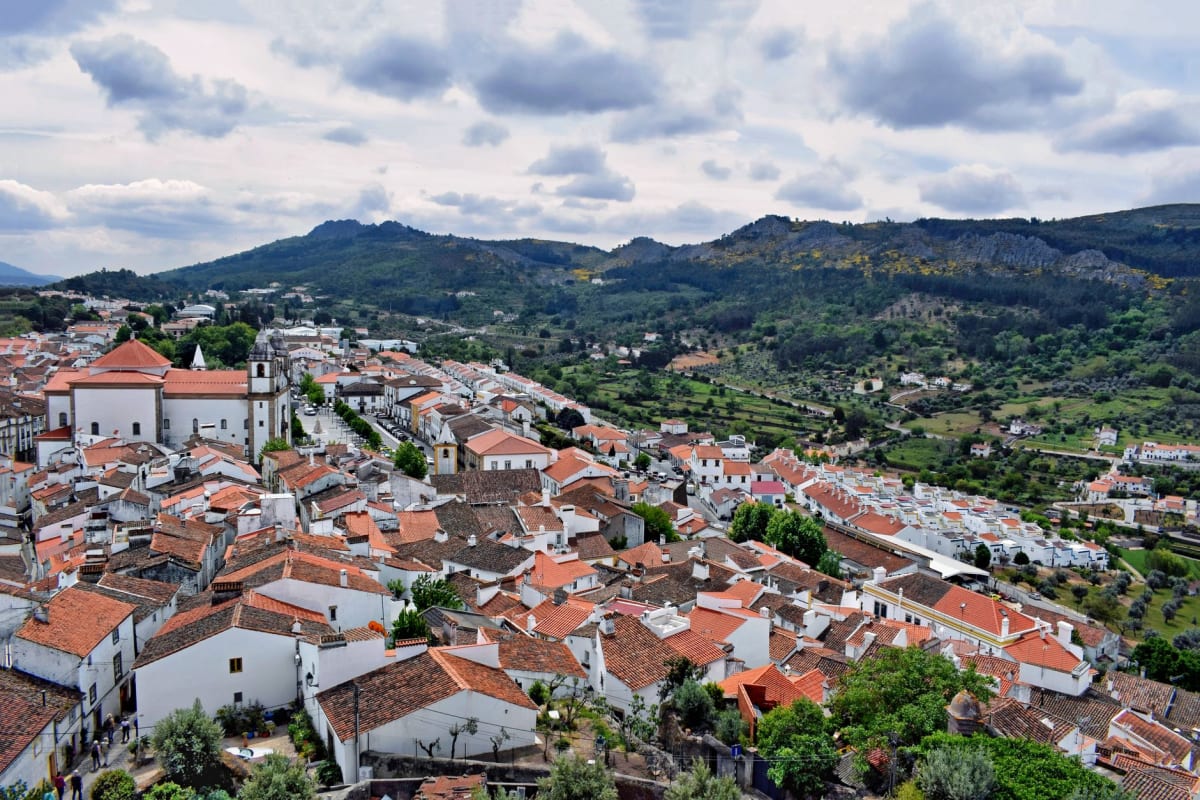
The village itself rewards slow walking. The Praça Dom Nuno Álvares Pereira, which is really just a widening of the main street, holds a small arena where bullfights once took place and now occasionally hosts open-air concerts. The parish church contains azulejo panels of a quality that would stop you in a Lisbon cathedral, yet here they sit in an unlocked room where anyone may enter. On the way out of the village I passed the pelourinho, the medieval pillory stone where criminals were once displayed, standing in the sunlight looking faintly ceremonial.
When to go: April and May, when the wildflowers are still on the plains and the heat has not yet arrived. October also works well — harvest season in the surrounding vineyards means local wine flows cheap, and the reservoir light in autumn is something else entirely.
Keep exploring
More from Alentejo
 alentejo
Portalegre
A textile city tucked into the cool northern serra where the air smells of wool and the tapestry factory still weaves the old way.
Explore alentejo
Serpa
A walled town near the Spanish border where the sheep's cheese is so good it earns its own protected designation and the afternoons last forever.
Explore alentejo
Vila Viçosa
A royal town built on marble where the Ducal Palace still smells of dynasty and the orange groves go all the way to the walls.
Explore alentejo
Alqueva
Europe's largest artificial lake and a certified Dark Sky Reserve where the stars arrive so thickly they change the quality of the night itself.
Explore alentejo
Beja
The quietly defiant southern capital where a Moorish tower still watches the plain and a nun's forbidden love letters made Portugal's literary history.
Explore alentejo
Comporta
A former rice-farming village where thatched fishermen's huts meet pine dunes and a wide Atlantic beach, quietly beloved by architects and dolphins alike.
Explore