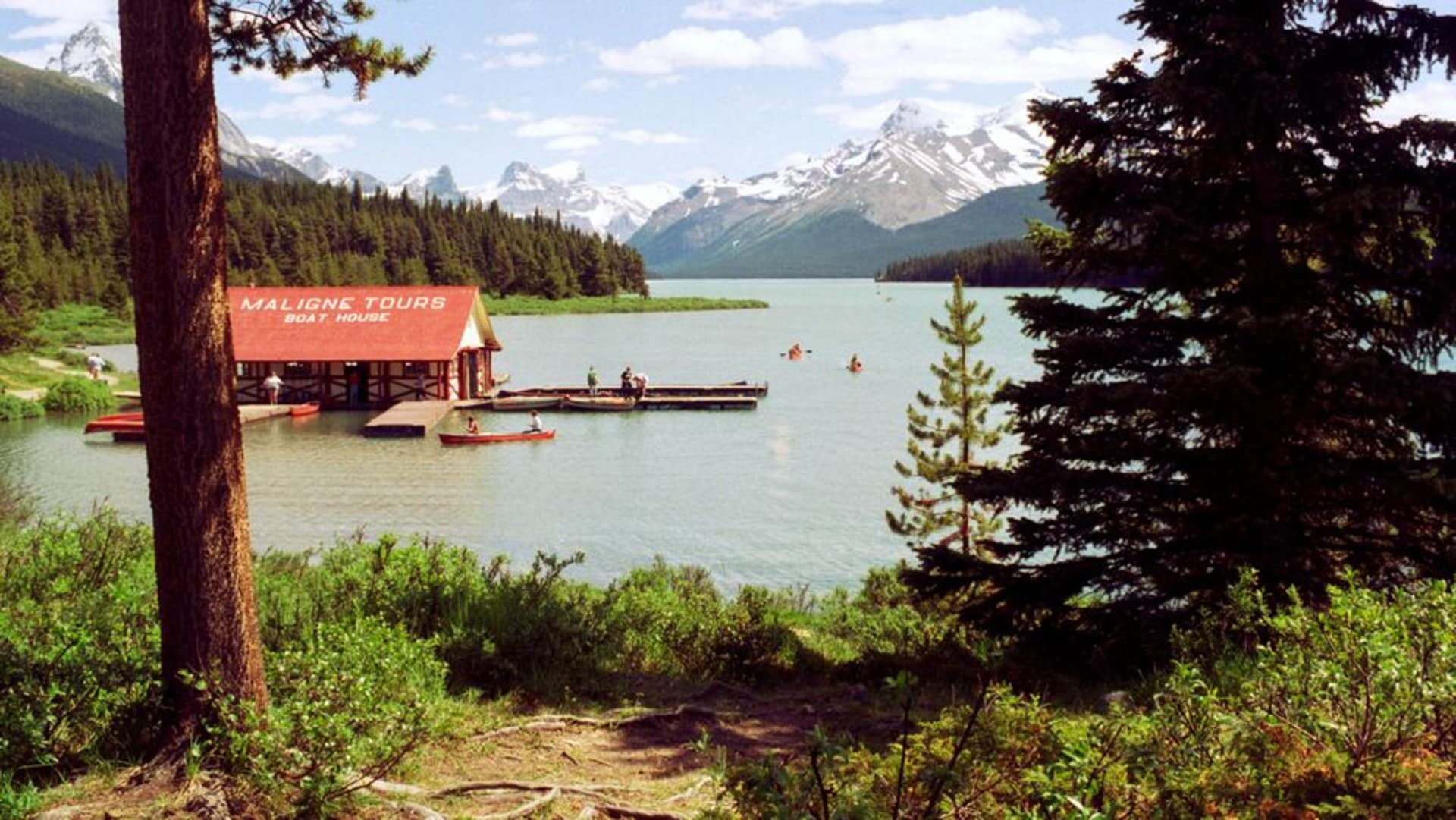
Maligne Lake
"Spirit Island is barely big enough for the trees growing on it, and it might be the most photographed piece of land in Canada."
The largest natural lake in the Canadian Rockies, a twenty-two-kilometre ribbon of glacial water in Jasper National Park famous for a tiny pine-covered island that has become one of the most photographed spots in Canada.

I’d seen the photo of Spirit Island so many times before arriving in Jasper — that small forested island sitting almost exactly centred in a wide turquoise channel, mountains framing it on both sides — that I assumed it had to be exaggerated, one of those images so heavily processed it bears only a loose relationship to reality. It isn’t. Maligne Lake stretches twenty-two kilometres through the Maligne Valley southeast of Jasper townsite, the largest natural lake in the Canadian Rockies, and reaching the island requires a boat cruise down almost the full length of it, since there’s no road anywhere near the far end.
The boat ride itself is worth the trip independent of the destination. The colour of the water shifts as you go, from a deep glacial green near the dock to an almost impossible turquoise further down the lake, caused by the same rock flour — fine sediment ground by glaciers upstream — that colours Lake Louise and Moraine Lake, except here the lake is long enough that you watch the colour actually change in real time as different tributaries feed in. Mount Unwin and Mount Charlton rise steeply on either side, glaciers visible on their upper slopes even in midsummer, and the guide on my boat pointed out a black bear working the shoreline that nobody else on deck had noticed.

Spirit Island itself, when the boat finally stops nearby, is almost comically small — really a spit of land with a handful of stunted pines clinging to it — and its fame has everything to do with the surrounding geometry rather than the island itself. The channel narrows exactly where it sits, the mountains close in symmetrically on both sides, and the whole scene resolves into a composition that feels engineered rather than accidental. It’s a fifteen-minute stop before the boat turns back, and I understood immediately why photographers have been chasing this exact frame for a century.

When to go: Late June through September, when the cruise boats run and the road into the valley is fully open. Early morning departures give the calmest water and the best reflections, before any afternoon wind picks up on the lake.
Keep exploring
More from Alberta
 alberta
 Medicine Hat
A prairie city built over one of the largest natural gas fields ever discovered in North America, tucked into a surprisingly deep river valley with hoodoos, a saddledome, and Rudyard Kipling's approval on record.
Explore alberta
 Moraine Lake
The lake that used to be on Canada's twenty-dollar bill, and which earns that honour every single morning at sunrise.
Explore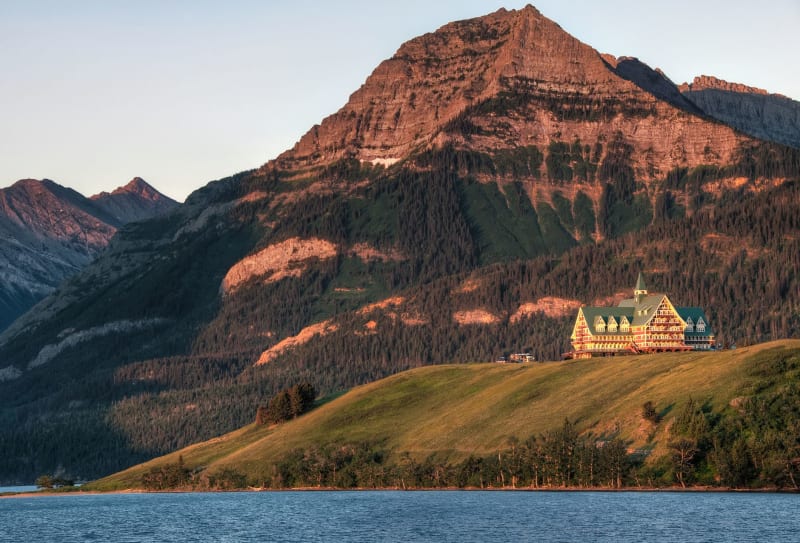 alberta
 Waterton Lakes
The smallest and most forgotten of Alberta's national parks sits at the US border, where the prairies crash directly into the Rockies without warning.
Explore alberta
 Writing-on-Stone Provincial Park
A valley of wind-carved hoodoos along the Milk River, sacred to the Blackfoot for centuries and covered in some of the largest concentrations of First Nations rock art on the continent.
Explore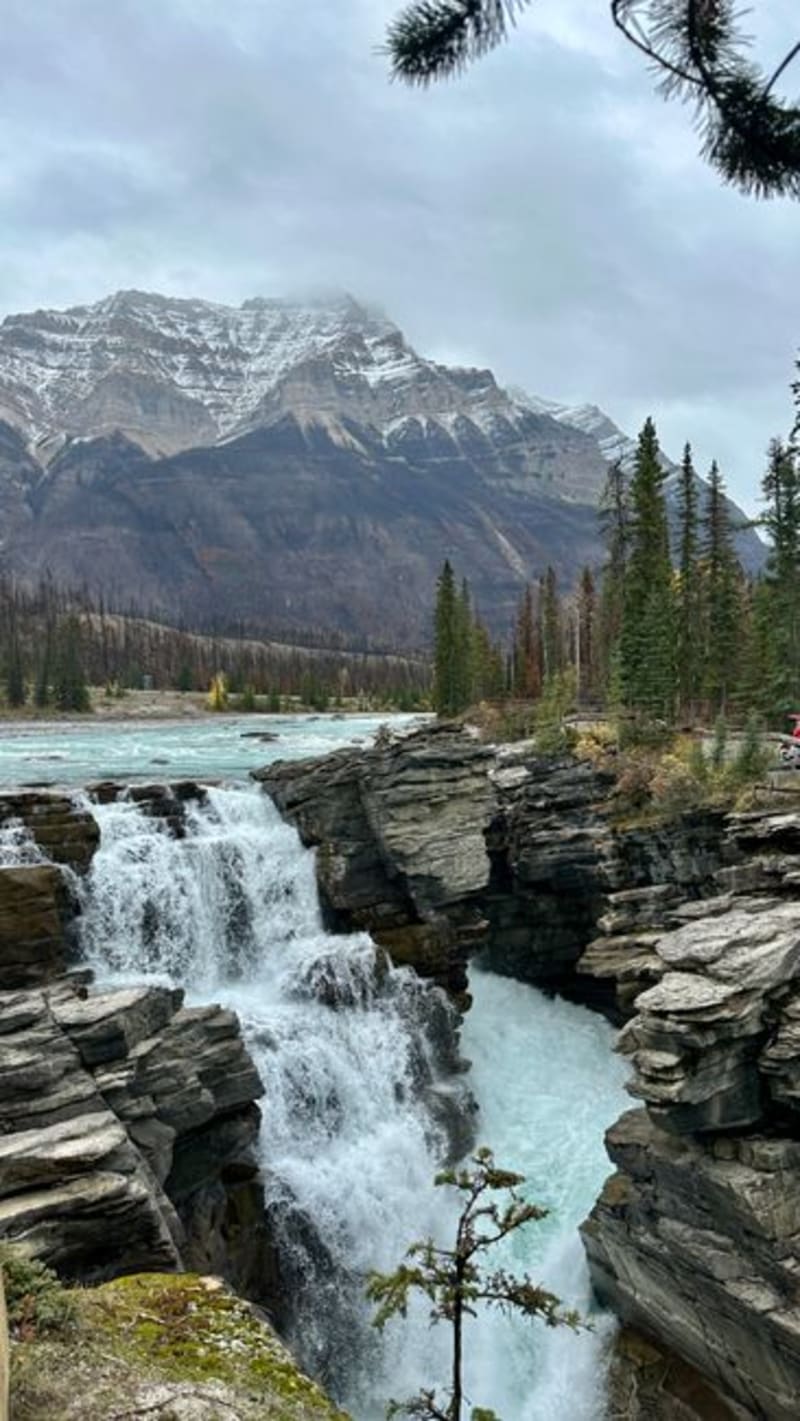 alberta
 Athabasca Falls
A short, violent drop where the Athabasca River forces its entire volume through a narrow quartzite gorge just south of Jasper townsite, loud enough to feel before you see it.
Explore alberta
 Banff
A mountain town so perfectly placed inside its national park that even the gas station has a glacier for a backdrop.
Explore