Pergamon
"They built a library here to rival Alexandria's, then invented parchment when the Egyptians cut off the papyrus supply out of jealousy."
A hilltop acropolis so steep the ancient theater seems to pour straight down the mountainside, and a healing sanctuary below where Roman patients once walked a tunnel toward the sound of trickling water.
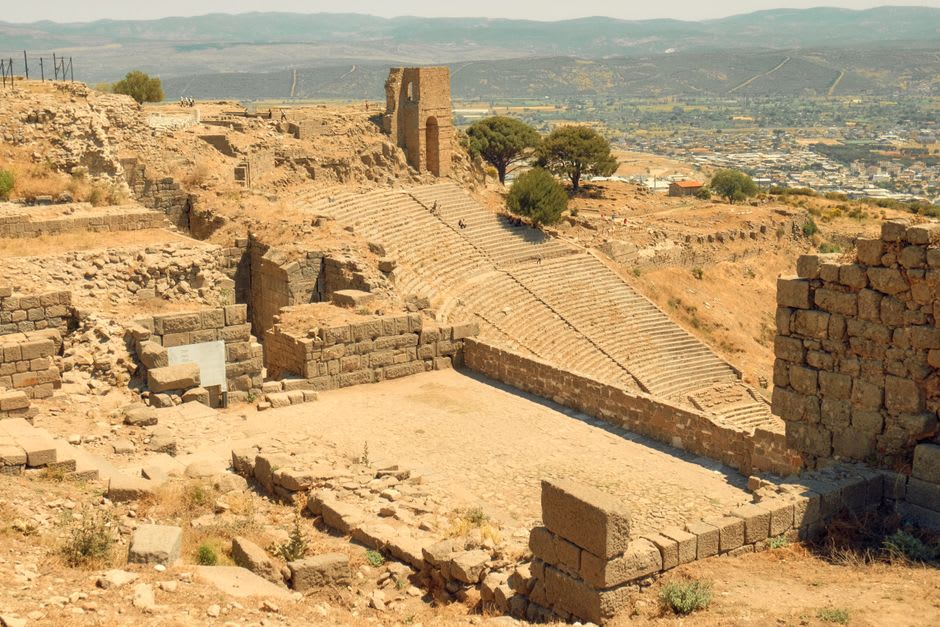
I climbed to the Pergamon acropolis in the early morning specifically to avoid the heat, and arrived at the theater out of breath and slightly dizzy from the gradient. It is the steepest ancient theater I have stood in — eighty rows of seats plunging down a slope so severe that the builders had to leave the stage as a temporary wooden structure, assembled for performances and dismantled afterward, because there was no flat ground to build it on permanently. Sitting near the top, looking down past the seats to the plain far below, I understood immediately why the site was chosen. It is theater as vertigo.
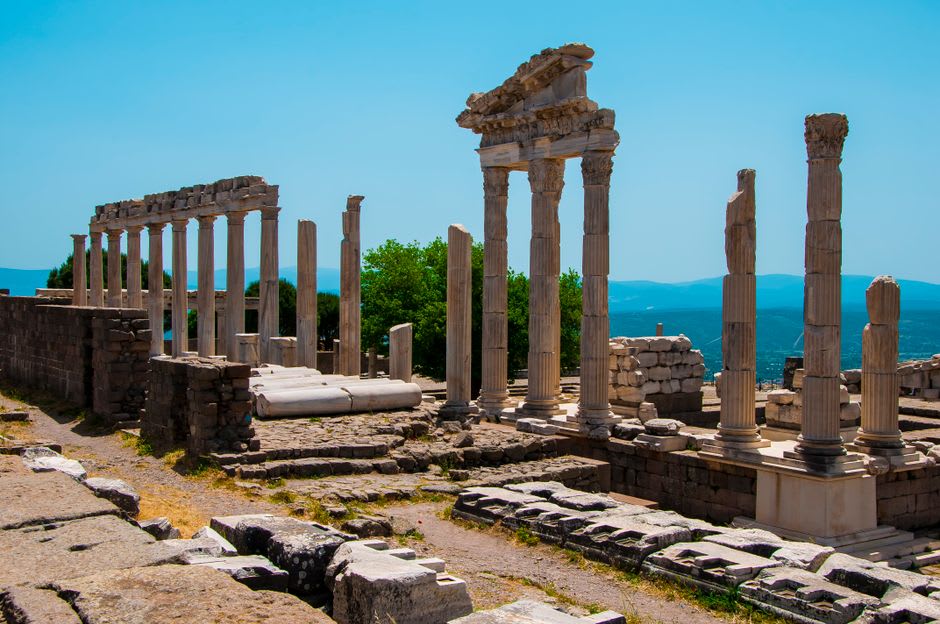
The rest of the upper acropolis spreads out along the ridge: the foundations of the great Library of Pergamon, which once held two hundred thousand scrolls and rivaled Alexandria closely enough that, according to the story I was told by a guide sharing my taxi, the Egyptians cut off Pergamon’s papyrus supply to slow it down — which is why parchment, made from treated animal skin, was developed here as a workaround. Whether the story survives close historical scrutiny I couldn’t say, but it is the kind of detail that makes ancient rivalries feel suddenly personal. The altar of Zeus itself is long gone, its dramatic frieze shipped to Berlin in the nineteenth century and reassembled in the museum that bears the city’s name — a fact that every Turkish guide mentions with a specific, weary irony.
Down in the valley, a fifteen-minute walk from the modern town of Bergama, sits the Asclepion — a sanctuary of healing dedicated to the god of medicine, and one of the ancient world’s genuine hospitals. Patients arrived here for weeks or months of treatment that mixed real medical practice with theater and suggestion: dream interpretation, mud baths, a diet regimen, and a long underground tunnel that patients walked through while unseen priests spoke encouraging words through openings in the ceiling above, the sound arriving as if from nowhere. I walked the tunnel myself, and even knowing exactly how the trick worked, the effect of a disembodied voice overhead in the dark was unsettling in a way that felt entirely intentional.
Bergama itself, the modern town wrapped around the base of the hill, is unhurried and mostly unbothered by tourism outside of a few streets near the museum. I ate a plate of testi kebab at a small restaurant where the clay pot arrives sealed and is cracked open at the table with a small theatrical flourish, releasing a column of steam that smells like everything good about slow-cooked lamb. It felt like a fitting way to end a day built around a city that never did anything by half measures.
When to go: April through June or September through October avoids the worst of the exposed, shadeless heat on the acropolis. Arrive at opening time — the site has almost no shade and gets brutally hot by midday in summer.
Keep exploring
More from Aegean Coast
 aegean-coast-turkey
 Priene
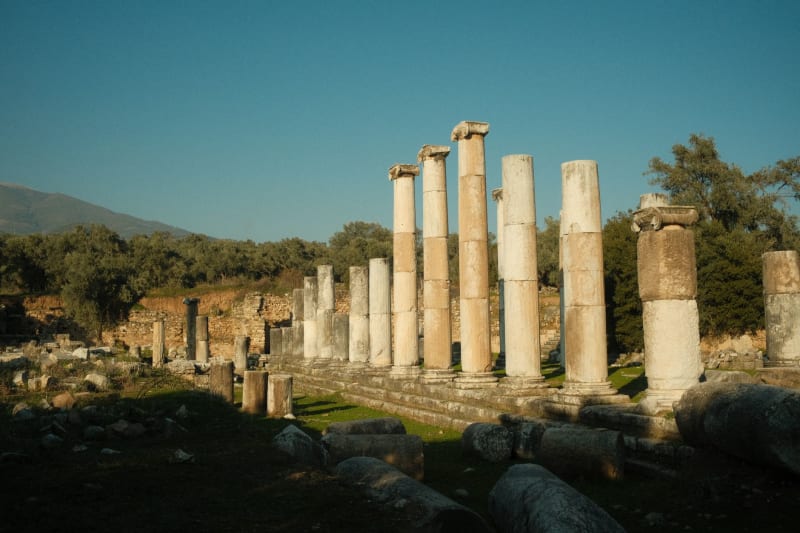
A Hellenistic ghost town perched above a flood plain that was once the Aegean Sea — ancient, mostly unvisited, and growing figs through its own ruins.
Explore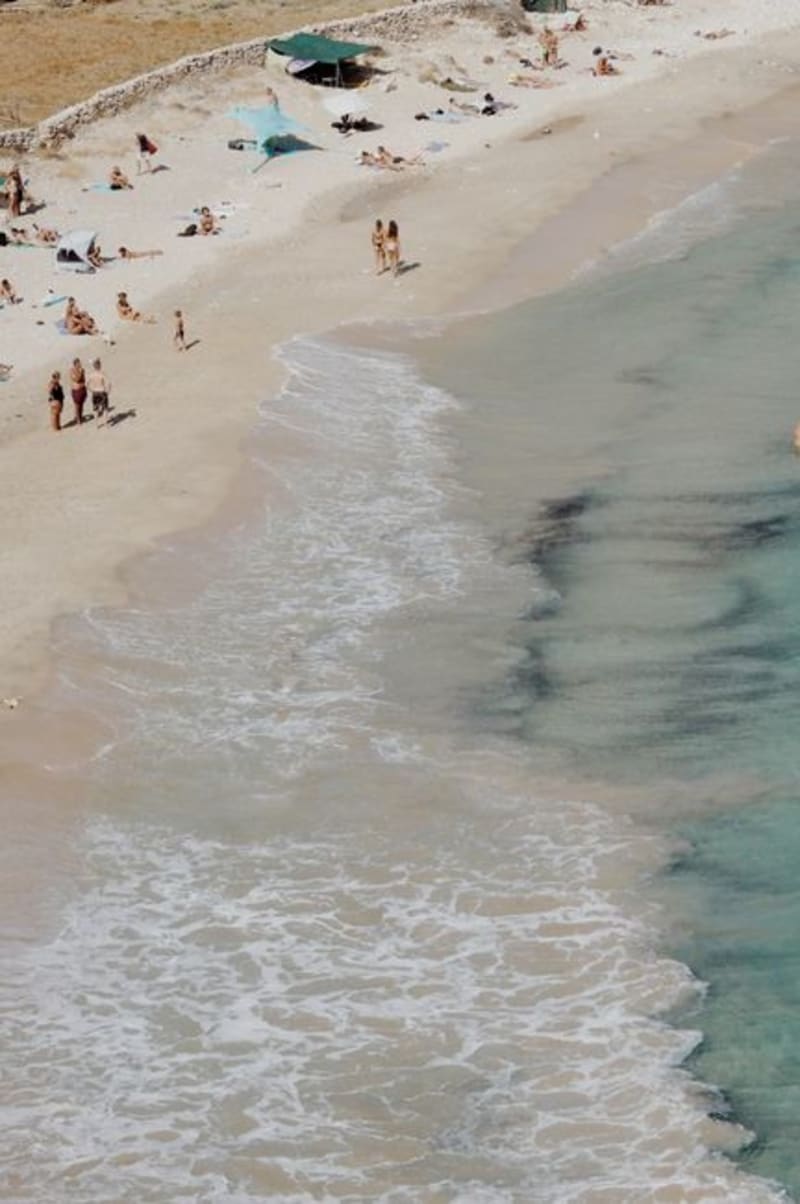 aegean-coast-turkey
 Sedir Island
A tiny island in Gökova Bay with a strange, protected beach of round quartz-sand grains, legend insisting Cleopatra ordered it shipped in from Egypt to charm Mark Antony.
Explore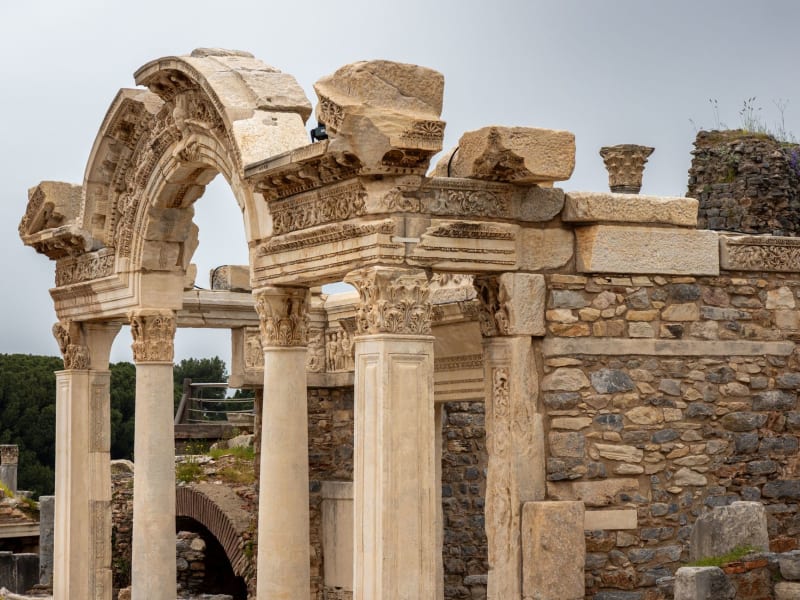 aegean-coast-turkey
 Selçuk
The quiet town at Ephesus's gateway, where storks nest on Byzantine columns and a Tuesday market is better than most museums.
Explore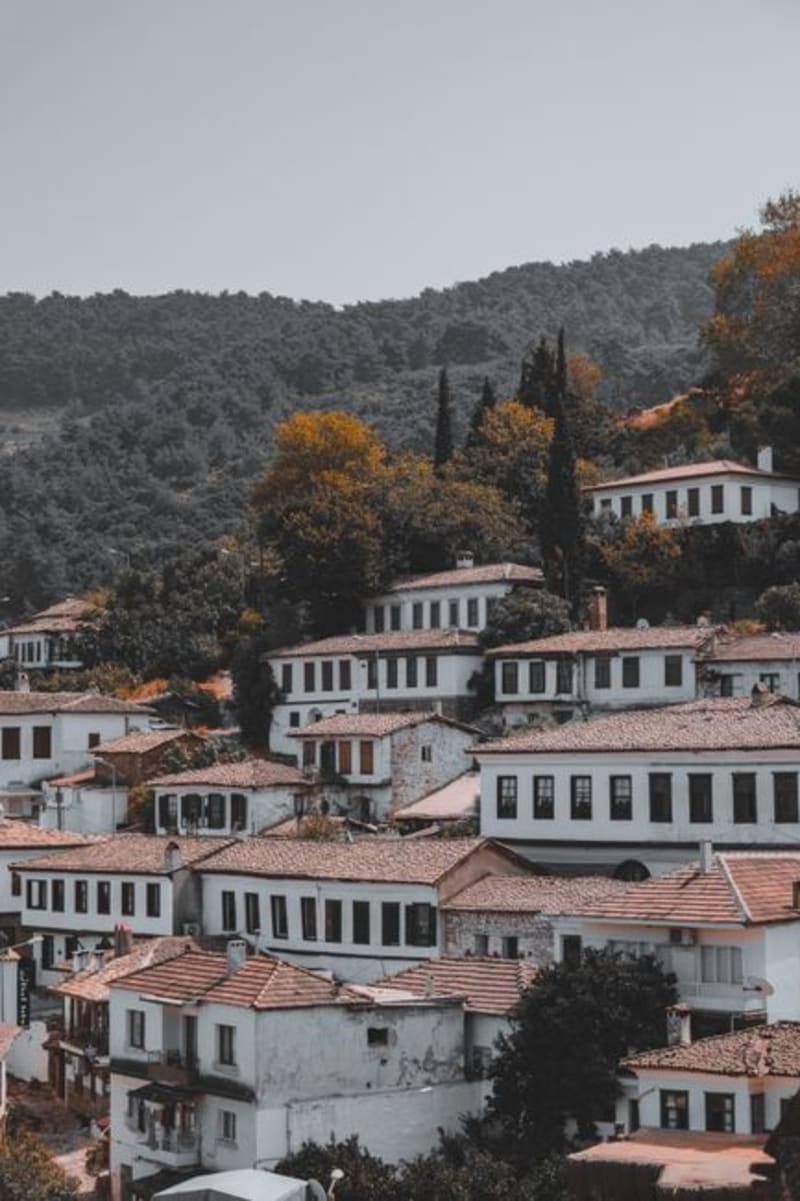 aegean-coast-turkey
 Şirince
A hillside village of stone Greek houses and vineyard terraces, built by Ottoman Greeks who supposedly named it 'Ugly' on purpose to keep outsiders away — it did not work.
Explore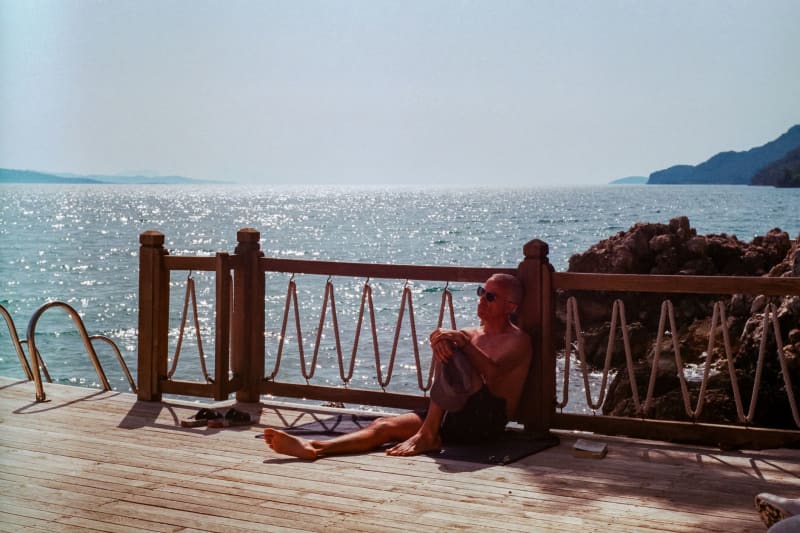 aegean-coast-turkey
 Akyaka
A slow-architecture village at the head of Gökova Bay where a spring-fed river runs cold through the reeds and nobody seems to be in any particular hurry.
Explore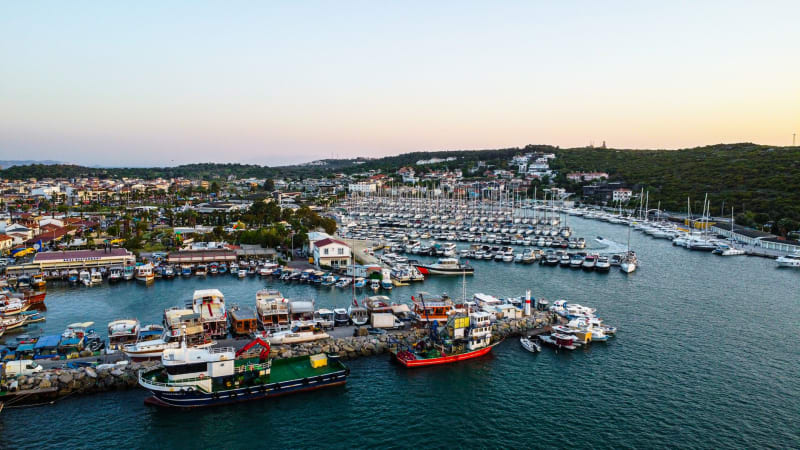 aegean-coast-turkey
 Alaçatı
A stone Ottoman village turned windsurfers' mecca — ancient windmills on the ridge, bougainvillea in the streets, and the most elaborate breakfast table in Turkey.
Explore