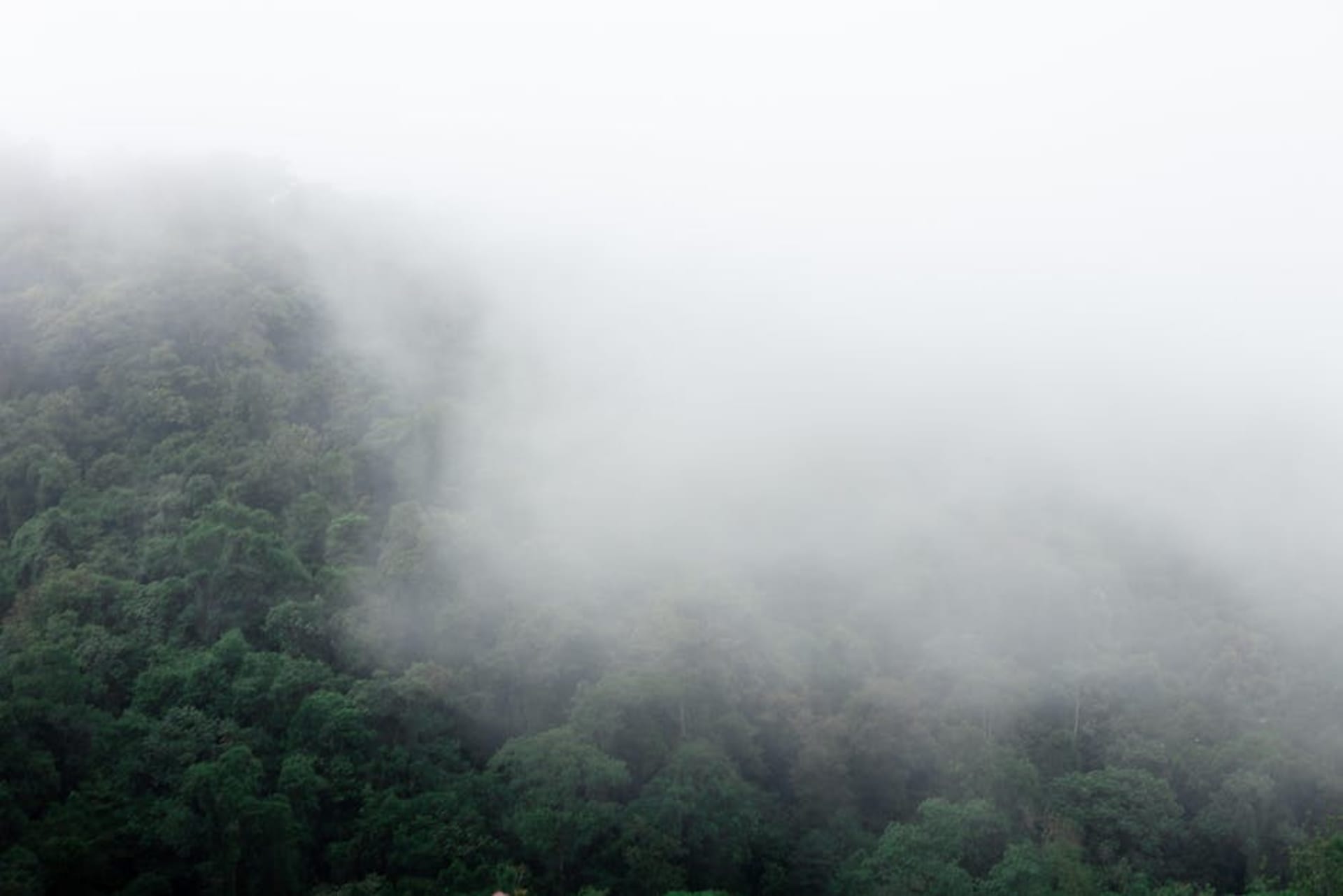
Into the Cloud — Monteverde and the Forest That Breathes
The Road Up
The drive from San Jose to Monteverde is three and a half hours of steadily increasing altitude and steadily deteriorating road surface. You leave the Central Valley — coffee plantations, small towns, the kind of organised agricultural landscape that gives Costa Rica its postcard identity — and climb into the Cordillera de Tilaran, where the pavement gives way to gravel and the gravel gives way to a surface that can only be described as aspirational. The rental car company had said a 4x4 was recommended. They meant mandatory. The last eighteen kilometres took an hour, and by the end the car was making sounds that suggested it was reconsidering the terms of our agreement.
But the road is part of the filter. Monteverde was never meant to be easy to reach. The Quaker settlers who founded the community in the 1950s — conscientious objectors from Fairhope, Alabama, who chose Costa Rica because it had abolished its army — picked this cloud-wrapped ridge precisely because it was remote, quiet, and surrounded by forest that nobody else wanted. They started a dairy cooperative, made cheese, protected the watershed above their farms, and accidentally created the conditions for one of the most important biological reserves in the Americas. The Monteverde Cloud Forest Reserve, established in 1972, grew out of their stewardship, and the community’s conservation ethic still shapes everything — from the absence of chain hotels to the guides who grew up here and know the forest the way a librarian knows the shelves.
We arrived in the late afternoon, the clouds sitting on the town like a lid, the air fifteen degrees cooler than the coast. The smell was different — not the salt and diesel of the Pacific lowlands but something vegetal and wet and old, the smell of decomposition and growth happening simultaneously, which is what a cloud forest is: a place where life and death are the same process, visible on every branch.
The Cathedral
The Monteverde Cloud Forest Reserve opens at seven in the morning, and we were at the gate at six-fifty because our guide, Minor, had said the quetzal was most active at dawn. Minor has been guiding in this forest for twenty-two years. He carries a Swarovski spotting scope worth more than his truck and can identify a bird by the quality of a rustle in the canopy. He is the kind of guide who makes you realise how much you miss when you walk through a forest alone — which is nearly everything.
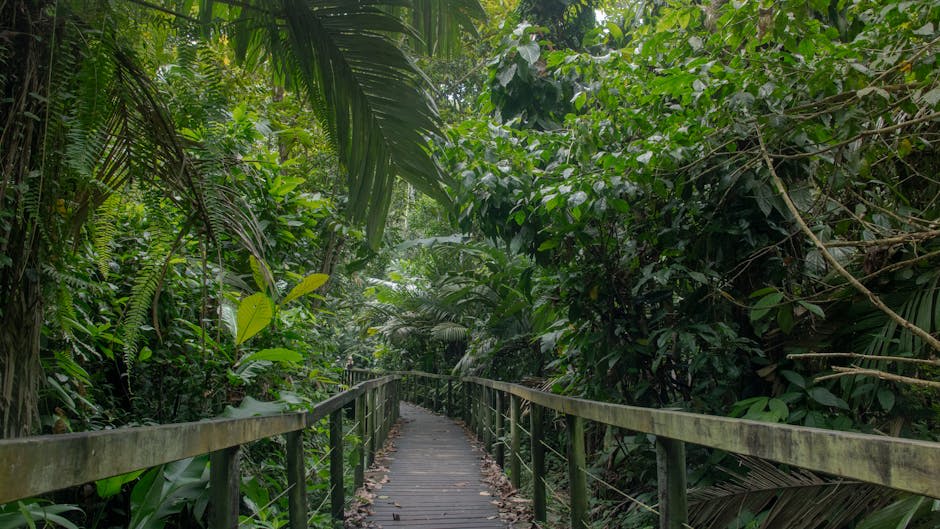
The cloud forest is not like other forests. The trees are shorter than lowland rainforest — the canopy sits at twenty-five to thirty metres rather than forty — but every surface is covered. Epiphytes — orchids, bromeliads, ferns, mosses, liverworts — coat every branch, every trunk, every fork of every tree, so densely that the tree itself disappears beneath its passengers. A single tree in the Monteverde cloud forest can host more plant species than exist in some entire European countries. The moisture comes from the clouds themselves — the trade winds push moist Caribbean air up and over the continental divide, and as it rises it cools and condenses, wrapping the forest in a permanent mist that provides water without rain. The result is a forest that is soaking wet but rarely storming, a place where water arrives horizontally rather than vertically, absorbed through leaves and moss and the hair-thin roots of orchids that have never touched the ground.
We walked the main trail in near-silence, Minor scanning the canopy with binoculars and occasionally stopping to point at something I would never have seen. A pygmy owl, six inches tall, sitting in a mossy hollow, its yellow eyes tracking us with the intensity of a creature that considers itself a predator despite weighing less than a tennis ball. A glass frog on the underside of a leaf, its translucent belly showing the slow pulse of its heart. A procession of leaf-cutter ants carrying pieces of leaf like tiny green sails along a trail they have maintained for decades — the same ants, the same trail, the same underground fungus garden they have been farming since before the Quakers arrived.
The Quetzal
Minor found the quetzal at eight-fifteen. He had been listening — not for the bird’s call, which is a low, melodic whistle, but for the sound of an avocado being eaten. The resplendent quetzal feeds on wild avocados, small fruits from the Lauraceae family, and Minor knows which trees are fruiting and at what time of morning the quetzals visit them. He positioned us below a aguacatillo tree and we waited.
The bird appeared without warning — a flash of iridescent green and crimson dropping onto a branch ten metres away. The male resplendent quetzal is one of the most beautiful birds on Earth, and that is not hyperbole but consensus. The breast is crimson. The back and head are an iridescent green that shifts between emerald and gold depending on the angle of light. The tail streamers — two feathers that extend sixty centimetres beyond the body — float and curve as the bird moves, catching the mist-filtered light like ribbons made of metal. The Aztecs and Maya considered the quetzal sacred. Quetzalcoatl, the feathered serpent god, wore its plumes. Looking at it through Minor’s scope, the feathers filling the eyepiece with impossible colour, I understood why a civilisation would build a mythology around this animal.
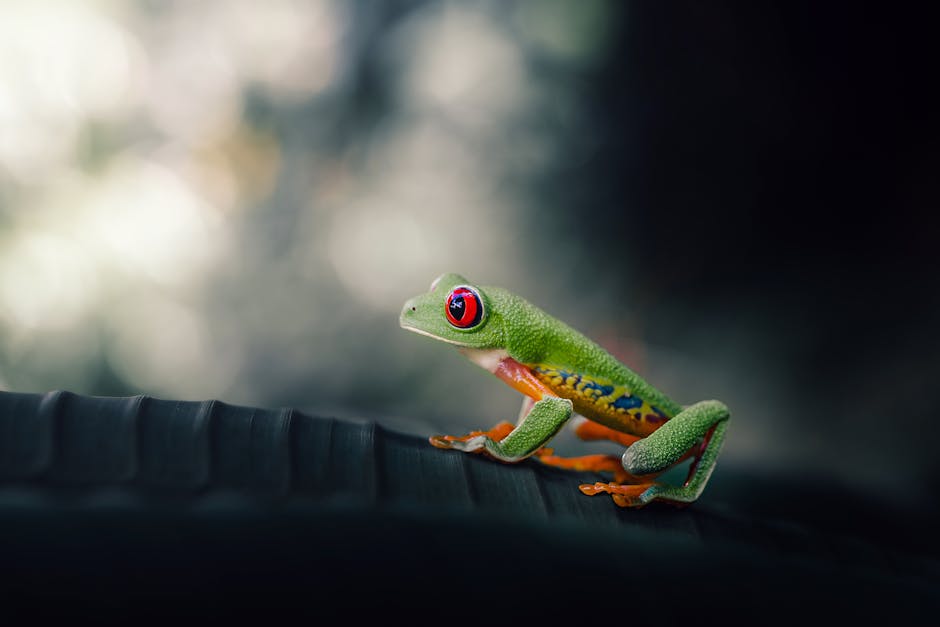
It sat for four minutes, ate two avocados, and flew. The flight was extraordinary — the tail streamers undulated behind it like a calligrapher’s stroke, the green body disappearing into the green forest as if the bird were returning to the material from which it was made. Minor lowered his scope and smiled. “Twenty-two years,” he said. “And I still hold my breath every time.”
After Dark
The night tour started at five-thirty, as the cloud forest’s day shift ended and the night shift clocked in. Our guide for this walk was a younger naturalist named Fabricio who carried a red-filtered headlamp and spoke in whispers. The forest at night is a different organism. The sounds change — the bird calls replaced by frog calls, the insect chorus rising to a volume that seems designed to overwhelm. The temperature drops. The mist thickens.
Fabricio found a red-eyed tree frog within ten minutes — Costa Rica’s most iconic amphibian, sitting on a leaf at eye level, its enormous red eyes open and its blue-and-yellow flanks vivid against the green. The red eyes are a defence mechanism — when startled, the frog opens them wide, and the flash of red confuses predators long enough for the frog to leap to safety. In the beam of Fabricio’s headlamp, the eyes glowed like tiny brake lights. A sleeping toucan tucked into a tree hollow, its enormous bill resting on its back. A tarantula the size of my palm, orange-kneed and calm, sitting on a leaf with the patience of something that has no appointments.
The most unsettling discovery was a fer-de-lance — Costa Rica’s most venomous pit viper — coiled beside the trail at a distance that made my pulse spike. Fabricio pointed it out with his light and we gave it a generous berth. The snake did not move. It did not need to. It was the most dangerous thing in the forest and it knew it. The walk lasted two hours and covered barely a kilometre — every metre revealing something that the day had hidden.
What the Cloud Forest Teaches
I have spent four years in Mexico, most of it on the coast, where the landscape is dry scrub and cactus and the ocean dominates every sense. Coming to Monteverde was a shock of green — a reminder that the natural world operates at a density and complexity that my daily life has edited out. The cloud forest is not scenic in the way that a beach sunset is scenic. It is not dramatic in the way that a volcano is dramatic. It is intricate. It rewards attention. It punishes haste. You cannot drive through it or fly over it or photograph it from a viewpoint and feel that you have understood it. You have to walk slowly, look carefully, listen with intention, and accept that most of what is happening around you is invisible to your untrained eyes.
Minor told me that the cloud forests of the world are disappearing faster than the rainforests — that rising temperatures are pushing the cloud base higher, drying out the mosses and epiphytes that define the ecosystem, threatening the quetzal and the glass frog and the thousand species of orchid that depend on horizontal rain. Monteverde’s future is not guaranteed. The mist may lift. The forest may dry. The quetzal may have to climb higher until there is nowhere higher to climb.
That knowledge — that this place is both ancient and fragile, both resilient and threatened — changed how I walked through it. Not with sadness, exactly, but with the kind of attention you give to something you know you might not see again. The cloud forest does not ask for your admiration. It does not perform. It simply exists, in mist and moss and the slow pulse of a glass frog’s heart, and it is up to you to notice.
Voyagez avec intention
Guides sélectionnés, destinations paisibles et récits qui valent la peine d'être lus — envoyés quand nous avons quelque chose qui mérite d'être partagé.
Pas de spam. Désabonnement à tout moment.